Published on: 2026-05-18
Updated on: 2026-05-18
Silver needs to reclaim $76 to $76.65 to stabilise; a break below $74.36 opens the low-$70s liquidation zone.
The deficit shrinking from 143 million ounces in 2025 to 25 million by 2027 changes the question from whether silver is scarce to whether scarcity is worsening fast enough to justify $75. (Investing)
$75 is not a clear bargain: silver is far below its January $121.67 peak but still about 133% higher year over year.
SLV outflows show the dip-buying bid weakened before the latest drop, with bullion holdings falling by roughly 37.7 million ounces in Q1. (SEC Filing)
India’s import curbs can lift local premiums but pressure global silver if they reduce one of the world’s largest physical demand channels.
The silver price at $75 is not a bargain. It is a test of whether buyers still trust the shortage trade after ETF outflows, shrinking deficit forecasts, and higher yields weakened the rally.
Silver is not falling because it has become abundant. It is falling because $75 now sits between two markets: buyers looking for a rebound to $76-$76.65, and sellers watching for a break below $74.36. The shortage story still exists, but silver can remain tight and lose altitude if buyers stop paying January-style prices for that tightness.
Two levels define silver’s near-term setup. A move back above $76 to $76.65 would show sellers losing control of the short-term tape. A break below $74.36 would raise the risk of forced selling into the low $70s.
| Technical level | Latest reading | Takeaway |
|---|---|---|
| Spot silver | $75.19 | Sitting near the decision zone |
| RSI 14 | 35.667 | Weak, but not fully washed out |
| MACD | -1.650 | Bearish momentum remains active |
| EMA 20 | $76.68 | First stabilisation level |
| EMA 50 | $79.53 | Recovery needs stronger buying |
| EMA 200 | $80.80 | Longer-term repair level |
| Classic support | $74.63 / $74.36 / $73.86 | Breakdown zone |
| Classic resistance | $75.41 / $75.92 / $76.19 | First reclaim area |
The daily technical summary remains “Strong Sell,” with moving averages showing 2 buy signals and 10 sell signals. Price sits below the 20, 50, and 200 EMAs, so rebounds below $76.65 remain vulnerable to selling. (Investing)
The first signal is not a forecast. It is price behaviour around the pivot. A daily close above $76.65 would repair the immediate chart. A close below $74.36 would shift attention from a normal pullback to position liquidation.
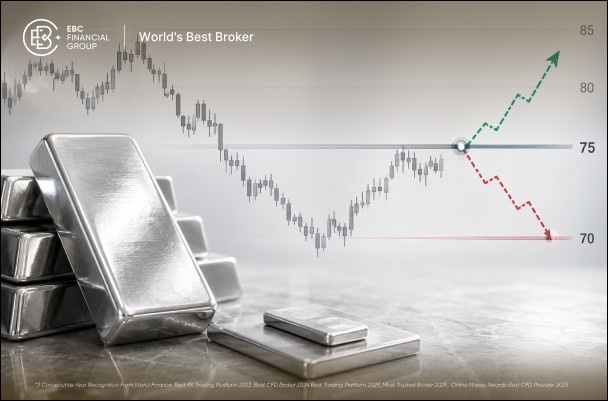
Silver prices can fall into a supply deficit when traders believe the shortage is becoming easier to manage.
A deficit supports the floor. It does not guarantee every rally. Silver rallies hardest when shortages worsen, physical buyers chase the metal, and financial demand adds pressure through ETFs and futures. That was the January setup, when silver reached a 52-week high above $121.
The current market is different. High prices have slowed demand, deficit forecasts have narrowed, and ETF flows have weakened. The question is no longer whether silver is scarce. It is whether that scarcity is worsening fast enough to justify current prices.
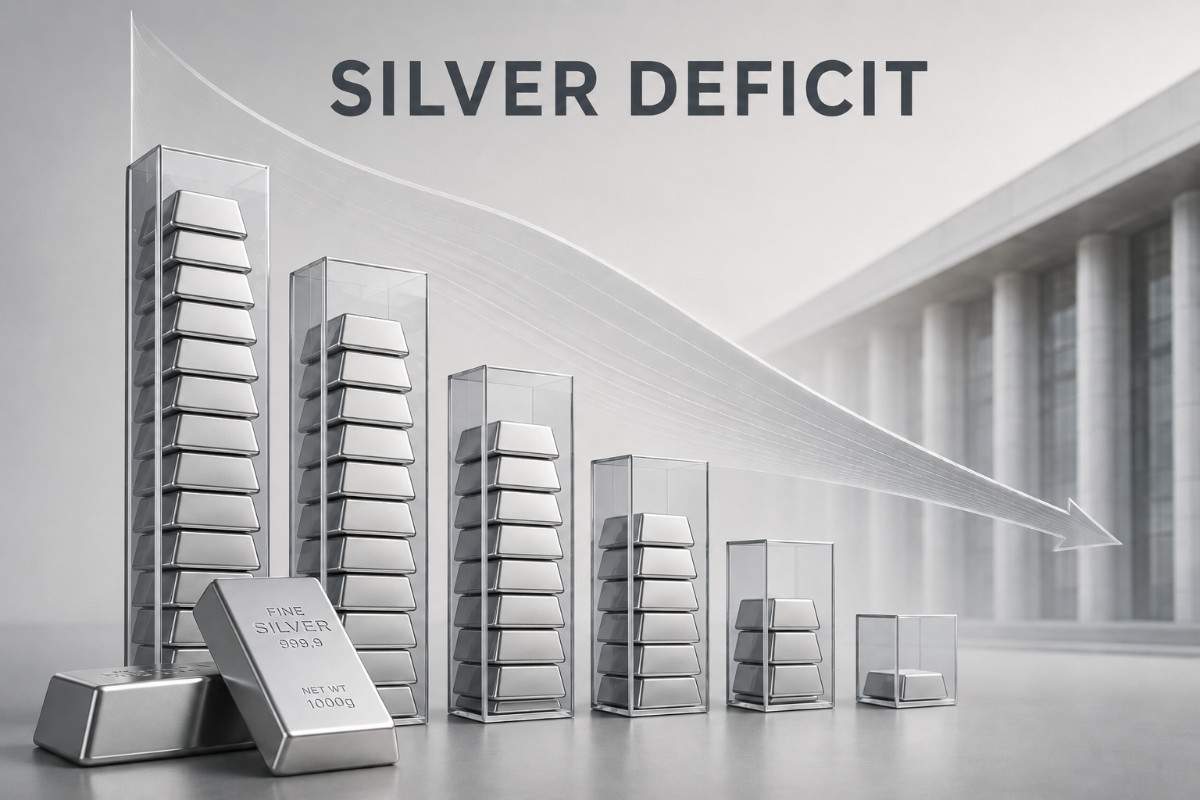
HSBC raised its silver forecasts, but the supply-demand path is less bullish than the headline suggests. The bank sees silver averaging $75 in 2026 and $68 in 2027, while the market deficit shrinks from 143 million ounces in 2025 to 73 million ounces in 2026 and 25 million ounces in 2027.
That is the pressure point. Silver can remain undersupplied while losing upside momentum if the shortage becomes easier to absorb. A 143 million-ounce deficit can attract squeeze pricing. A 25 million-ounce deficit looks less explosive if recycling rises, mine output improves, and price-sensitive buyers step back.
The current silver price already sits near HSBC’s 2026 average forecast. That makes $75 less of a bargain and more of a fair-value test.
The trade has moved from “silver is in shortage” to “how much is that shortage still worth?”
SLV’s Q1 filing shows the pressure under the surface: ETF holders reduced silver exposure even while the filing-period silver price rose 0.97%.
The iShares Silver Trust held 528.69 million ounces of silver bullion at the start of Q1. By March 31, holdings had fallen to 490.99 million ounces, a decline of roughly 37.7 million ounces. Shares outstanding fell from 582.95 million to 542 million, while net assets dropped from $38.05 billion to $35.67 billion.
That flow weakens the standard dip-buying argument. The latest drop toward $75 did not create ETF pressure. It exposed a bid that had already faded.
SLV redemptions settle through silver bullion, not just cash. During Q1, the trust distributed 130.34 million ounces through redemptions while taking in 93.24 million ounces through creations. When redemptions exceed creations, metal leaves the trust structure, and the ETF stops acting like a steady absorber of supply.
Silver does not need a collapse in physical demand to fall. It only needs marginal buyers to stop absorbing the excess.
India’s silver import curbs look bullish at first glance. Fewer imports can tighten domestic supply and lift local premiums.
Global silver trades on the demand that clears outside India. If Indian import demand falls, international sellers lose one of their largest physical buyers. That can push global prices lower even while domestic Indian prices stay firm.
This creates a split market: tighter local supply, weaker global demand visibility. For silver, that split carries weight because India is a major buyer of jewellery, bars and investment metal.
Futures traders do not wait for the next inventory report when a major import channel slows. They first mark down the demand impulse.
Higher yields pressure silver by turning inflation from a hedge argument into a rate-risk problem.
Silver pays no income. When Treasury bills, cash and short-duration bonds offer higher returns, traders demand a lower silver price to justify holding a volatile metal.
With the 10-year Treasury yield near the 4.5% zone, silver rebounds face a higher bar. Cash and short-duration bonds compete more aggressively for capital, making rallies below $76.65 easier to sell until yields retreat.
Inflation supports silver when it weakens confidence in paper currency. It hurts silver when it lifts rate expectations, real yields and the US Dollar. The current move fits the second pattern, with silver trading near $75 after losing roughly 5% over one week.
The rate backdrop keeps rebounds vulnerable below $76.65. Silver needs yields to stabilise before $75 can become a durable base rather than a pause before another test of $74.36.
Silver at $75 is not a neutral level. It separates three market paths.
| Path | Trigger | Market implication |
|---|---|---|
| Bullish repair | Holds $74 to $75 and reclaims $76.65 | The selloff looks like a reset after January’s squeeze, not a collapse in the supply story. |
| Bearish breakdown | Breaks below $74.36 | Forced exits can push silver toward the low $70s before fundamentals improve. |
| Range-bound squeeze | Fails near $80 to $85 | Rallies risk becoming exit liquidity for traders trapped above the market. |
Silver needs more than tight supply to rebuild momentum. It needs at least one confirming catalyst: SLV holdings stop falling, Indian import demand returns, Treasury yields retreat, or price holds above the 20-day EMA near $76.65.
Until one of those signals appears, $75 remains less a bargain than a test of whether buyers will defend the shortage trade.
$75 is a testing zone, not a clean buy signal. A stronger setup needs silver to hold above $74 and reclaim $76 to $76.65. Without that recovery, buyers are entering before the chart proves that selling pressure has faded.
A daily close above the 20-day EMA near $76.65 would be the first technical signal of repair. Stronger confirmation would come from ETF holdings stabilising, Treasury yields easing and physical demand improving after India’s import restrictions.
A break below $74.36 would expose silver to forced selling. A move toward $70 would look more like liquidation than a fresh collapse in the physical silver market.
Because three pressures hit at the same time: the deficit is forecast to shrink from 143 million ounces in 2025 to 25 million by 2027, ETF buyers reduced exposure before the latest drop, and India’s import restrictions weakened one of the world’s largest physical demand channels. Silver is still tight, but the market is paying less for that tightness.
Silver’s next signal is not the deficit itself. It is whether real buyers appear before $74 turns from support into overhead supply.