Published on: 2026-05-18
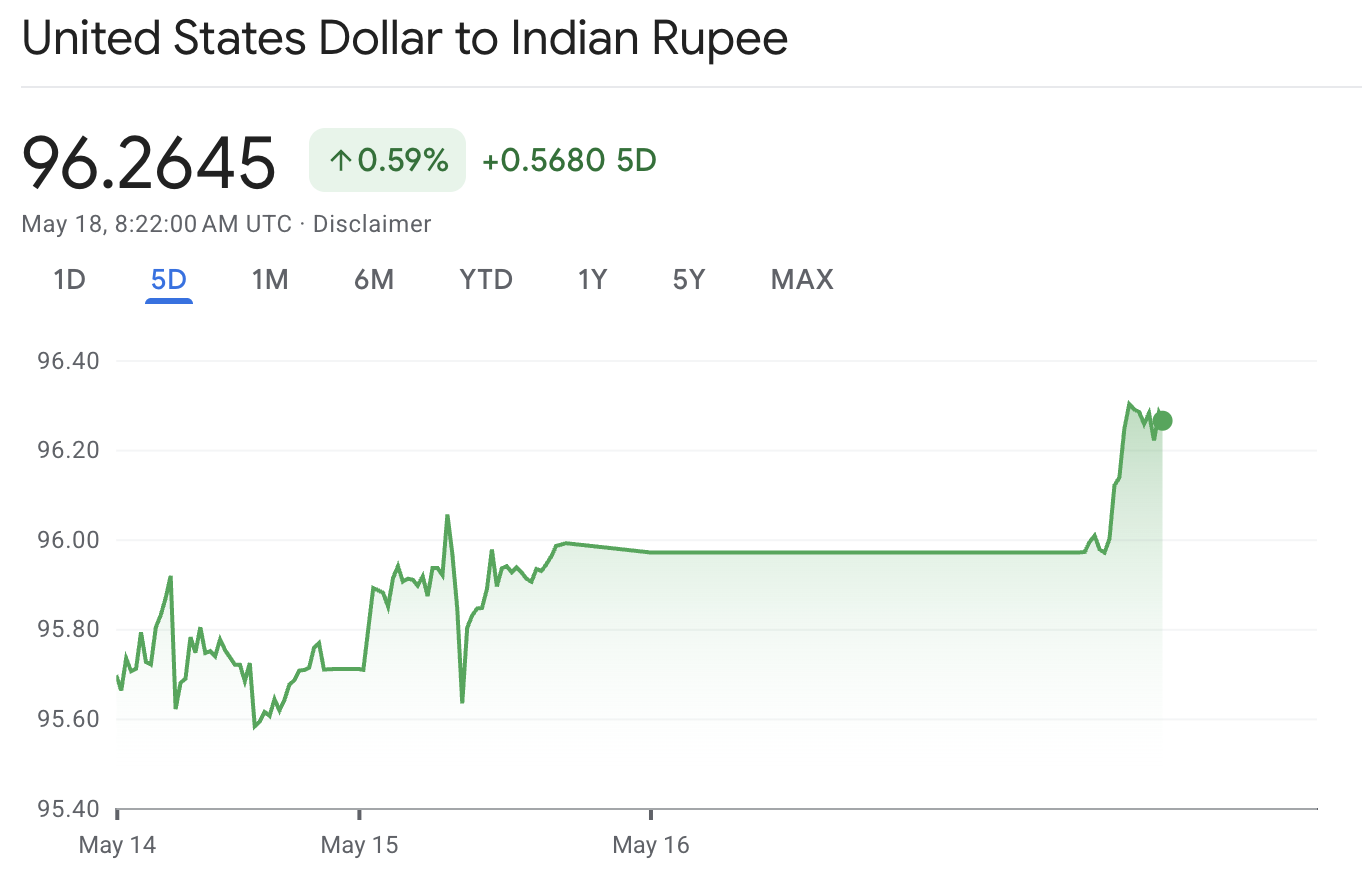
The rupee crash deepened in May 2026 as USD/INR broke above 96 and moved into the 96.20 area, pushing the Indian currency to its weakest level on record. The break matters because USD/INR is no longer reacting to one headline, but to a tightening external-financing mix.
Crude oil above $110, heavy FPI outflows, importer Dollar demand, higher US yields and West Asia geopolitical risk are now moving in the same direction. The key question is whether 96 becomes a new USD/INR reference zone or a temporary stress point shaped by oil prices and RBI smoothing.
USD/INR broke above 96 after touching 96.14 intraday on 15 May and moving near 96.20 on 18 May.
The rupee has fallen about 5.5% since the Iran-linked conflict began in late February.
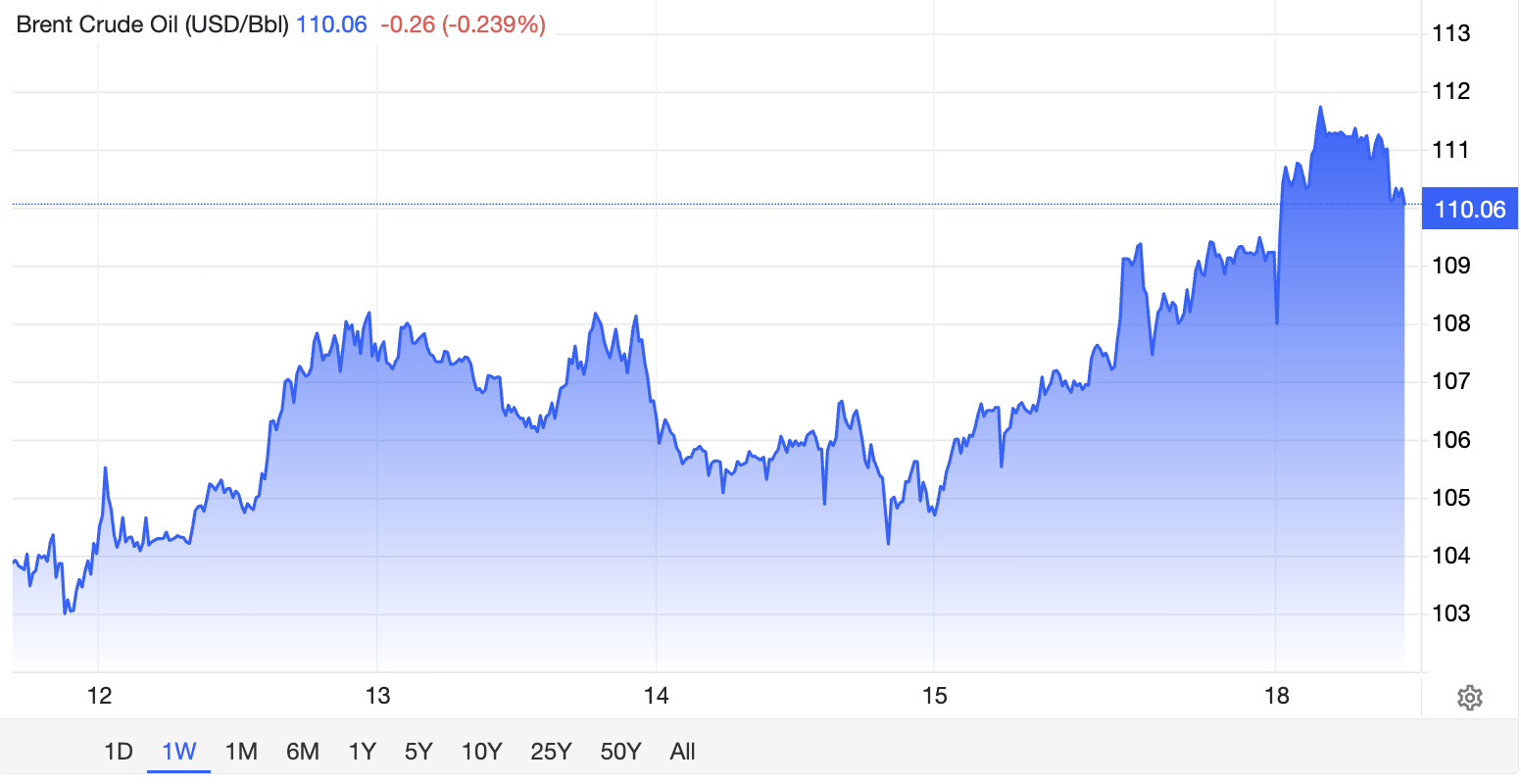
Brent crude above $110 is the central pressure point because India relies heavily on imported oil.
FPI outflows have crossed ₹2.2 lakh crore in 2026, reducing foreign-currency support for the rupee.
India’s April trade deficit widened to about $28.4 billion, showing pressure on external balances.
The next USD/INR signals are 96, Brent crude, RBI intervention, FPI flows, reserves and US yields.
USD/INR’s break above 96 was not a one-day accident. On 15 May, the pair touched 96.14 intraday and closed near 95.86, marking a record closing low for the rupee. By 18 May, reports showed USD/INR around 96.20, extending the currency’s slide and confirming that the move had become a broader macro event.
The speed of the decline changed the market tone. The rupee weakened nearly 2% in six trading sessions before the 15 May close, while reports on 18 May showed it down about 5.5% since the Iran-linked conflict began. That points to sustained repricing rather than a short burst of volatility.
Crude oil supplied the spark. Brent moved above $110 per barrel as West Asia tensions raised supply concerns. For India, higher crude prices quickly become a foreign-exchange issue because refiners and importers need more Dollars to pay for oil.
The surface explanation is oil and Dollar strength. The more important issue is how those pressures are feeding into each other. Higher crude prices increase India’s Dollar demand, FPI outflows reduce foreign-currency supply, importer hedging pulls future Dollar demand into the spot market, and rising US yields keep the Dollar supported globally.
| Pressure Point | What Changed | Why It Matters for USD/INR |
|---|---|---|
| Crude oil | Brent above $110 | Raises India’s import bill and Dollar demand |
| Trade deficit | April gap near $28.4 billion | Shows external-account pressure is rising |
| FPI flows | 2026 outflows above ₹2.2 lakh crore | Reduces foreign-currency support |
| US yields | Around 4.6% | Supports the Dollar and pressures emerging-market FX |
| RBI action | Smoothing near record lows | Can reduce disorderly moves |
| Hedging demand | Importers hedge faster | Pulls Dollar buying forward |
Oil is the cleanest transmission channel. India imports most of its crude, so a jump in Brent immediately raises the value of Dollar payments needed by refiners, fuel retailers and energy-linked importers. When those buyers enter the market at the same time, USD/INR can move faster than usual.
The stress is already visible in the trade data. India’s April exports rose to $43.6 billion, but imports climbed to $71.9 billion, widening the merchandise trade deficit to about $28.3 billion, the highest in three months. Strong exports helped, but they were not enough to offset the import surge.
That is why the rupee move matters. A wider trade deficit increases the need for external financing. If foreign flows are also weakening, the pressure shifts directly into the currency market.
Foreign portfolio flows have become the second major pressure point. FPIs withdrew ₹27,048 crore from Indian equities in May, taking 2026 outflows beyond ₹2.2 lakh crore. That matters because foreign selling creates conversion pressure when investors move capital out of rupees and back into foreign currency.
This makes the rupee trade more fragile. Oil raises Dollar demand. FPI outflows reduce Dollar supply. When both happen together, USD/INR can rise even if domestic growth remains resilient.
The flow effect can also weigh on equity sentiment. A weaker rupee reduces Dollar-adjusted returns for foreign investors. If the currency keeps sliding while local equities struggle, currency risk itself can become another reason to cut exposure.
The Reserve Bank of India can sell Dollars, guide liquidity and reduce disorderly moves around major levels such as 96. That can slow volatility and prevent one-way trading conditions.
Intervention cannot fully reverse the underlying pressure if crude stays high, the Dollar remains yield-supported and portfolio outflows continue. Foreign-exchange reserves are still a buffer, but every drawdown becomes more closely watched when USD/INR is trading at record highs.
The rupee selloff becomes more important when it feeds producer costs. A weaker rupee raises the local-currency cost of imported crude, fuel, chemicals, electronics, machinery and industrial inputs. That pressure can hit margins first, then consumer prices later.
India’s wholesale inflation jumped to 8.3% in April, a 42-month high, from 3.88% in March. Fuel and power inflation surged sharply, showing that the oil shock is already moving through the cost structure.
This complicates the RBI’s policy mix. Currency weakness argues for caution. Higher inflation argues for discipline. But growth and liquidity conditions can still require flexibility. That tension is why USD/INR is now being watched as a macro signal, not just a forex quote.
The break above 96 did not appear from nowhere. USD/INR has moved through successive stress levels over the past five years, with each phase shaped by a different mix of Dollar strength, oil sensitivity, capital flows and external shocks.
| Period | USD/INR Level | Market Meaning |
|---|---|---|
| July 2022 | Above 80 | Fed tightening lifted the Dollar and pressured emerging-market FX |
| 2023 | Around 83 | Rupee stayed under pressure, but volatility was more contained |
| End-2024 | Around 85.6 | Annual depreciation trend remained intact |
| December 2025 | Around 91 | External pressure moved into a higher band |
| 15 May 2026 | 96.14 intraday | First major break above 96 |
| 18 May 2026 | Around 96.20 | Oil, outflows, yields and geopolitical risk converged |
The 2026 oil shock accelerated an existing trend. The difference in 2026 is the speed of the move. Earlier rupee weakness was gradual. The latest move is being driven by several pressure channels at once.
A weaker rupee changes cost pressure, earnings translation, inflation risk and policy expectations across Indian markets.
Import-heavy sectors face the clearest pressure. Oil marketing companies, airlines, chemicals, fertilisers, machinery importers and manufacturers with foreign-currency costs are exposed when crude and USD/INR rise together. If higher costs cannot be passed on, margins absorb the currency shock.

Dollar earners may receive some support. IT services, pharmaceuticals and other export-oriented sectors can earn more rupees when overseas revenue is converted back into local currency. That benefit can fade if global demand weakens, pricing pressure rises or wage costs increase.
Policy sensitivity is also rising. India raised gold and silver import duties to 15%, a move aimed at curbing import demand and conserving foreign exchange. Currency pressure is now feeding into trade policy and external-account management.
The 96 zone is the first test. If USD/INR holds above it, markets may treat it as a new reference point. A clean move back below 96 would suggest that oil cooling, RBI action or position unwinding is slowing the pressure.
Brent crude remains the main external trigger. A sustained move below $100 would reduce immediate import-bill pressure. A push toward $115 to $120 would keep USD/INR highly sensitive to oil headlines.
FPI flows are the second signal. Continued outflows would keep pressure on the rupee. Stabilisation in equity and debt flows would make RBI smoothing more effective.
RBI behaviour should be read through market action. Smaller intraday ranges, stable reference rates, reserve movements and reduced volatility around 96 would suggest stronger smoothing.
US yields remain the global swing factor. If Treasury yields fall and Fed rate-cut expectations rise, the Dollar’s yield advantage would weaken. That would give emerging-market currencies, including the rupee, more room to stabilise.
The rupee crash is not only about oil. It is the collision of crude above $110, a wider trade deficit, heavy FPI outflows, importer hedging, elevated US yields and RBI smoothing limits. USD/INR above 96 matters because it changes behaviour: importers hedge faster, exporters wait longer and every crude headline carries more weight.
The market has already answered whether the rupee is under pressure. The real question is whether the forces pushing USD/INR above 96 begin to ease, or whether 96 becomes the new anchor for India’s currency risk.