Published on: 2026-06-18
An out-of-the-money option, often shortened to OTM option, is an option that has no intrinsic value at the current market price.
For beginner traders, the easiest way to understand it is this: an out-of-the-money option is not useful to exercise right now, but it may become useful if the market moves far enough before expiry.
An OTM option still has time value because there is still a chance that the price could move in the trader’s favour before the option expires.
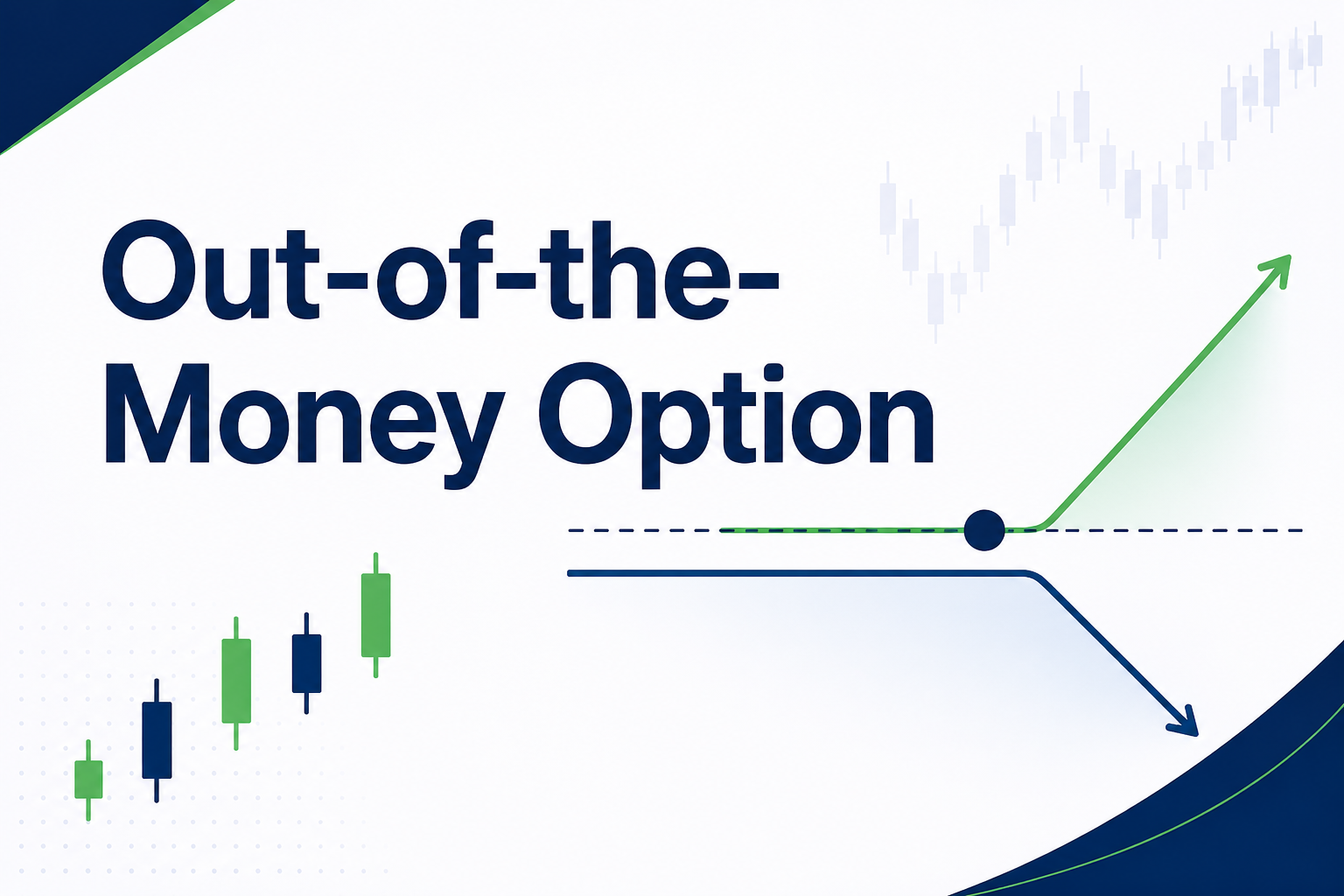
A call option gives the holder the right to buy the underlying asset at a selected strike price.
A call option is out of the money when the strike price is above the current market price.
For example, if a stock is trading at $100 and a trader holds a $110 call option, the option is out of the money. It would not make sense to buy the stock at $110 through the option when the market price is only $100.
The call option only becomes useful if the stock rises above the $110 strike price before expiry.
A put option gives the holder the right to sell the underlying asset at a selected strike price. The option is out of the money when the strike price is below the current market price.
For example, if a stock is trading at $100 and a trader holds a $90 put option, the option is out of the money. It would not make sense to sell the stock at $90 through the option when the market price is $100.
The put option only becomes useful if the stock falls below the $90 strike price before expiry.
Options are often described as out of the money, at the money, or in the money.
An out-of-the-money option has no intrinsic value. An at-the-money option has a strike price close to the current market price. An in-the-money option already has intrinsic value.
For example, if a stock trades at $100:
A $110 call is out of the money.
A $100 call is at-the-money.
A $90 call is in the money.
For put options, the logic is reversed:
A $90 put is out of the money.
A $100 put is at-the-money.
A $110 put is in the money.
Traders may buy out-of-the-money options because they usually cost less than in-the-money options.
The lower premium can make them attractive to traders who expect a strong move. A trader may buy an OTM call if they expect a sharp rise, or an OTM put if they expect a sharp fall.
However, the lower price comes with a trade-off. The market must move far enough, and it must do so before the option expires.
This is why OTM options can be risky. They may look cheap, but they can expire worthless if the move does not happen.
An OTM option needs more than the right direction.
If a trader buys an OTM call, the underlying price must rise above the strike price before expiry. If a trader buys an OTM put, the price must fall below the strike price before expiry.
Even if the trader’s market view is partly correct, the option may still lose value if the move is too small or too late.
OTM options are also affected by time decay and implied volatility. As expiry approaches, the time value can decline. If implied volatility drops, the option premium may also decline.
The key lesson is simple: cheap does not always mean low risk.
Call Option: An option that gives the holder the right to buy an asset at a selected strike price.
At the Money: A situation where an option’s strike price is close to the current market price.
Underlying Asset: The asset on which an option or derivative contract is based.
Implied Volatility: A measure of expected future price movement based on options pricing.
Derivatives: Financial instruments whose value comes from another asset.
Risk Management: The process of controlling possible losses before and during a trade.
An out-of-the-money option is an option with no intrinsic value at the current market price. It is not profitable to exercise right now, but it may become valuable if the market moves far enough before expiry.
Not always. An OTM option has no intrinsic value, but it may still have time value. Traders may still pay a premium because there is a chance the option could move into the money before expiry.
OTM options are usually cheaper because they are not currently profitable to exercise. The buyer is paying for the possibility of a future move, not for value that already exists.
Yes. If the underlying price does not move beyond the strike price before expiry, an OTM option can expire worthless. This is one of the main risks traders should understand before buying them.
An out-of-the-money option is an option that has no intrinsic value at the current market price. An OTM call has a strike price above the market price, while an OTM put has a strike price below the market price.
For beginner traders, the main idea is that OTM options are cheaper because they need the market to move far enough before expiry. They may offer higher potential percentage returns, but they can also expire worthless if the move does not happen.