Published on: 2026-06-18
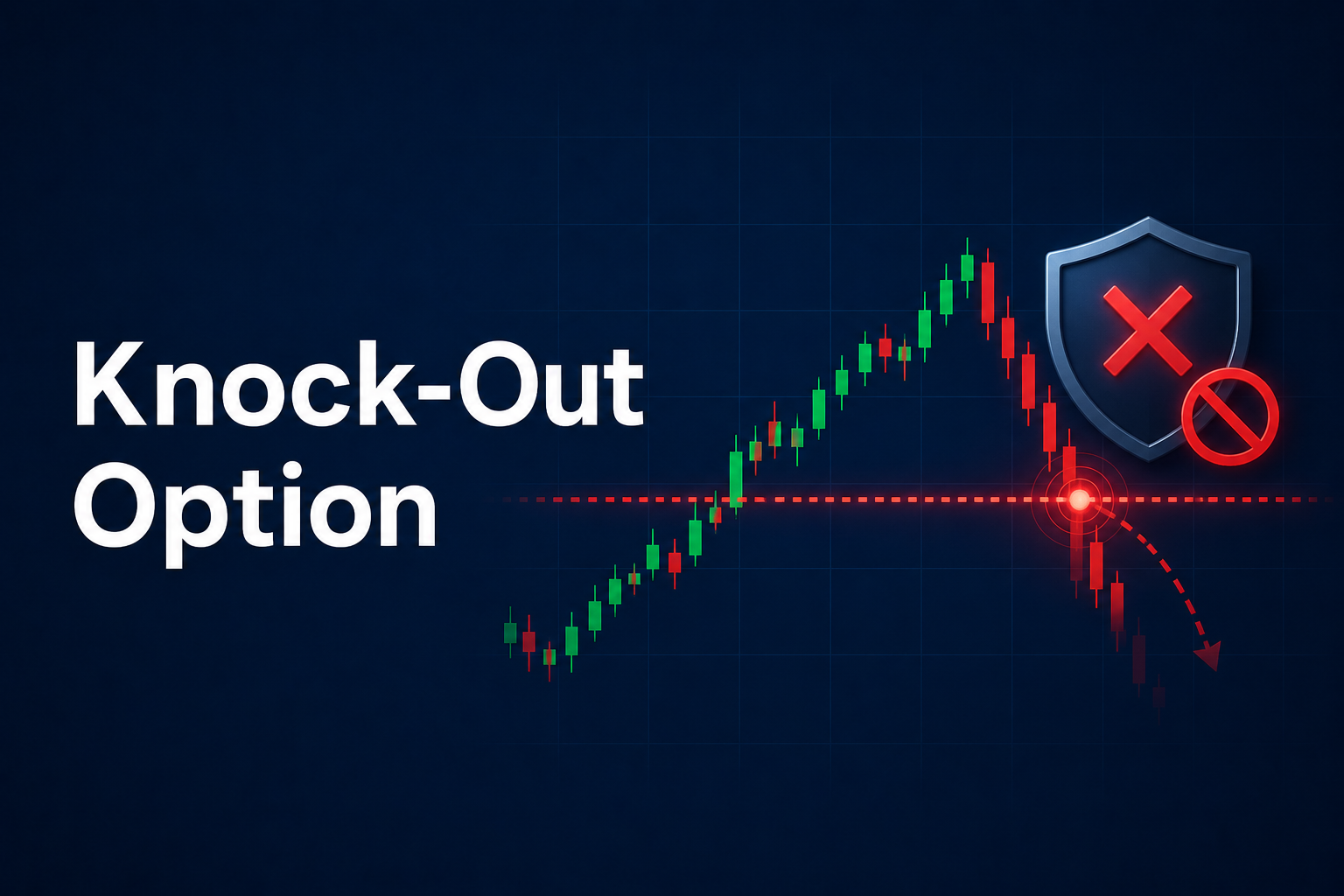
A knock-out option is a type of barrier option that ceases to be active if the price of the underlying asset reaches a specified level. This level is known as the barrier.
For beginners, the simplest way to think about a knock-out option is as an option with a shut-off switch. It starts out active, but if the price hits the barrier, the option can be closed before it expires.
This is what sets a knock-out option apart from a standard option. Standard options usually stay active until they expire, unless the trader closes or exercises them. Knock-out options, on the other hand, can end early if the barrier is reached.
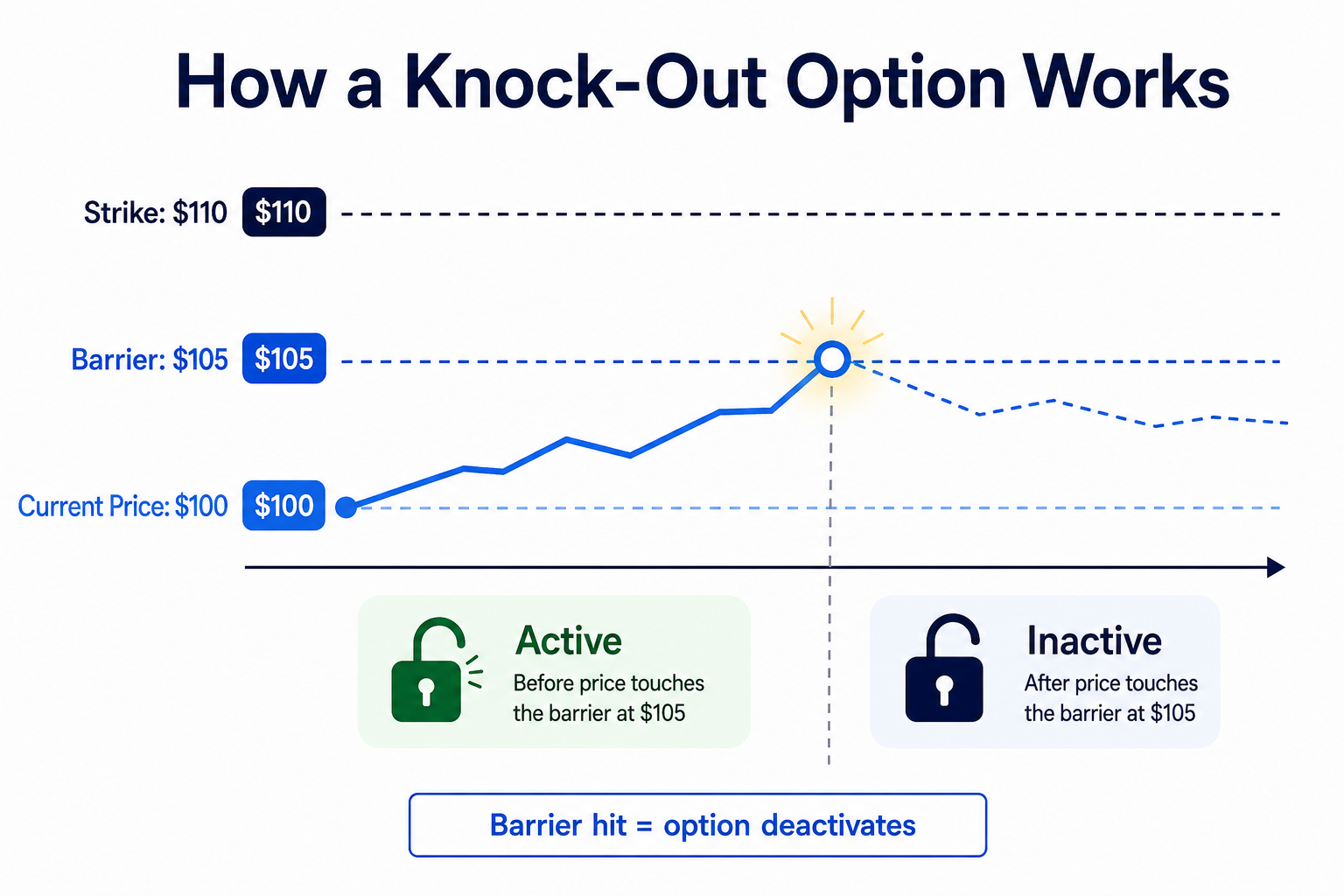
A knock-out option includes several key parts: the underlying asset, the strike price, the barrier level, the expiry date, and the option premium.
Suppose a stock is trading at $100. A trader buys a down-and-out call option with a strike price of $110 and a barrier level of $90.
The option begins as active. If the stock price goes up, the trader can benefit from the call option. But if the stock price drops to $90 before it expires, the option is knocked out and ceases to be active. This means the trader loses the opportunity to benefit from the option, even if the stock price rises again later.
The main idea is simple: the barrier can cancel the option.
Traders might choose knock-out options when they want to participate in a market but believe the barrier level probably won't be reached.
Knock-out options often have lower premiums than standard options because of the extra condition. The buyer assumes the risk that the option may expire early if the barrier is reached.
For example, a trader might say, “I want upside exposure, but if the price falls below this level, my view is probably wrong.” In this case, a down-and-out call option fits because it expires if the price drops below the barrier.
But a lower premium does not make the trade safer. It just means the trader is taking on the risk that the barrier could be reached.
There are two main types of knock-out options: up-and-out and down-and-out.
Up-and-Out Option: This type becomes inactive if the underlying price reaches a barrier above the current market price. Traders might use it if they want the option to end when the price rises too much.
Down-and-Out Option: This type becomes inactive if the underlying price drops to a barrier below the current market price. Traders might use it if they want the option to end when the price falls below a certain level.
A knock-out option can be either a call or a put. So, traders might come across up-and-out calls, up-and-out puts, down-and-out calls, and down-and-out puts. The outcome depends on the specific contract terms.
Knock-out and knock-in options are both types of barrier options, but they work in opposite ways.
A knock-out option starts out active and becomes inactive if the barrier is reached.
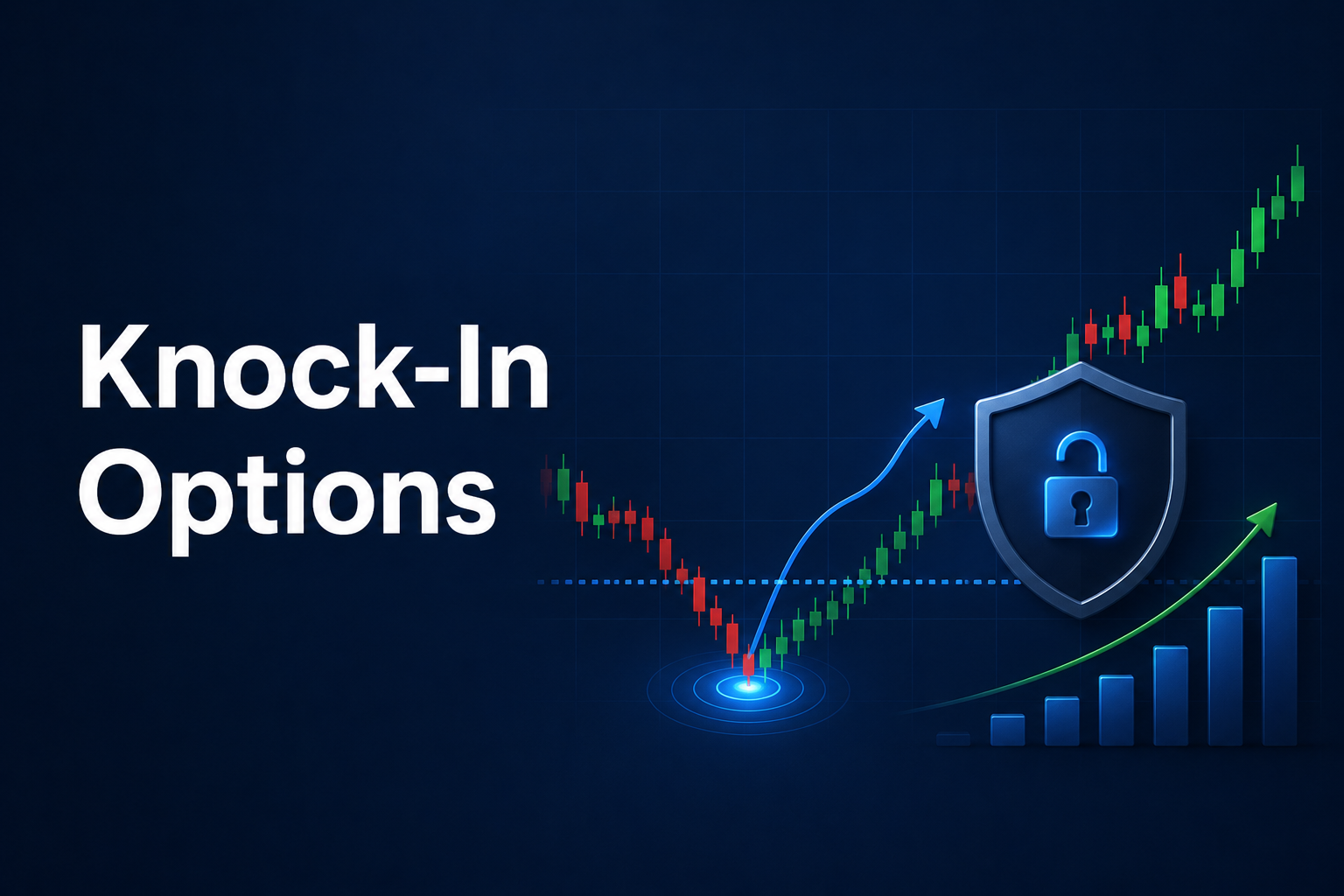
A knock-in option starts off inactive and becomes active if the barrier is reached.
The basic difference is:
Knock-out: The barrier disables the option.
Knock-in: The barrier turns the option on.
A common mistake is thinking that a knock-out option behaves like a regular option until it expires. It doesn't. The option can end early if the barrier is reached.
Another mistake is failing to pay attention to the barrier level. In a knock-out option, the barrier is just as important as the strike price because it decides whether the option stays active.
Beginners might also think that a lower premium means a better trade. In fact, the premium is lower because the trader is taking on the risk of being knocked out.
The safest way to think about a knock-out option is as a conditional option. It only works as long as the barrier isn't triggered.
Derivatives: Financial instruments whose value comes from an underlying asset.
Call Option: An option that gives the holder the right to buy an asset at a set price.
At the Money: A situation where an option’s strike price is close to the current market price.
Underlying Asset: The asset on which a derivative or option contract is based.
Implied Volatility: A measure of expected future price movement based on options pricing.
Risk Management: The process of controlling possible losses before and during a trade.
A knock-out option becomes inactive if the underlying asset reaches a specific barrier price before expiry. If the barrier is touched, the option can be cancelled early.
No. A normal option usually stays active until expiry. A knock-out option has an extra barrier condition. If the market price touches that barrier, the option may stop working.
A knock-in option is inactive until the barrier is reached. A knock-out option starts active and becomes inactive when the barrier is reached.
Traders may use knock-out options when they want option exposure at a lower premium and believe the barrier is unlikely to be reached. However, the option can disappear if the barrier.
A knock-out option is a conditional option that starts out active but becomes inactive if the underlying asset hits a barrier level before it expires. Higher level before expiry.
For beginners, the main idea is simple: a knock-out option has a shut-off trigger. It might cost less than a standard option, but the trader assumes the risk that it could be cancelled early.



World's Best Broker