Published on: 2026-04-20
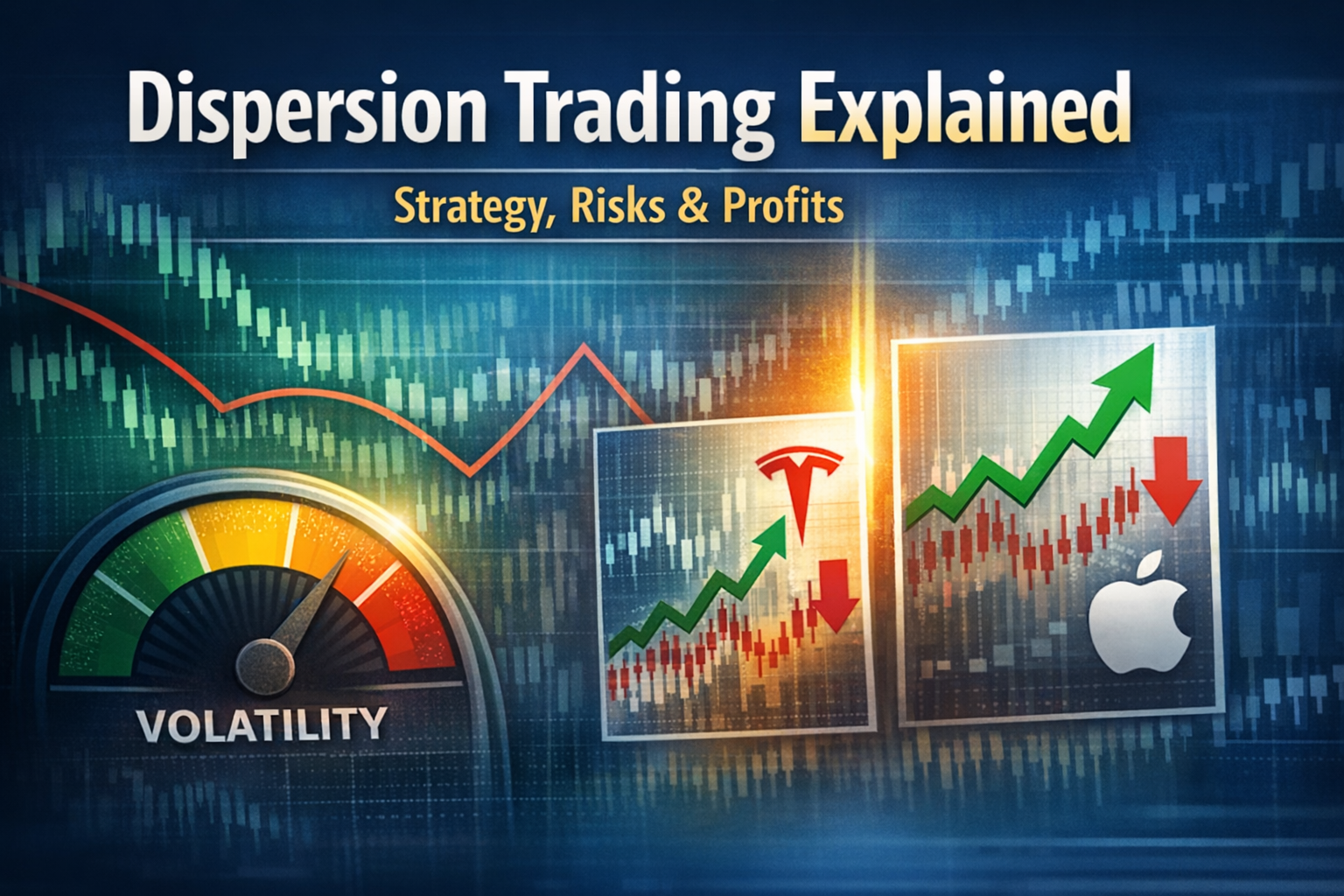
Dispersion trading is an options-based strategy built on the relationship between a stock index and the shares it comprises. Traders compare the index's implied volatility with that of its constituents and use the gap to express a view on correlation. In simple terms, the trade asks whether the stocks in the index will move more independently or more in sync than the options market currently implies.
Because index variance reflects both single-stock variance and the extent to which constituents move together, dispersion trading is often described as a way to trade correlation rather than outright market direction. Dispersion is related to the volatility index, but it measures something different.
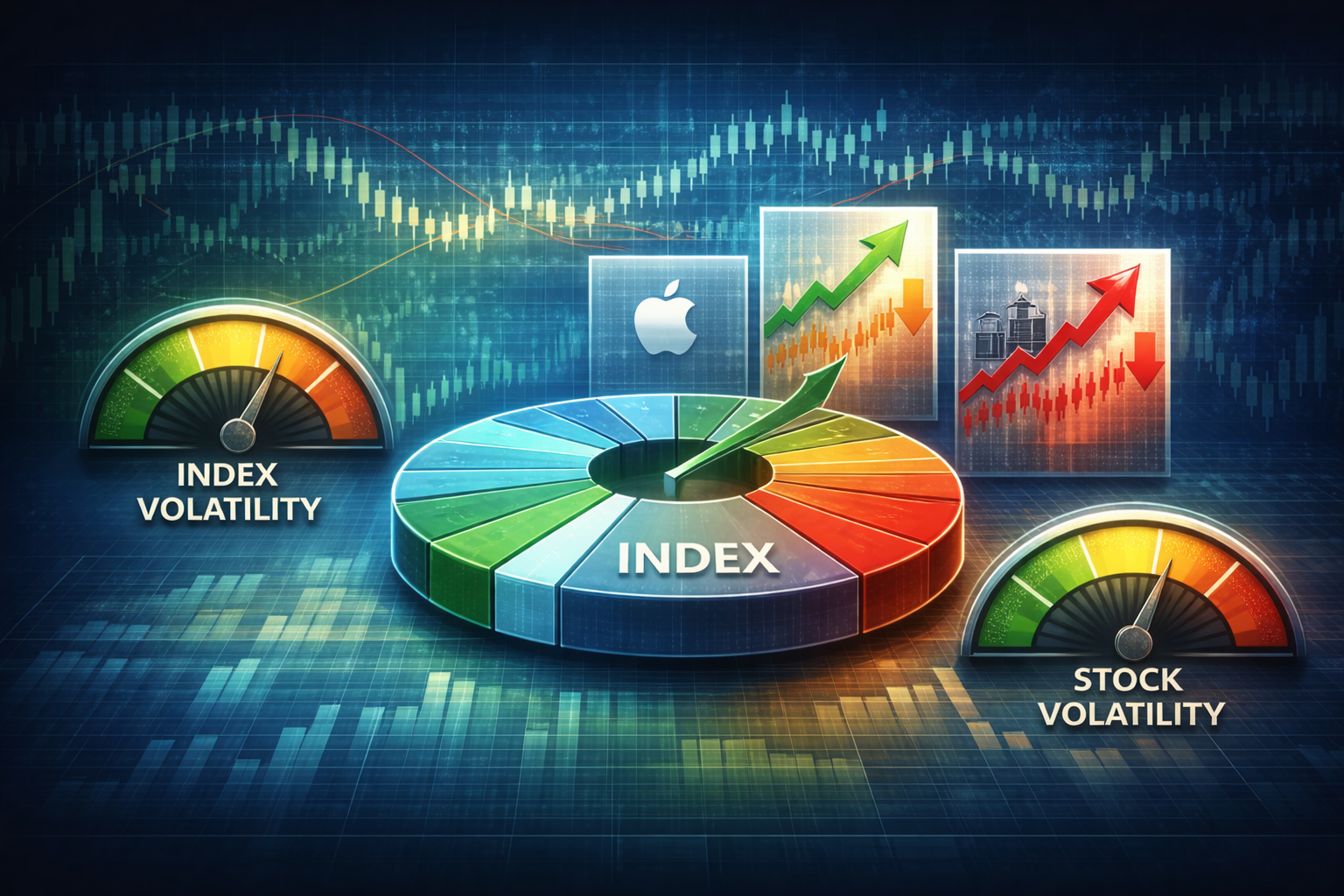
Dispersion trading seeks to profit from the gap between index volatility and the volatility of the stocks inside the index.
A classic long-dispersion trade usually sells index volatility and buys volatility on selected constituents.
The trade is mainly a view on correlation: it tends to benefit when stocks move less in sync than the options market had implied.
It is an advanced strategy used mainly by professional options traders.
Main risks include correlation spikes, IV crush, volatility skew changes, liquidity costs, and hedge error.
These are the main ideas behind dispersion trading and the main reasons it is treated as an advanced options strategy.
A classic long-dispersion trade usually sells volatility on the index and buys volatility on a basket of constituent stocks. A short-dispersion trade flips that structure and is used when a trader expects correlation to be higher than the implied value.
Because dispersion is expressed through options, understanding implied volatility is essential. Actual profit and loss also depend on weights, strikes, expiries, hedging, and transaction costs, not just on whether the market feels calm or chaotic.
Traders use dispersion trading to isolate relative value between the index and its constituents, rather than to make a simple bullish or bearish call. The strategy is most attractive when stock-specific catalysts matter more than broad market direction, and when the pricing of correlation looks rich or cheap relative to what the trader expects to be realised.
Earnings season is a common hunting ground because company-specific reactions often diverge. When winners and losers offset each other at the index level, single-name options can behave very differently from index options.
Imagine an index whose largest members are all approaching results. A trader believes the market has overpriced the likelihood that those stocks will move together. They sell index volatility and buy volatility in selected constituents. If the individual stocks gap in different directions while the index stays relatively contained, realised dispersion can exceed what was implied at entry.
Dispersion trading is sophisticated, and the failure modes matter as much as the setup. A long-dispersion trade can still lose money after an IV crush if the single-stock options were too expensive to begin with. Changes in volatility skew and term structure can move option prices even when the broad correlation view is correct. Advanced desks also monitor gamma exposure, because hedging flows can change the path of realized volatility.
These are standard implementation risks for dispersion and multi-leg option structures.
Dispersion trading tends to work best when single-stock catalysts matter more than macro headlines, when index volatility is relatively contained but constituent volatility is elevated, and when the trader can actively manage weights, rebalancing, and execution costs.
Common setups include earnings windows, uneven sector rotations, and periods when a few large names are driving very different outcomes from the rest of the market.
Can target correlation and relative-value pricing rather than simple direction.
Can benefit from stock-specific divergence inside a broad index.
Can add a different return profile to an advanced derivatives book.
Complex to size, hedge, and rebalance.
Sensitive to correlation shocks and event repricing.
Transaction costs and liquidity can materially affect results.
These trade-offs are why dispersion trading is usually handled by more experienced participants.
For most readers, this belongs in the advanced end of options trading rather than in beginner strategy lists. Retail traders can study the concept or build simplified approximations with a small basket of stocks, but a true dispersion book is operationally demanding and is still dominated by professional desks. Volatility products may help traders study volatility, but they are not a direct substitute for a full dispersion trade.
No, dispersion trading is primarily a relative-value strategy. It doesn't bet on whether the market goes up or down, but rather on the volatility relationship between an index and its individual components. However, traders must still manage risks like delta and vega.
Implied correlation is the market’s expectation of future stock movements, as priced into options. Realised correlation is how stocks actually moved during a specific period. Dispersion trading thrives on the gap (the "spread") between these two metrics.
During a financial crisis, correlation typically "goes to one," meaning most stocks crash simultaneously. Since a long-dispersion trade relies on individual stocks moving independently of the index, this sudden spike in correlation can lead to significant losses.
While the concept is easy to grasp, execution is complex. It requires advanced knowledge of options Greeks, access to multiple symbols, and sophisticated risk management. Most retail traders start with simpler volatility strategies before moving to dispersion.
Dispersion trading is best understood as a correlation-and-volatility strategy, not as a shortcut to easy profits. Used well, it can isolate a real pricing relationship between an index and its components. Used badly, it can concentrate several hard-to-manage risks in one book.