Published on: 2026-03-19
IV crush is a sharp and sudden drop in implied volatility on options contracts that typically occurs after a major anticipated event when uncertainty in the market is resolved. This drop in implied volatility can dramatically reduce the extrinsic value of options, often leading traders to experience significant losses even if the underlying stock moves in the direction they expected.
The concept of IV crush is critical for anyone trading options, especially around scheduled events such as earnings announcements, economic releases, or corporate news. Understanding IV crush helps traders avoid costly mistakes and design strategies that either mitigate or benefit from volatility changes.
IV crush is a rapid drop in implied volatility that occurs after an event removes market uncertainty, reducing option prices.
High implied volatility before events raises option premiums, making options more expensive than their expected stock movement justifies.
Even correct directional bets can lose money if implied volatility falls sharply after an event.
Strategies exist to manage or profit from IV crush, including selling premium or using spreads to reduce sensitivity to volatility changes.
Awareness of events and implied volatility levels is essential to avoid unintended losses.
Before diving deeper into IV crush, it is important to understand implied volatility (IV). Implied volatility is a measure of the market’s expectation of how much the price of an asset might fluctuate in the future. Higher IV suggests traders expect larger price swings, while lower IV implies smaller price swings.
Unlike historical volatility, which is based on past price action, implied volatility is forward‑looking and directly impacts how options are priced. Because options premiums are significantly influenced by IV, changes in volatility can alter option value even if the underlying stock moves in the anticipated direction.
Options have two main components of value:
Intrinsic Value: The difference between the strike price and the underlying stock price when it is in the money.
Extrinsic Value: Also called time value, which reflects the remaining time until expiration and expected volatility.
Implied volatility primarily affects extrinsic value. When IV drops, the extrinsic component shrinks, lowering overall option premiums.
IV crush typically happens around events that generate uncertainty in markets, such as:
Corporate earnings announcements are the most common trigger.
Economic data releases, such as inflation or employment reports.
Regulatory decisions in sectors such as biotech or finance.
Product launches or major corporate news that could significantly impact the stock price.
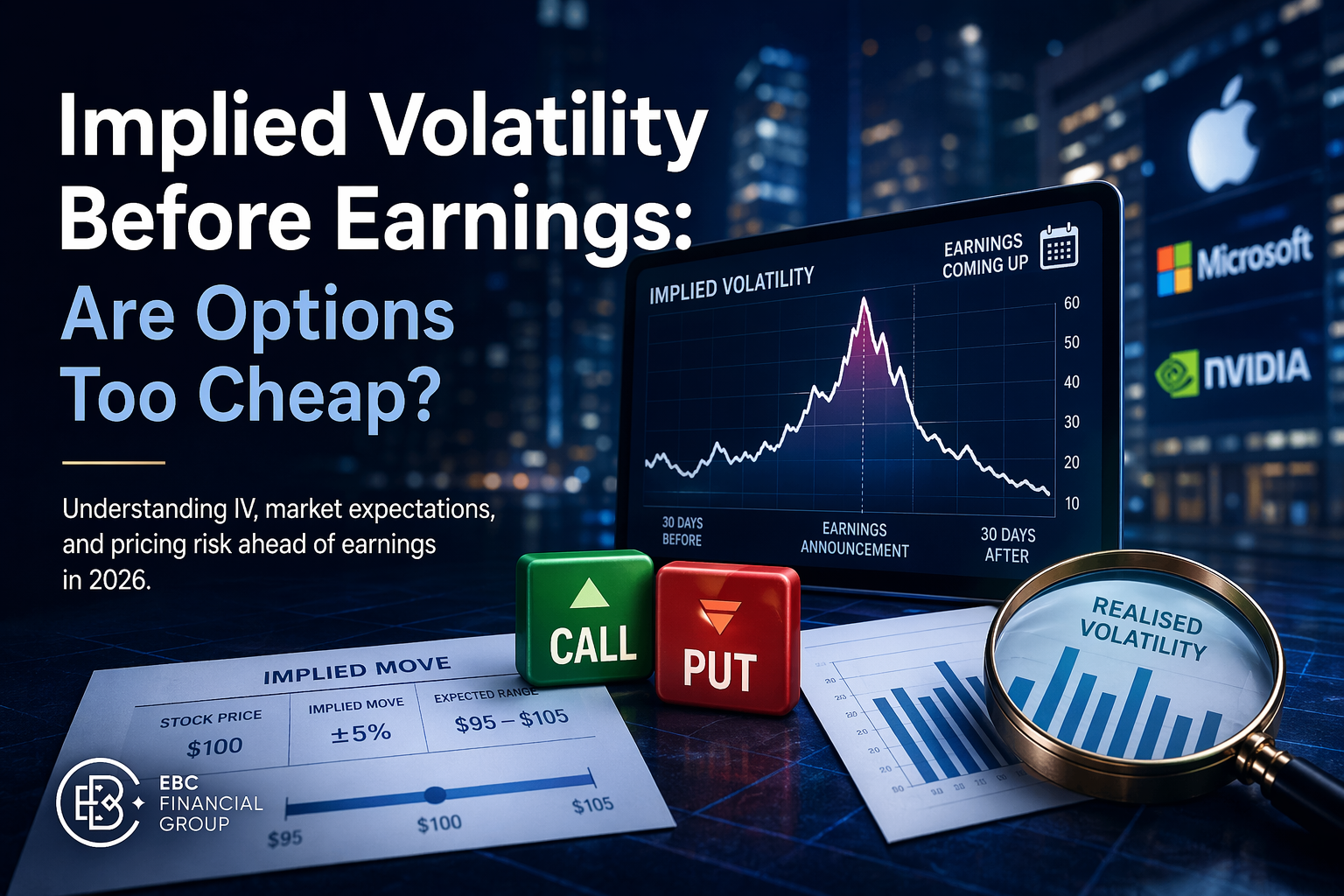
In the lead‑up to these events, uncertainty tends to rise because traders do not know how markets will react to the outcome. This increased uncertainty drives implied volatility higher as traders are willing to pay more for the potential of significant price movement. After the event occurs and the result becomes public, the uncertainty dissipates, and IV drops sharply. This sudden collapse in volatility following the clarification of unknowns is referred to as an IV crush.
The impact of IV crush on options prices can be dramatic and often catches traders by surprise. Consider the following effects:
Traders who buy options just before a high‑uncertainty event may pay high premiums due to elevated implied volatility. If the underlying stock moves slightly in the expected direction but implied volatility drops significantly, the option’s overall value can still fall. In other words, directional correctness may not ensure profitability for the options buyer when IV drops sharply.
Option sellers, on the other hand, can benefit from IV crush because they collect premiums when volatility is high and then profit when those premiums decay after the event. Selling premium before times of high IV can lead to gains as implied volatility collapses afterwards. However, selling options carries its own risks, especially in volatile markets.
Imagine you buy a call option on a stock ahead of its quarterly earnings report. The implied volatility rises significantly in the days leading up to the release because traders are uncertain about how the company will perform. That elevated volatility inflates the price of the call option beyond what might be justified by the expected price move alone.
After the earnings are announced and the outcome becomes public, implied volatility collapses to more normal levels. Even if the stock price increases slightly, the drop in IV can cause the overall price of the call option to fall, potentially below what you originally paid. This illustrates how extrinsic value erosion from IV crush can outweigh gains from stock movement.
Here is a simplified illustration:
Traders use a variety of strategies to either mitigate the negative impact or benefit from an IV crush:
Option sellers can take advantage of high implied volatility by selling options before an event and buying them back after IV collapses at lower prices. Popular strategies include iron condors, strangles, and credit spreads. These strategies collect premiums initially and benefit when volatility decreases.
Traders may use vertical or credit spreads to reduce their exposure to changes in implied volatility. When you sell one option and buy another at a different strike or expiration, the negative impact of IV crush can be lessened because the spread has lower vega exposure than a single outright option.
A trader should analyse the IV rank before entering a trade. A high IV rank suggests that volatility is elevated compared to historical levels, indicating a potential for a significant post‑event drop. Conversely, a low IV rank indicates that volatility is relatively subdued. This analysis helps with timing entry and exit points.
Some traders prefer to buy options well before the event, when implied volatility is lower. The intention is to sell the option as IV increases leading up to the event and close the position before IV collapses after the event passes.
Each strategy carries risks, and traders must use disciplined risk management around events to avoid losses from both directional moves and IV crush.
Understanding IV crush is essential for options traders because:
Buying options with elevated implied volatility increases the risk of loss if volatility drops.
Time decay (theta) accelerates as the expiration date nears, which can compound the effects of IV crush.
Short‑dated options tend to be more sensitive to drops in implied volatility since a larger portion of their value is extrinsic.
Selling premium requires careful risk management, as significant price movements can lead to losses even when IV collapses.
Implied volatility increases when traders expect uncertainty, such as earnings reports or regulatory decisions, because they anticipate larger price swings.
Yes, if the underlying stock moves sharply enough, the intrinsic value gain can outweigh the drop in implied volatility and extrinsic value.
Yes, because a larger portion of their value is time value, which is less sensitive to short‑term volatility changes.
No, IV crush refers to a drop in implied volatility, while time decay refers to the loss of value as an option approaches expiration. Both can affect option pricing, but are distinct factors.
Traders can monitor upcoming events, check implied volatility levels, and choose strategies such as spreads or selling premium to profit from or mitigate a post‑event volatility drop.
IV crush is a crucial concept in options trading because it highlights the impact that changes in implied volatility can have on option prices, independent of the underlying stock’s price movement. The typical scenario occurs around scheduled events such as earnings announcements, economic reports, or major corporate news when uncertainty drives volatility high and then collapses suddenly after the event.
Traders need to understand implied volatility, how it is priced into options, and how strategies like selling premium or using spreads can help avoid losses or even capitalise on the volatility drop. Through disciplined risk management and careful trade planning, understanding IV crush can become a powerful tool in an options trader’s toolkit.
Disclaimer: This material is for general information purposes only and is not intended as (and should not be considered to be) financial, investment or other advice on which reliance should be placed. No opinion given in the material constitutes a recommendation by EBC or the author that any particular investment, security, transaction or investment strategy is suitable for any specific person.