Published on: 2026-07-01
The DISK ETF is a bet on the part of artificial intelligence that usually gets less attention than GPUs but increasingly decides how fast AI systems can run. Nvidia still dominates the AI-compute story, but processors are only as effective as the memory architecture feeding them data. Tema’s new Memory ETF, trading under the ticker DISK, is built to own that layer directly.
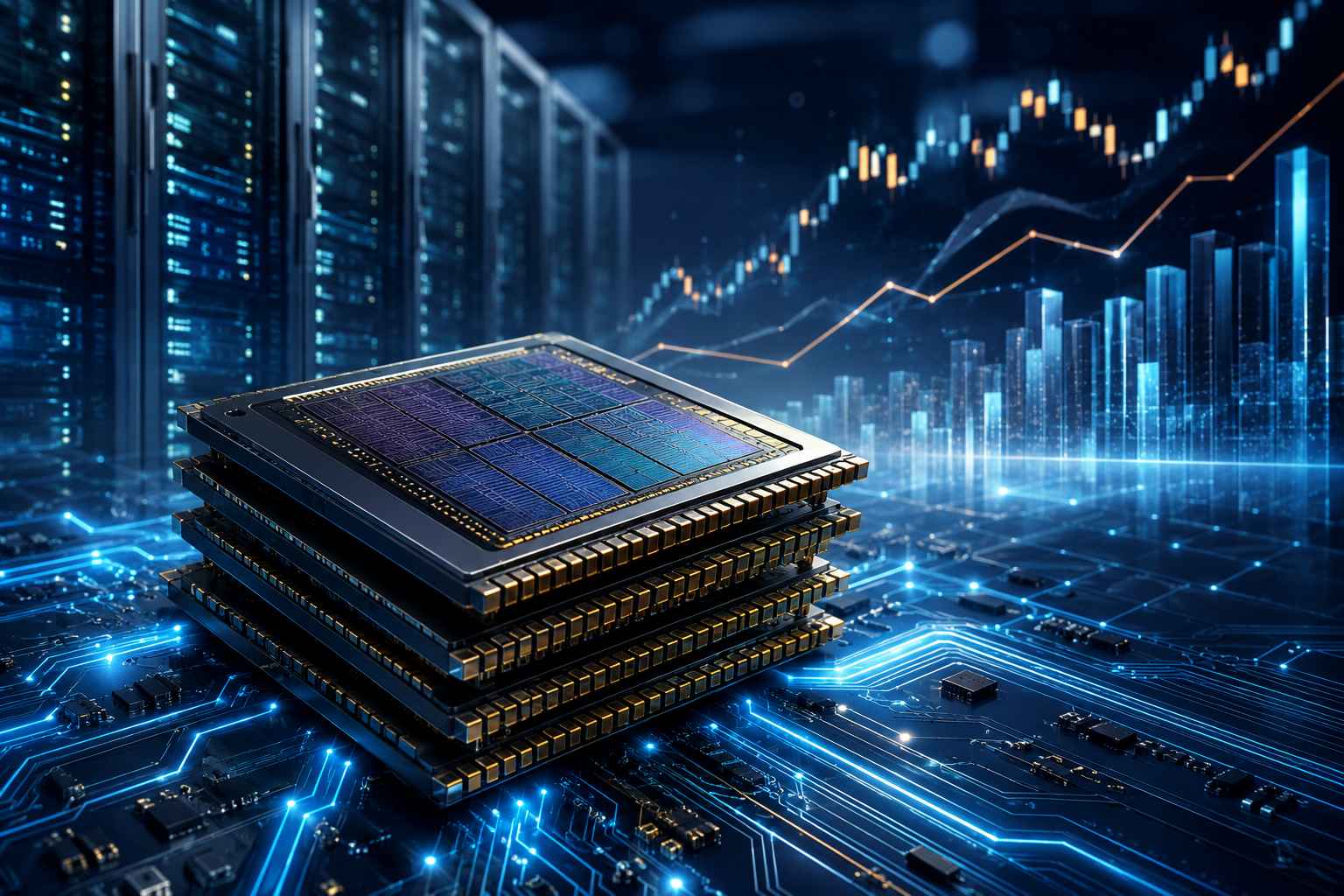
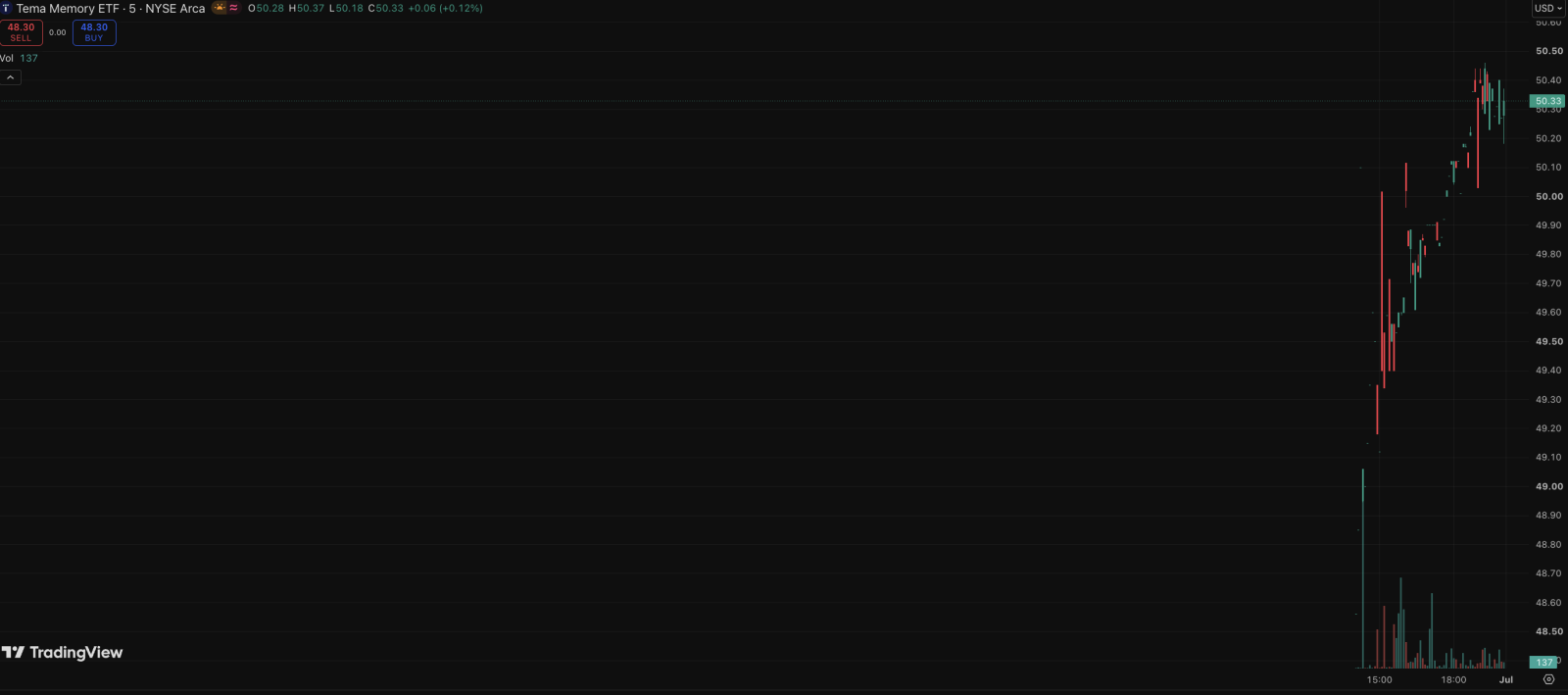
The fund launched on the NYSE on 30 June 2026 with a 0.75% expense ratio, 19 holdings, and an active mandate covering companies tied to high-bandwidth memory, DRAM, NAND flash, and storage. Its timing is deliberate. AI has turned memory from a cyclical semiconductor category into one of the tightest bottlenecks in the data-center buildout.
DISK is a focused AI-memory fund, not a broad semiconductor ETF.
The portfolio has a strong NAND and storage tilt through Sandisk and Kioxia.
DISK charges 0.75%, above the 0.65% fee on Roundhill’s competing DRAM ETF.
The thesis rests on AI demand straining a memory supply base that cannot expand quickly.
The main risks are concentration, memory cyclicality, new-fund liquidity, Asian currency exposure, and software efficiency gains that could reduce hardware intensity.
The AI trade has moved past its first act. Compute was the opening wave because training and running large models required enormous parallel-processing power. Memory is the second wave. Models must move data quickly, hold more of it close to the processor, and scale across longer context windows, retrieval systems, and always-on agents.
High-bandwidth memory sits at the center of that shift. HBM stacks DRAM vertically next to an accelerator and feeds it data at bandwidth levels conventional layouts cannot match. Without that throughput, costly GPUs can sit idle waiting for data. DRAM handles working memory, while NAND flash supports enterprise SSDs, vector databases, model storage, and retrieval-heavy applications.
Tema frames the opportunity through a sharp forecast: global memory-chip revenue rising from $216 billion in 2025 to $758 billion in 2027. The exact outcome will depend on pricing, capacity, and AI spending, but the direction is clear. Memory is no longer just a supporting component. It has become a strategic constraint inside the AI supply chain.
| Feature | DISK ETF |
|---|---|
| Full name | Tema Memory ETF |
| Ticker | DISK |
| Launch date | 30 June 2026 |
| Primary exchange | NYSE |
| Expense ratio | 0.75% |
| Holdings | 19 |
| Management style | Active |
| Portfolio manager | Yuri Khodjamirian, CFA |
| Core exposure | HBM, DRAM, NAND, storage, and memory-related chip companies |
DISK should not be read like SMH, SOXX, or another broad semiconductor ETF. Those products blend chip designers, equipment makers, foundries, analog suppliers, and diversified semiconductor companies. DISK narrows the field to memory and storage, which sharpens the signal and raises the volatility.
The portfolio is the most revealing part of DISK. It is not simply a basket of Samsung, SK Hynix, and Micron. Its largest disclosed holdings are Sandisk and Kioxia, two names closely tied to NAND flash and storage.
| Top DISK Holdings | Weight of NAV |
|---|---|
| Sandisk | 18.61% |
| Kioxia Holdings | 16.93% |
| Samsung Electronics | 7.98% |
| SK Hynix | 7.70% |
| SK Square | 5.16% |
| Aehr Test Systems | 4.87% |
| Micron Technology | 4.72% |
| Western Digital | 4.71% |
| Seagate Technology | 4.54% |
| Nanya Technology | 4.13% |
Sandisk and Kioxia together account for more than one-third of the portfolio. That gives DISK a different shape from a pure DRAM or HBM trade. It leans into NAND, enterprise storage, and data-retention demand, which could become more important as AI moves from model training toward large-scale inference and enterprise deployment.
The global mix also matters. DISK includes US names such as Sandisk, Western Digital, Micron, Seagate, and Aehr Test Systems, alongside South Korea’s Samsung, SK Hynix, and SK Square, Japan’s Kioxia, and Taiwan’s Nanya. Several major memory producers sit outside the United States and rarely appear meaningfully in ordinary US portfolios. That access is part of the fund’s rationale.
The trade-off is concentration. With 19 holdings and a heavy top-10 weighting, DISK carries little internal offset if memory pricing weakens.
Micron’s latest results show why the memory bottleneck is more than a marketing line. The company reported fiscal Q3 2026 revenue of $41.46 billion, up from $23.86 billion in the prior quarter and $9.30 billion a year earlier. GAAP gross margin reached 84.6%, and non-GAAP EPS came in at $25.11.
That is pricing power rarely seen in memory. Micron said DRAM revenue reached $31.3 billion, up 343% year over year, while NAND revenue reached $9.9 billion, up 361%. Sequential pricing increased in the low-60% range for DRAM and the mid-80% range for NAND, helped by tight industry conditions and favorable mix.
The forward signals were just as important. Micron guided fiscal Q4 revenue to $50.0 billion, plus or minus $1.0 billion, with gross margin near 86%. It also said DRAM and NAND demand continues to exceed supply and expects tight conditions to persist beyond calendar 2027.
Micron is only one holding in DISK, but it is the cleanest public read-through for the economics driving the fund. The same figures that validate the thesis also warn against complacency. Revenue and margins at this level indicate a cycle running hot.
DISK is not the first ETF targeting the theme. Roundhill launched the Roundhill Memory ETF, ticker DRAM, on 2 April 2026. DRAM charges 0.65% and focuses on global companies producing HBM, NAND, DRAM, and storage devices.
| Feature | DISK ETF | DRAM ETF |
|---|---|---|
| Issuer | Tema ETFs | Roundhill Investments |
| Launch date | 30 June 2026 | 2 April 2026 |
| Expense ratio | 0.75% | 0.65% |
| Management style | Active | Active |
| Launch holdings | 19 | 9 |
| Portfolio shape | Broader memory and storage | More concentrated memory-producer exposure |
The difference is practical. DRAM is the sharper tool for a view centered on the dominant HBM and DRAM producers. DISK is broader, with greater exposure to NAND, storage systems, and secondary memory-chain names.
Neither structure is automatically better. DRAM is cleaner if the profit pool remains concentrated in the big memory manufacturers. DISK is more flexible if the AI memory trade spreads across storage, SSDs, and the wider supply chain.
Memory is one of the most cyclical corners of technology. The strongest case for DISK also contains the seed of its own reversal. High prices encourage new capacity, and supply responses can eventually turn scarcity into oversupply.
The first risk is capacity. Micron itself expects industry supply to improve gradually in 2028, even though it does not yet see when supply will fully catch up with demand. If new capacity arrives faster than expected, or if customers slow orders after securing inventory, memory prices can fall quickly.
The second risk is software efficiency. Google Research introduced TurboQuant, a compression approach designed to reduce memory overhead in vector quantization and help ease key-value cache bottlenecks. Better software does not kill the memory thesis because cheaper AI can expand usage. It does, however, challenge the simplest assumption that every increase in AI capability requires a proportional increase in hardware memory.
The third risk is ETF structure. DISK is new, with limited trading history. Early bid-ask spreads, premium and discount behavior, and asset growth will shape the real cost of ownership. Its Asian holdings also bring currency risk and overnight-pricing gaps because several large positions trade while US markets are closed.
The fourth risk is concentration. DISK is narrower than a semiconductor ETF and more exposed to one variable: memory pricing. If that variable turns, most of the portfolio can move in the same direction at once.
DISK arrives at the right thematic moment. AI memory demand is no longer a background semiconductor story. It is becoming a visible constraint on data-center scale, inference economics, and AI system performance.
The fund’s appeal is direct access. DISK owns a part of the AI supply chain that broad semiconductor ETFs often dilute and single-stock positions can overconcentrate. Its storage-heavy tilt gives it a different profile from Roundhill’s DRAM ETF, with more exposure to NAND and data-retention demand.
The risk is just as clear. Memory remains cyclical, the portfolio is concentrated, and the fund launches after the AI infrastructure trade has already drawn significant capital. DISK is not a diversified AI allocation. It is a precise position on one powerful bottleneck.
If memory scarcity persists, DISK gives that thesis a clean public-market wrapper. If pricing rolls over, the same focus that makes the ETF compelling will become its main source of downside.