Published on: 2026-08-14
Updated on: 2026-08-14
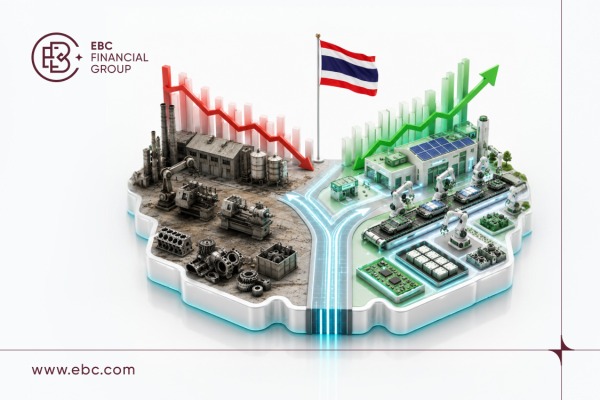
Thailand built its economy on internal combustion engines (ICE) and for four decades the country manufactured Japan's cars, exported them across the region. Along the way, Thailand earned the nickname "Detroit of Asia" for the effort.
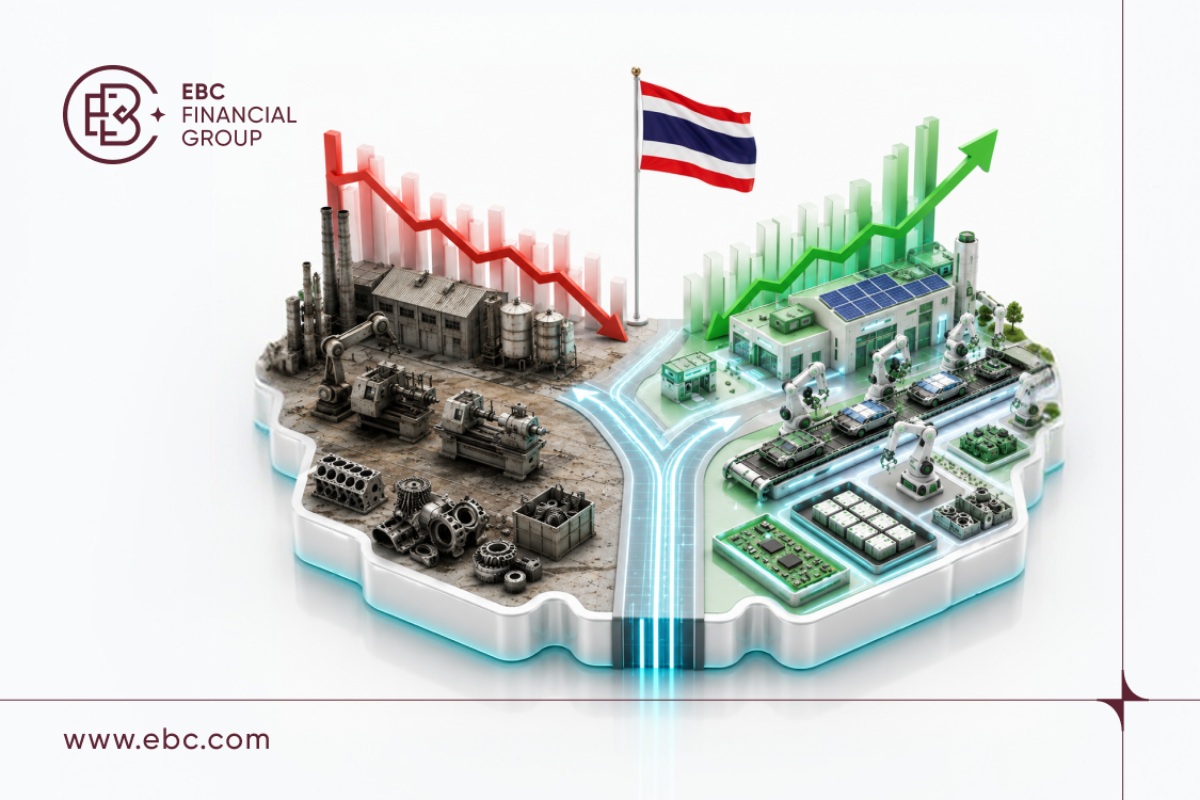
However, that identity is cracking apart in real time.
Battery electric vehicles (BEVs) held under 10% of Thailand's passenger car market in 2023. By the first quarter of 2026, that number had climbed to 27.54%, with Chinese brands including BYD, Geely, Chery, Changan, MG and GWM fighting for market share.
The change isn't limited to Thailand's showrooms. It's a direct extension of what's already happening inside China, where Toyota and Honda are losing ground to domestic EV makers, and that pressure has crossed the border. Suzuki and Subaru have already shut their Thai factories. The industry is entering what looks less like growth and more like a survival phase.
Several currents are converging on Thailand at once. Chinese manufacturers are setting up local production lines to satisfy Thailand's EV 3.0 and EV 3.5 policies, which are designed to encourage BEV adoption in the country.
Simultaneously, those same manufacturers are overproducing relative to what they can sell in China, so they're sending the extra stock to Thailand and selling it cheap, which is pushing prices down across the whole market.
Japanese brands are struggling at home and in China at once, which slows how quickly they can respond elsewhere. Separately, the government's per-vehicle subsidy has been quietly shrinking, from ฿100,000 in 2024 down to a range of ฿25,000 to ฿50,000 by 2026 and 2027, as Bangkok tries to ease adoption without permanently underwriting the market.
BYD remains Thailand's top BEV and plug-in hybrid brand by registrations, combining imports with local production that satisfies the offset requirement. BYD's first-half 2026 sales reached roughly 30,000 units, up 15% from a year earlier. This isn't just a one-brand story anymore; Geely, Chery, Changan, Omoda and Jaecoo, MG and GWM are all expanding at once, giving Thai buyers more choice and squeezing margins at every price point.
Japan's automakers sit on the other side of that ledger. Toyota, still the world's largest carmaker, has posted four straight months of falling global sales, driven largely by a 31.7% collapse in China. Honda has decided to shut its GAC Honda plant in Guangzhou and its Dongfeng Honda plant in Wuhan, cutting its Chinese production capacity by roughly 40%. Nissan's global sales are down more than 10%. In Thailand, the fallout is already visible on the ground: Suzuki and Subaru have closed their local plants, timed almost exactly with the expiry of the Eco Car incentive scheme that once underpinned their core lineups.
The clearest read on who's adapting and who does not come from Thailand's listed auto parts makers, most of which built their businesses supplying Japanese OEMs.
Maybank Kim Eng's research, an assessment rather than a recommendation, rates Aapico Hitech (AH) a "Buy," largely on its existing supply ties to BYD and Changan. It rates Somboon Advance Technology (SAT) and Thai Stanley Electric (STANLY) "Hold," citing their 65% and 80% Japanese revenue exposure with no material BEV business yet to offset it, propped up instead by dividends and balance-sheet strength.
What's more interesting than the ratings themselves is why AH got there first. The company runs more than 40 plants across Thailand, Malaysia, China, Portugal and India, so it was never tied to any single country's auto cycle the way SAT and STANLY are. Its first-quarter 2026 net profit was roughly flat at ฿306 million, but management is pointing to a stronger second half as new BEV parts contracts come online. The lesson for SAT and STANLY isn't that they specifically need BEV customers. It's that they need to diversify the way AH already has, across both geography and product line, and neither has started.
None of this is abstract for the roughly 800 to 2,000 workers Suzuki laid off at its Pluak Daeng plant in Rayong, some of whom the company says it will try to shift into motorcycle production. Subaru made a similar call at its own Rayong facility in late 2024, cutting its entire assembly workforce and switching to imports from Japan instead.
The exposure runs wider than two plant closures. Labour authorities in Chachoengsao province have flagged close to 39,000 workers across 137 auto parts firms as vulnerable to further cuts if ICE production keeps sliding. Nationwide, an estimated 1,700 factories have closed over the past year or two, affecting some 42,000 jobs, only some of which are tied to the auto sector specifically. What's still missing is any systematic government plan to retrain ICE workers for BEV supply chain roles, even as investment promotion for the industry itself keeps moving fast.
Vietnam and Indonesia are both closing the gap on Thailand, just from different directions. Vietnam has VinFast, a homegrown BEV brand that already dominates its domestic market and is targeting 300,000 BEV deliveries globally in 2026. The country is also building a domestic battery supply chain, with Kim Long Motor investing $130 million in a BYD-backed battery plant expected to push localisation above 80% by mid-2026.
Indonesia's advantage is upstream: it controls some of the region's largest nickel and cobalt reserves, a legacy of its 2020 nickel and 2023 cobalt export bans, and that has pulled in the bulk of ASEAN's upstream BEV investment.
Thailand's edge is still the strongest midstream-to-downstream assembly base in the region, and it remains the default destination for BYD and most other Chinese brands. But regional BEV-related FDI surged 570% year-on-year to roughly $18 billion, and increasingly that money is chasing upstream battery materials Thailand doesn't have. BOI incentives and supplier density won't be enough on their own if the country doesn't start building further up the chain.
Three paths lie ahead for Thailand's auto industry.
In the best-case scenario, Thai parts makers pivot into the BEV supply chain the way Aapico Hitech already has. The BOI pulls in more upstream battery investment. Falling global battery costs offset the shrinking EV 3.5 subsidy, and demand holds up anyway.
The middle path is more likely, and it's slower and uneven. BEV adoption keeps growing, but at a gentler pace as subsidies fade. Some Japanese brands survive through joint ventures or a pivot to hybrids. Others follow Suzuki and Subaru out the door. Fast movers like Aapico Hitech keep pulling ahead of Somboon Advance Technology and Thai Stanley Electric, which get by on dividends rather than growth.
The worst-case scenario is the one worth watching. If Chinese overcapacity keeps spilling into Thailand and Japanese plant closures spread further, the tens of thousands of already-vulnerable workers could turn into a real political problem. That would force the government into unplanned relief spending on top of an already high public debt load. Even Aapico Hitech, despite its diversification, wouldn't escape that kind of pricing pressure.
The headline here isn't how fast BEVs are growing. It's that Thailand's entire auto industry, automakers and suppliers alike, is going through its most serious sorting process in decades. For anyone looking at this sector, the useful question isn't which Thai auto stock to buy. It's which side of the transition a given company is actually on, and whether it has a plan for the bear case. Suzuki and Subaru are the reminder that this kind of shift can move faster than the market expects, and that no incumbent is safe just because it used to be one.