Published on: 2026-06-25
Updated on: 2026-06-25
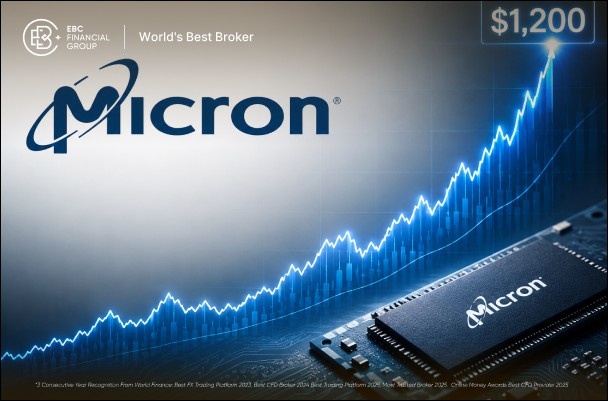
MU stock surged past $1,200 after Micron delivered one of the clearest AI earnings shocks of the year. Revenue reached $41.46 billion, adjusted EPS hit $25.11, and Q4 guidance pointed to $49 billion to $51 billion in revenue as AI memory demand continued to outrun supply. Micron now has the numbers of an AI leader and the valuation pressure of a stock priced for perfection.
| Metric | Latest figure | Signal |
|---|---|---|
| After-hours price | Above $1,200 | Leadership re-rating |
| Revenue | $41.46B | AI demand in sales |
| Adjusted EPS | $25.11 | Profit leverage accelerated |
| Gross margin | 84.6% | Scarcity pricing intact |
| Q4 revenue guide | $49B-$51B | Expectations reset higher |
Gross margin is the decisive figure. Revenue proves AI demand; margin proves scarcity.
MU stock topped $1,200 after earnings, shifting Micron from a memory recovery story to an AI leadership test.
Revenue reached $41.46 billion and adjusted EPS hit $25.11, giving the AI trade hard earnings proof.
Gross margin reached 84.6%, showing scarcity pricing rather than ordinary cycle recovery.
Q4 guidance of $49 billion to $51 billion and margin near 86% raised the bar for another exceptional quarter.
The bear case starts above $1,200, where good results may no longer be enough.
Micron clearing $1,200 after earnings marks a clean break from its old memory-cycle valuation. MU stock is no longer being judged against the last downturn; it is being tested against the strongest AI earnings stories in the market. The rally now has evidence behind it, and far less room for disappointment.
Micron delivered a quarter strong enough to reset the ceiling, yet the share price has already moved as though leadership is confirmed. That is the tension now sitting inside the stock: the business has earned a higher valuation, but the market has already moved quickly to award it.
Micron’s results gave the AI trade something stronger than narrative. Revenue, earnings and margin expansion arrived together, showing that demand was strong enough to lift volume and pricing at the same time.
The 84.6% gross margin was the shock. Memory companies do not print margins above 80% in ordinary conditions. Scarcity, not sentiment, drove the earnings power.
The Q4 guide raised the bar again. Revenue of $49 billion to $51 billion and gross margin around 86% would keep Micron in rare territory, where each quarter becomes less about recovery and more about sustaining exceptional economics.
The AI rally has spent most of its time focused on processors. Micron’s quarter shifted attention to memory and storage, the parts of the system that determine how quickly AI models can move data and handle larger workloads.
Data center revenue exceeded $25 billion in fiscal Q3, equal to an annualised run rate above $100 billion. Data center SSD revenue exceeded $5 billion and more than doubled sequentially. Memory and storage peers rallied after Micron’s report because the signal extended across the AI infrastructure chain.
The AI chip rally remains intact, with leadership spreading from processors into memory and storage. GPUs remain critical. Memory now carries enough pricing power to move the wider chip complex.
Customers are locking in supply because memory has become too important to leave to spot-market availability. Micron has signed 16 strategic customer agreements covering roughly 20% of DRAM volume and one-third of NAND volume.
The commitments carry real weight. Micron projects about $22 billion in deposits and related financial commitments under agreements signed so far, and expects about half or more of the company's revenue to fall under these arrangements once completed.
Visibility gives the re-rating a firmer base. Micron remains exposed to cycles, yet the market now has more evidence that scarcity can last longer than a normal memory rebound.
The bear case does not start with weak earnings. It starts with the possibility that earnings have become almost too good.
Micron’s gross margin now sits far above levels normally associated with memory cycles. Shortage margins can persist when supply additions are slow and customer demand is urgent. They also attract capital, competition and tougher customer behaviour once supply improves.
Capex adds pressure. Micron spent $7.1 billion on capital expenditures in fiscal Q3 while generating $18.3 billion of adjusted free cash flow. Expanding supply requires large, multi-year investment before new capacity meaningfully arrives.
The stock price compresses the margin for error. At $1,200, Micron is priced as an AI leader that must keep proving scarcity, pricing power and execution. At that price, Micron’s implied equity value sits near $1.35 trillion, or roughly 7x the annualised revenue run rate implied by its Q4 guide. That multiple only works cleanly if margins near 86% prove durable rather than peak-cycle exceptional.
MU stock rose because Micron delivered revenue growth, margin expansion and stronger guidance at the same time. Fiscal Q3 revenue reached $41.46 billion, adjusted EPS hit $25.11 and Q4 revenue guidance pointed to $49 billion to $51 billion, confirming that AI memory demand is already driving earnings.
Micron has become one of the clearest AI earnings winners because its AI exposure is visible in sales, margins and cash flow. The stock’s strength comes with a higher bar. Above $1,200, Micron needs continued margin strength to justify leadership pricing.
Micron’s results support the AI chip rally by showing that demand has spread beyond GPUs into memory and storage. Gains in Sandisk, Western Digital and Seagate after Micron’s report reinforced the same signal: AI infrastructure needs more than processors.
Margin durability is the biggest risk. An 84.6% gross margin signals exceptional scarcity, but it also creates a difficult benchmark. If pricing cools before earnings expectations adjust, MU stock could fall even if Micron’s business remains fundamentally strong.
Micron expects DRAM and NAND demand to exceed industry supply beyond calendar 2027. Management also said it still lacks clear line of sight on when memory supply will catch up with demand.
Fiscal Q4 is the next proof point. The test is whether revenue lands inside or above the $49 billion to $51 billion guidance range, gross margin holds near 86%, and supply commentary stays tight.
If those signals hold, MU stock strengthens its case as an AI infrastructure leader. If margin, pricing or demand language weakens, the old memory-cycle discount returns quickly. For MU stock, the next move depends less on whether AI demand is real and more on whether perfection has become the new baseline.