Published on: 2026-07-08
KMEM ETF looks like a new way to buy the AI memory boom, until the holdings show how narrow the bet really is. SK hynix, Micron and Samsung account for 80.19% of the fund’s look-through exposure, turning a broad AI infrastructure theme into a three-company test of memory scarcity. The fund’s appeal depends on whether those memory giants can keep pricing power as AI demand meets new supply.
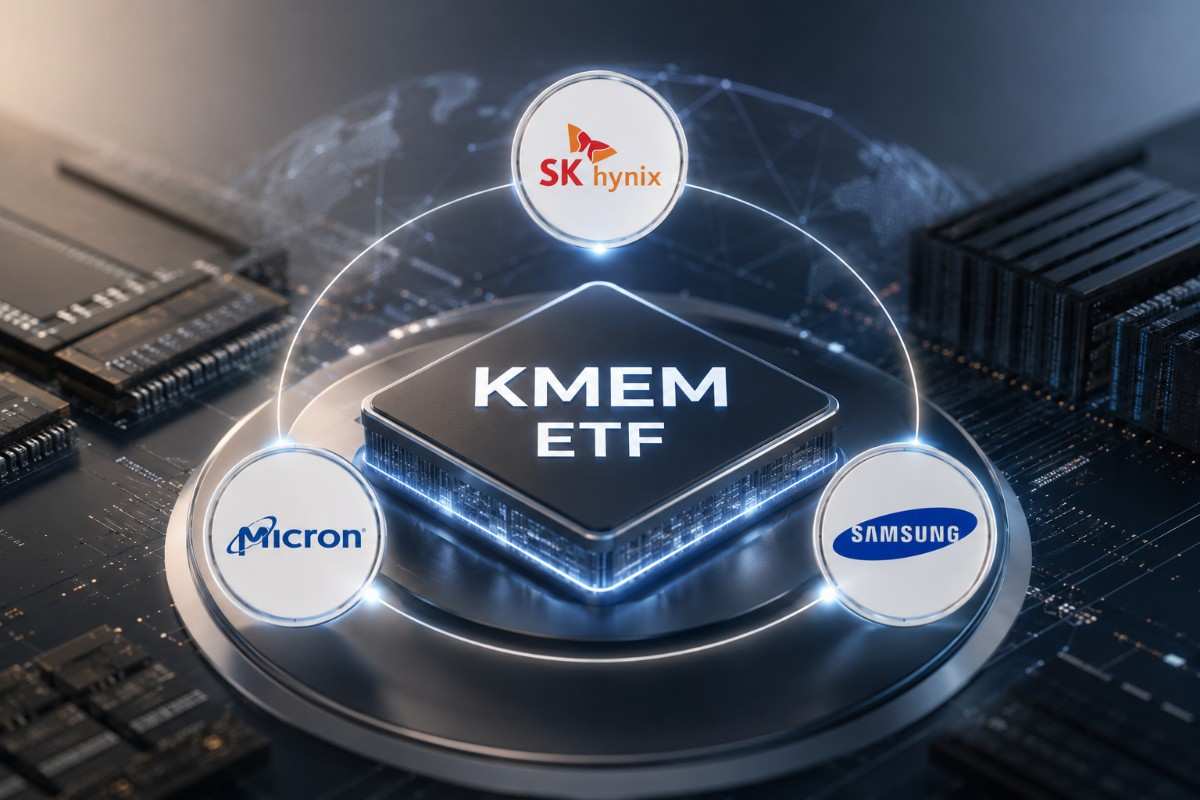
KMEM launched on June 30, 2026 with a 0.65% expense ratio, offering targeted exposure to memory-chip producers rather than broad semiconductor exposure.
SK hynix, Micron and Samsung make up 80.19% of look-through exposure, making concentration the fund’s defining feature.
SK hynix alone accounts for 41.53%, making the fund especially sensitive to advanced DRAM and HBM leadership.
DRAM and NAND prices are still rising into Q3 2026, but slower price momentum makes supply discipline the key test after launch.
KMEM is actively managed, not index-tracking, making its current 80.19% top-three exposure a snapshot rather than a fixed portfolio rule.
| Detail | KMEM ETF |
|---|---|
| Full name | Kurv Memory Select ETF |
| Ticker | KMEM |
| Launch date | June 30, 2026 |
| Expense ratio | 0.65% |
| Exchange | Cboe BZX |
| Fund type | Actively managed ETF |
| Core exposure | Memory-chip producers |
| Top-three exposure | 80.19% |
KMEM’s structure matters more than its newness. The fund is actively managed, focused on memory-chip producers, and far narrower than a broad semiconductor ETF.
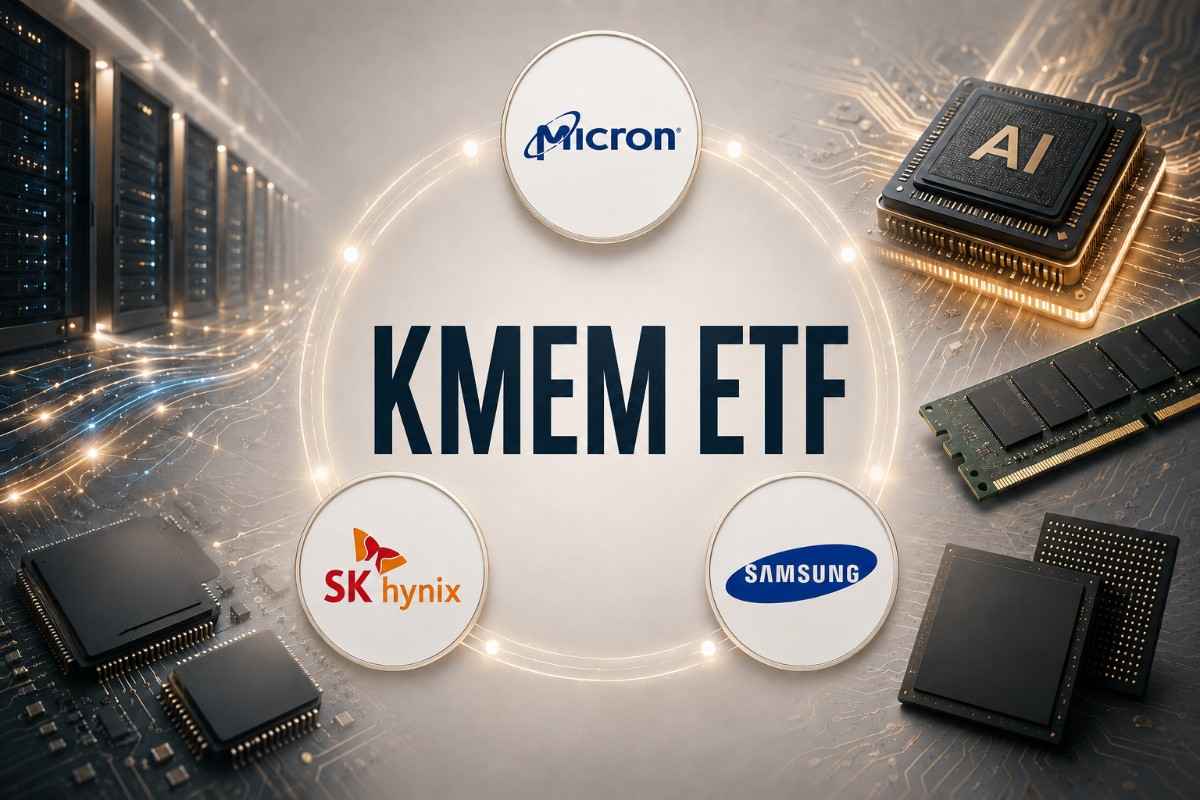
KMEM is the Kurv Memory Select ETF, an actively managed fund built around memory-chip producers tied to HBM, DRAM and NAND. Those technologies sit closer to the hardware bottleneck behind AI infrastructure than many broad AI themes suggest.
Most AI funds spread across software, cloud platforms, chip designers and data-center names. KMEM narrows the exposure to memory suppliers, where AI demand is testing how much capacity the industry can deliver.
Outside the top three, KMEM’s exposure drops off quickly.
| Company | Weight |
|---|---|
| SK hynix | 41.53% |
| Micron Technology | 19.85% |
| Samsung Electronics | 18.81% |
| SanDisk | 3.64% |
| Western Digital | 3.40% |
| Kioxia | 3.35% |
| Seagate Technology | 3.26% |
| GigaDevice Semiconductor | 2.45% |
| Nanya Technology | 1.41% |
| Winbond Electronics | 0.84% |
| Phison Electronics | 0.47% |
| Macronix International | 0.27% |
After Samsung, KMEM drops from an 18.81% major holding to SanDisk at 3.64%, showing how concentrated the fund really is.
SK hynix anchors KMEM at 41.53%, making advanced DRAM and HBM the fund’s strongest exposure. Micron adds the US memory angle, while Samsung brings scale across DRAM and NAND.
AI chips are only useful if data reaches them fast enough. Memory systems store, retrieve and move that data across AI infrastructure. As models grow and inference workloads expand, memory capacity and bandwidth become harder to ignore.
The pricing backdrop still supports the thesis. TrendForce expects conventional DRAM contract prices to rise 13% to 18% quarter-on-quarter in Q3 2026, while NAND Flash contract prices are projected to rise 10% to 15%. Those gains show that memory suppliers still hold pricing power, even after a strong run.
The risk is the split beneath the headline numbers. AI and server demand remain firm, while consumer markets such as PCs and smartphones are showing weaker tolerance for higher memory costs. KMEM depends on AI and server demand staying strong enough to offset weakness in consumer memory markets.
KMEM is not alone in targeting the memory trade. DRAM and DISK also offer memory-chip exposure, but KMEM stands out for leaning harder on the three dominant suppliers rather than spreading exposure widely across the memory ecosystem.
That concentration gives KMEM a sharper link to advanced memory pricing. It also leaves fewer smaller exposures to offset a downturn in the top holdings.
The risk is supply catching demand. Memory is cyclical, and strong pricing often encourages new capacity. If AI servers stop absorbing advanced memory faster than producers add supply, KMEM’s largest holdings would feel the pressure first.
Kurv’s own risk disclosures underline the same point. Memory companies face business-cycle swings, technological change, supply-chain disruption, pricing volatility and export-control risk, while KMEM is actively managed and may use derivatives such as options, forwards, futures and swaps.
KMEM is too new for the chart to reveal much. Holdings updates, memory pricing and supply discipline matter more than early price moves.
Monthly holdings updates showing whether the top-three concentration changes.
DRAM and NAND contract pricing through the second half of 2026.
HBM capacity plans from SK hynix, Samsung and Micron.
Trading spreads and premium or discount as KMEM builds market depth.
Supply discipline matters most. KMEM’s case strengthens if AI servers keep absorbing advanced memory faster than producers add capacity. It weakens if HBM, DRAM and NAND scarcity fades before demand catches up.
KMEM ETF is the Kurv Memory Select ETF, an actively managed fund focused on memory-chip producers. It trades on Cboe BZX and targets companies tied to AI memory technologies such as HBM, DRAM and NAND.
KMEM is led by SK hynix, Micron and Samsung. As of the fund’s latest look-through exposure, SK hynix held 41.53%, Micron held 19.85% and Samsung held 18.81%, giving the three companies a combined 80.19% weight.
KMEM is AI-related, but narrow. It focuses on memory producers rather than software platforms, cloud companies or GPU designers. Its AI link comes from demand for HBM, DRAM and NAND used in data centers, AI inference and advanced computing systems.
KMEM, DRAM and DISK all target the memory-chip trade, but the funds are not identical. KMEM’s defining feature is its current concentration in SK hynix, Micron and Samsung, while DISK offers a broader 19-holding memory portfolio. DRAM also targets global memory stocks across HBM, NAND and DRAM, making fund weights and holdings the key comparison point.
Concentration is the biggest risk. KMEM depends heavily on SK hynix, Micron and Samsung, so weaker memory pricing, excess supply, slower AI server demand or pressure on any of those companies would hit the fund directly.
KMEM will be judged by whether memory remains scarce enough to protect pricing power at its largest holdings. Monthly holdings updates, HBM capacity plans and Q3 2026 DRAM and NAND pricing trends will show whether that case is strengthening or weakening.
For KMEM, the question is not whether AI stays popular; it is whether memory stays scarce.