Published on: 2026-04-30
Updated on: 2026-04-30
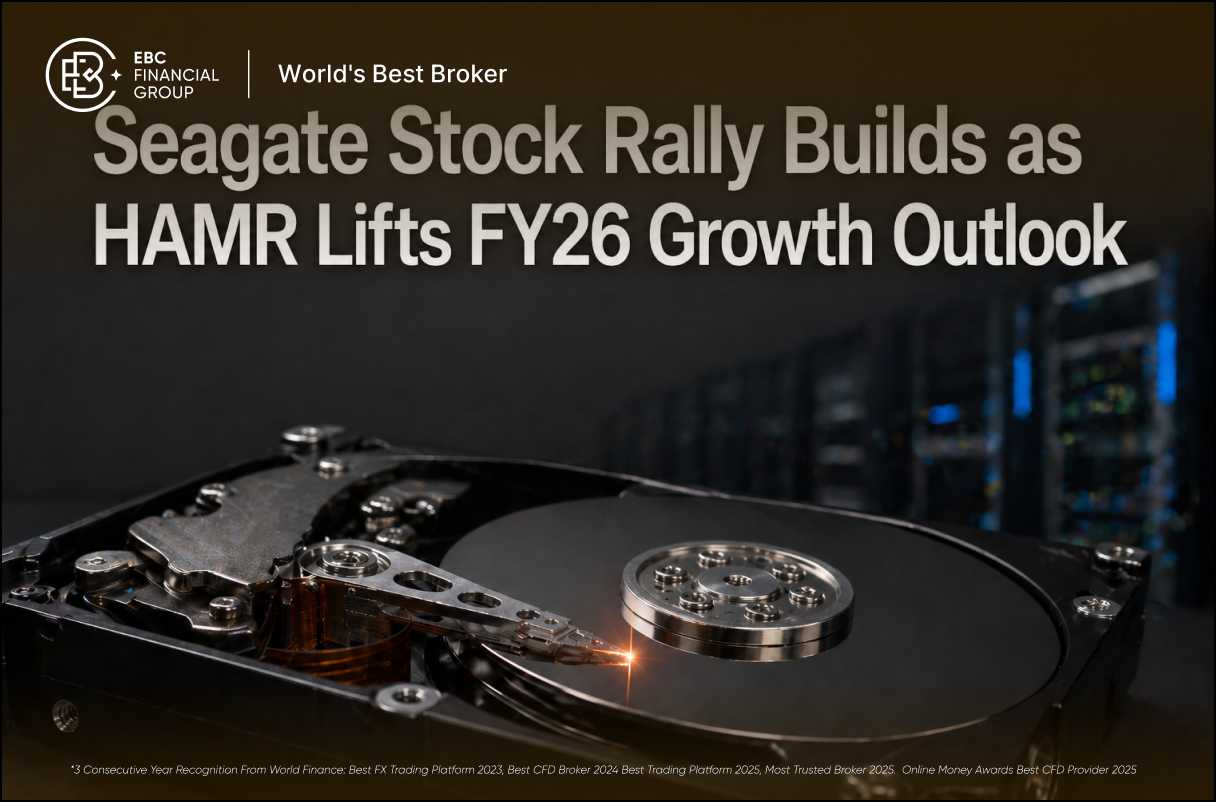
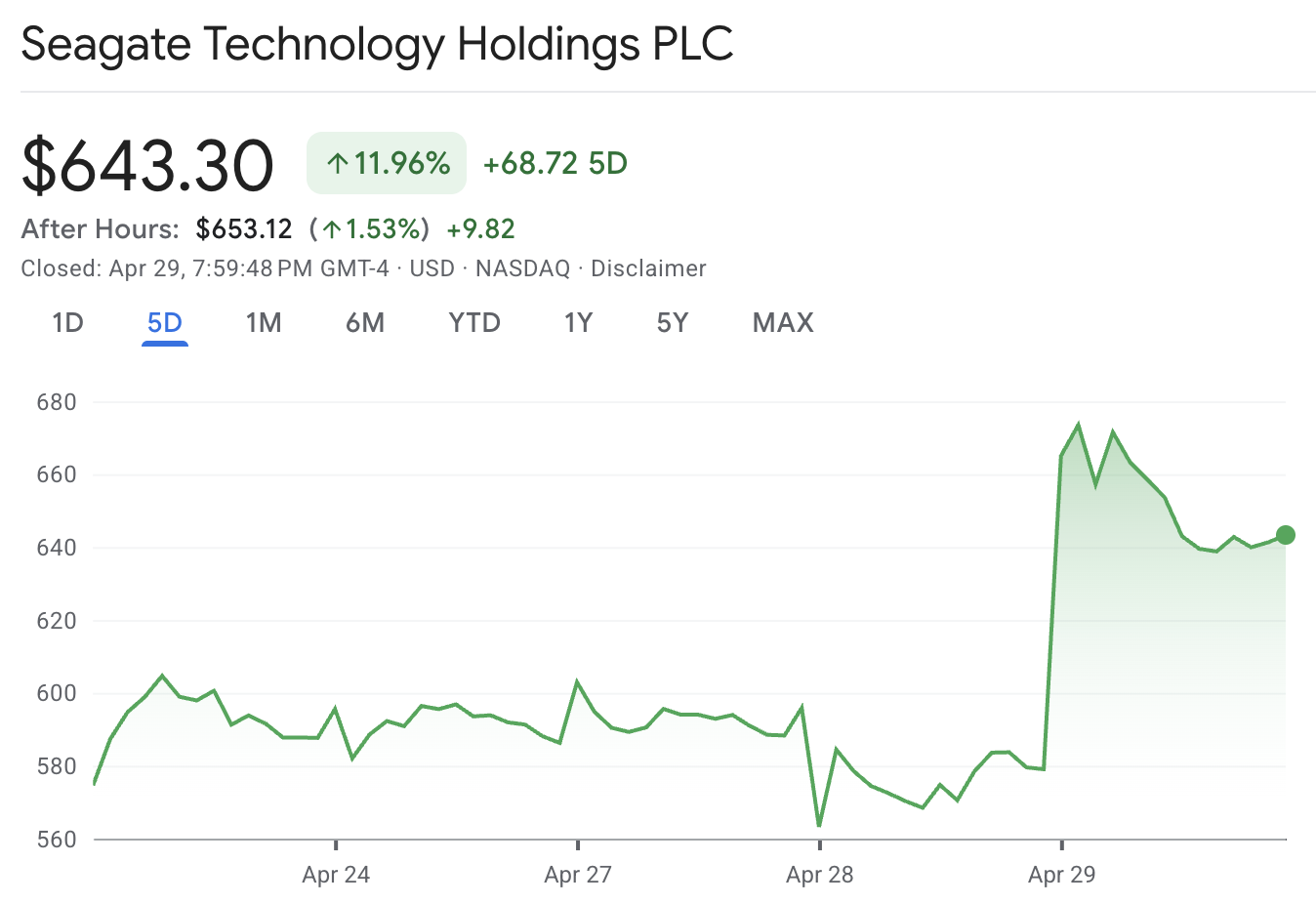
Seagate stock just hit an intraday high of $643.30, extending a rally that has turned the hard-drive maker into one of Wall Street’s clearest AI infrastructure trades.
The move reflects more than a strong earnings reaction. Investors are now pricing Seagate as a beneficiary of rising data-center storage demand, stronger margins and the commercial maturity of HAMR technology.
Seagate stock surged after fiscal Q3 results beat expectations, with revenue rising 44% year over year to $3.11 billion and adjusted EPS reaching $4.10.
HAMR technology has moved from promise to commercial relevance, supporting higher-capacity drives for AI data centers and hyperscale storage demand.
FY26 guidance strengthened the growth outlook, with fiscal Q4 revenue guided near $3.45 billion and adjusted EPS near $5.00.
Margin expansion is changing the valuation debate, as Seagate reported GAAP gross margin of 46.5% and non-GAAP gross margin of 47.0% in fiscal Q3.
Valuation risk has increased after the rally, with STX recently trading near $643.30 and reaching an intraday high of $696.35.
Seagate stock has become one of the clearest signs that the AI infrastructure trade is moving beyond processors and into data capacity. The latest rally reflects more than a strong earnings print. It signals a market revaluation of storage as a scarce, profitable and strategically important layer of the AI buildout.
The fiscal Q3 numbers gave investors a powerful catalyst. Revenue rose 44% to $3.11 billion, while adjusted EPS increased 115% year over year to $4.10. The result showed that operating leverage is returning faster than expected as demand from AI data centers absorbs high-capacity hard drives.
The more important signal came from guidance. Seagate projected fiscal Q4 revenue of about $3.45 billion and adjusted EPS of about $5.00, both above market expectations. That outlook suggests the current demand cycle is not simply a post-inventory rebound. It increasingly looks like a structural upgrade cycle tied to data growth, cloud storage and AI model deployment.
| Metric | Fiscal Q3 2026 | Market Signal |
|---|---|---|
| Revenue | $3.11 billion | AI storage demand lifted sales growth |
| GAAP gross margin | 46.5% | Pricing and mix improved sharply |
| Non-GAAP gross margin | 47.0% | Profitability reached a stronger run-rate |
| GAAP diluted EPS | $3.27 | Earnings recovery accelerated |
| Non-GAAP diluted EPS | $4.10 | Adjusted profit beat expectations |
| Free cash flow | $953 million | Cash generation supports debt reduction and returns |
The table shows why the rally has been so forceful. Revenue growth was strong, but profitability improved even faster. Seagate also generated $953 million of free cash flow, retired $641 million of debt and returned $191 million to shareholders through dividends and repurchases.
That combination matters for valuation. A storage company with rising revenue, record margins and stronger free cash flow deserves a different market treatment from a company driven only by cyclical hardware volume.
HAMR, or heat-assisted magnetic recording, sits at the centre of the Seagate investment case. The technology allows more data to be packed onto each disk by using laser-assisted writing, increasing areal density and enabling higher-capacity hard drives.
That matters because AI workloads are creating a different storage problem. Companies are not only processing data faster. They are also retaining more data, archiving larger model outputs, storing inference records and expanding training datasets. High-capacity HDDs remain economically relevant because they offer efficient cost per terabyte for mass storage.
Seagate’s Mozaic 3+ platform and HAMR-based drives are designed for this demand profile. The company has positioned these products for scalable, high-performance storage linked to AI deployments and enterprise infrastructure expansion.
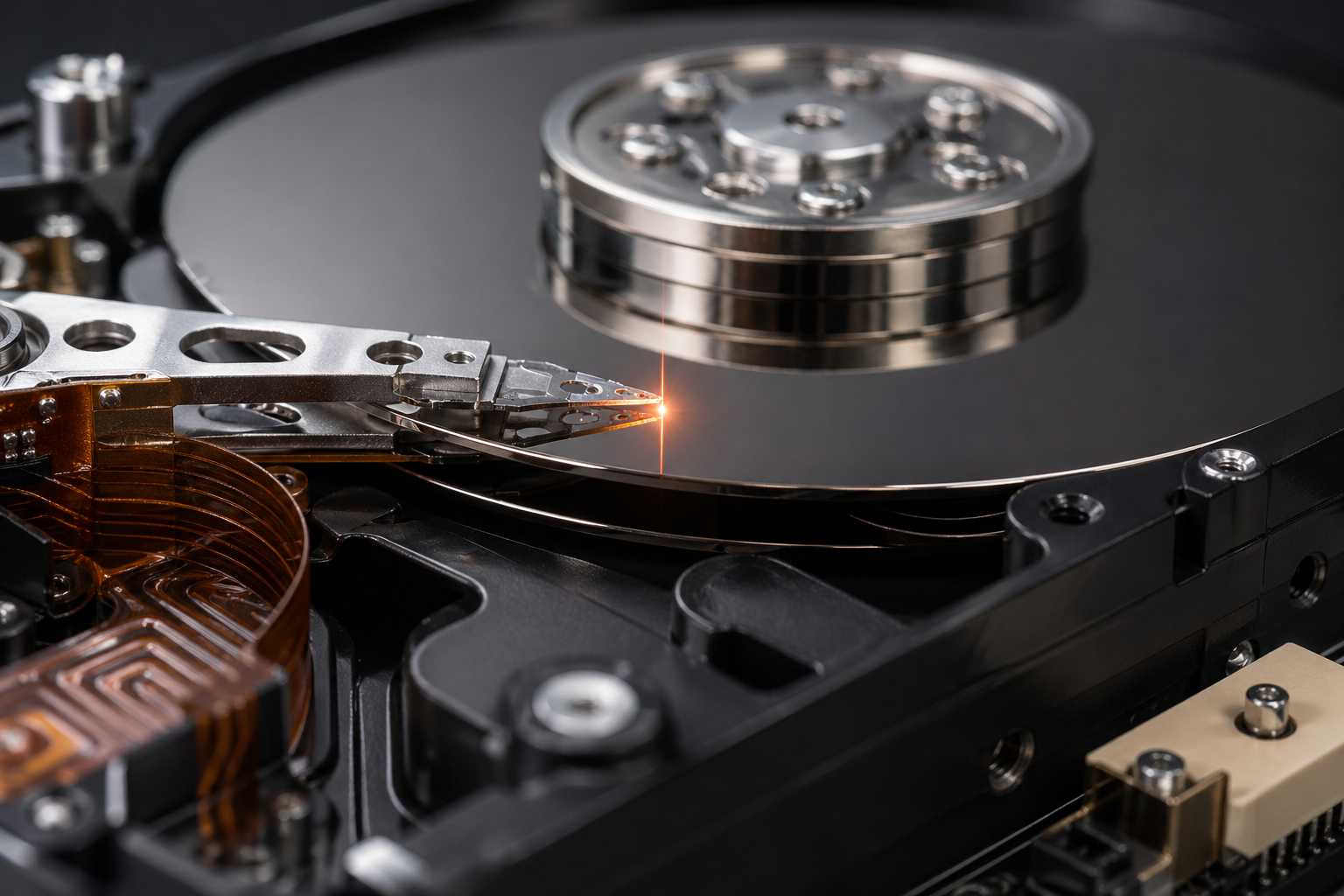
The technology is also maturing at a time when customers face physical constraints. Data centers must manage power, space and cooling limits. Higher-density drives help operators expand capacity without increasing infrastructure footprint at the same pace. That gives HAMR a direct financial relevance: it supports better customer economics and potentially stronger pricing for Seagate.
The first stage of the AI trade was dominated by GPUs and advanced semiconductors. The next stage is broader. It includes power, networking, cooling and storage. Seagate now sits directly inside that second phase.
AI models require large volumes of data before, during and after deployment. Training data must be stored. Model outputs must be retained. Enterprise use cases create compliance records. Sovereign AI projects and private cloud deployments add further capacity needs.
That demand strengthens the case for high-capacity HDDs. Not all AI data requires ultra-fast flash storage. Much of it requires durable, dense and cost-effective storage at scale. Seagate’s opportunity comes from supplying that layer of the stack.
The broader market has started to recognise this shift. Seagate’s results supported gains across related storage names, including Western Digital, Sandisk and Micron, as investors reassessed whether AI-linked data demand can remain stronger for longer.
The bullish case for Seagate stock has strengthened, but the rally has also lifted the execution bar. STX recently traded near $643.30, with an intraday high of $696.35, a market value near $146.7 billion and a price-to-earnings ratio above 72.
That valuation suggests investors are no longer pricing Seagate as a cyclical storage recovery story. The market is now discounting sustained AI-led demand, stronger margins and successful HAMR adoption.
Key risks now sit across five areas:
Valuation risk: STX trades with a much higher earnings multiple after the rally, leaving less room for disappointment if revenue growth or margin expansion slows.
Demand risk: Hyperscale customers may pause orders after recent capacity additions, especially if cloud capital expenditure becomes more selective.
Pricing risk: Strong margins depend on tight supply, favourable product mix and disciplined industry capacity. A shift in any of those factors could pressure profitability.
Cyclicality risk: Storage remains a hardware market. Even with AI demand, inventory cycles and customer purchasing patterns can still reverse quickly.
Positioning risk: A stock that has risen sharply can become vulnerable when expectations turn crowded. Momentum can amplify the move higher, but it can also accelerate a drawdown.
The core issue is not whether Seagate remains well positioned. It is whether the company can keep delivering results strong enough to justify a premium valuation. The market is pricing in more than recovery. It is pricing in sustained leadership in AI storage infrastructure.
The FY26 growth outlook has strengthened because Seagate is now benefiting from three forces at once: AI storage demand, HAMR product maturity and stronger operating leverage. That combination gives the company a more credible growth profile than the traditional hard-drive cycle implied.
The next test is whether fiscal Q4 confirms that demand remains durable. If Seagate delivers near its guidance range and maintains strong margins, the market could continue treating STX as an AI infrastructure compounder rather than a legacy storage stock.
HAMR is central to that transition. It gives Seagate a technology narrative that aligns with financial results. Higher density supports customer efficiency. Stronger pricing supports margins. AI data growth supports volume visibility. Together, these factors explain why the stock has been re-rated so aggressively.
Seagate stock is rising because fiscal Q3 earnings beat expectations, margins expanded sharply and management guided for stronger fiscal Q4 revenue and earnings. Investors are also repricing STX as an AI storage infrastructure beneficiary.
HAMR, or heat-assisted magnetic recording, allows Seagate to increase hard-drive storage density through laser-assisted writing. The technology supports higher-capacity drives for data centers facing rising AI storage demand.
Seagate is not a chipmaker, but it has become an AI infrastructure stock. AI workloads require large-scale, cost-efficient data storage, making high-capacity HDDs increasingly important to cloud and hyperscale customers.
Seagate stock has become a higher-conviction AI infrastructure trade because the company is delivering financial evidence behind the narrative. Fiscal Q3 results showed rapid revenue growth, stronger earnings, wider margins and substantial free cash flow.
The rally is not only about one earnings beat. It reflects a broader market recognition that AI needs storage capacity as much as compute power. HAMR technology gives Seagate a credible product advantage at the moment when data center customers need more density and efficiency.
The valuation is no longer cheap, and execution risk has increased. Still, the FY26 growth outlook has improved. If AI storage demand remains firm and HAMR adoption continues to scale, Seagate can remain one of the most important non-Magnificent 7 stocks in the next phase of the AI trade.