Gas feels expensive because drivers see America’s oil abundance, then see gasoline at $3.999 a gallon, barely below $4. The U.S. holds 46.0 billion barrels of proved crude reserves, yet those barrels do not lower prices until they become refined gasoline sitting in available inventory.
Gas prices jump on war risk, refinery stress and tight supply; they fall only when the fuel chain catches up.
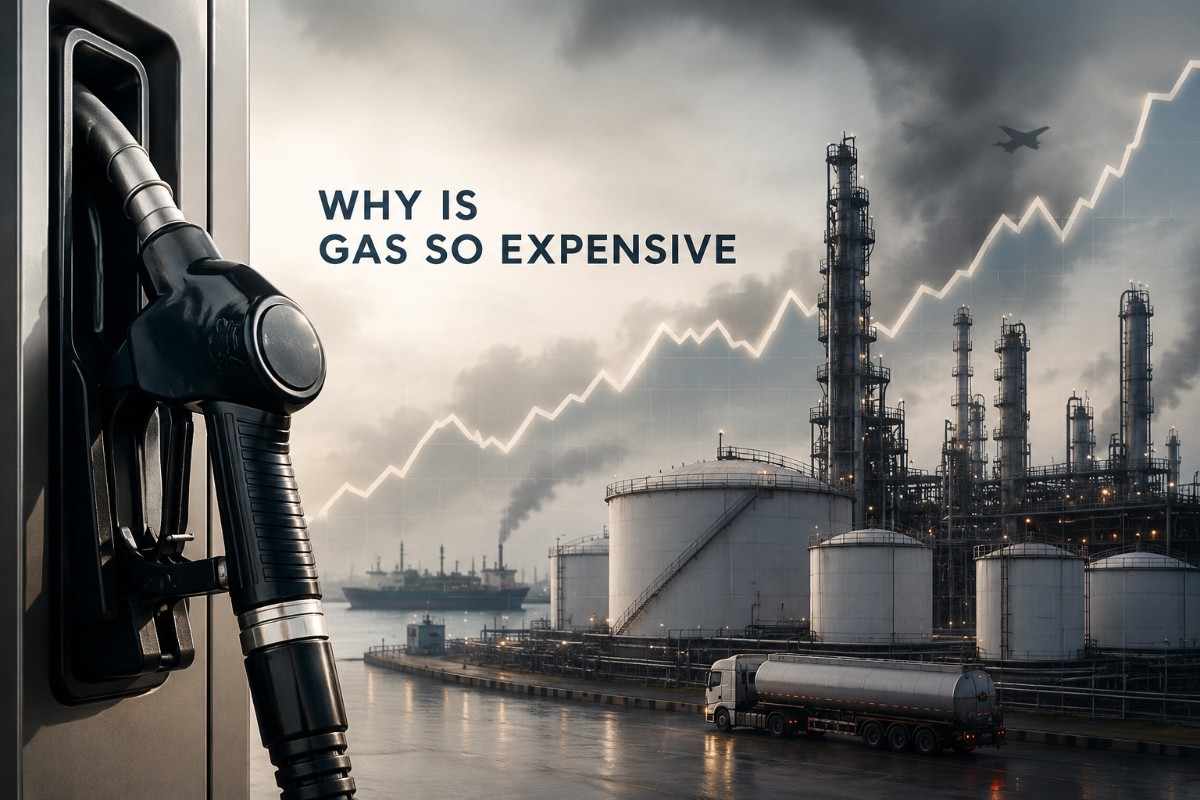
46 billion barrels of reserves do not equal cheap gasoline. Reserves sit underground; pump prices track refined fuel available now. (U.S. Energy Information Administration’s proved reserves report)
Gas has eased, but not enough. AAA showed regular gasoline at $3.999 on June 18, down from $4.515 a month earlier and above $3.188 a year ago. (AAA Daily Fuel Gauge Report)
Refineries are already stretched. Utilization reached 96.7%, leaving limited spare capacity to turn crude into cheaper gasoline quickly.
Gasoline stocks are the pressure point. Total motor gasoline inventories fell to 214.2 million barrels, about 6% below the five-year seasonal average.
Hormuz remains relevant. EIA assumes oil shipments through the Strait of Hormuz resume in 3Q26, with pre-conflict traffic unlikely before early 2027.
The pump price follows the weakest link in the fuel chain, not the biggest number in America’s reserve data.
| What drivers see | What sets the price |
|---|---|
| 46 billion barrels of U.S. oil reserves | Long-term crude supply does not equal gasoline available today. |
| Gas near $4 a gallon | Pump prices still reflect tight refined fuel supply. |
| Refineries near 97% utilization | Limited spare capacity slows the conversion of crude into gasoline. |
| Gasoline inventories below normal | Relief stays fragile until finished fuel stocks rebuild. |
| Hormuz tensions easing | The war premium can fade, but shipping flows need time to normalize. |
Until gasoline stocks rebuild, lower oil risk can soften prices without delivering the drop drivers expect.
Forty-six billion barrels sounds like abundance until the question shifts from oil underground to gasoline at the terminal. Proved reserves show what the U.S. can recover over time, not how much finished fuel can reach a gas station this week.
America has oil, yet drivers pay for the refined product moving through today’s fuel system.
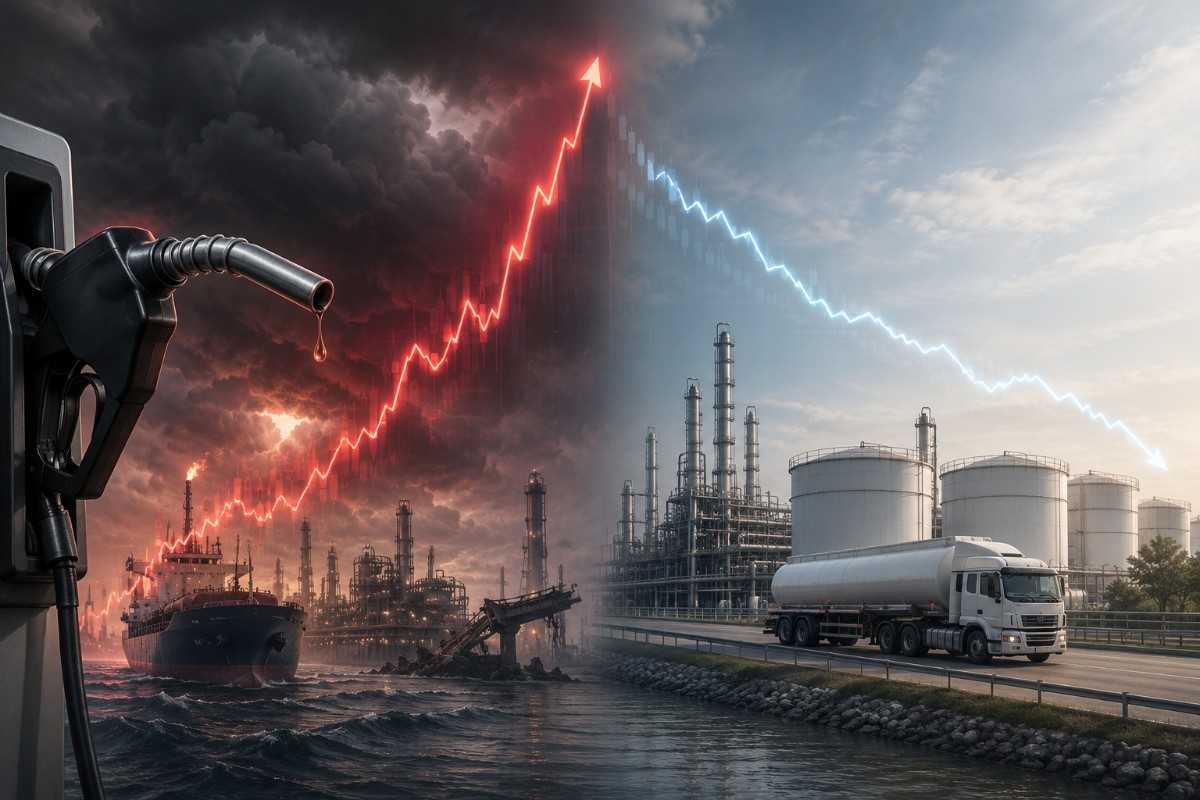
Gasoline prices rise quickly because markets price risk before shortages arrive. A refinery outage, hurricane threat or shipping disruption can lift wholesale fuel prices immediately as buyers compete for replacement supply.
Price declines need proof. Cheaper crude must pass through refineries, wholesale contracts, terminals, trucking networks and retail station margins before drivers see the discount. Lower oil prices help, yet they do not control the full pump price.
Crude made up 51.4% of the regular gasoline price in 2025. Refining, distribution, marketing and taxes made up the rest, with refining at 14.3%, distribution and marketing at 17.8%, and taxes at 16.6%. That split explains why fuel can remain expensive even after oil prices start falling.
Weekly refinery data shows why relief is slow. U.S. refinery inputs averaged 17.2 million barrels per day in the week ending June 12, while refineries operated at 96.7% of capacity and gasoline production averaged 10.1 million barrels per day.
A system running near full stretch cannot flood the market with cheaper gasoline overnight. More crude helps only when refineries can process it, storage can hold it and distribution networks can move it.
Storage is where the price drop either becomes real or fails. Total motor gasoline inventories fell by 0.9 million barrels to 214.2 million, about 6% below the five-year seasonal average. The parts drivers cannot see are the ones setting the price: the refinery, the terminal, and the storage tank.
The Hormuz conflict pushed gas prices higher because every threatened tanker raised the cost of securing crude, shipping fuel and replacing lost supply. Gasoline dropped below $4 after reports of a tentative U.S.-Iran breakthrough and a path to partial reopening, yet prices remained roughly a quarter higher than a year earlier.
EIA’s June outlook still treated Hormuz as the central supply risk. Shipments were expected to resume in 3Q26, while pre-conflict traffic was not expected to return until early 2027. Middle East crude production had already fallen by more than 11 million barrels per day against pre-conflict levels.
A peace headline can cut fear; it cannot refill gasoline storage. War premiums leave trading screens faster than barrels return to tanks.
Gas prices can move back below $3.50, but not because America has large oil reserves. The path lower needs cheaper crude, rising gasoline inventories and weaker refining margins at the same time.
EIA projects U.S. retail gasoline at $3.90 in 2026 and $3.64 in 2027, compared with $3.10 in 2025. That forecast points to gradual relief, not a clean return to cheap fuel.
The harder threshold is $3. A national average below that level would likely require a deeper crude sell-off, softer demand, larger gasoline stocks and a full retreat in the Hormuz risk premium. Lower oil helps; lower pump prices require the whole fuel chain to loosen.
Weekly gasoline inventories now carry more weight than another reserve headline. If stocks rebuild while refineries keep running near full capacity, pump prices can keep falling. If stocks keep drawing despite lower crude, the market will treat the recent relief as temporary.
The next proof point is physical supply. Drivers do not need another estimate of oil underground; they need evidence that finished gasoline is becoming easier to find.
Drivers buy gasoline, not crude oil. U.S. production helps supply the system, yet pump prices depend on refinery capacity, gasoline inventories, transport costs and global crude prices. Strong domestic output cannot fully offset tight finished-fuel supply.
No. Reserves are barrels the U.S. can recover over time, not fuel already refined and delivered. The reserve number supports long-term energy security, while today’s gas price is driven by available gasoline stocks and wholesale fuel costs.
Yes. The conflict added a war premium by raising risks around crude shipments, tanker insurance and replacement supply. The tentative reopening helped prices ease, while fuel costs remain exposed until shipping flows and inventories normalize.
Gas prices rise quickly because markets immediately price supply risk. They fall slowly because cheaper crude must pass through refineries, wholesalers, terminals, trucking networks and retail margins before reaching the pump.
A national average below $3 is possible, although it would likely require cheaper crude, weaker demand, rebuilt gasoline inventories and lower refinery margins at the same time. Current forecasts point to easing, not a full return to pre-shock prices.
The next test is physical, not political. Gasoline inventories, refinery utilization and Hormuz shipping flows will show whether recent relief has supply behind it.
If stocks rebuild while crude risk fades, pump prices can keep moving lower; if inventories stay tight, 46 billion barrels of reserves will remain a headline number rather than a discount at the pump.