Published on: 2026-06-22
Updated on: 2026-06-22
A 60-day US-Iran roadmap has given crude a diplomatic clock, not a clean exit. Brent logged 50 daily moves of at least 2% between February 27 and June 15, turning the Hormuz crisis into a price loop rather than a single shock.
Oil will stop swinging only when the market sees barrels moving, insurance easing, and inventories stabilising together.

The US-Iran roadmap aims to reach a final deal within 60 days, setting a deadline for the oil market without removing the physical supply test.
Brent logged 50 daily moves of at least 2% between February 27 and June 15, based on EBC’s calculation from FRED’s EIA-sourced Brent spot series.
Hormuz shipping has been extremely limited since February 28, while Brent still averaged $107/b in May, even after falling $10/b from April.
US crude stocks fell 8.3 million barrels to 418.2 million, leaving inventories about 6% below the five-year average.
The clearest calming signal would be alignment, with tanker traffic, insurance, exports, spreads, and inventories all moving in the same direction.
Brent has not moved in a straight line since the Hormuz shock began. From February 27 to June 15, Brent recorded 50 daily moves of at least 2% across 72 trading sessions, based on EBC’s calculation from FRED’s EIA-sourced Europe Brent spot price series.
The price path says enough. Brent stood at $71.32 on February 27, reached $138.21 on April 7, then fell to $84.36 by June 15.
Four months is long enough for a shock to become the market’s routine. Each rally has carried the fear of stranded barrels. Each selloff has carried the hope that the Strait will reopen cleanly.
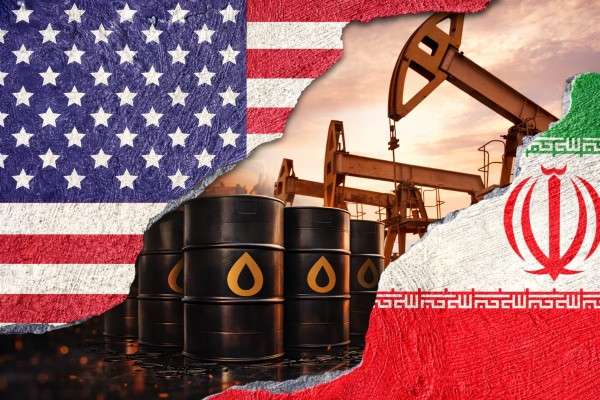
The latest diplomatic development belongs to the same pattern. Qatar and Pakistan said the US and Iran agreed on a roadmap toward a final deal within 60 days, while earlier memorandum details included a commitment to negotiate a final agreement within that period
The 60-day roadmap gives oil a date to trade around, but it does not put barrels back on the water. Tankers still need safe passage, insurers need confidence and Gulf exports need to restart before the market treats the deal as real.
The memorandum includes freedom of navigation in the Strait of Hormuz, and Qatar’s foreign ministry said the US-Iran MoU covered the cessation of military operations and navigation through the Strait.
Australia’s ABC News reported that the agreement includes a commitment by the US and Iran to negotiate a final deal within 60 days, with the Strait of Hormuz remaining toll-free during that period.
A political framework can be announced faster than tankers can return, insurance can reset, or export schedules can recover. The EIA’s June outlook says Hormuz shipping has been extremely limited since February 28, and the de facto closure has already passed three months. Brent still averaged $107/b in May, even after falling $10/b from April.
That gap keeps crude unstable. Prices can fall on reopening hopes, then rebuild premium when tankers, insurers and export flows fail to confirm the reset.

Oil does not need perfection to calm down. It needs fewer contradictions.
The strongest signal would be simple. Regular tanker crossings, lower insurance costs, and slower inventory draws need to move in tandem. Any one of those can improve for a few days. All three improving together would show the market is trading recovery, not hope.
The upside risk for oil in the second half of 2026 is a failed recovery. Ships can move unevenly, insurance can remain expensive and inventories can keep falling even as negotiations continue. In that setup, crude can climb without a new military escalation.
The cooling scenario is synchronized evidence. Wider shipping access, cheaper cover, recovering Gulf exports, a narrower Brent-WTI spread, and smaller stock draws would signal that the Hormuz premium is fading.
One speech will not settle this market. These five checks will.
| Signal | Calm reading | Stress reading |
|---|---|---|
| Tanker traffic | Normal crossings | Stop-start flows |
| Insurance | Lower war-risk cover | High or scarce cover |
| Gulf exports | Cargo recovery | Shut-ins persist |
| Brent-WTI spread | Premium narrows | Premium widens |
| Inventories | Draws slow | Stocks keep falling |
Tanker traffic leads the list because every other signal depends on barrels moving safely through the Strait.
Hormuz does not need a full shutdown to keep oil unstable. A narrow, unreliable shipping lane can delay cargoes, raise freight costs and force buyers to pay for supplies they cannot be sure will arrive.
Flows through the Strait of Hormuz made up more than one-quarter of global seaborne oil trade in 2024 and the first quarter of 2025. They also accounted for about one-fifth of global oil and petroleum product consumption.
Limited bypass routes keep the premium alive. Saudi Arabia and the UAE have pipelines outside the Strait, but they cannot fully replace normal Hormuz flows during a major disruption.
A reopened Strait is not the same as a normal Strait. Carriers, charterers and underwriters still need safe passage, clear operating terms and confidence that another closure will not trap vessels inside the Gulf.
Exports give the second proof point. The EIA assumes flows through Hormuz will begin to resume in the third quarter of 2026, while most shut-in oil production may not be fully restored until the first quarter of 2027. It also assessed Middle East production shut-ins at 11.3 million b/d in May.
That timeline keeps oil sensitive to every setback. A signed framework can lift sentiment, but cargoes, insurance and export schedules decide whether relief reaches the market.
Inventories decide how much damage a shipping delay can do. High stocks absorb disruption. Low stocks turn small delays into larger price moves.
US commercial crude inventories fell 8.3 million barrels in the week ending June 12, landing at 418.2 million barrels, about 6% below the five-year average. Distillate inventories rose 1.0 million barrels, but remained about 13% below the five-year average.
The EIA expects Brent to average around $105/b in June and July, while global inventories continue to fall and oil flows remain disrupted. It also forecasts that OECD inventories will fall to just under 2.3 billion barrels by December 2026, the lowest level in its dataset since 2003.
Low inventories leave little room for false calm.
Brent reacts faster to Hormuz stress than WTI because it prices global seaborne crude. A wider Brent premium says traders still see waterborne barrels as fragile.
OPEC’s Monthly Oil Market Report, June 2026, showed ICE Brent averaging $103.71/b in May, while NYMEX WTI averaged $98.51/b. The Brent-WTI futures spread widened to $5.20/b.
A narrower spread would point to fading seaborne risk. A wider spread would signal that fear remains embedded in the price.
Peace headlines move faster than oil cargoes. Prices can fall when talks improve, then rebound when tanker movement, insurance cover or inventories fail to confirm the change. The market is not rejecting diplomacy. It is waiting for proof that diplomacy has reached the physical oil system.
Tanker traffic comes first. If vessels are not crossing regularly, insurance, exports and inventories cannot normalize. The strongest calming signal would be several indicators improving together, not a single positive data point in isolation.
Yes. Negotiations can continue while crude rises if ships move unevenly, insurance stays expensive or inventories keep falling. Oil does not need a new conflict to rise. A slow recovery would be enough.
Yes, if shipping normalizes faster than expected and inventories stop drawing down. A narrower Brent-WTI spread would be the first market sign that traders are removing seaborne risk from the price.
The US-Iran roadmap gives oil a date to trade around, but the market will judge it before the deadline arrives. The June 24 EIA weekly petroleum report is the next hard check on the peace trade. A smaller crude draw alongside steadier Hormuz crossings would mark the first real crack in the risk premium.
Another major crude draw with uneven shipping would expose the rally in confidence as premature. For the second half of 2026, oil does not need another promise. It needs barrels moving, cover easing and inventories stabilising at the same time.
Until that happens, every calm headline has a short shelf life.