Published on: 2026-08-03
Updated on: 2026-08-03
Indonesian households hold an estimated 1,800 tonnes of gold in jewelry and small bars, according to State-Owned Enterprises Minister Erick Thohir at the bullion bank launch in February 2025. This amount is 20.7 times greater than Bank Indonesia’s 87.04 tonnes of monetary gold.
Bank Indonesia increased its gold reserves by 2 tonnes in the first quarter of 2026, according to World Gold Council data, while spending $8.3 billion to support the rupiah. In contrast, Turkey and Russia sold a combined 101 tonnes during the same period.
Indonesia’s state bullion bank system, operated by Pegadaian and Bank Syariah Indonesia, accumulated approximately 153 tonnes of gold worth nearly $20 billion in its first 17 months, according to the Coordinating Ministry for Economic Affairs on July 14. Customer numbers increased from 3.2 million to 5.6 million over twelve months.
Indonesian demand for gold bars and coins increased by approximately 40% year on year to about 15 tonnes in the second quarter, despite a 6.41% decline in gold prices in 2026, according to the World Gold Council’s July 31 report. The upcoming end-July reserve release around August 6 and the first Indonesian gold ETF listing on August 10 are expected to be key market events.
Gold held by Indonesian households is valued at approximately $234 billion, based on the July 31 price of $4,042.97 per troy ounce and the government’s estimate of 1,800 tonnes in private ownership. Bank Indonesia’s gold reserves total 87.04 tonnes, worth about $11.3 billion, while total official reserves were $145.6 billion at the end of June. The majority of national savings remain outside the central bank.
Official reserves fell for five consecutive months through May while Bank Indonesia sold dollars to slow a rupiah trading at record lows. Household demand ran the other way. Bar and coin buying strengthened through the second quarter even as gold retreated from its record highs earlier in the year.
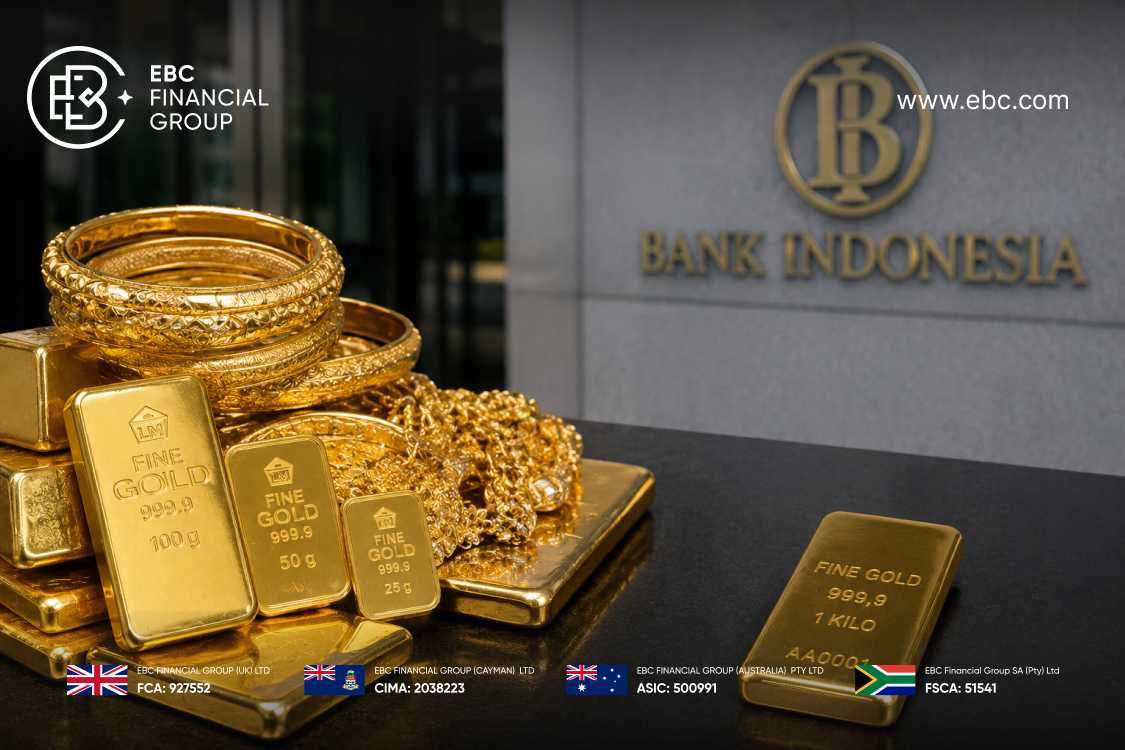
Indonesia’s gold reserves are structured in three layers: 87.04 tonnes of monetary gold at Bank Indonesia, approximately 153 tonnes within the state bullion bank system, and an estimated 1,800 tonnes held privately by households. The household estimate is based on Thohir’s statement at the February 2025 bullion bank launch and should be considered a government estimate rather than an audited figure.
| Layer | Held or managed by | Gold (tonnes) | Value at $4,042.97 per oz, July 31, 2026 | Direction in 2026 |
|---|---|---|---|---|
| Monetary gold | Bank Indonesia | 87.04 | About $11.3 billion | Up 2 tonnes in Q1 |
| State bullion system | Pegadaian and Bank Syariah Indonesia | About 153 | Nearly $20 billion | Customers increased from 3.2 million to 5.6 million |
| Household holdings | Private individuals, government estimate | About 1,800 | About $234 billion | Bar and coin demand rose 47% in Q1 and 40% in Q2 |
Source: World Gold Council, Bank Indonesia, Coordinating Ministry for Economic Affairs, SOE Ministry statement of February 26, 2025. Dollar values are EBC calculations at the July 31 close.
The $234 billion valuation is calculated by converting 1,800 tonnes to approximately 57.9 million troy ounces and multiplying by the July 31 closing price. Even with a one-third reduction, household gold holdings would still exceed Indonesia’s total foreign exchange reserves of $145.6 billion. Private gold stocks are 20.7 times greater than Bank Indonesia’s 87.04 tonnes.
Thohir has also referenced 201 tonnes of national gold bar reserves across Bank Indonesia, Pegadaian, and Bank Syariah Indonesia (BSI), a figure he compared to Singapore’s 228 tonnes. This metric includes a broader range of state-linked bars and differs from the monetary gold Bank Indonesia reports to the IMF; the two figures should not be combined.
Bank Indonesia increased its gold holdings by 2 tonnes in the first quarter of 2026, raising its monetary gold reserves from 85.53 to 87.04 tonnes, according to World Gold Council data. This purchase represented 0.8% of the 244 tonnes acquired by central banks globally during that period. The acquisition occurred as official reserves fell $8.3 billion due to intervention and external debt payments. By adding gold, Bank Indonesia strengthened its reserves with an asset that carries no counterparty risk.
Turkey’s central bank sold 79 tonnes of gold in the same quarter to support the lira, while Russia sold 22 tonnes, according to WGC Asia-Pacific head Shaokai Fan in the first quarter report. Fan noted that central banks intervening in currency markets often reduce reserve assets and limit their ability to diversify into gold. However, Bank Indonesia continued to purchase gold, contributing to an official sector that has added over1,000 tonnes annually for three consecutive years.
Reserves reached a low of $144.9 billion in May, the lowest since June 2024, before increasing by $700 million to $145.6 billion in June due to tax and services receipts. This was the first monthly rise in 2026. However, this figure does not reflect the full cost of currency defense: Bank Indonesia’s net short position in the currency forward market reached nearly $27 billion by the end of May. Fitch Ratings estimates that reserves will cover 4.9 months of external payments in 2026, slightly below the 5.0-month median for BBB-rated sovereigns.
Indonesia’s bullion bank system, which accepts deposits, provides financing, and trades physical gold similarly to conventional banks with currency, manages approximately 153 tonnes valued at nearly $20 billion after 17 months of operation, according to Coordinating Ministry for Economic Affairs deputy Ferry Irawan on July 14. The system was launched on February 26, 2025, through Pegadaian and Bank Syariah Indonesia. Coordinating Minister Airlangga Hartarto reiterated this figure to President Prabowo Subianto in a cabinet meeting on July 20.
Customer accounts in the system increased from 3.2 million to 5.6 million over 12 months, while gold savings balances nearly doubled from 10.5 to 19.25 tonnes. Bank Syariah Indonesia alone opened over one million gold accounts in approximately 13 months, with purchases starting at Rp50,000, or about $3. According to the World Gold Council’s July 31 report, Fan stated that Indonesian investors now view gold as a long-term strategic asset due to the weakening rupiah and uncertain domestic conditions.
The primary objective at launch was monetary: retaining gold onshore, processed and stored domestically, conserves foreign exchange and supports financial stability. Coordinating Ministry macroeconomics deputy Iskandar Simorangkir has stated that the bank can reduce the need to import gold products certified abroad. The bullion system effectively implements reserve policy through household balance sheets.
Indonesia’s gold bar imports increased at an average annual rate of 29.1% from 2016 to 2025, according to OJK financing institution analyst Iwan Partogi at a bullion banking seminar in Jakarta on May 7. In 2025, approximately 89% of gold imports came from five sources: Australia, Hong Kong, Singapore, Japan, and Switzerland. The statistics agency BPS reported 2.5 tonnes of gold imports worth $377.2 million in April 2026 alone, with Australia supplying 52.8%.
This cycle is self-reinforcing: currency stress prompts households to purchase gold bars, which are sourced from foreign refiners because Indonesia’s investment-grade gold has traditionally been certified and processed overseas. The resulting import bill further strains the external account, perpetuating the cycle. Although Indonesia is the largest gold producer in Southeast Asia, reliance on imported bars reflects a processing gap rather than a resource shortage.
The bullion system is Jakarta’s strategy to break this cycle by recirculating gold already within the country. Each tonne deposited at Pegadaian or BSI can support financing, trading, and collateral without requiring new imports. If even a portion of the estimated 1,800 tonnes held by households enters the formal system, demand currently met by foreign refiners could be satisfied from domestic reserves.
Bank Indonesia will release its end-July reserve figure around August 6, providing the first indication of whether June’s $700 million rebound persisted through another month of intervention. Four days later, the Indonesia Stock Exchange will list the country’s first gold exchange-traded fund (ETF) on August 10, marking the capital market’s 49th anniversary. OJK has already issued ETF regulations as part of its 2026 to 2031 bullion roadmap.
The structure of the ETF is more important than its initial size. A fund backed by domestically vaulted and refined gold would direct new investment demand toward gold already onshore, reducing the need for imports. If bar and coin demand remains near the 15 tonnes per quarter recorded in Q2, monthly BPS import data will be the best indicator of whether recirculation is replacing importation. If reserves continue to decline while gold demand rises, the cycle remains unbroken and pressure on the rupiah persists.
Indonesia’s gold reserves are now tracked through three metrics: monthly foreign exchange data, quarterly World Gold Council demand figures, and the ongoing tonnage within the bullion bank system. The estimated 1,800 tonnes held by households functions as a shadow reserve that the state can measure but not access directly. Since February 2025, policy efforts have focused on integrating this private gold into the formal system.
For traders monitoring USD/IDR, the program represents a gradual but impactful variable: each tonne transferred from private holdings to a Pegadaian vault reduces imports and provides some relief to a central bank with a nearly $27 billion short forward position. The key question for 2026 is whether Jakarta can convert private gold into public stability more quickly than currency pressure depletes public reserves.