Published on: 2026-09-15
Updated on: 2026-09-15
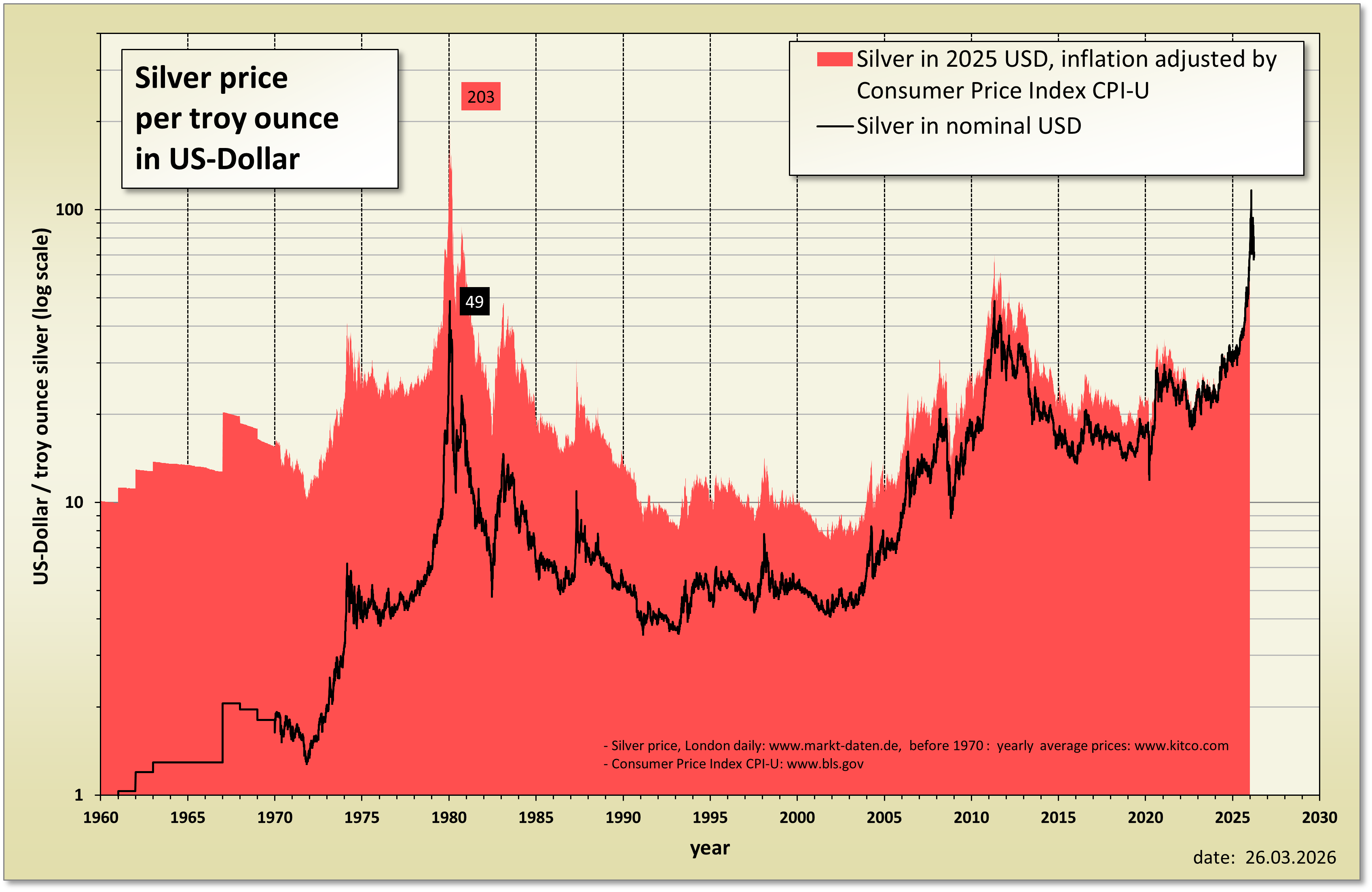
Silver Thursday was 27 March 1980, the day the silver market broke, and one of the largest leveraged commodity positions ever assembled could no longer be funded. Silver had closed at $48.70 an ounce on 17 January. Ten weeks later it traded as low as $10.80.

Silver now changes hands near $63 an ounce, roughly half its January 2026 record and still far above that 1980 nominal peak. The route to $48.70, though, was nothing like an ordinary bull market. The collapse was never only about the metal. It was about what happens when concentrated positions, borrowed money, changing exchange rules, and forced selling arrive together.
Silver Thursday, 27 March 1980, closed out a squeeze that had carried silver from roughly $6 to $48.70 in about a year.
The position was built by taking physical delivery on futures contracts, which pulled deliverable supply out of the market.
Two exchanges responded with position limits, higher margin requirements and liquidation-only trading.
Once prices turned, margin calls forced selling, and the selling drove prices lower again.
Silver Thursday is the name given to 27 March 1980, the session in which silver fell to a low of $10.80 a troy ounce and the Hunt brothers of Texas were unable to meet their margin calls. Nelson Bunker Hunt, William Herbert Hunt and Lamar Hunt had spent more than a year accumulating the metal.
The strain reached beyond the metal pits. The Commodity Futures Trading Commission’s account of the episode records that the unmet calls pressed on the securities market that same day. The reversal reads clearly as a sequence.
| Date | Silver price per ounce |
|---|---|
| January 1979 | About $6.00 |
| 17 January 1980 | $48.70 (peak close) |
| 22 January 1980 | $34.00 |
| 26 March 1980 | $15.80 |
| 27 March 1980 | $10.80 (intraday low) |
Most futures positions never reach delivery. Traders close them out before expiry by taking the opposite side of the contract, and the underlying commodity never moves.
The Hunt group did the opposite. It bought silver futures and then stood for delivery, converting paper exposure into bullion and keeping that bullion out of circulation. Regulators later noted that the metal was held in a way that prevented it from being redelivered back into the futures market, with large quantities moved to Swiss storage.
This is the mechanism behind cornering a market, which means gaining enough control over available supply or deliverable stock to influence how the market functions. By the autumn of 1979, the group held more than 43 million ounces of physical silver, alongside more than 12,000 contracts for March delivery, representing a potential 60 million ounces more. Exchange warehouses at the time held roughly 120 million ounces in total.
Prices responded to that pressure. Silver traded near $6 in January 1979, above $9 by August, in a $15 to $17.50 band through much of the autumn, and above $30 by December. Even measured against the swings in silver’s longer price history, that ascent was exceptional.
The metal was not moving on one buyer alone. An interagency study of the period identified three contributors: the wider economic backdrop affecting all precious metals, genuine shifts in physical supply and demand, and the accumulation by large traders.
Industrial users felt the distortion. Photographic silver consumption fell by nearly a third between the first quarters of 1979 and 1980, and silverware use more than halved.
Exchanges were slow to respond, then moved in a sequence that altered the economics of holding the position at all.
In late 1979, the Chicago Board of Trade set a limit of 3 million ounces per trader, equal to 600 contracts, raised margin requirements, and required traders to liquidate anything above that threshold by February 1980.
On 7 January 1980, the larger COMEX introduced a 10 million ounce speculative position limit, equal to 2,000 contracts, with excess holdings to be closed by 18 February. Each contract then covered 5,000 troy ounces, so contract size translated those limits into a hard ceiling on exposure.
On 21 January, COMEX went further and moved silver into liquidation-only trading. Liquidation-only means participants may reduce or close existing positions but cannot freely add new speculative exposure. The long side could no longer keep expanding.
The squeeze depended on continuous accumulation: more futures, more deliveries, less available metal, higher prices. Position limits capped the size of the engine, and liquidation-only trading switched it off.
Silver closed at $44.00 on 21 January and fell again the next day. Nothing about the long-term case for the metal had changed in those forty-eight hours. What changed was the ability to keep building the position supporting the price.
A margin call is a demand for additional cash or collateral when losses erode the financial cushion supporting a leveraged position. It arrives on a schedule set by the clearing system, not by the trader’s conviction.
While silver was rising, the mechanics were comfortable. Gains lifted account equity and the leverage embedded in the position looked manageable.
Falling prices reversed each step. Equity in large long accounts shrank, margin calls followed, and cash had to be found quickly. When the cash was not there, positions were reduced. Reducing positions of that size meant selling into a market that was already falling, which produced fresh losses and another round of calls.
The financing amplified the loop. Brokers had lent against silver as collateral, and much of that collateral had been pledged on again to banks. A falling price hit the customer account and the value of the loan security at once, which is how the stress spread from the Hunt group to the firms carrying it.
At the end of December 1979 the group’s net futures position was 19,727 contracts, close to 98.6 million ounces. At that size, a one dollar move in silver is worth roughly $99 million. Silver fell $14.70 between the closes of 17 and 22 January.
That is the difference between leverage in theory and leverage as a daily funding obligation. The same holdings had peaked at 24,722 contracts in September 1979 and were down to 1,444 by 2 April 1980. By 27 March, meeting the calls required selling assets outside silver altogether, which is how a commodity squeeze reached the equity market.
The agencies that studied the market agreed on one point: speculative position limits, had they existed before the positions were built, would have prevented the accumulation and the dislocation that followed when those holders stood for delivery.
Limits are now standard on physical commodity derivatives, and the 1979 to 1980 silver market is still cited in support of them.
The combination recurs. Amaranth Advisors collapsed in September 2006 after prices moved against natural gas positions of up to 100,000 contracts. In March 2022 nickel more than doubled in a single session on the London Metal Exchange, a large industrial short faced billions in margin calls, and the exchange suspended trading and cancelled that day's trades.
Three practical points follow. Position size determines whether a trader can exit on their own terms. Margin requirements can rise at the least convenient moment. Collateral that looks solid in a rising market deteriorates exactly when more of it is required, which is why exposure management works from the full position value rather than the deposit behind it.
Silver Thursday is remembered for an extraordinary commodity crash, but its more durable lesson lies in the financing behind the position. A large market view survives an adverse price move only as long as the trader can keep funding it. Once leverage forces liquidation, being right about the long-term fundamentals is no longer enough.
That reads the same at $63 an ounce as it did at $48.70. Before sizing a leveraged trade, ask what a one-dollar move costs in cash, what happens if the exchange raises margin, and whether you can close the position without moving the price against yourself.