Published on: 2026-06-22
Updated on: 2026-06-22
Lithium carbonate reached about $64,000 per tonne in late 2022 before dropping 84% to below $10,000 by mid-2025, leading to the sector’s most significant production cuts in recent history. By June 20, 2026, Chinese spot prices rebounded to approximately $24,710 per tonne, a 176% increase year-on-year, after briefly reaching $27,000 in mid-May 2026.
Wood Mackenzie’s March 2026 Energy Transition Outlook projects supply deficits as early as 2028. By 2030, EV batteries alone will require about 3 million tonnes of lithium carbonate equivalent annually, compared to current global production of roughly 1.5 million tonnes. New mines take five to seven years from investment decision to production. The 2023-2025 window to commission projects for 2028-2030 supply closed without sufficient capital investment.
Governments recognized structural scarcity before spot markets reflected it. The US launched Project Vault on February 2, 2026, establishing a $12 billion strategic minerals reserve backed by a $10 billion Export-Import Bank loan. On February 25, 2026, Zimbabwe immediately enforced its raw lithium concentrate export ban, removing 7-10% of global LCE supply from unprocessed exports overnight.
BloombergNEF data shows global lithium-ion battery pack prices averaged $108/kWh in 2025, with BEV-specific packs averaging $99/kWh for the second consecutive year below the $100/kWh threshold. If lithium supply deficits between 2027 and 2030 push carbonate prices back toward $30,000-$60,000 per tonne, the 15% annual battery cost decline that has underpinned every EV affordability model since 2015 faces a structural reversal. ICCT scenario analysis estimates that a worst-case mineral price shock could delay EV-ICE purchase price parity by two to three years in the United States.
As of June 22, 2026, battery-grade lithium carbonate in China trades at about $24,710 per tonne, 176% higher than a year earlier. While the price surge has received significant media attention, the underlying structural issues remain largely overlooked.
The 84% price collapse eliminated oversupply but also disrupted the investment pipeline needed to meet demand in 2028-2030. A greenfield lithium mine requires five to seven years from commissioning to production, so projects for the latter half of this decade needed capital commitments between 2023 and 2025. At prices below $10,000 per tonne, mining boards did not approve billion-dollar investments.
The global EV fleet is expected to increase from 58 million vehicles in 2024 to 235 million by 2030. Battery energy storage is expanding rapidly alongside global renewable capacity. However, the necessary lithium supply for this growth was not developed during the recent market downturn.
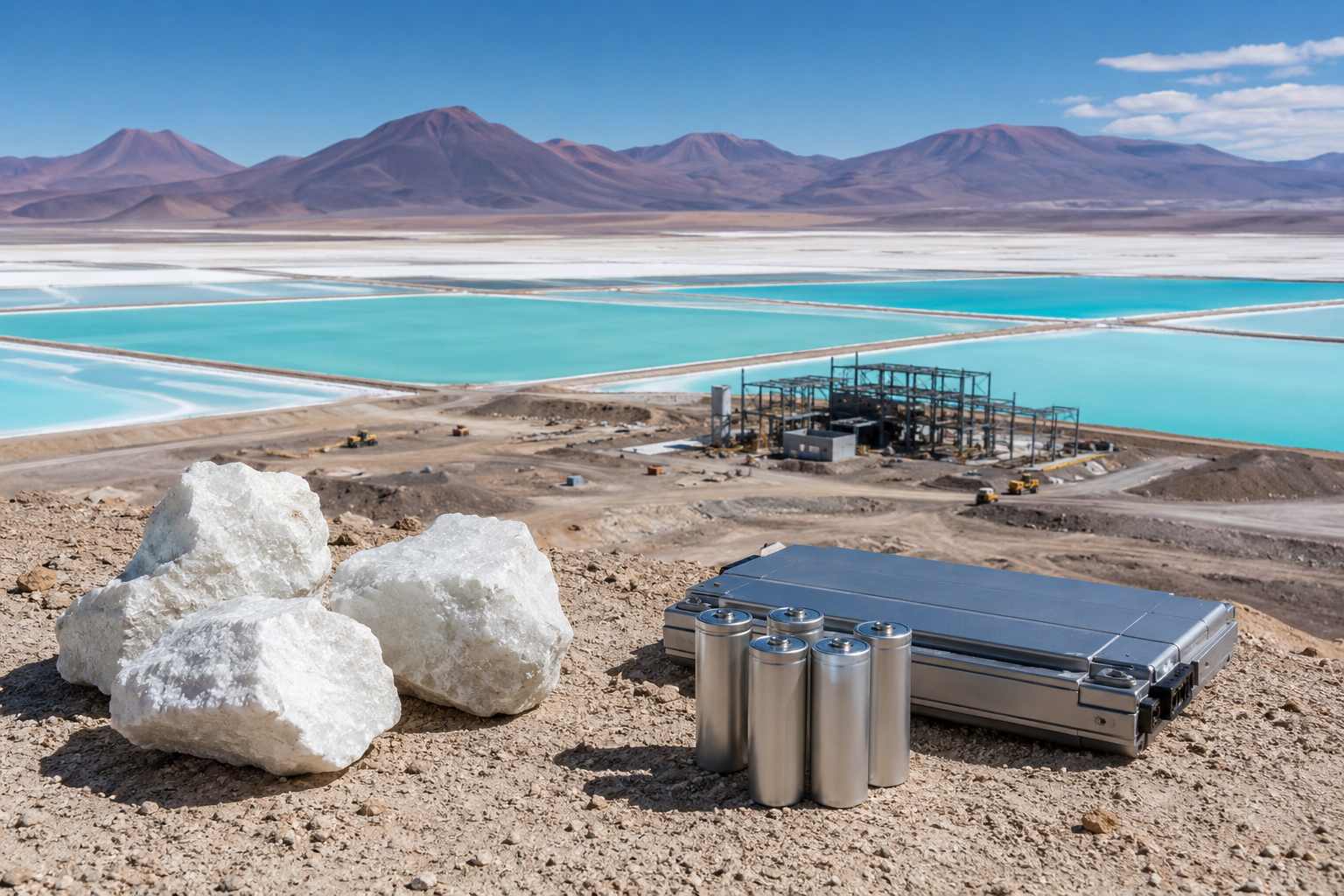
In mid-2024, Albemarle placed one of two processing trains at its Kemerton facility in Western Australia into care and maintenance, canceled plans for a third train, cut 300 jobs, and reduced capital expenditure by over $450 million year-on-year. CATL’s Jianxiawo lepidolite mine in China, responsible for about 3% of global output, experienced production delays, which Fastmarkets identified as a key factor in the Q1 2026 price surge to $26,278 per tonne. Core Lithium suspended its Finniss operation in Australia for 18 months, resuming restart preparations only in June 2026 after prices recovered.
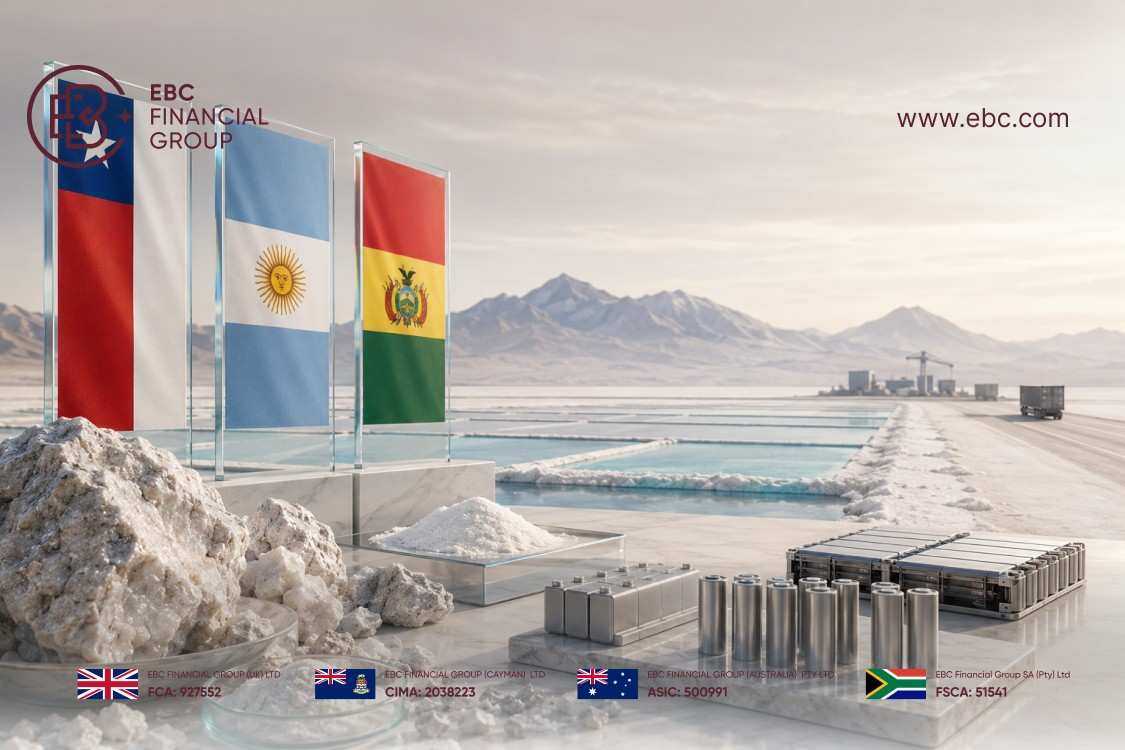
In Argentina, Chile, and Bolivia, many development-stage projects were deferred or abandoned as investors determined that lithium prices below $10,000 per tonne did not justify the $1-3 billion needed for new mines. The USGS Mineral Commodity Summaries 2026 reported global lithium production reached about 290,000 tonnes in 2025, a 31% increase from 2024, reflecting expansion approved before the price collapse. This increase marked the end of the previous investment cycle, not the start of a new one.
Mothballed capacity is now being restarted. Mineral Resources resumed operations at its Bald Hill mine in June 2026 after an 18-month suspension, and Core Lithium’s Finniss mine also restarted that month. These are existing assets returning to production; the greenfield projects required to address the 2028-2030 supply gap have not yet begun construction.
A new hard-rock lithium mine takes five to seven years from final investment decision to commercial production, a timeline consistent across spodumene operations in Australia, brine projects in Argentina’s Puna region, and development-stage assets in Chile. Projects needed for 2028 required investment decisions by 2023; those for 2029 and 2030 needed commitments by 2024 and 2025. During these years, lithium carbonate prices remained below the breakeven point for most new projects.
Wood Mackenzie Research Director Allan Pedersen stated in the firm’s March 2026 Energy Transition Outlook that, under ambitious climate scenarios, deficits will emerge from 2028 and that projects approved today will determine market balance in the critical 2030s. Under the Country Pledges scenario, which reflects existing national climate commitments, deficits emerge around 2029.
Under the Net Zero scenario, deficits begin in 2028 and persist through mid-century, requiring an additional 8.5 million tonnes LCE of supply by 2050 beyond what current project commitments will deliver.
Closing the supply gap will require significant capital. Wood Mackenzie estimates investment needs between $104 billion under a delayed transition scenario and $276 billion under a Net Zero pathway, with peak demand between 2030 and 2034. Capital for 2030s supply must now be deployed quickly, amid rising costs and competition from governments seeking priority access to key assets.
The World Economic Forum and BloombergNEF project that global lithium demand for EV batteries alone will reach approximately 3 million tonnes of lithium carbonate equivalent annually by 2030. Electric vehicles account for 72-80% of total lithium consumption across Wood Mackenzie’s transition scenarios, with battery energy storage systems growing at 6-7% annually as the second major demand driver. Benchmark Mineral Intelligence, at its March 2026 Toronto summit, confirmed that global EV sales rose 22% in 2025 and projected lithium demand to grow at roughly 12% annually over the next decade.
Current global production of about 290,000 tonnes of lithium content, or roughly 1.5 million tonnes LCE, must nearly double within five years to meet 2030 targets. Achieving this requires substantial greenfield investment, which as of mid-2026 has not been approved. These new mines cannot begin production before 2031.
China’s inventory trends highlight the urgency. Goldman Sachs reports Chinese lithium chemical inventories are falling by about 4,000 tonnes per week, while the government plans to double EV charging capacity to 180 gigawatts by 2027. Domestic demand remains strong, and the repricing of scarcity risk in late 2025 and early 2026 reflects the mismatch between demand and a disrupted supply pipeline.
| Country | Share of 2025 Production | Resource Type | Key Structural Risk |
|---|---|---|---|
| Australia | ~36% | Hard rock / spodumene | Deepest closure cycle in 2024–2025; restarts underway, but greenfield development paused |
| Chile | ~22% | Brine / Atacama | Largest reserves; SQM and Albemarle dominant; expansion constrained by state agreements |
| China | ~16% | Mixed hard rock + brine | Processes ~80% of global Li-ion batteries; net importer of spodumene; world’s largest consumer |
| Argentina | ~10% | Brine / Puna-Jujuy | Fastest-expanding basin; no state monopoly; multiple projects advancing |
| Zimbabwe | ~7% | Hard rock / spodumene | Raw concentrate export ban effective Feb. 25, 2026; supplies ~15% of China’s spodumene imports |
| Brazil | ~2% | Hard rock / Minas Gerais | Emerging producer; commercially significant scale still years away |
| United States | ~1% | Brine / Nevada | Near-zero domestic output; Thacker Pass and Ioneer Rhyolite Ridge projects in development |
Sources: USGS Mineral Commodity Summaries 2026, February 2026; Fastmarkets, March 2026; Al Jazeera, February 2026.
Australia and Chile provide about 58% of global supply, but both experienced capital withdrawals during the downturn. Zimbabwe increased its share to 7% of global LCE in four years and has now banned unprocessed concentrate exports, limiting feedstock for external buyers. The United States, despite a $12 billion investment through Project Vault, produces less than 1% of global supply and remains reliant on imports from major producers.
China produces about 16% of global raw lithium but processes around 80% of the world’s lithium-ion batteries, relying heavily on imported spodumene from Australia and Zimbabwe. This processing dominance gives China significant leverage over the battery supply chain, extending beyond its domestic ore resources.
President Trump signed the executive order establishing Project Vault on February 2, 2026, creating a strategic reserve of critical minerals backed by a $10 billion Export-Import Bank loan and $2 billion in private capital. The US stated the rationale plainly: it is fully import-dependent on 12 critical minerals and imports more than 50% of an additional 29. Lithium, despite anchoring US EV policy through the Inflation Reduction Act, is produced domestically at less than 1% of national consumption.
Twenty-three days later, Zimbabwe’s Ministry of Mines and Mining Development announced an immediate ban on all raw mineral exports and lithium concentrate shipments, compressing a deadline originally set for January 2027. Zimbabwe exported approximately 1.128 million tonnes of spodumene concentrate in 2025, representing roughly 15% of China’s total spodumene imports that year. The Guangzhou Futures Exchange recorded intraday moves exceeding 9% on lithium carbonate contracts within hours of the announcement.
The DRC suspended cobalt exports and set production quotas in early 2025, doubling prices. Indonesia’s 2020 nickel ore export ban shifted global battery material supply chains toward domestic processing. Zimbabwe has now implemented a similar strategy for spodumene, halting unprocessed exports. With EV and storage demand at record levels, these policy decisions further constrain the upstream pipeline and hasten the onset of a structural deficit.
BloombergNEF’s December 2025 survey found global lithium-ion battery pack prices averaged $108/kWh in 2025, an 8% year-on-year decrease. BEV-specific packs averaged $99/kWh for the second year below $100/kWh. In China, packs averaged $84/kWh, and LFP packs averaged $81/kWh. These prices support EV affordability projections, government 2030 mandates, and automaker roadmaps based on continued battery cost declines.
The IEA’s Global EV Outlook 2025 highlighted that low critical mineral prices could deter future investment, leading to lithium and nickel shortages by 2030 and negatively impacting battery and EV manufacturers and consumers.
S&P Global Mobility warned that cell prices may rise between 2025 and 2030 as low-margin suppliers exit and limited upstream capacity restricts battery industry growth in Europe and North America. Both assessments emphasize that the cost declines enabling EV affordability rely on mineral supply conditions now compromised by the 2023-2025 downturn.
ICCT scenario modeling provides a specific estimate: if lithium, nickel, and cobalt prices reach the 95th percentile of historical levels by 2032, EV purchase price parity with gasoline vehicles in the United States could be delayed by two to three years. Decarbonization targets assuming EV cost parity by 2028-2030 now face a significant structural risk due to upstream supply constraints addressed by government stockpiling efforts starting in February 2026.
Indonesia holds the world’s largest nickel reserves and produces more than 50% of the global nickel supply. The Dragon project, a $5.9 billion joint venture between state-owned Antam, Indonesia Battery Corporation, and CATL’s subsidiary CBL, processes Indonesian nickel ore through to EV-grade battery cells at facilities in East Halmahera and Karawang, with commercial battery production scheduled for late 2026. Jakarta’s 2020 nickel ore export ban created upstream leverage to attract this investment and, in the process, reshaped global battery material supply chains.
LFP batteries, which contain no nickel, now command nearly half the global EV battery market and roughly 80% of new stationary storage deployments per IEA and BloombergNEF data, pulling demand away from the nickel-rich cathodes Indonesia’s upstream policy was designed to supply.
Indonesia’s 2026 nickel mining quota cut of more than 30%, to 250-270 million wet metric tonnes from 379 million in 2025, compounds the chemistry-shift risk with upstream supply pressure. (For detailed analysis of how the quota reduction affects defense and EV supply chains globally, see EBC’s coverage: Indonesia’s 30% Nickel Cut.)
Lithium supply constraints directly affect Indonesia’s EV market, which is projected to reach 600,000 annual sales by 2030. BYD’s $1 billion West Java plant aims to produce 150,000 EVs annually, supporting Indonesia’s domestic manufacturing goals. All these vehicles require lithium, so if global supply deficits between 2027 and 2030 raise battery costs, Indonesia will face the same affordability challenges as other lithium-dependent markets.
Chinese lithium carbonate prices peaked at about $27,000 per tonne on May 13, 2026, the highest in two and a half years, before declining to around $24,710 by June 20 as higher prices encouraged producers to restart idle capacity. While restarts like Bald Hill and Finniss can add supply within months, a greenfield mine announced now would not produce output before 2031.
Restarting all mothballed Australian and global lithium operations will not close the 2028-2030 supply gap. Total curtailed capacity in the Western lithium sector remains well below the volume needed to meet the projected 3 million tonnes LCE annual demand by 2030, up from the current 1.5 million tonnes. Although higher spot prices in 2026 are encouraging new project approvals, these projects will not deliver supply until 2031 or later.
Goldman Sachs projected an average lithium carbonate price of $8,900 per tonne for 2026, yet Chinese spot prices exceeded $26,000 before the end of the first quarter. This forecast gap highlights how the structural supply constraint was underestimated before governments and buyers began repricing it in early 2026. The key market question for 2027 and beyond is not if deficits will occur, but at what price the supply imbalance will stabilize.
The mine development timeline cannot be adjusted after the fact. Supplying lithium for 2028-2030 required investment decisions between 2023 and 2025, but most were not made because $9,000-per-tonne lithium did not justify billion-dollar investments. Wood Mackenzie’s estimate of $104-276 billion in required capital, peaking between 2030 and 2034, represents deferred commitments rather than future opportunities.
The risk of rising battery costs has been consistently underestimated in corporate planning and government mandates. Battery pack prices below $100/kWh for a second year in 2025 made EV mandates appear achievable. However, a sustained lithium supply deficit that raises carbonate prices above $30,000-$40,000 per tonne in the late 2020s would reverse this trend, delay EV-ICE price parity by years, and require automakers and governments to revise plans based on 2030 affordability assumptions.
For commodity traders and investors monitoring energy transition supply chains, the outlook for 2027-2030 is clear. Restarting mothballed capacity offers short-term relief, but greenfield projects approved now will not produce output until the early 2030s. The lithium needed for the global EV transition in the latter half of this decade is not yet available, and the timeline to develop it is already behind most published 2030 scenarios.