Published on: 2026-07-27
Updated on: 2026-07-27
US farm sector debt is forecast to reach a record $624.7 billion in 2026, up 5.2% in one year, with interest expenses hitting a record $33 billion, according to USDA. That interest bill works out to roughly $90 million a day.
Chapter 12 farm bankruptcy filings increased 46% to 315 in 2025, the highest level since 2020, according to United States Courts data. The Midwest and Southeast accounted for 226 cases, and Arkansas reported its highest number of filings this century.
China pledged to purchase at least 25 million tonnes of US soybeans annually through 2028. However, new-crop bookings were approximately 200,000 tonnes at the end of June, less than 1% of the commitment. A single-day sale of 472,000 tonnes on July 8 marked the largest since November 2025.
Brazil is expected to harvest a record 184 million tonnes of soybeans in 2026/27, marking a third consecutive record on a 20th straight year of area expansion. COFCO is investing over $400 million to expand its Mato Grosso plant, making it Brazil’s largest crushing complex.
As the 2026 harvest approaches, American agriculture faces $624.7 billion in debt and $33 billion in interest expenses. Demand for its largest export crop depends on a purchase pledge that was less than 1% fulfilled by the end of June.
USDA data indicates Chinese buyers had booked about 200,000 tonnes of new-crop soybeans against a 25 million tonne annual commitment. The opportunity to meet this pledge is now limited to the period between the September harvest and the arrival of Brazil’s next record crop in early 2027.
The United States secured this market over two generations through competitive pricing, harvest timing, and Gulf logistics. In recent years, China has purchased about half of all exported American soybeans. Currently, exports are managed by state-owned buyers under a diplomatic framework, and the collateral supporting the US farm credit system is valued according to this framework’s delivery schedule.
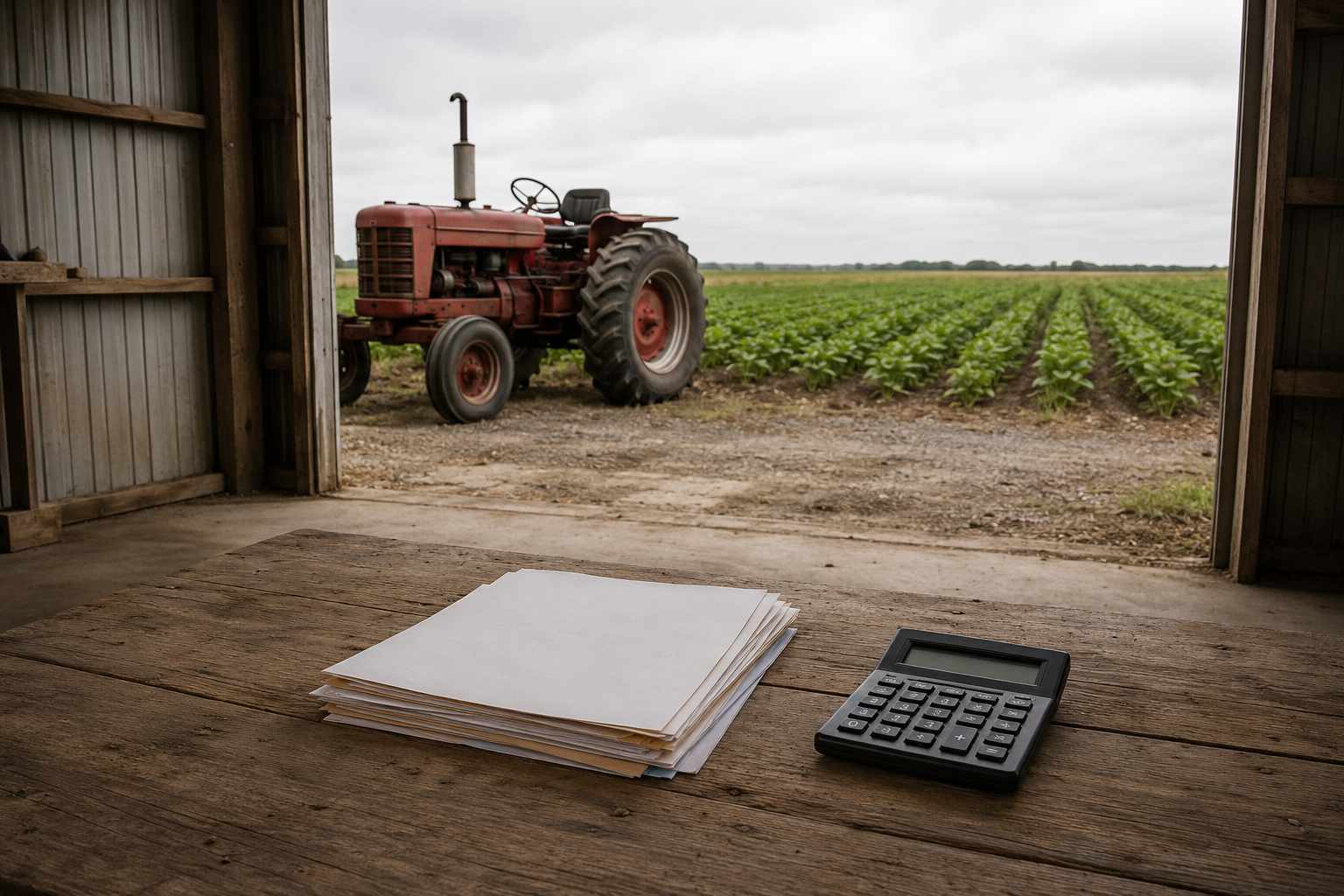
The USDA Economic Research Service projects total farm sector debt to reach $624.7 billion in 2026, an increase of $30.8 billion from 2025. Real estate debt is expected to rise 4.8% to $404.3 billion, while non-real estate debt will increase 6% to $220.4 billion. Interest expenses are forecast to reach a record $33 billion, or about $90 million per day, representing over 20% of the sector’s projected annual profit.
Nearly 40% more new farm operating loans were opened in the fourth quarter of 2025 than a year earlier, according to the Federal Reserve Bank of Kansas City, and the average operating loan across 2025 ran 30% larger with maturities three months longer than in 2024. The borrowing is covering seed, fuel, and fertilizer rather than new investment (read: From Oil to Fertilizer to Food). Sector working capital, the cash buffer between current assets and current bills, is forecast to fall 9.2% this year.
Net farm income is forecast at $153.4 billion for 2026, with government payments accounting for nearly 29% of that total, according to the USDA. Without these payments, sector income would fall to $109.1 billion. Total cash receipts are expected to decline by $14.2 billion this year, and the debt-to-asset ratio will rise from 13.49% to 13.75% as debt increases faster than asset values.
United States Courts data show 315 Chapter 12 farm bankruptcy filings in 2025, a 46% increase over 2024 and the highest total since 2020. The Midwest filed 121 cases, up 70%, and the Southeast filed 105, up 69%. Together, these regions accounted for nearly 75% of all filings nationwide, according to the American Farm Bureau Federation.
Arkansas led all states with 33 filings, more than double its 2024 total and the highest this century, as rice growers faced losses exceeding $200 per acre even after supplemental assistance. Georgia followed with 27 filings, up 145%. Iowa, Minnesota, and Wisconsin saw increases of 220%, 300%, and 700% respectively from low prior-year bases.
The official bankruptcy count understates sector distress because Chapter 12 requires most income to come from farming, a criterion many households with off-farm jobs do not meet. Operations excluded from this process often sell land or close. Over 160,000 American farms closed between 2017 and 2024. Bankruptcy is a lagging indicator, appearing only after prolonged financial losses.
China agreed under the framework announced after the October 2025 Busan summit to buy 12 million tonnes of US soybeans as a first tranche, then at least 25 million tonnes annually through 2028, alongside $17 billion a year in wider farm purchases, according to the White House. Beijing delivered the opening tranche in full in January, ahead of the February deadline, after cutting tariffs on the crop and lifting import bans on three American exporters. First-quarter US soybean exports to China ran 57% above the prior year, USDA data show.
The 2026 commitment is more than twice the initial tranche. New-crop commitments were about 200,000 tonnes at the end of June, which the American Soybean Association’s chief economist described as slow buying.
A 472,000 tonne sale on July 8 was the largest single-day booking since November 2025. State trader COFCO booked at least 11 cargoes for September and October loading. By late July, weekly new-crop sales reached 1.54 million tonnes, and Chicago soybean futures rose to $12.50 per bushel, the highest since May 2024.
US soybeans continue to face an additional 10% tariff compared to competing origins, which discourages private Chinese crushers and channels all shipments through state entities. The commitment has not been published as a signed agreement, and officials have cited varying measurement periods for the 25 million tonnes.
Meeting the pledge requires about 417 standard cargoes, or roughly 1.1 million tonnes per week from September through January, if measured by new-crop shipments before Brazil’s harvest.
The USDA Foreign Agricultural Service projects Brazil’s 2026/27 soybean crop at 184 million tonnes, a third consecutive record, with exports reaching a record 117.5 million tonnes. Planted area is expanding for the twentieth consecutive year to 49 million hectares, according to AgRural. In 2025, China purchased 108.1 million tonnes of Brazilian soybeans, nearly 79% of Brazil’s total exports.
COFCO is investing over $400 million to expand its Rondonópolis plant in Mato Grosso from 4,500 to 10,000 tonnes of daily capacity, making it Brazil’s largest soybean crushing complex. This reflects disciplined, long-term food security planning: annual purchase commitments in the United States and permanent processing capacity in Brazil’s leading producing state. One supply line is renewed annually through negotiation, while the other is established through infrastructure investment.
Farm real estate is valued at $3.77 trillion, representing 83% of the sector’s $4.54 trillion asset base, and serves as collateral for the record debt. Farmland values are based on expected crop income, and demand for the top US farm export now comes through state firms under an annual framework rather than open commercial bidding. Lenders renewing operating notes this fall are effectively extending credit against a pledge that becomes farm revenue only when shipments are loaded.
This conversion is tracked on a fixed public calendar. USDA export sales are reported every Thursday, providing a weekly update against the 25 million tonne target. The August 12 WASDE report will offer the first survey-based yield estimate, and September 1 marks the start of the US marketing year as Brazil begins planting its next crop.
Another presidential meeting is expected later in the year. The November 3 midterm elections will highlight farm economy conditions for grain belt voters, and January will bring China’s full-year customs data along with the Brazilian harvest, which closes the US export window.
US farmers are carrying record debt into a year of falling receipts. Sector debt is forecast at $624.7 billion with $33 billion of interest, while total cash receipts fall by $14.2 billion and working capital drops 9.2%. Government payments make up nearly 29% of forecast net farm income, so the commercial side of the business is weaker than the headline income figure suggests.
Yes, but slowly against what it pledged. China completed a first tranche of 12 million tonnes ahead of its February deadline, then booked only about 200,000 tonnes of new-crop soybeans by the end of June, under 1% of the 25 million tonne annual commitment. Buying picked up in July, with a 472,000 tonne single-day sale and weekly new-crop sales of 1.54 million tonnes by late in the month.
Chapter 12 is a US bankruptcy process reserved for family farmers and fishermen, allowing them to reorganise debts while continuing to operate. It requires most income to come from farming, which excludes many households that rely on off-farm jobs. Those operations tend to exit by selling land or closing instead, so Chapter 12 filings undercount farm distress.
China has taken about half of all exported American soybeans in recent years, and has pledged at least 25 million tonnes annually through 2028 under the framework announced after the October 2025 Busan summit. For comparison, China bought 108.1 million tonnes of Brazilian soybeans in 2025, close to 79% of Brazil’s total exports.
American farm credit is now tied to a purchase pledge, which is realized only when shipments are loaded. China has fulfilled the framework to date, completing 12 million tonnes ahead of schedule and making significant purchases through July, while also securing supply from record Brazilian harvests and its own processing capacity. The financial risk remains with US producers, who face $624.7 billion in debt and $33 billion in interest, regardless of whether the pledged shipments are completed.
For traders monitoring grain markets and farm credit risk, the key indicator is the weekly gap between the pledged pace and actual bookings. Consistent Thursday reports near 1 million tonnes would support the rally toward $12.50 and stabilize the collateral supporting farm lending. Conversely, a shortfall through October could negatively impact Chicago prices, farmland values, loan renewals, and contribute to the rising bankruptcy rate.