Published on: 2026-06-22
Updated on: 2026-06-22
Suriname’s current oil base is small enough that GranMorgu could match a full year of output in about 29 days. By 2028, the $10.5 billion project is expected to bring 220,000 bpd of offshore capacity via an FPSO, a floating production, storage, and offloading vessel, to a country that produced about 17,400 bpd onshore in 2025.
Suriname sits next to Guyana on South America’s northeastern coast, in the same offshore basin that has already turned its neighbor into one of the world’s fastest-growing oil producers. GranMorgu is the test of whether that revaluation can happen twice.
Suriname is not waiting for an oil boom. It is trying to prepare for one before the scale overwhelms the country.
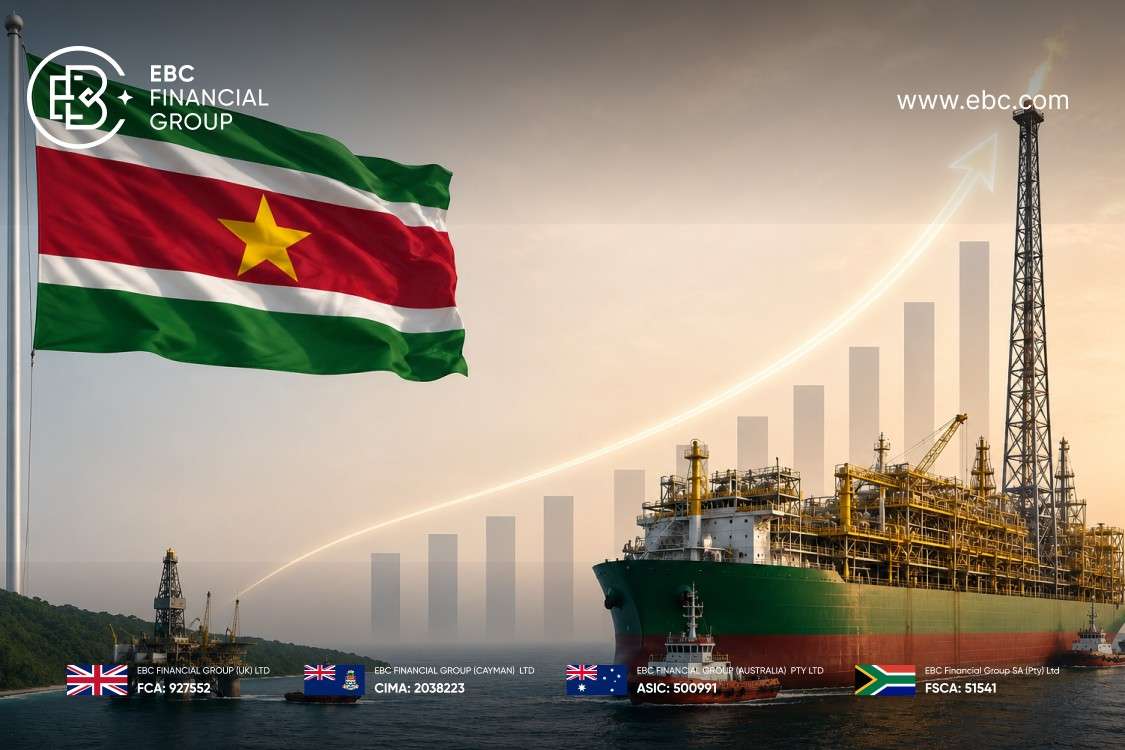
GranMorgu could compress Suriname’s 2025 onshore oil output into about 29 days at full FPSO capacity.
The project’s 220,000 bpd capacity is roughly 12.6 times today’s onshore production base.
The $10.5 billion development equals about 2.4 times Suriname’s latest annual GDP.
Staatsolie’s 20% stake carries a national-scale price tag, with its $2.4 billion share equal to roughly 54% of GDP.
GranMorgu can make Suriname richer, but the country must prove it can control the boom before the boom controls it.
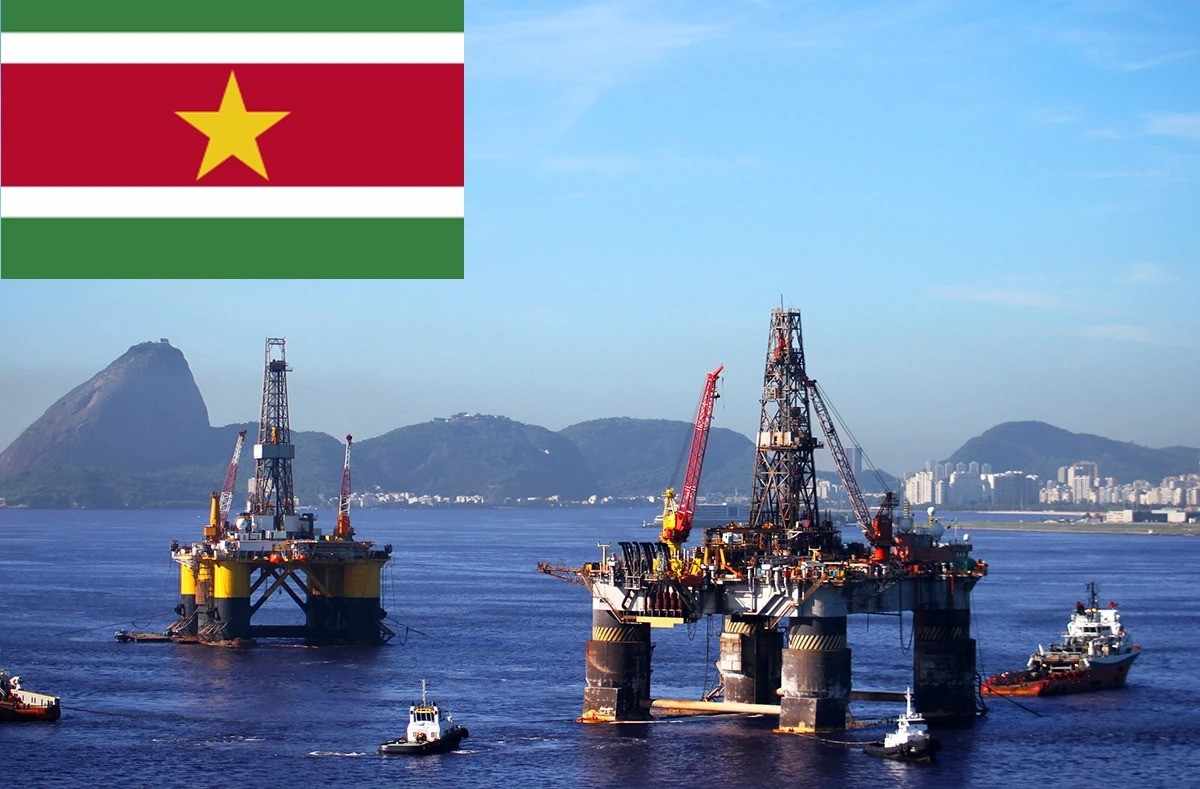
Suriname’s current oil industry is still measured in thousands of barrels per day. GranMorgu is measured in hundreds of thousands.
This is not a country adding a little offshore growth to an already large oil base. It is a small producer preparing for one project with more than twelve times its current daily output capacity. At full FPSO capacity, GranMorgu could match Suriname’s 6.35 million barrels of 2025 onshore output in about 29 days.
That does not mean the 29-day number should be read as a first-day production forecast. GranMorgu will not necessarily run at full plateau from the start, and offshore projects typically ramp up output over time. The distance between 17,400 bpd and 220,000 bpd is too wide to treat as a normal production increase.
TotalEnergies, the project operator, has positioned GranMorgu around the Sapakara and Krabdagu fields, with recoverable resources near 760 million barrels and first oil expected in 2028. Suriname is not adding an offshore appendix to its oil sector. It is preparing for a production system that could make today’s oil base look like the preface.
The oil math is only the first shock. GranMorgu is a $10.5 billion project in a country whose latest reported annual GDP is about $4.42 billion. That makes the project about 2.4 times the size of Suriname’s economy.
Staatsolie, Suriname’s state-owned oil company, uses a broader $12.2 billion financing framework, which brings the comparison closer to 2.8 times GDP.
The scale becomes harder to ignore when GranMorgu is measured against Suriname’s balance sheet.
| GranMorgu signal | Scale against Suriname |
|---|---|
| $10.5bn project estimate | About 2.4x GDP |
| $12.2bn financing framework | About 2.8x GDP |
| $2.4bn Staatsolie stake | About 54% of GDP |
| $1.6bn Staatsolie loan | About 36% of GDP |
| $1.0bn to $1.5bn local-content spend | About 23% to 34% of GDP |
The uncomfortable number is Staatsolie’s $2.4 billion share. A 20% stake sounds modest until it is measured against GDP and becomes a commitment equal to more than half of annual output.
The $10.5 billion and $12.2 billion figures are not competing claims. The first reflects the operator’s project estimate, while the second reflects Staatsolie’s broader financing framework. Both point to the same conclusion.
GranMorgu is too large to behave like an ordinary offshore development. It can move imports, credit demand, local wages, public expectations, and fiscal pressure before the first barrel reaches the market.
A 20% stake sounds small until the bill is measured against Suriname’s economy.
Staatsolie’s share is about $2.4 billion, or roughly 54% of Suriname’s latest annual GDP. A minority stake still carries a majority-sized financial weight.
The company has lined up a $1.6 billion loan from 18 banks and financial institutions to help fund the stake. Staatsolie also raised $516 million through a 2025 bond issuance, showing how much financing muscle is needed before the first offshore barrel arrives.
This is the trade-off Suriname has chosen. Owning part of GranMorgu gives the country more than tax revenue and royalties. It gives the state a direct claim on one of the basin’s most important new offshore projects.
But ownership brings pressure forward. The financing comes before the cash flow. If first oil slips, costs rise, or crude prices weaken, Staatsolie still carries the bill while the boom remains on paper.
GranMorgu does not have to produce oil to start moving Suriname’s economy. TotalEnergies expects $1 billion to $1.5 billion of local-content spending tied to the project, equal to roughly 23% to 34% of Suriname’s latest annual GDP.
More than 6,000 direct, indirect, and induced jobs are expected around the development. That is where the boom becomes visible first, not in export revenue, but in the scramble for skilled workers, suppliers, equipment, housing, ports, and infrastructure.
The upside is a deeper industrial base. The risk is that spending outpaces capacity, pushing up costs before productivity catches up.
Local content is not just a jobs story. It is Suriname’s first test of whether the country can absorb the oil boom before it starts paying for itself.

Guyana is the future Suriname wants markets to see. Since first oil in 2019, the Stabroek Block has become one of the fastest offshore buildouts in the world, with production reaching about 900,000 bpd and a path toward 1.7 million bpd by 2030.
The economic change has been just as dramatic. Guyana’s real GDP growth has averaged 47% a year since 2022, helped by oil production, non-oil activity, and public infrastructure investment.
Suriname is still on the other side of that line. It is not trying to copy Guyana’s map. It is trying to capture the revaluation that came after offshore barrels became exports, revenue, jobs, contracts, and global attention.
GranMorgu gives Suriname a credible route into that story, but not yet the same status. Guyana has producing barrels. Suriname has a financed project, a 2028 target, and a waiting period where confidence must hold before cash flow arrives.
Guyana has cash flow. Suriname still has to earn it.
GranMorgu will not rescue the 2026 oil market. First oil is expected in 2028, after construction, offshore installation, commissioning, and ramp-up.
But 2028 is not distant for Suriname. The pressure is already here.
The IMF estimates gross debt at 106% of GDP and says the current-account deficit exceeded 30% of GDP because of offshore oil-field investment imports. Suriname is absorbing the cost of the boom before it starts generating revenue.
That is the real risk between now and 2028. Suriname has to carry the debt, imports, fiscal pressure, and public expectations before GranMorgu starts producing the revenue meant to pay for them.
GranMorgu is too late to solve a near-term supply squeeze. It is not too late to change how Suriname is valued before the first barrel leaves the FPSO.
Yes, at full FPSO capacity. Suriname produced 6.35 million barrels onshore in 2025, while GranMorgu is designed for 220,000 bpd. Dividing 6.35 million barrels by 220,000 bpd gives about 28.9 days.
No. Suriname is still waiting for its first offshore oil, which is expected in 2028. That makes the story different from Guyana, where offshore barrels are already generating exports, revenue, and cash flow.
Yes. The pressure is already arriving through debt, imports, financing needs, and public expectations. GranMorgu may transform Suriname, but the country must absorb the costs of preparation before offshore revenue begins in 2028.
GranMorgu’s real test is not whether it can make Suriname an oil producer, but whether Suriname can stay disciplined long enough to become one.
The oil is offshore. The real test is on land.