Published on: 2026-02-24
Updated on: 2026-02-24
Oil markets seldom present clear entry points, and determining whether it is too late to invest in oil stocks after the recent price increase depends on the underlying drivers of crude prices. In late February, the price increase appears to reflect a geopolitical premium rather than a sustained tightening of physical balances. U.S. crude is currently trading at approximately $66-$67 per barrel, representing a 9.8% increase over the past month.

This distinction is significant because oil equities are valued based on multi-year cash flows rather than short-term, headline-driven price movements. According to the EIA’s February 2026 outlook, 2026 is projected to be a year of inventory accumulation, with Brent expected to average $58 per barrel, down from $69 in 2025.
Prices are anticipated to remain under pressure as inventories increase. Consequently, the investment opportunity centers on selecting the appropriate type of oil exposure at the optimal point in the cycle, rather than pursuing short-term price movements.
The primary driver of the late-February price movement was geopolitical tension. Brent crude rose into the low $70s as concerns regarding U.S. and Iran relations intensified, prompting markets to incorporate a risk premium ahead of diplomatic negotiations. While risk premia can elevate prices rapidly, they are also the most susceptible to mean reversion if diplomatic efforts stabilize market sentiment.
Market positioning further suggests an event-driven repricing rather than a gradual tightening. On February 23, 2026, open interest in NYMEX light sweet crude futures declined by 36,289 contracts, accompanied by a decrease in estimated trading volume compared to the previous session. This pattern indicates that traders were reducing exposure following a sharp price movement, rather than building sustained conviction in a prolonged upward trend.
The EIA’s analysis supports this interpretation, noting that January’s price strength resulted from unplanned disruptions, such as cold-weather impacts in the United States and outages in Kazakhstan. Despite these events, the EIA continues to forecast that production growth will outpace consumption over the forecast period, leading to higher inventories and lower prices.
A systematic approach to evaluating whether it is too late to invest involves distinguishing between the base case and the tail risk scenarios.
Base case (higher probability): Inventories build and prices drift lower. The EIA forecasts that global oil inventory builds will average 3.1 million b/d in 2026 (versus 2.7 million b/d in 2025), and expects Brent to average $58 in 2026and $53 in 2027. In that world, broad oil equity upside tends to compress, and performance becomes more dependent on dividends, buybacks, and balance-sheet strength than on multiple expansion.
The tail risk scenario: While less probable but with higher potential impact, involves a significant supplydisruption. The EIA specifically notes that conflict affecting flows through the Strait of Hormuz could reduce Middle East production and exports. In this scenario, purchasing oil stocks after a price increase may still be advantageous, as physical disruptions can rapidly reprice the market and extend equity upside beyond what fundamentals alone would support.
| Variable | 2025 | 2026 (forecast) | 2027 (forecast) |
|---|---|---|---|
| Brent average price (US Dollar/bbl) | $69 | $58 | $53 |
| Global oil inventory builds (million b/d) | 2.7 | 3.1 | 2.7 |
(Sources for the figures above: EIA Global Oil Outlook and IEA February 2026 Highlights.)
This is the core reason it may feel “late.” If you buy oil stocks purely because crude printed a higher number this week, you are implicitly betting against the base-case surplus and paying up for geopolitical optionality. That can work, but it is a different trade than buying energy because balance sheets are improving or because mid-cycle prices are rising.
After a headline-driven spike, “oil stocks” split into distinct risk profiles. The late-entry mistake is buying the highest-beta expression when the geopolitical premium is already embedded.

1) Integrated majors (diversified cash flows, buybacks, dividends)
Exxon Mobil (XOM)
Chevron (CVX)
Shell (SHEL)
BP (BP)
TotalEnergies (TTE)
2) Large-cap U.S. E&Ps (higher crude sensitivity, higher drawdown risk)
ConocoPhillips (COP)
EOG Resources (EOG)
Occidental Petroleum (OXY)
Devon Energy (DVN)
Diamondback Energy (FANG)
3) Oilfield services (levered to capex cycles, not spot alone)
SLB (SLB)
Halliburton (HAL)
Baker Hughes (BKR)
These examples are provided for illustrative purposes and do not constitute individualized investment recommendations. Investors generally assess balance sheets, breakeven costs, payout policies, and valuation metrics before determining the appropriate level of exposure.
For many investors, the practical “oil stock” is the sector ETF. XLE provides a clean illustration of concentration and factor mix: Exxon Mobil and Chevron together account for 41.3 percent of holdings (23.7% and 17.6%, respectively), while the ETF’s stated index dividend yield is 3.44 percent and forward P/E is 16.71 (as of 31 Dec 2025). This structure tends to behave more like “mega-cap energy quality” than a pure high-beta oil trade.
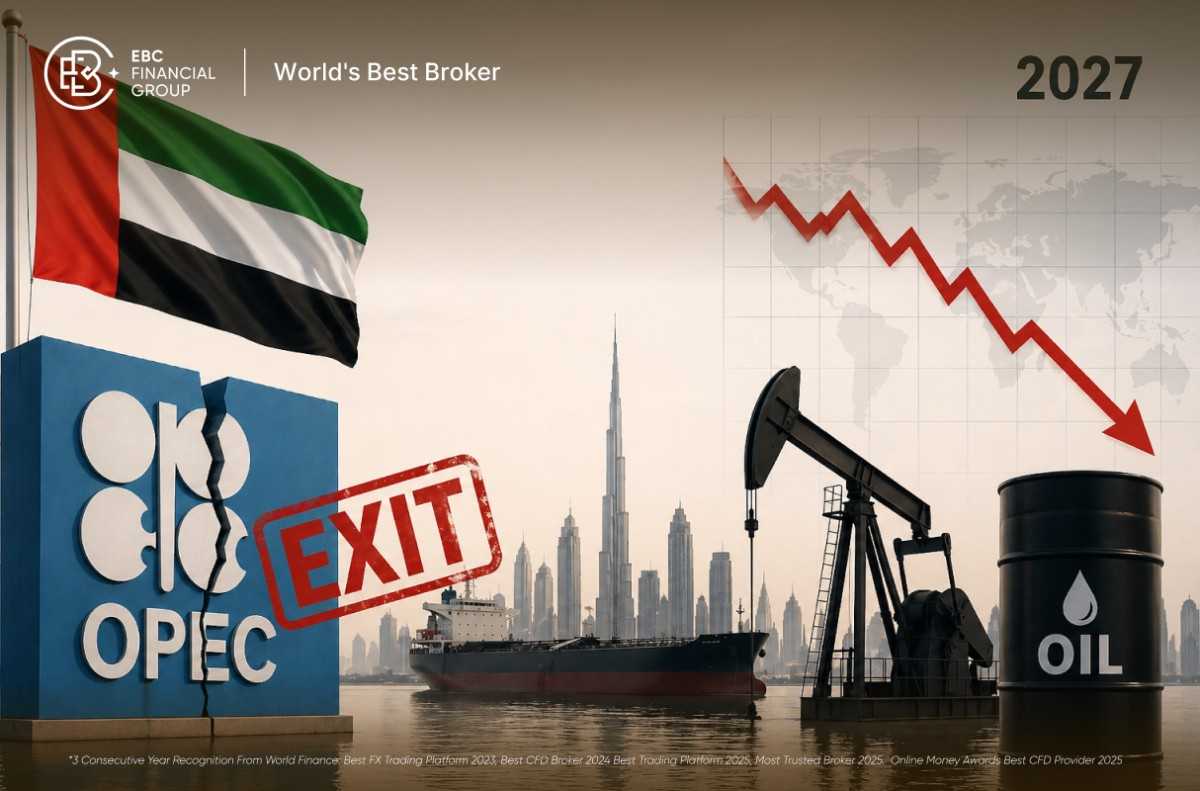
Policy discipline still matters, especially in a market transitioning from tightness to builds. On February 1, 2026, eight OPEC+ countries reaffirmed their decision to pause planned increments for March 2026 and emphasized flexibility to continue pausing or reverse voluntary adjustments if conditions warrant.
That stance can reduce the probability of a disorderly price decline, but it does not eliminate the base-case inventory build signaled by the EIA.
It is too late to buy oil stocks for the simplest version of the trade: “crude went up, so energy will keep going up.” That trade relies on momentum continuation and assumes the geopolitical premium grows rather than mean-reverts.
It is not necessarily too late for investors with a longer horizon who are buying the sector for three reasons that survive a pullback: dividends, buybacks, and balance-sheet resilience. XLE’s yield profile and its concentration in dividend-paying mega-caps are precisely what can cushion returns if crude drifts lower in a surplus year.
The real answer is conditional:
If you believe the Iran risk escalates from probability to reality, upside remains meaningful because supply disruption is not linear and the Hormuz channel is systemically important.
If you believe diplomacy holds and 2026 reverts to surplus math, crude can slide while the best energy equities grind sideways on cash returns, and the weakest high-beta names give back much of the move.
In short, after a headline-driven jump, oil stocks shift from a “directional bet” to a “portfolio allocation problem.” The quality of exposure matters more than the timing of the headline.
The move was largely geopolitical. Brent pushed into the low $70s amid heightened U.S.-Iran tensions and ahead of talks, prompting markets to price in a near-term disruption premium.
It can be too late for a simple momentum chase. If inventories build as forecast and Brent averages near $58 in 2026, broad upside may be limited and returns may rely more on dividends and buybacks than on oil prices rising further.
Mean reversion of the geopolitical premium. Futures open interest fell by 36,289 contracts on February 23, suggesting some traders reduced exposure after the jump, which can amplify pullbacks if headlines cool.
A genuine supply disruption. The EIA notes that conflict affecting flows through the Strait of Hormuz could materially reduce Middle East production and exports, thereby repricing risk across crude and energy equities.
The late-February oil rally is real, but it is not cleanly “fundamental.” WTI’s move to the mid-$60s has been shaped by geopolitics and short-term disruptions, while the EIA’s base case still points to sizable inventory builds and lower average prices through 2026-2027.
That does not make buying oil stocks irrational. It changes the playbook. After a spike, the edge shifts from timing the headline to choosing durable cash flows, conservative balance sheets, and shareholder-return frameworks that can survive a softer oil tape. High-beta producers can still outperform, but largely if a geopolitical risk premium turns into a physical disruption, not merely a fear of one.
Disclaimer: This material is for general information purposes only and is not intended as (and should not be considered to be) financial, investment or other advice on which reliance should be placed. No opinion given in the material constitutes a recommendation by EBC or the author that any particular investment, security, transaction or investment strategy is suitable for any specific person.