Published on: 2026-04-29
Updated on: 2026-04-29
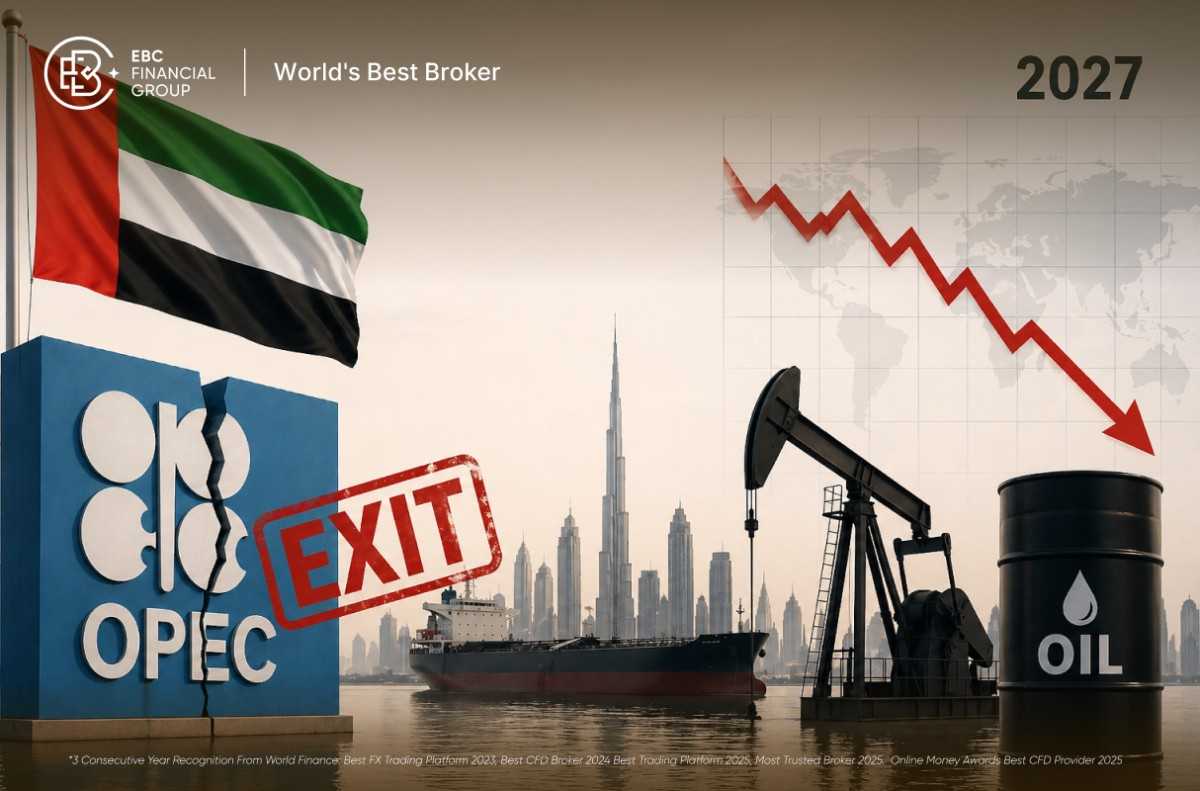
The United Arab Emirates is leaving OPEC and OPEC+ on May 1, 2026. The immediate oil-price impact is likely to be limited because traders are still focused on the Strait of Hormuz disruption and the broader Iran conflict. AP reported that the UAE is OPEC’s third-largest producer and one of the few members with meaningful spare capacity. (1)
The bigger market question is what happens after shipping normalizes. Outside OPEC quotas, the UAE may have more freedom to raise production toward ADNOC’s 5 million barrels-per-day capacity target for 2027. (2)
The simple read: bullish risk now, bearish supply risk later.
Oil prices may remain elevated due to disrupted Gulf exports, tanker risks, inventory draws, and uncertainty around the Iran conflict. But in 2027, a larger UAE supply base outside OPEC could weaken the cartel’s ability to defend oil-price floors.
| Time frame | Main driver | Likely oil-price bias |
|---|---|---|
| Now | Hormuz disruption and war-risk premium | Bullish |
| Late 2026 | Shipping normalization vs. lingering risk premium | Mixed |
| 2027 | UAE supply flexibility outside OPEC quotas | Bearish risk |
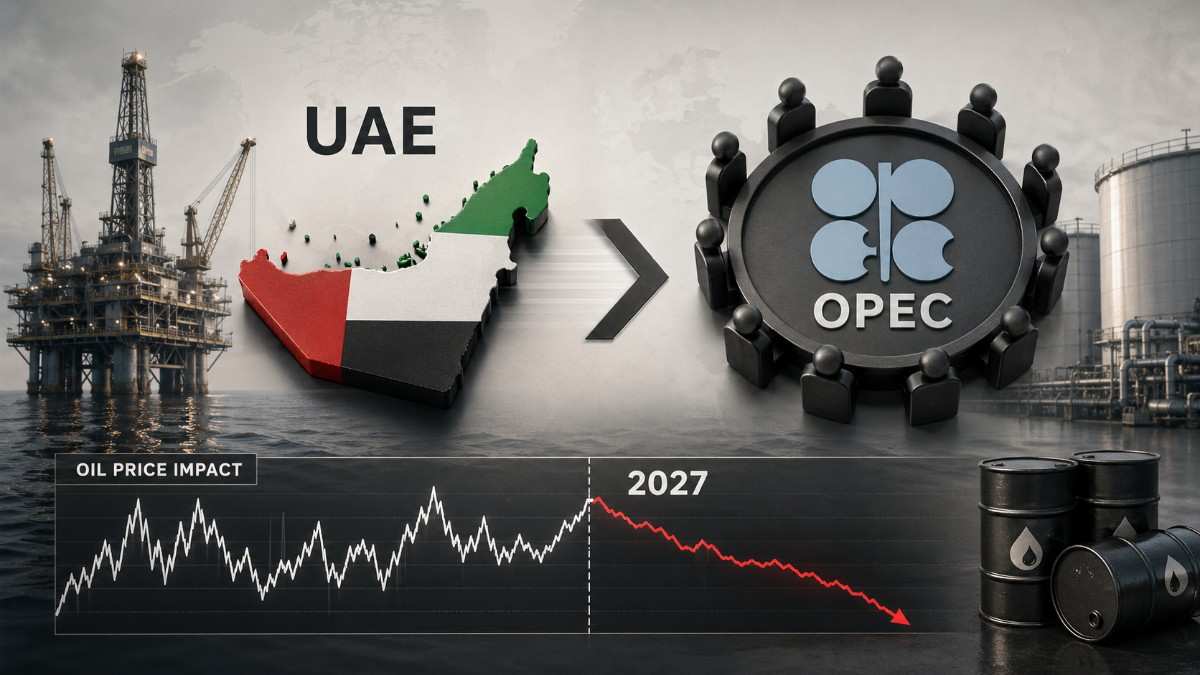
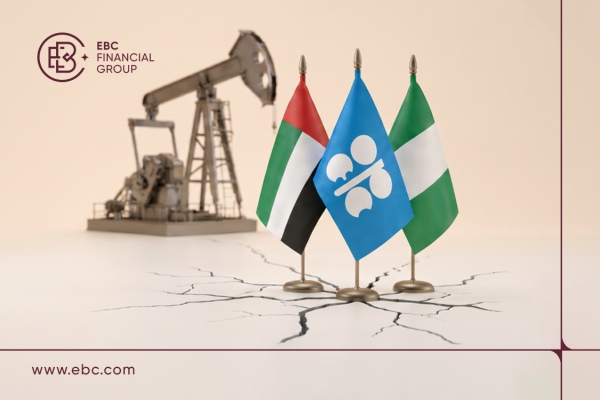
The UAE announced on April 28, 2026, that it would leave OPEC effective May 1. The move ends nearly six decades of membership and removes one of OPEC’s most important Gulf producers.
But crude prices did not move mainly because of the UAE announcement. The market was already being driven by the Hormuz crisis. EIA’s April 2026 Short-Term Energy Outlook estimated that oil production shut-ins among Iraq, Saudi Arabia, Kuwait, the UAE, Qatar, and Bahrain would rise to 9.1 million barrels per day in April.
That distinction matters because it separates today’s price shock from the 2027 supply risk. The UAE exit is important, but it is not the main short-term price driver.
The UAE’s official explanation was broad: the decision reflected its long-term strategic and economic vision and changing energy profile. AP reported that the UAE had pushed back in recent years against OPEC production quotas it considered too low, after investing heavily to expand capacity.
For oil markets, the key issue is production flexibility.
Abu Dhabi has spent years expanding ADNOC’s production capacity, while OPEC+ quotas limited how much crude it could sell. That created a growing mismatch: the UAE was investing to produce more, yet remained in a cartel built around production restraint.
The exit allows the UAE to manage output more independently. That does not mean the UAE will immediately flood the market. It still has an incentive to avoid damaging prices. But OPEC no longer has the same formal control over one of its most capable producers.
The geopolitical backdrop also matters. The move comes during the Iran conflict, amid disruption around the Strait of Hormuz, and against a longer-running backdrop of Saudi-UAE competition.
Those factors should be treated as context, not the only explanation.
Leaving OPEC gives the UAE more policy flexibility, but it does not automatically put more barrels into the market.
The constraint is logistics. If Hormuz flows remain limited, the UAE cannot fully monetize higher production capacity. Alternative export infrastructure exists, including routes through Fujairah, but that does not replace full Gulf shipping capacity.
The near-term oil market is still being driven by:
| Driver | Oil-price effect |
|---|---|
| Strait of Hormuz disruption | Bullish |
| Gulf production shut-ins | Bullish |
| War-risk premium | Bullish |
| Strategic stock releases | Bearish or stabilizing |
| Demand destruction from high prices | Bearish over time |
| UAE leaving OPEC | Limited immediate effect; bigger long-term effect |
The key point: the UAE has more freedom to produce, but the market still needs export routes, buyers, and stable shipping conditions.
The long-term issue is whether ADNOC’s capacity expansion turns into actual barrels outside OPEC control.
ADNOC says it aims to increase production capacity to 5 million barrels per day by 2027.
Before the exit, OPEC+ quotas limited how much of that capacity the UAE could use. After May 1, OPEC quotas no longer directly bind UAE production policy. But capacity is not the same as production. Actual output will still depend on export routes, demand, field management, pricing strategy, and Abu Dhabi’s own policy choices.
If UAE output eventually rises from roughly 3.4 million barrels per day toward 5 million barrels per day, the extra supply could be meaningful. AP reported that the UAE was producing around 3.4 million bpd before the war and that analysts estimate capacity near 5 million bpd.
That possible 1 million-plus bpd increase is the bearish risk for 2027.
Not automatically.
The UAE exit reduces OPEC’s future control over supply, but it does not eliminate near-term geopolitical risk. Oil prices could remain high if Hormuz disruption persists, inventories keep falling, or the Iran conflict widens.
EIA’s April 2026 outlook forecasts Brent averaging $96 in 2026 before falling to $76 in 2027. EIA also says Brent is expected to peak in the second quarter of 2026 before easing as shut-ins slowly abate. (3)
EIA’s forecast depends heavily on its assumptions that the conflict eases and Hormuz traffic gradually resumes.
The better conclusion is not “oil will fall.” It is this:
The UAE exit may reduce OPEC’s ability to support prices once the current supply shock fades.
OPEC is weaker, but not finished.
The UAE’s departure removes a producer with scale, spare capacity, and large investment plans. Rystad Energy’s Jorge Leon told AP that a structurally weaker OPEC, with less spare capacity inside the group, would find it harder to calibrate supply and stabilize prices.
But Saudi Arabia remains the central actor in OPEC. Iraq, Kuwait, Iran, and other producers still matter. OPEC can still influence prices, especially if Saudi Arabia is willing to cut supply.
The damage is not existential, but it is strategic. The damage is that one of its most capable members is no longer formally inside the quota system.
Investors should not treat the UAE exit as a simple “buy oil” or “short oil” signal.
Oil futures ETFs are most exposed to short-term crude-price moves, futures curves, and roll costs. They can behave differently from spot oil, especially during steep backwardation or contango.
Energy equities do not track spot crude one-for-one. Integrated oil majors, shale producers, refiners, and oilfield-service companies respond to different drivers: crude prices, refining margins, gas exposure, capital spending, dividends, and balance-sheet strength.
| Exposure | Near-term implication | 2027 risk |
|---|---|---|
| Oil futures ETFs | Supported by Hormuz disruption and war premium | Vulnerable if shipping normalizes and UAE supply rises |
| Oil producers | Higher crude can lift cash flow | Lower long-term price assumptions could pressure valuations |
| Integrated majors | Benefit depends on upstream, refining, and gas mix | More resilient than pure producers, but still exposed |
| Oilfield services | Could benefit from UAE capacity investment | Risk if lower prices reduce global capex |
This article is for general information only and is not personalized investment advice. The UAE exit is one input, not a standalone trading signal.
The next price move depends less on the OPEC headline and more on these indicators:
| Indicator | Why it matters |
|---|---|
| Strait of Hormuz flows | Determines how much Gulf supply can reach the market |
| UAE production guidance | Shows whether Abu Dhabi plans to use its new flexibility quickly |
| ADNOC capacity updates | Confirms whether the 5 million bpd target remains on track |
| Saudi response | Signals whether OPEC will defend price or market share |
| EIA and IEA revisions | Shows how official supply-demand assumptions are changing |
| Futures curve shape | Reveals whether traders see the shock as temporary or structural |
The UAE has some ability to bypass the Strait of Hormuz through export routes linked to Fujairah, but that capacity does not replace full Gulf shipping access. The Wall Street Journal reports that the Fujairah bypass route is at roughly 1.5 million to 1.8 million barrels per day.
Yes, in theory. Saudi Arabia remains OPEC’s central producer and could try to support prices by cutting output further. But deeper cuts would come at a cost: Saudi Arabia would give up more market share, while the UAE would gain greater freedom outside OPEC quotas.
Possibly, but it would no longer be formally bound by OPEC quotas unless it joined a new cooperation framework. OPEC has previously coordinated with non-OPEC producers through the Declaration of Cooperation and Charter of Cooperation, so dialogue is possible even outside full OPEC membership.
The UAE’s departure from OPEC is not primarily a same-day oil-price shock. The near-term market is still dominated by the Hormuz disruption and war-risk premium.
The bigger issue is 2027. If the UAE uses its freedom outside OPEC to raise output toward 5 million barrels per day, OPEC loses some ability to manage supply and defend price floors.
For oil prices, the clearest interpretation is this: high risk premium now, more bearish supply risk later.
(1) https://apnews.com/article/opec-united-arab-emirates-leaving-cartel-4966108c3fafacb67181152216deda14
(2) https://www.adnoc.ae/en/ourstrategy/responsible-growth