Published on: 2026-04-28
Updated on: 2026-04-28
The Bank of Japan did not raise rates on April 28, 2026. But the decision was still hawkish.
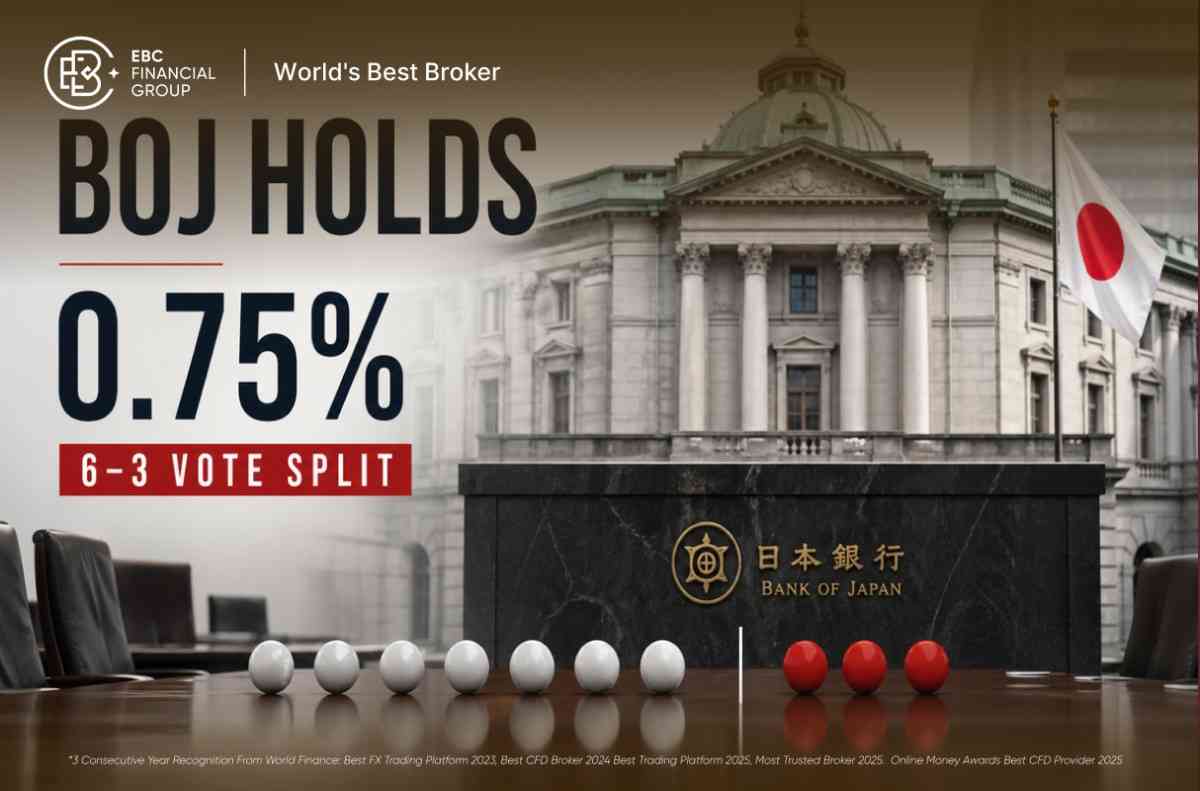
The BOJ kept the uncollateralized overnight call rate at around 0.75%, with Governor Kazuo Ueda’s board voting 6–3 to hold. Three board members, Junko Nakagawa, Hajime Takata, and Naoki Tamura, voted against the hold and proposed raising the rate to around 1.0%. (1)
The dissent matters because three members were willing to move before the next inflation and wage data window. It shows the BOJ’s debate has shifted from whether normalization should continue to how quickly the next step should come. The live question is now whether the BOJ moves in June or waits for clearer evidence that inflation is broadening beyond energy.
The June 15–16 meeting is the next major test. The BOJ’s own schedule shows the June policy meeting on those dates, with the April meeting’s Summary of Opinions due May 12 and minutes due June 19.
The April decision was hawkish, with a hold. Three of nine BOJ board members wanted an immediate 25-basis-point hike.
Inflation forecasts moved sharply higher. The BOJ raised its fiscal 2026 core CPI forecast to a median 2.8%, from 1.9% in January.
June is now a live hike meeting, not a certainty. A Reuters poll before the April meeting found that 65% of economists expected the BOJ rate to reach 1.00% by the end of June. (2)
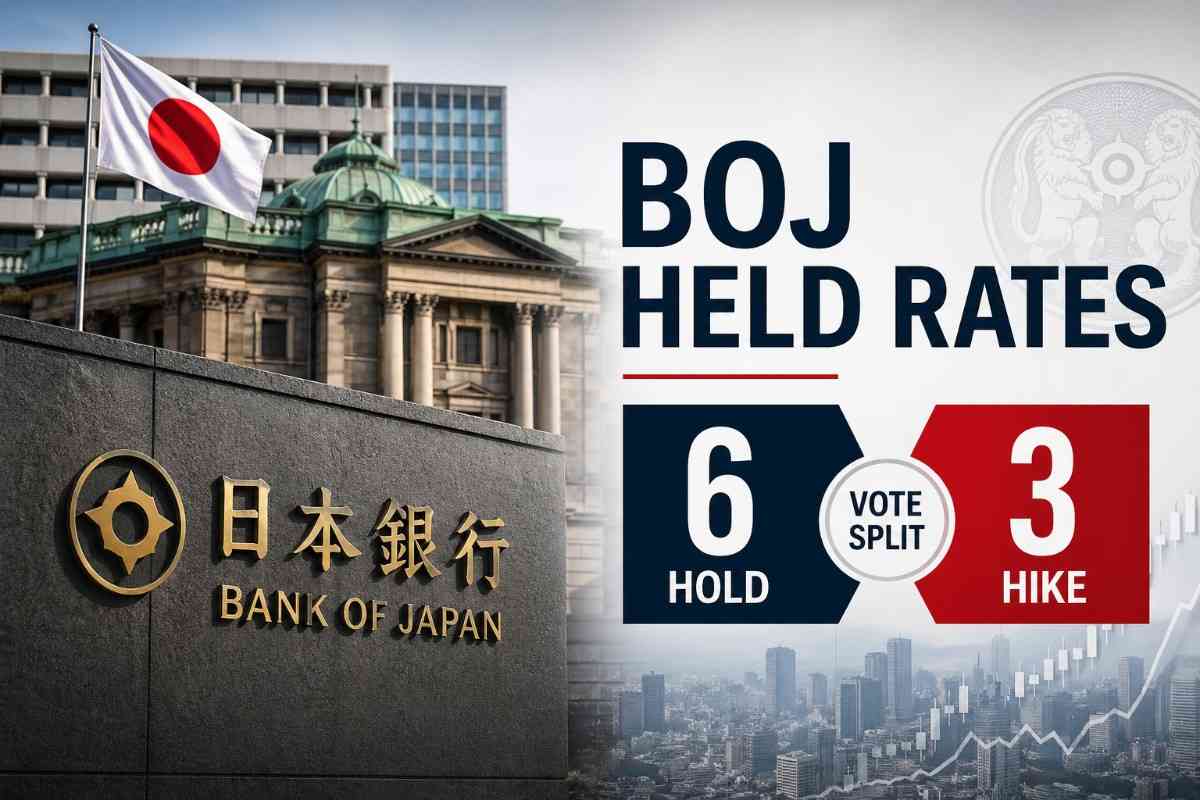
The BOJ left its short-term policy rate target at around 0.75%, keeping borrowing costs at their highest level since 1995. The decision itself was expected, but the vote split was not routine.
Nakagawa argued that price risks were skewed to the upside under accommodative financial conditions. Takata said the price-stability target had been “more or less achieved” and that overseas-driven price rises were creating second-round effects. Tamura said price risks had become significantly skewed to the upside and that the BOJ should move the policy rate closer to neutral.
Their proposals were defeated, but the message was clear: the hawkish wing of the board is pushing for faster normalization.
The hold was hawkish for two reasons.
First, three dissenters wanted an immediate move to 1.0%. A 6–3 vote is a much stronger signal than a unanimous hold.
Second, the BOJ’s inflation forecasts moved higher. The April Outlook Report projected fiscal 2026 CPI excluding fresh food at 2.8% on a median basis, up from 1.9% in January. The fiscal 2027 forecast rose to 2.3%, from 2.0%. Fiscal 2026 real GDP growth was cut to 0.5%, from 1.0%.
| BOJ forecast | January 2026 median | April 2026 median | Signal |
|---|---|---|---|
| Fiscal 2026 real GDP | 1.0% | 0.5% | Growth risk worsened |
| Fiscal 2026 core CPI | 1.9% | 2.8% | Inflation risk rose sharply |
| Fiscal 2027 core CPI | 2.0% | 2.3% | Inflation stays above target |
| Fiscal 2028 core CPI | N/A | 2.0% | Inflation near target |
In BOJ terminology, “core CPI” usually refers to all items except fresh food. That measure still includes energy. The BOJ also publishes a reference measure excluding both fresh food and energy.
The BOJ is facing an uncomfortable trade-off.
Higher oil prices raise inflation through energy, goods, and import costs. But the same shock can weaken Japan’s economy by hurting household real income and corporate profits.
Japan is heavily exposed to Middle East energy risks, and the BOJ said it needs to pay particular attention to how developments in the Middle East affect financial markets, foreign exchange, economic activity, and prices.
That is why the April hold was not dovish. It was cautious. The BOJ kept rates steady because growth risks increased, not because inflation pressure disappeared.
The BOJ’s inflation upgrade rests on four forces.
1. Oil and energy costs. The BOJ said higher crude oil prices linked to the Middle East situation are expected to push up energy and goods prices. Its baseline assumes the shock eases, but it also warns that the outlook could change considerably if tensions persist. (3)
2. Wage pass-through. The BOJ said firms continue to pass wage increases through to selling prices, and it expects the wage-price mechanism to remain in place.
3. Inflation expectations. BOJ survey data show that 83.7% of respondents expected prices to rise one year from now, down from 86.0% in the previous survey, but still high.
4. The yen and import prices. The BOJ warned that foreign-exchange moves can affect prices more than in the past because firms have become more willing to raise wages and prices.
The June meeting is important because the April vote showed three board members were already ready to move. A Reuters poll conducted before the April meeting found that 46 of 71 economists, or 65%, expected the BOJ’s policy rate to reach 1.00% by the end of June.
But a June hike is not guaranteed.
Nakagawa’s current BOJ term runs from June 30, 2021, to June 29, 2026, meaning her April dissent may be one of her final policy signals unless she is reappointed.
That board-composition issue matters because reports have described her expected replacement, Ayano Sato, as more dovish or reflationist.
A June hike becomes more likely if inflation data firm, wage growth remains broad, oil prices stay elevated, and the yen remains weak enough to keep import-price pressure alive.
Possible market effects:
| Asset or channel | Possible reaction if BOJ hikes |
|---|---|
| Yen | Could strengthen if rate differentials narrow |
| Short-end JGB yields | Likely upward pressure |
| Long-end JGB yields | Depends on growth fears and fiscal-risk pricing |
| Carry trades | Higher risk of yen-funded trade unwinds |
| Households and SMEs | Borrowing costs rise gradually |
This is a conditional scenario, not a trading recommendation.
A June hold becomes more likely if oil-price stress starts damaging growth faster than it lifts underlying inflation, if core-core CPI softens, if the yen stabilizes, or if policymakers decide that geopolitical uncertainty is too high.
Possible market effects:
| Asset or channel | Possible reaction if BOJ delays |
|---|---|
| Yen | Could weaken if markets price out near-term hikes |
| JGB yields | Short-end yields could fall |
| Equities | May get short-term relief, especially rate-sensitive sectors |
| BOJ credibility | Depends on whether inflation expectations remain anchored |
| Indicator | Why it matters | Release timing before June BOJ |
|---|---|---|
| Tokyo CPI | Early signal for national inflation | May 1 for April Tokyo CPI; May 29 for May Tokyo CPI |
| National CPI | Confirms whether price pressure is broadening | May 22 for April national CPI |
| Core-core CPI | Helps separate energy shock from underlying inflation | May 22 within national CPI details; May 29 within Tokyo CPI details |
| Wage settlements at SMEs | Tests whether wage growth is broad, not just large-firm driven | May updates / ongoing Shunto tallies |
| BOJ Summary of Opinions | Shows how strongly board members are leaning | May 12 for the April 27–28 meeting |
| Oil prices | Central to both inflation and growth risks | Ongoing |
| USD/JPY | A weaker yen can raise import-price pressure | Ongoing |
| Q1 GDP | Tests whether the economy can absorb another hike | May 19 first preliminary estimate; June 8 second preliminary estimate |
The BOJ’s April 2026 decision was not a dovish hold. It was a hawkish hold with a growth-risk caveat.
The central bank kept rates at 0.75% because the energy shock could hurt households and companies and slow growth. But the 6–3 vote, the three dissents in favour of moving to 1.0%, and the sharp upgrade to the fiscal 2026 inflation forecast all point in the same direction: the BOJ is still moving toward tighter policy.
June is now the key meeting. A hike is plausible if inflation, wages, oil, and the yen keep supporting the normalization case. But it is not automatic, and investors should treat the June decision as a live policy risk rather than a done deal.
(1) https://www.boj.or.jp/en/mopo/mpmdeci/mpr_2026/k260428a.pdf