Published on: 2026-04-27
GLDM vs GLD is not a question of which fund gives investors “better” gold exposure. Both ETFs are designed to track the price of physical gold at a lower expense. The real decision is whether lower long-term cost matters more than trading depth, execution quality, and options access.
That distinction is important because investors use gold in different ways. A long-term investor may hold gold as a portfolio diversifier during inflation, currency weakness, or market stress.
A trader may use gold exposure tactically around interest-rate decisions, real-yield moves, geopolitical risk, or US Dollar volatility. GLDM and GLD can both serve those purposes, but they are built for different investor behaviours.
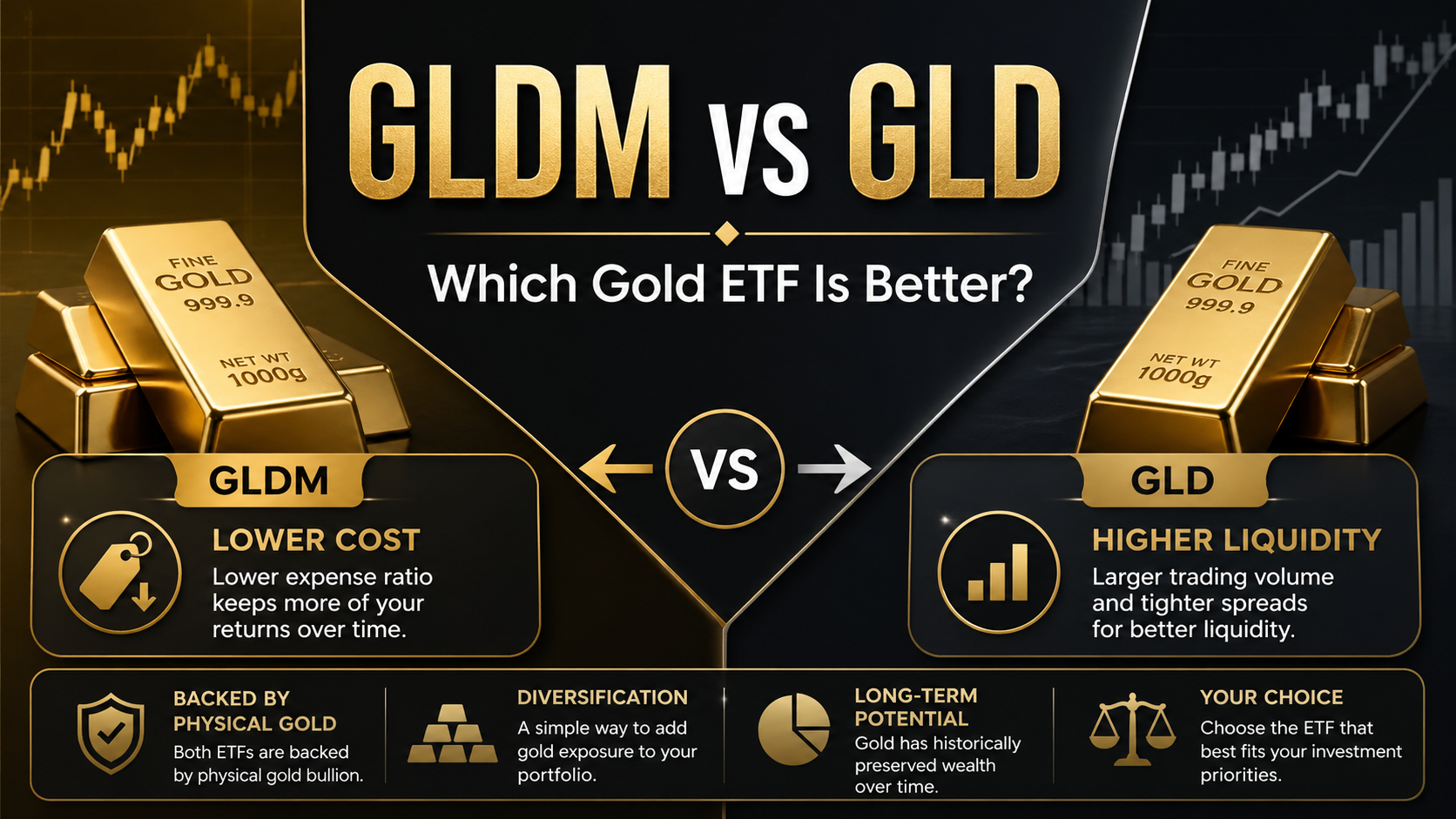
For most buy-and-hold investors, GLDM is usually the more efficient choice. For active traders, large allocators, and options users, GLD remains the more practical instrument.
GLD and GLDM both provide exposure to physical gold prices, so performance differences mainly come from fees, spreads, and trading behaviour.
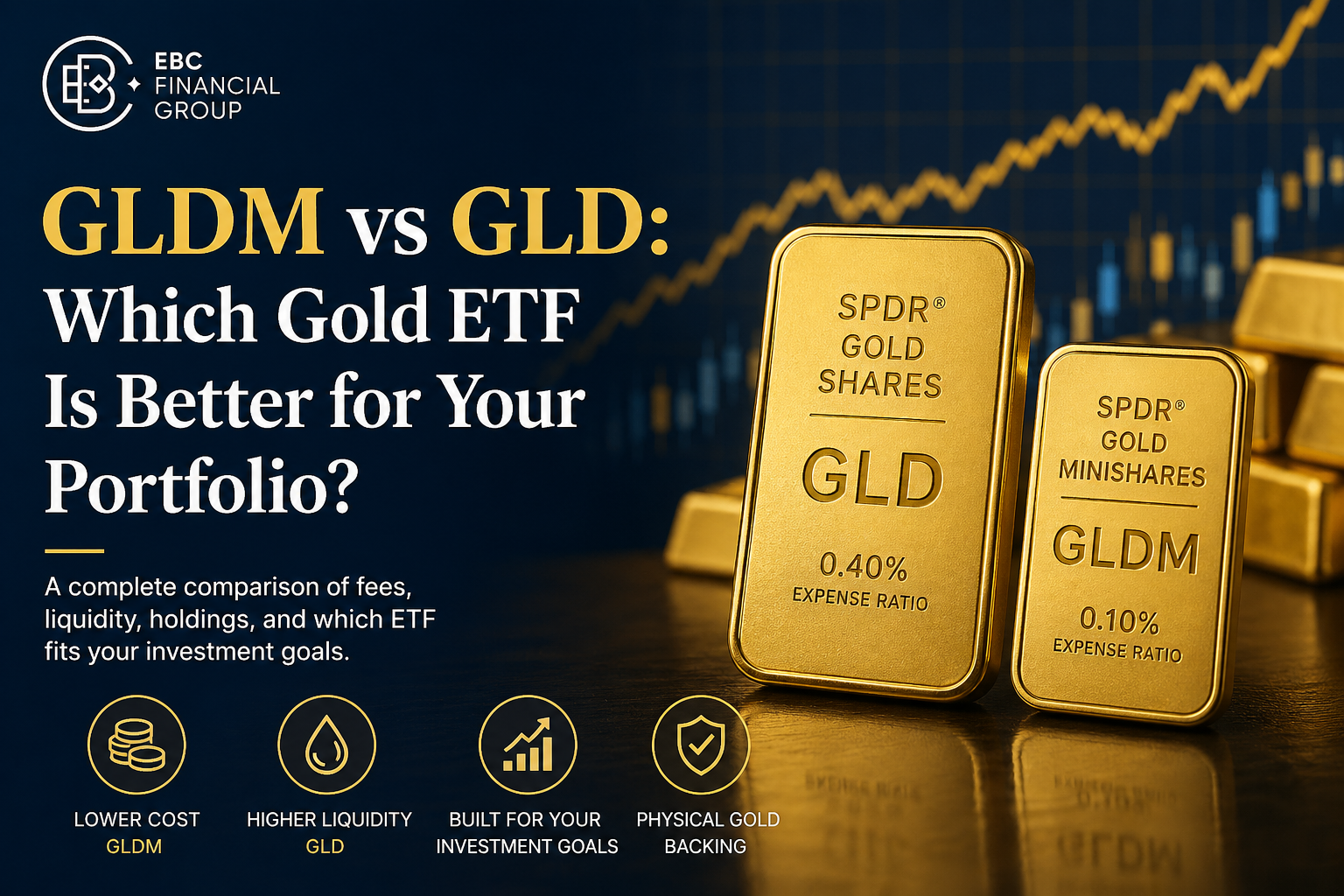
GLDM has a lower gross expense ratio at 0.10%, compared with 0.40% for GLD.
GLD is much larger, with $158.5 billion in assets under management versus $31.2 billion for GLDM as of 24 April 2026.
Both funds had a 30-day median bid-ask spread of 0.01%, but GLD traded 975,898 shares on 24 April 2026 versus 210,278 for GLDM, giving GLD stronger market depth.
GLD offers listed options, whereas GLDM does not, making GLD more useful for hedging, volatility strategies, and tactical trades.
GLD, or SPDR Gold Shares, launched in 2004. It was the first US-listed ETF backed by a physical asset and remains one of the most widely used gold ETFs globally. Its objective is to reflect the performance of gold bullion at a lower cost.
GLDM, or SPDR Gold MiniShares Trust, launched in 2018. It shares the same broad objective but was designed as a lower-cost, more accessible gold ETF for investors seeking efficient long-term exposure.
Neither fund invests in gold miners, futures contracts, or income-producing securities. Both are direct gold-price vehicles. The differences lie in cost, liquidity, trading flexibility, and the investor's use case.
The strongest argument for GLDM is cost. A 0.30 percentage-point annual fee gap may look small, but over time it becomes meaningful.
This is the main reason GLDM suits strategic investors. If the plan is to hold gold for several years, rebalance occasionally, and avoid frequent trading, the lower fee is a durable advantage.
GLDM does not need to be more liquid than GLD to be the better long-term vehicle. It only needs to be liquid enough for the investor’s trade size.
GLD’s higher expense ratio does not make it inferior. It reflects a different job.
GLD has a larger asset base, higher exchange volume, and listed options. That matters most when investors need to enter or exit positions quickly, trade larger blocks, or express short-term views around macro events. A retail investor buying $2,000 and holding for years may not benefit much from GLD’s extra depth. An institution moving millions of dollars may care deeply about execution quality.
This is where the total cost of ownership matters. ETF costs are not limited to the expense ratio. It also includes bid-ask spreads, trading frequency, trade size, and the risk of poor execution.
For a long-term holder, the expense ratio usually dominates. For an active trader, spread and execution can matter more than the annual fee.
GLD’s listed options are a major advantage for more advanced investors. Options allow investors to hedge gold exposure, protect portfolios with puts, sell covered calls, or trade expected volatility around central-bank meetings and inflation data.
GLDM is simpler. That is an advantage for investors who only want straightforward gold exposure. But for traders who need flexibility, GLD’s options market gives it a role that GLDM does not replace.
The simplest rule is this: choose GLDM when holding period matters more than execution speed. Choose GLD when trade size, liquidity, or options access matter more than fee savings.
The main risk in both funds is gold price volatility. Gold can fall when real yields rise, the US Dollar strengthens, or safe-haven demand fades. These ETFs make gold easier to own, but they do not remove gold’s market risk.
Investors should also understand that GLD and GLDM do not pay income. They are not bond substitutes, dividend assets, or guaranteed inflation hedges.
There is also a structural cost. Because each fund sells small amounts of gold to pay ongoing expenses, the amount of gold represented by each share gradually declines over time. That is normal for physically backed gold ETFs, but it reinforces why fees matter.
GLDM is better for many long-term investors because it has a lower expense ratio. GLD is better for active traders, large investors, and anyone using options.
Yes. Both are designed to track the prices of physical gold bullion at a lower cost. Their differences come mainly from fees, liquidity, trading volume, and options availability.
GLD has greater scale, stronger trading depth, a longer history, and listed options. Those features make it more useful for institutions, traders, and hedgers.
Not automatically. A lower share price helps with position sizing, especially for smaller investors. It does not, by itself, make the fund structurally superior.
GLD and GLDM are not competing versions of the same idea. There are different tools for different investor needs. GLDM is the cleaner long-term holding vehicle because it reduces annual fee drag. GLD remains the stronger trading instrument because it offers greater scale, deeper activity, and options access.
For most beginner-to-intermediate investors seeking simple gold exposure, GLDM is likely the better fit. For traders, institutions, and portfolio hedgers, GLD remains the more flexible choice.