Published on: 2026-03-30
USD/JPY yen intervention risk 2026 is back because the market has returned to the exact zone that forced Tokyo into action before.
As the yen approaches 160 against the US dollar, the situation shifts from typical currency weakness to a test of Japan’s tolerance for disorderly market movements.
What makes this moment different from standard yen weakness is the convergence of a weak currency, surging energy prices, an unresolved yield gap, and a carry trade that has never been fully unwound.
The yen is back under pressure as policy divergence, imported inflation, and official rhetoric collide.
Intervention risk rises when weakness becomes rapid, one-sided, and politically costly.
The Bank of Japan is tightening carefully, but not fast enough to erase the dollar’s yield advantage.
Any action from Tokyo could quickly hit carry trades, bond markets, and broader risk sentiment.
USD/JPY has moved back through 160, returning to the same zone that triggered Japan’s intervention response in 2024.
Tokyo does not officially defend a line in the sand, but markets know some levels matter more than others. Around 160, positioning becomes more fragile, headlines intensify, and official tolerance comes under closer scrutiny.
That is what makes the current setup dangerous. Once the market starts to look one-way, intervention risk becomes part of the price action itself.

The Bank of Japan’s 0.75% interest rate, compared to the US federal funds upper limit of about 3.75%, encourages carry trades. Changes in this rate gap are the main driver of short-term price movements.
Japan has gradually moved away from zero rates, but the gap remains wide enough to support continued yen selling through carry trades.
With Brent crude near $115 on March 30, Japan faces an energy shock from both higher global oil prices and a weaker yen, which increases the local cost of imports.
This vulnerability is significant because Japan imports nearly all its oil, about 90% of which comes from the Middle East, making the economy highly exposed to regional tensions.
The pressure does not stop at the pump. Rising crude prices increase fuel, freight, and transportation costs, which then spread to broader consumer prices.
The Bank of Japan’s March statement highlighted Middle East tensions, crude prices, and currency movements as overlapping sources of inflation risk. Weak, imported inflation can deepen, keeping downward pressure on the currency.
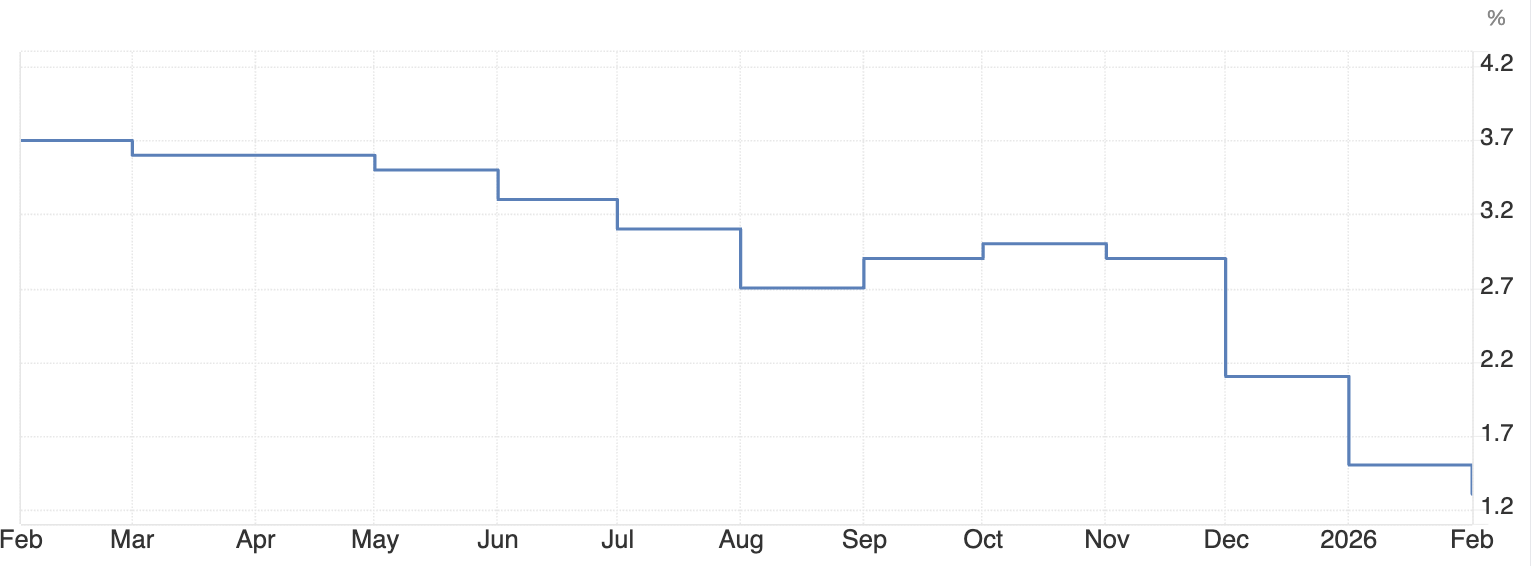
In February 2026, Japan’s CPI showed headline inflation at 1.3%, core inflation at 1.6%, and core-core inflation at 2.5%. While subsidies have moderated headline inflation, underlying pressures persist.
| Pressure Point | Latest Signal | Why It Matters |
|---|---|---|
| USD/JPY | Crossed 160 on March 30 | Historically linked to direct intervention |
| BOJ policy rate | 0.75% | Tightening, but far below Fed funds rate |
| March BOJ board vote | 8-1 | Internal pressure building, not yet dominant |
| Japan core CPI | 1.6% YoY (February) | Headline cooled; core pressure persists |
| Japan core-core CPI | 2.5% YoY (February) | Domestic price pressure firmer than headline |
| Brent crude | Around $115 | Weak yen amplifies the energy import bill |
| Coordinated intervention risk | Rising, per Bank of America | US Treasury involvement changes the calculus |
The 160 area matters because markets remember what happened the last time USD/JPY pushed too far, too fast. Japan’s interventions in 2024 were large enough to break one-way dollar buying and force a sharp reversal in positioning.
That history still shapes the market today. As USD/JPY returned to similar levels in 2026, traders had to price in the risk that official warnings could turn into direct action. That alone can slow momentum, as investors cut exposure before any intervention actually happens.
Still, intervention is a circuit breaker, not a cure. It can knock USD/JPY lower in the short term, especially when the market is overcrowded on one side, but it does not remove the forces driving yen weakness. If the rate gap stays wide and oil remains high, Tokyo can disrupt the move, but not reverse the trend on its own.
If Japan decides to support the yen, the process is simple. The government authorizes the move, and the Bank of Japan carries it out by selling dollars and buying yen in the market.
So far, there is no evidence that direct intervention has already begun in this latest bout of yen weakness. Official responses have stayed verbal, with policymakers warning against excessive currency moves rather than using reserves.
If intervention does occur, the first goal will be to shock the market and break one-way USD/JPY positioning. Whether that rebound lasts is a different question. Without support from a weaker dollar, lower oil prices, or a firmer policy path from the BOJ, any recovery in the yen may prove temporary.

The first signal is speed. Japanese officials are more likely to react when yen weakness becomes rapid, speculative, and one-sided. In that sense, the pace of the move matters almost as much as the 160 level itself.
The second is BOJ communication ahead of the April 27-28 meeting. The March split showed that pressure for a firmer policy stance is building, even if it is not yet the dominant view.
The third is oil. Higher crude prices, combined with a weaker yen, raise Japan’s import bill and add to inflationary pressures. That makes the exchange rate more than a currency issue. It becomes part of the broader inflation story.
The Bank of Japan’s next policy meeting on April 27-28 could become the next major trigger for USD/JPY. At the March meeting, the board voted 8-1 to keep the policy rate at 0.75%, with one member favoring a move to 1.0%.
That dissent matters. It shows the debate over further normalization is active, even if the BOJ is still moving cautiously. The March discussion also made clear that yen weakness, higher oil prices, and Middle East tensions are all feeding into the inflation outlook.
Heading into the April meeting, three things matter most:
The speed of yen weakness: Officials are more likely to react when moves look rapid and one-sided, not just when USD/JPY reaches a specific level.
The BOJ’s tone: Any shift toward firmer rate guidance would be the strongest alternative to direct intervention.
The US response: If Washington starts to view yen weakness as a broader trade or policy issue, the risk of a stronger official response would rise.
No. Japan officially targets excessive volatility, not a fixed level. But 160 matters because it is the zone where prior intervention happened and where political pressure rises sharply.
No. The finance ministry can intervene without a BOJ hike. But rate policy affects whether the intervention has a lasting impact or only creates a temporary reversal.
The USD/JPY pair may initially decline sharply amid the unwinding of positions. The more significant consideration is the subsequent trajectory. Without changes in interest rates, oil prices, or the US dollar, the market often resumes its original direction.
A weak yen funds higher-yield trades abroad. If intervention suddenly lifts the yen, those positions can unwind quickly and spill into broader risk assets.
Yes. It can reduce imported cost pressure and ease the inflation hit from energy and food. The trade-off is that a sharp rebound can hurt exporters and weigh on equity sentiment.
The risk of yen intervention in 2026 has reemerged as USD/JPY returns to levels that typically test official tolerance. This episode is particularly concerning due to a cautious Bank of Japan, persistent underlying inflation, and an oil shock that amplifies both political and economic costs of yen weakness.
The central issue is that a yen exchange rate near 160 is significant not due to the number itself, but because it concentrates policy, market, and political risks.
If yen depreciation accelerates and becomes more disorderly, the likelihood of Japanese currency intervention increases. Without changes in underlying fundamentals, any resulting relief is likely to be temporary.
Disclaimer: This material is for general information purposes only and is not intended as (and should not be considered to be) financial, investment or other advice on which reliance should be placed. No opinion given in the material constitutes a recommendation by EBC or the author that any particular investment, security, transaction or investment strategy is suitable for any specific person.