Published on: 2025-08-06
Updated on: 2026-07-28
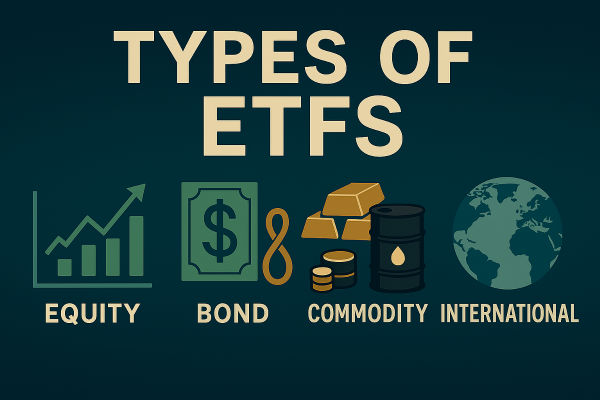
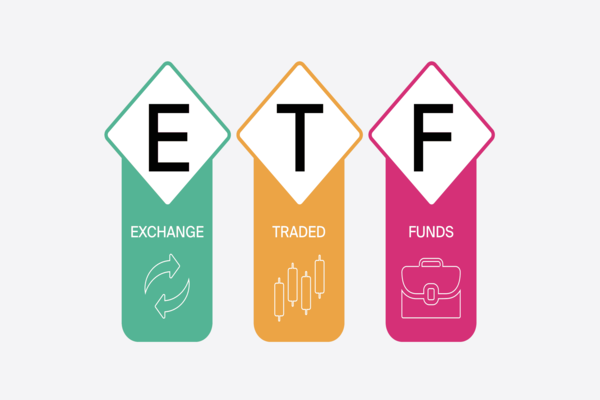
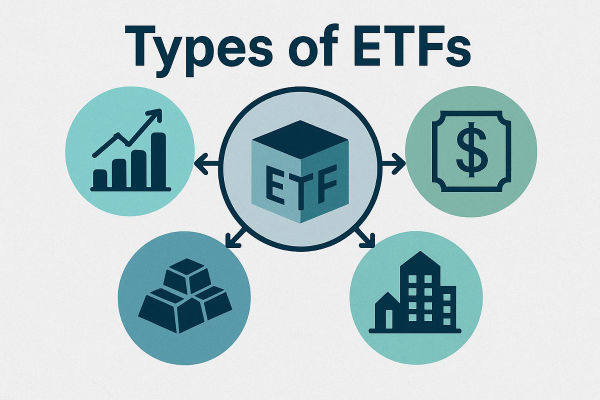
Most exchange-traded funds can be grouped into ten main ETF categories: broad market index, sector, international, bond, commodity, thematic, dividend, ESG, leveraged and inverse, and smart beta. At the end of 2025, 4,495 ETFs were domiciled in the United States with combined net assets of $13.4 trillion, leaving investors to distinguish between thousands of funds that can appear similar from their names alone.
This guide covers what each type holds and the specific risk attached to it. For the structure itself, start with how an exchange-traded fund works.
Broad market index ETFs track large benchmarks such as the S&P 500, MSCI World, or FTSE All-World, making them the standard core holding for most long-term portfolios. One purchase buys hundreds or thousands of companies, and fees are the lowest in the market, with several large US-listed S&P 500 funds charging around 0.03% a year. The risk sits in the weighting.
Nearly all are market-cap weighted, so a broad fund quietly becomes concentrated in the biggest names when large caps lead for several years. Equal-weight versions of the same index exist for investors who want that concentration reduced.
Examples: SPDR S&P 500 ETF (SPY), iShares Core MSCI World UCITS ETF (IWDA), Vanguard S&P 500 ETF (VOO).
Sector ETFs hold companies from a single industry, such as technology, healthcare, energy, or financials. Investors use them to add or reduce exposure to an industry, or to run a sector rotation strategy around a core holding.
The overlap is what gets missed. A technology sector ETF held alongside an S&P 500 fund doubles up on technology rather than adding a separate asset. Comparing the top holdings of both shows how much exposure is already there.
Examples: Technology Select Sector SPDR (XLK), Health Care Select Sector SPDR (XLV), Energy Select Sector SPDR (XLE).
International ETFs track equity markets outside your home country, either by region or by single country, and are the simplest way to diversify beyond a domestic index. The return has two parts: the local market move and the currency move. A fund can rise 8% in local terms and deliver more or less once the exchange rate is applied.
Currency-hedged ETFs exist for investors who want that second part removed. Emerging market ETFs add higher volatility and, in several cases, sensitivity to commodity cycles.
Examples: iShares MSCI Emerging Markets ETF (EEM), Vanguard FTSE Europe ETF (VGK), iShares Asia 50 ETF (AIA).
Bond ETFs hold government, corporate, or high-yield debt, grouped by maturity and credit quality, and are used to lower portfolio volatility and generate income. Duration is the number that matters. It estimates the price move for a one percentage point change in yields, so a bond ETF with a duration of seven falls roughly 7% if yields rise by one point.
A second feature surprises first-time buyers: an individual bond matures and repays face value, while a standard bond ETF holds a rolling basket and has no maturity date at which capital is returned at par. Target-maturity bond ETFs are the exception and say so in the name.
Examples: iShares Core U.S. Aggregate Bond ETF (AGG), Vanguard Intermediate-Term Treasury ETF (VGIT), iShares iBoxx $ High Yield Corporate Bond ETF (HYG).
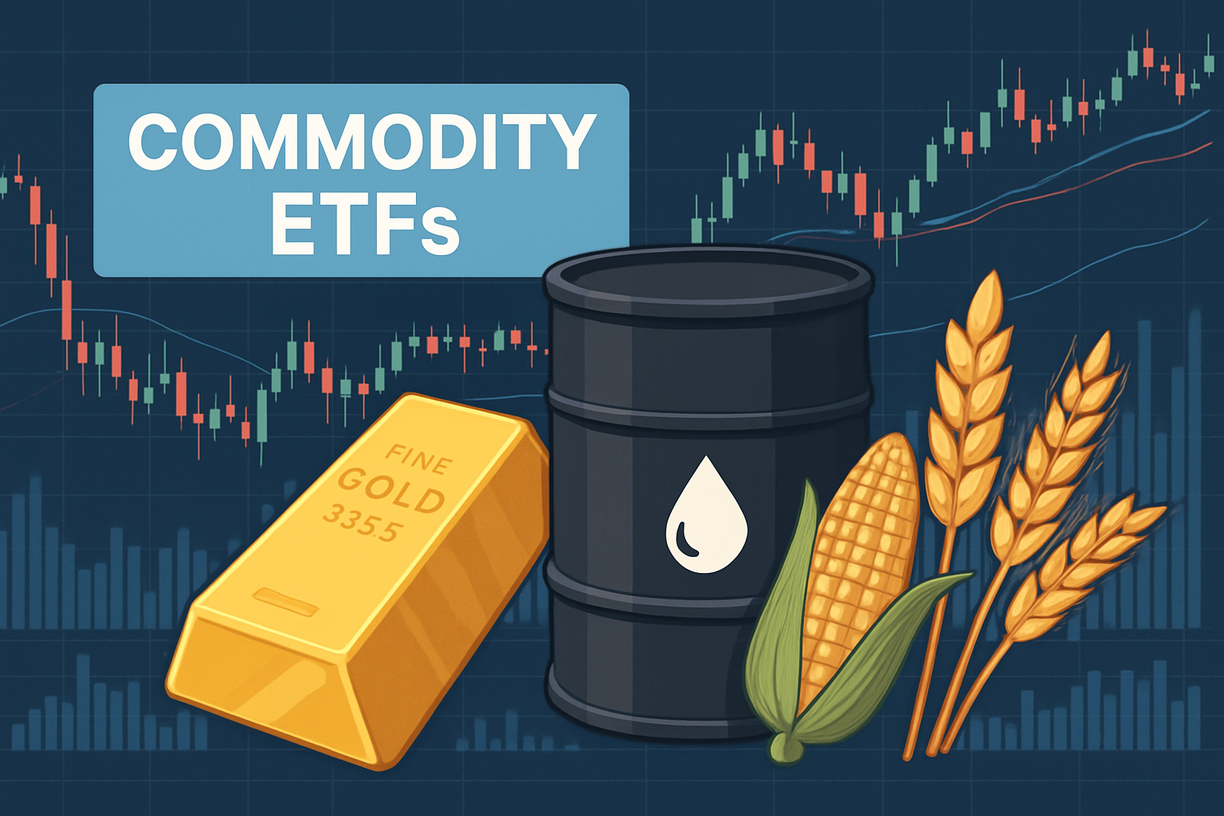
Commodity ETFs give exposure to gold, silver, oil, or agriculture, and the structure changes the outcome more than the commodity does. Physically backed funds hold metal in a vault and track spot closely, minus storage costs.
Futures-based funds must sell expiring contracts and buy later ones, and when later contracts cost more, a condition called contango, that roll leaks value every cycle. Over years a futures-based energy or agriculture ETF can drift well below the spot price it appears to follow. Equity-based funds hold miners or producers, adding company risk.
Examples: SPDR Gold Shares (GLD), iShares Silver Trust (SLV), Invesco DB Commodity Index Tracking Fund (DBC). More detail in our guide to commodity ETFs for diversification.
Thematic ETFs group companies around a trend rather than an industry classification, covering themes such as artificial intelligence, clean energy, robotics, and cybersecurity. Holdings cut across sectors, which is what separates a theme from a sector.
The index rules are custom-built by the provider, so two ETFs with the same theme name can hold very different companies. Holdings skew smaller and less liquid, and fees run higher, commonly 0.40% to 0.75%. New thematic ETFs also tend to launch after a theme has already performed strongly, because that is when demand appears.
Examples: Global X Robotics & Artificial Intelligence ETF (BOTZ), ARK Innovation ETF (ARKK), iShares Global Clean Energy ETF (ICLN).
Dividend ETFs pay regular income from a basket of dividend-paying stocks, and two designs sit inside this category. High-yield funds screen for the largest current payouts and concentrate in financials, energy, utilities, and real estate.
Dividend-growth funds screen for a long record of rising payouts, which tilts them toward industrials, staples, and healthcare. The first pays more today. The second is less exposed to companies whose yield is high because the share price has fallen. All are sensitive to interest rates, since higher bond yields make dividend payers less competitive on income.
Examples: Vanguard High Dividend Yield ETF (VYM), SPDR S&P Dividend ETF (SDY), Vanguard Real Estate ETF (VNQ) for REIT exposure.
ESG ETFs screen companies against environmental, social, and governance criteria, and the label alone tells you little, because providers use at least three methods. Exclusion screens remove industries such as tobacco, weapons, or thermal coal.
Best-in-class screens keep the highest-rated company in every sector, so an ESG fund can still hold energy producers. Tilt funds start from a standard index and adjust the weights. Two ETFs carrying the same ESG label can therefore hold different companies. Fees usually run above the plain index version.
Examples: iShares MSCI KLD 400 Social ETF (DSI), SPDR S&P 500 ESG ETF (EFIV), Vanguard ESG U.S. Stock ETF (ESGV).
Leveraged ETFs aim to deliver a multiple of an index’s daily return, usually 2x or 3x, while inverse ETFs aim to deliver the opposite. Both use derivatives and both reset every day, which is the part most people get wrong.
Take an index that falls 10% then rises 11.1%, ending where it started. A 3x fund falls 30% to 70, then rises 33.3% to 93.3. The index is flat and the fund is down 6.7%. Expense ratios often approach 1%. These are one-day tools for tactical positioning and hedging, not buy-and-hold holdings.
Examples: ProShares UltraPro QQQ (TQQQ), Direxion Daily S&P 500 Bull 2X Shares (SPUU), ProShares UltraShort S&P 500 (SDS).
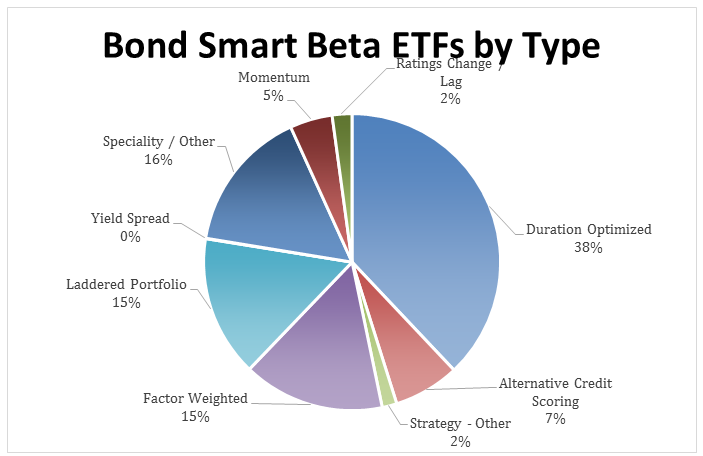
Smart beta ETFs hold the same universe as a standard index but weight it by something other than market capitalisation: value, momentum, quality, low volatility, size, or equal weight. The research behind these factors is long-standing, though returns arrive in cycles.
Momentum works in sustained trends and turns sharply at reversals. Low volatility lags in strong rallies and holds up better in falls. Long stretches where a factor trails the plain index are normal. Fees sit between index and active funds, typically 0.15% to 0.35%.
Examples: Invesco S&P 500 Low Volatility ETF (SPLV), iShares MSCI USA Momentum Factor ETF (MTUM), Vanguard Value ETF (VTV).
If you want broad exposure and low fees, stick with core market index ETFs. For income generation, consider dividend or bond ETFs. For targeting particular trends, thematic or sector ETFs are more effective. For inflation protection, commodity ETFs are more useful.
Lower expense ratios improve compound returns over time, especially with broad index ETFs (often under 0.10%). Verify the clarity of investments, trading volume, and replication strategy before purchase.
Large, popular ETFs offer tighter bid-ask spreads and easier execution. Less liquid ETFs may carry higher transaction costs. Verify average daily volume and bid-ask spread, especially for niche or thematic funds.
A strong portfolio typically employs a core-satellite strategy with a 60–80% allocation to broad index ETFs. Additionally, boost performance or yield with smaller satellite investments in sectors, themes, or income funds.
Factor-based and thematic ETFs often fluctuate more than core holdings. Bond ETFs have interest rate risk. Commodity ETFs may contain roll or contango costs. Know the inherent risks and align position sizing accordingly.
A potential investor using a core-satellite approach could use:
60% in the broad market index ETF (SPY, IWDA)
15% in dividend/income or bond ETF (AGG, VYM)
10% in thematic opportunity (ICLN, ARKK)
5% in commodity hedge (GLD, DBC)
10% in factor-based exposure (SPLV, MTUM)
Adjust according to risk tolerance and horizon. Rebalance annually or semi-annually to maintain target allocation.
Beginners should start with broad market ETFs, sector ETFs, bond ETFs, and dividend ETFs. These types offer diversified exposure, are easy to understand, and come with relatively low risk, making them ideal for new investors.
Thematic ETFs can be good if you're targeting long-term trends in AI, clean energy, or robotics. However, they may be more volatile than traditional ETFs, so they're best suited as part of a diversified strategy.
Yes, you can build a complete, diversified portfolio using ETFs. By combining broad market ETFs, bond ETFs, sector/thematic ETFs, and dividend ETFs, you can create a balanced strategy tailored to your risk and return preferences.
In conclusion, ETFs simplify investing by providing core index funds that deliver inexpensive, diversified access, while specialised thematic, bond, commodity, and factor funds enable personalisation.
If you're establishing a portfolio now, start with a broad index ETF and progressively add satellite investments such as income, thematic, or commodity ETFs as your strategy develops and your confidence increases.
Disclaimer: This material is for general information purposes only and is not intended as (and should not be considered to be) financial, investment or other advice on which reliance should be placed. No opinion given in the material constitutes a recommendation by EBC or the author that any particular investment, security, transaction or investment strategy is suitable for any specific person.