Published on: 2026-08-07
Updated on: 2026-08-07
South Korea's foreign exchange authorities conducted a rare dollar-selling intervention in late July, sending the won to a nine-month high, a market source said. That came alongside Japan's yen-buying.
A South Korean currency trader noted that the action is suspected to be a joint intervention with Japan, following recent commitments from both nations to coordinate closely on forex movements.
Some analysts suggest the Trump administration worries that Japan's efforts to strengthen its currency could harm the US economy by driving up government borrowing costs.
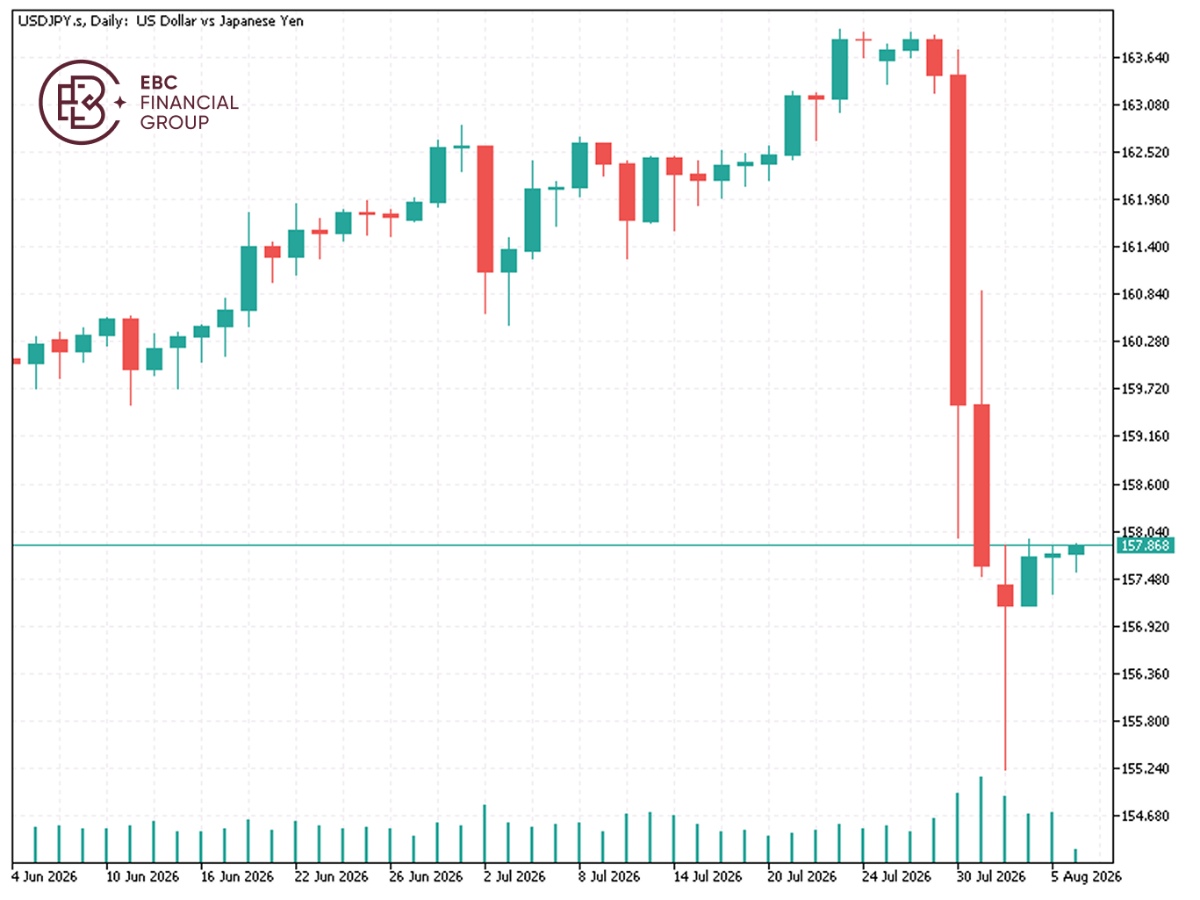
If the yen (USDJPY) kept falling, Japan would be forced to sell massive amounts of Treasury holdings for dry powder. Bond traders are spending millions on put options to hedge against a massive selloff in long-dated Treasuries.
Carry trades are shrinking amid manipulation fears, but the prospect largely hinges on the negotiation between Iran and the US. Trump said on Monday that Tehran is facing a "last chance before decapitation".
The torrid rally appears uneven, with widening gap between exporters and domestic-focused companies. Once the yen and won stabilises, capital may flow to the latter that grapples with ballooning input costs.
Up until then, the elevated volatility will become the new normal, which leaves unhedged positions vulnerable. An estimated 1.2 million Korean retail trading accounts were slammed with margin calls.
Investors remain confident in leading semiconductor manufacturers, believing their core expansion remains strong, while the disruptive leveraged positions that previously roiled the market appear to have diminished.
Highlighting a major sentiment shift, foreign investors reversed a year-long selling trend on Friday by purchasing a record-breaking 7.2 trillion won in South Korean shares, more than doubling the previous single-day high.
The regulators last month adopted cooling measures, including a higher minimum cash deposit requirement for investors and a temporary ban on new listings of such ETFs.
Funds tied to chip giants like SK Hynix and Samsung Electronics saw massive volume contractions; trading in the prominent SK Hynix leveraged ETF dropped to 59 million shares, down more than 90% from its peak.
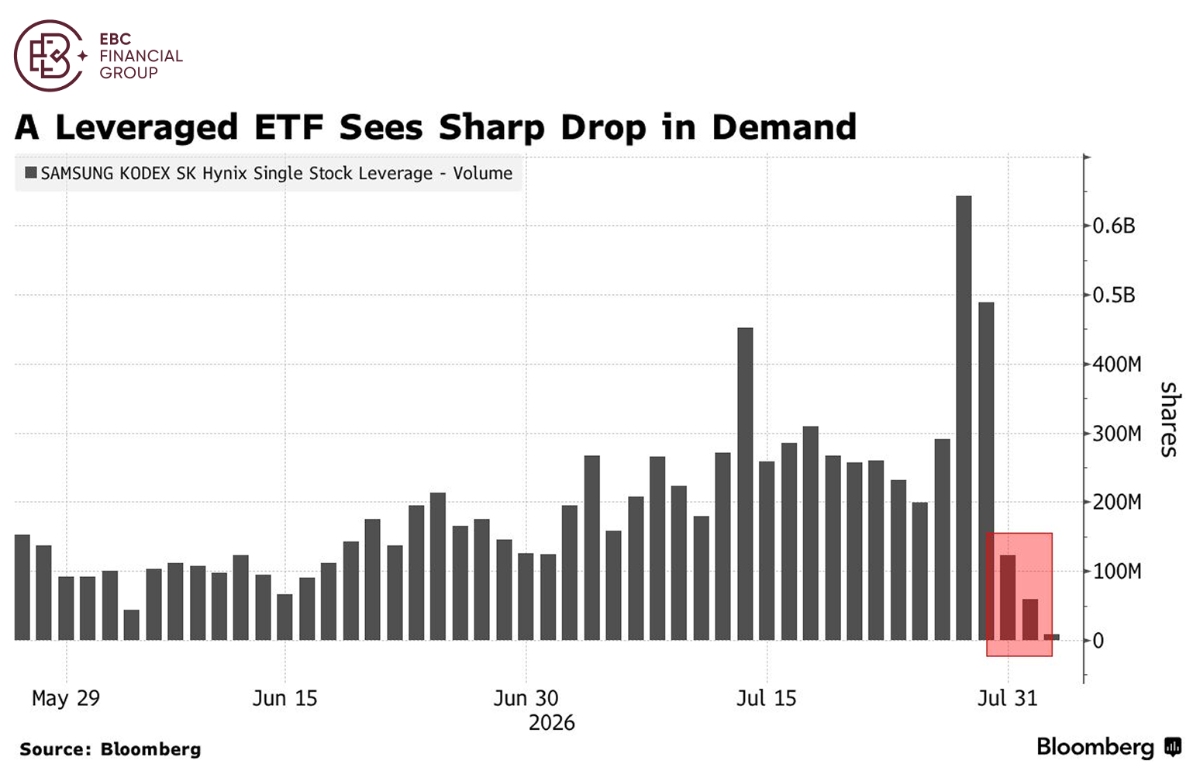
Leverage was driving the boom and subsequent crash. But average allocations to the Asian country by active global emerging market funds flattened in June, figures from analytics firm EPFR show.
Japanese retail traders are famously contrarian. They typically buy when the market drops and sell when it rallies, rather than chasing high-flying peaks, which helps prevent a 1990s-style crash.
As a result, the Nikkei 225 (225JPY) has demonstrated significantly great resilience during July. The benchmark index dropped 11.3%, while KOSPI tumbled 22.2% - the biggest monthly decline since October 2008.
Last week Samsung Electronic said it expects global chip shortages to become more acute and extend into 2028 while reporting a more than 250-fold jump in chip profit for Q2.
Furthermore, rising factory utilization and higher chip prices are expected to soon revive the company's foundry business, which directly competes with market leaders TSMC and Intel.
Elon Musk on Wednesday stated that the global demand for memory chips is surging by 200% or more annually, heavily outpacing the roughly 20% yearly growth in production output.
Aggressive AI infrastructure spending is forging an unprecedented bond between Wall Street and Seoul, locking the fate of US tech giants together with South Korea's premier semiconductor producers.
While Samsung and SK Hynix function as real-time proxies for investor sentiment ahead of the US market open, the Magnificent Seven similarly provides an advance signal for the upcoming South Korean trading session.
As long as the correlation holds, holding the related ETFs in a portfolio effectively eliminates the benefits of diversification, e.g. iShares MSCI SOUTH KOREA ETF (EWY.P) and iShares Core S&P 500 (IVV.P).
Instead Treasury bills may act as the perfect, uncorrelated antidote to tech exposures as they produce risk-free return. iShares Barclays Short Treasury Bond Fund (SHV.OQ) is an available option on EBC.