Published on: 2026-07-16
Updated on: 2026-07-16
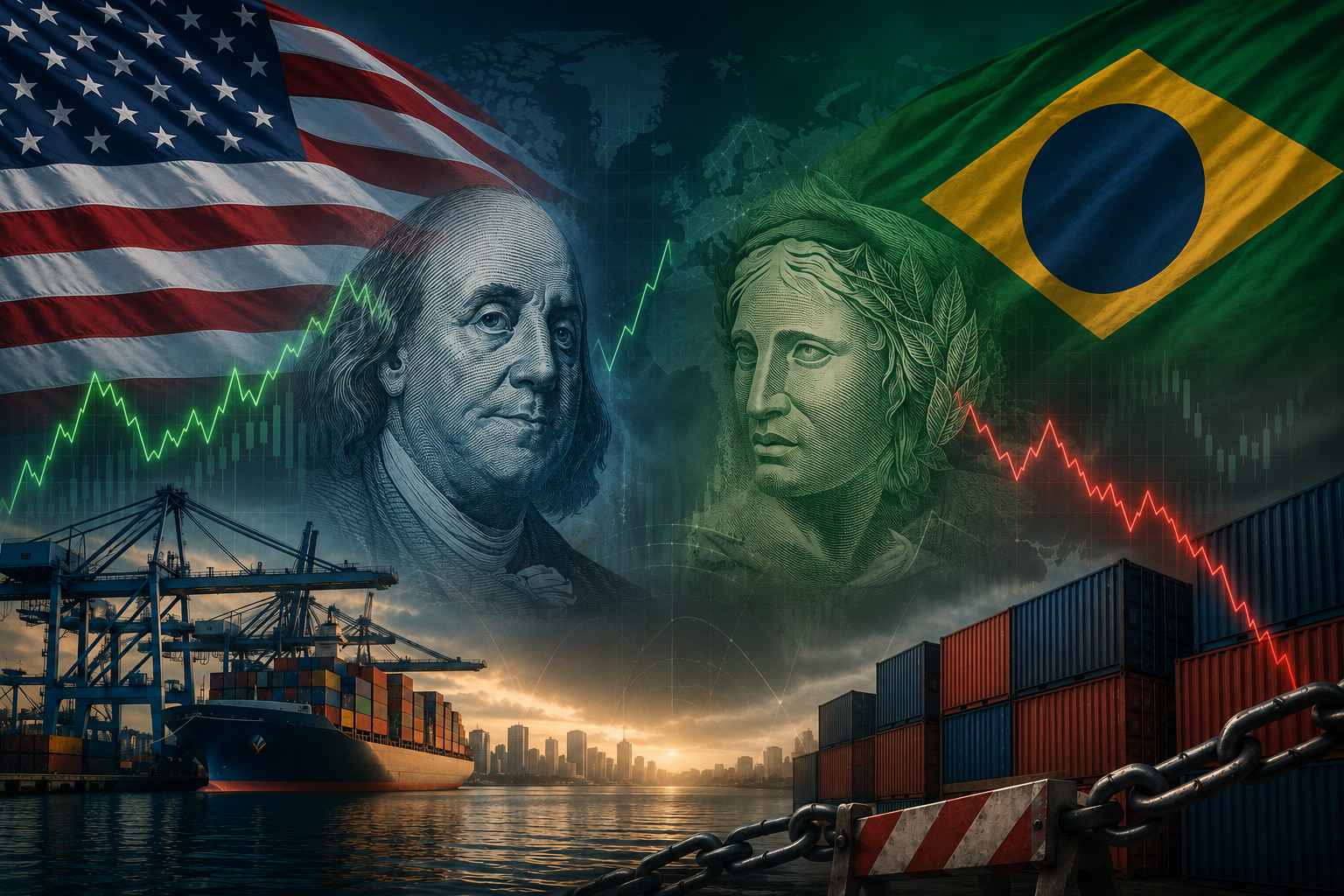
USD/BRL was trading near R$5.09 on 16 July, leaving the Brazilian real roughly 8% stronger against the dollar than it was a year earlier. From 22 July, the United States will impose an additional 25% duty on non-exempt Brazilian imports, but a generous list of product exemptions and Brazil's 14.25% policy rate look likely to limit the immediate damage to the currency.
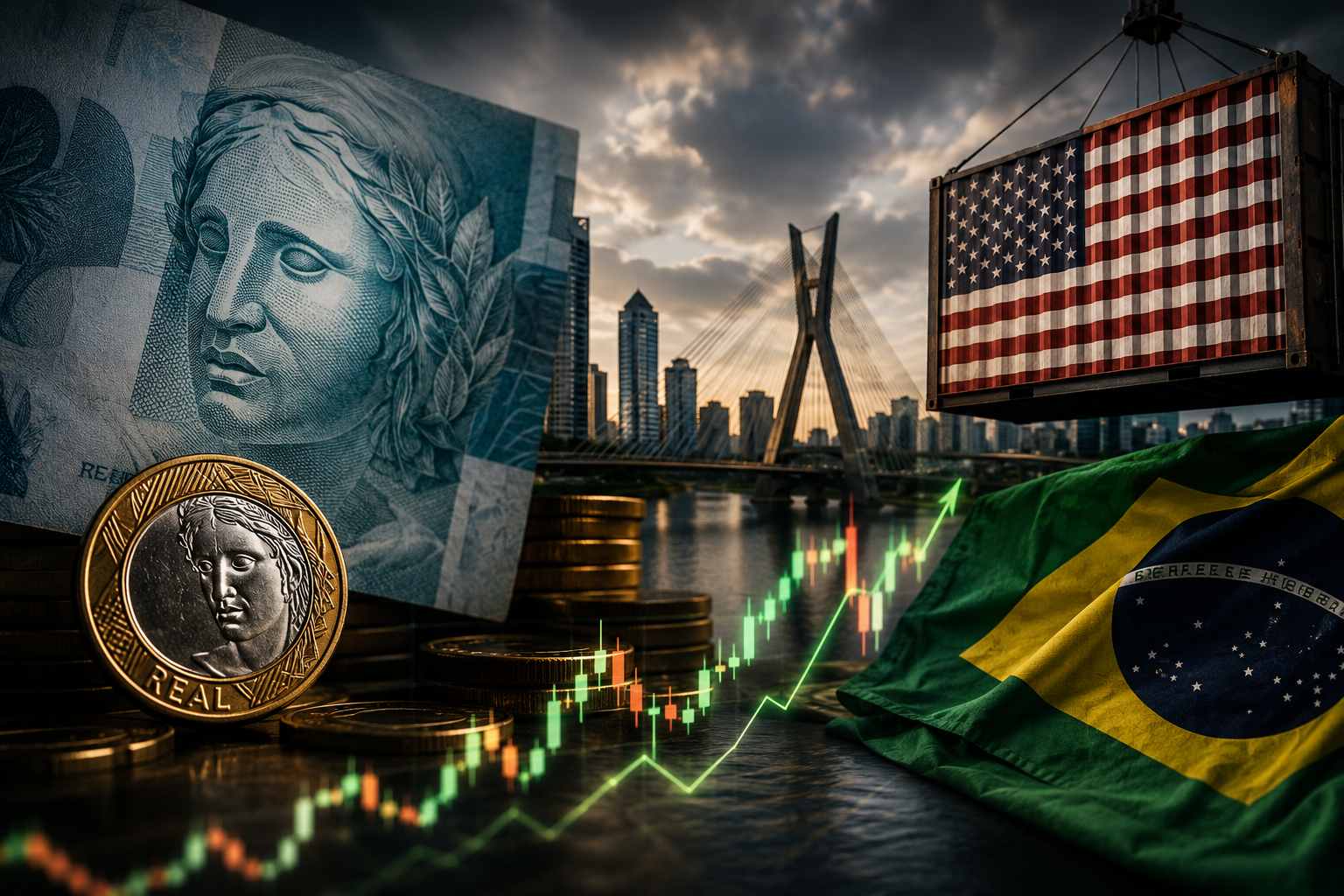
The more important question is not what the tariff headline does on day one. It is whether the trade dispute combines with election uncertainty, fiscal worries or faster interest-rate cuts to begin unwinding the carry trade that has kept the real strong.
The US will impose an additional 25% tariff on non-exempt Brazilian imports from 22 July.
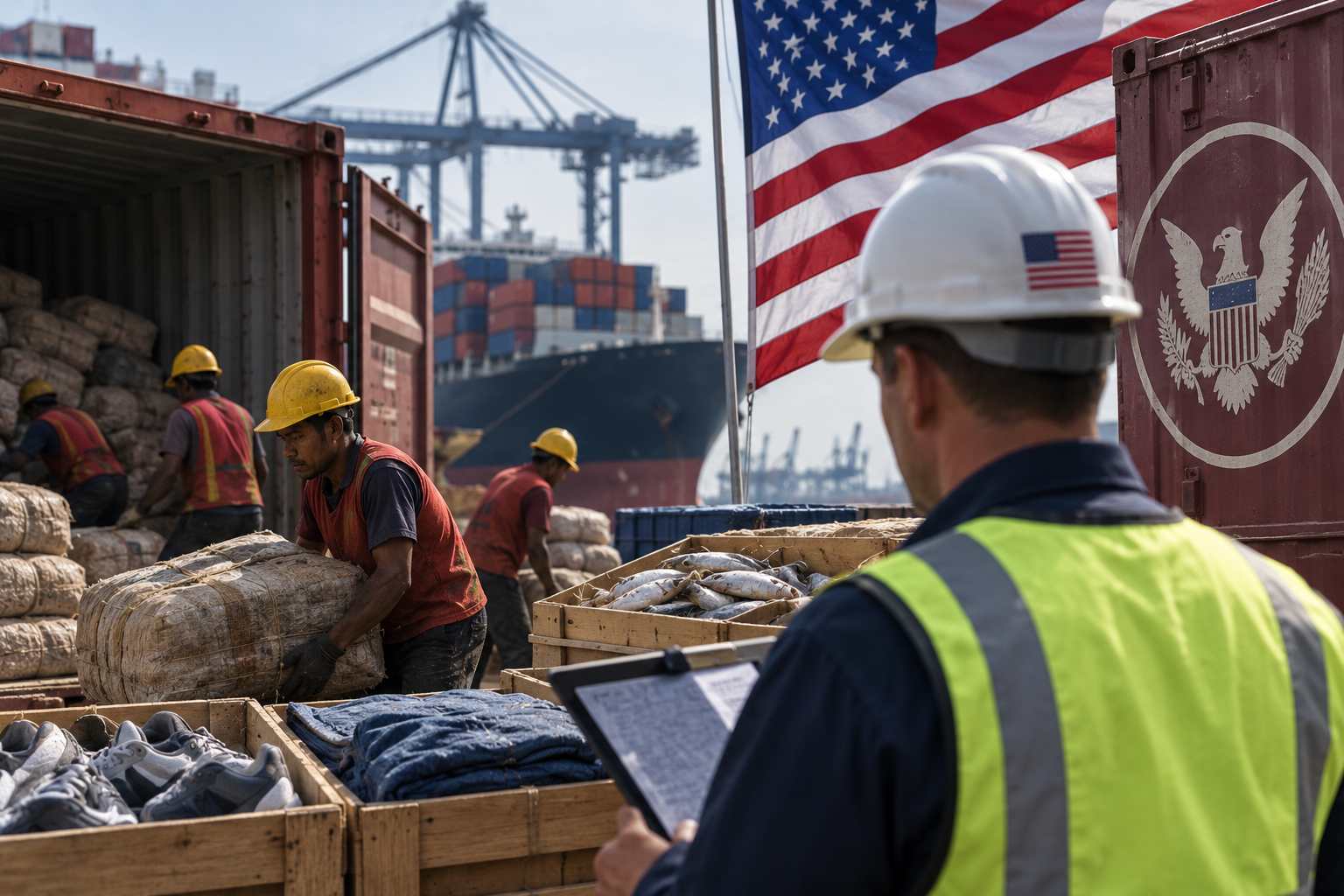
Coffee, beef, orange juice, selected energy products and certain aerospace goods are exempt.
Brazil's 14.25% Selic rate remains the single strongest source of support for the real.
A separate 12.5% forced-labour tariff has been proposed but not finalised.
The tariff is most likely to move USD/BRL sharply if it begins to affect capital flows, inflation expectations or Brazil's interest-rate outlook, though a global risk-off move could weaken the real independently.
The US Trade Representative has completed a Section 301 investigation into Brazilian trade practices and announced an additional 25% tariff on affected goods, effective at 12:01 a.m. Eastern Time on 22 July.
Crucially, the duty does not fall evenly across Brazil's export base. Coffee, beef, oranges and orange juice, selected energy products and certain aerospace parts are all exempt. The duty applies to goods outside that exemption list, machinery and fuel ethanol among them.(Ranking which sectors are hit hardest would require matching US import values to the affected customs codes, something the USTR notice does not do.)
Those carve-outs matter a great deal for the real, because several of Brazil's most internationally recognised exports will avoid the new duty altogether, softening the immediate hit to export revenue and the trade balance.
One technical wrinkle is worth noting: the tariff stacks on top of other applicable duties, and the temporary 10% global import surcharge introduced under Section 122 is scheduled to run until 24 July, leaving a short window in which the two measures overlap.
Sitting just behind the headline number is a second, unconfirmed threat. A separate US investigation into forced-labour enforcement has produced a proposed additional 12.5% tariff covering several economies, Brazil among them. As of 16 July, that measure remained a proposal rather than a duty in force.
If it were adopted in its current form and applied on top of the 25%, the effective rate on affected non-exempt goods would reach 37.5%. That figure belongs in the risk column, not the current-policy column, something that is crucial for USD/BRL, because while markets may price in some probability of a steeper duty, the real does not yet face a confirmed 37.5% wall.
The latest tariff is only the most recent stage in a dispute that has already moved through several legal phases. In July 2025, Washington imposed an additional 40% Brazil-specific tariff which, combined with an existing 10% measure, pushed the total rate on affected goods to 50%.
That structure did not survive: on 20 February 2026 the US Supreme Court ruled that the emergency-powers legislation underpinning many of the tariffs did not, in fact, authorise them.
Four days later, on 24 February, Washington introduced a fresh temporary 10% global import surcharge under Section 122. This was a new, broad measure rather than a reinstatement of the earlier Brazil-specific tariff. The Section 301 route then produced the current outcome, announced on 15 July and beginning on 22 July: an additional 25% on affected Brazilian goods.
On the surface, 25% is milder than the earlier 50% total, and the new exemptions further reduce the direct impact on several major exports. But the two regimes are not directly comparable, they rest on different legal authorities, cover different products and interact differently with other duties. The new tariff therefore looks less severe than the old one at the headline level, without being a clean de-escalation.
The dominant force behind the real's resilience is Brazil's interest-rate advantage. The central bank has lowered the Selic rate from 15% to 14.25% through three consecutive quarter-point cuts, yet even after that easing the rate sits far above the Federal Reserve's 3.50%-3.75% target range.
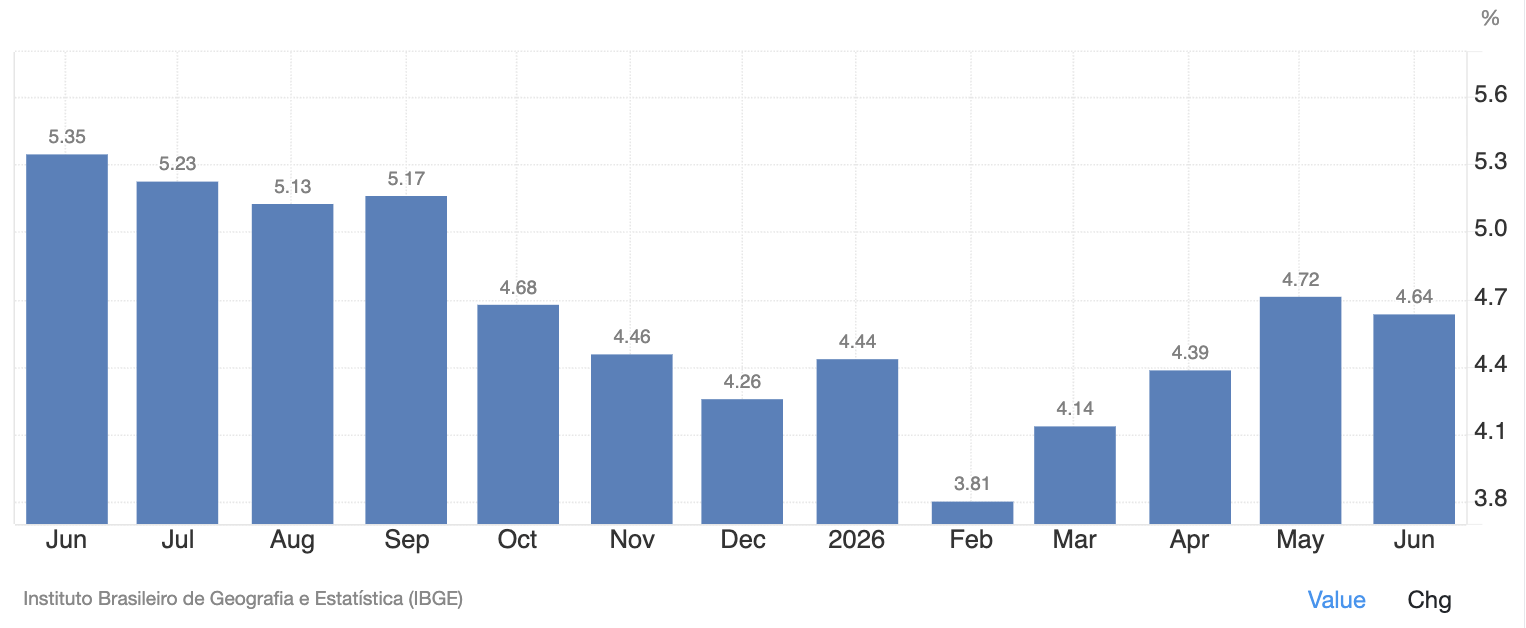
With Brazilian inflation at 4.64% in June, the real (inflation-adjusted) policy rate is around 9%, roughly 9.6 percentage points on a simple subtraction, or about 9.2% once compounding is accounted for. Substituting expected inflation of around 5.2% leaves it closer to 8.5%-9%.
That does not translate into a guaranteed real return, since bond prices, taxes, hedging costs and currency moves all shape the final outcome. It does, however, explain why Brazilian fixed income remains compelling relative to lower-yielding markets, and why the carry trade continues to work: investors can borrow in cheaper-funding currencies and hold higher-yielding Brazilian assets, and those inflows generate steady demand for the real.
A softer US dollar has added to the effect, as cooling US inflation has trimmed expectations for further Fed tightening and eroded part of the dollar's own rate advantage.
A tariff does not automatically weaken a currency. Its effect depends on how much trade is actually covered, whether exporters lose market share, how the affected country responds, and whether the dispute shifts inflation or interest-rate expectations.
In Brazil's case, the exemptions limit the immediate trade shock while the domestic rate advantage provides an unusually firm cushion, which is why USD/BRL has held near R$5.09 rather than spiking after the announcement.
For now, the market is placing more weight on Brazil's yield than on the direct cost of the duty. That balance could shift quickly, however, if the tariffs begin to reduce export income, provoke retaliation or dent demand for Brazilian assets.
The clearest risk is that the tariffs broaden. The proposed 12.5% forced-labour duty, retaliatory action from Brazil or further US restrictions could all raise the economic cost, and currency markets would likely react before any of it showed up in trade data.
Retaliation carries its own complications: measures aimed at US products might shield selected Brazilian industries, but they could equally lift domestic prices and dent confidence, with the currency reaction hinging on whether markets read the response as controlled or as the opening of a wider conflict.
Politics is the second pressure point. Brazil's presidential election opens with a first round on 4 October, and campaigns of this kind tend to bring promises on spending, taxes and household support. If investors conclude that the next government will tolerate wider deficits or loosen the fiscal framework, they will demand a higher risk premium, and high bond yields that reflect debt worries are far less supportive of a currency than high yields that simply attract capital.
The underlying fiscal picture reinforces the point: the consolidated public sector ran a primary deficit of R$56.1 billion in May, up from R$33.7 billion a year earlier, with the twelve-month deficit reaching R$149 billion, or around 1.14% of GDP.
Those numbers do not signal an immediate crisis, but they explain why spending and debt expectations will stay in focus as October approaches, and why sustained deterioration could weaken the real even with the Selic rate high.
The carry story also depends on Brazil keeping its rate gap wide, which makes the pace of easing a risk in itself. Copom has not declared its cycle almost over; it has tied future decisions to inflation, activity and expectations. The latest Focus survey puts the median year-end Selic forecast at 14.00%, only marginally below today's 14.25%, so a faster move lower would narrow the gap with the US and make Brazilian carry positions less attractive.
Finally, the real remains an emerging-market currency, and a global equity sell-off, geopolitical shock or sudden scramble for dollars could weaken it regardless of domestic fundamentals, carry trades are especially exposed when volatility rises and leveraged positions are unwound in a hurry.
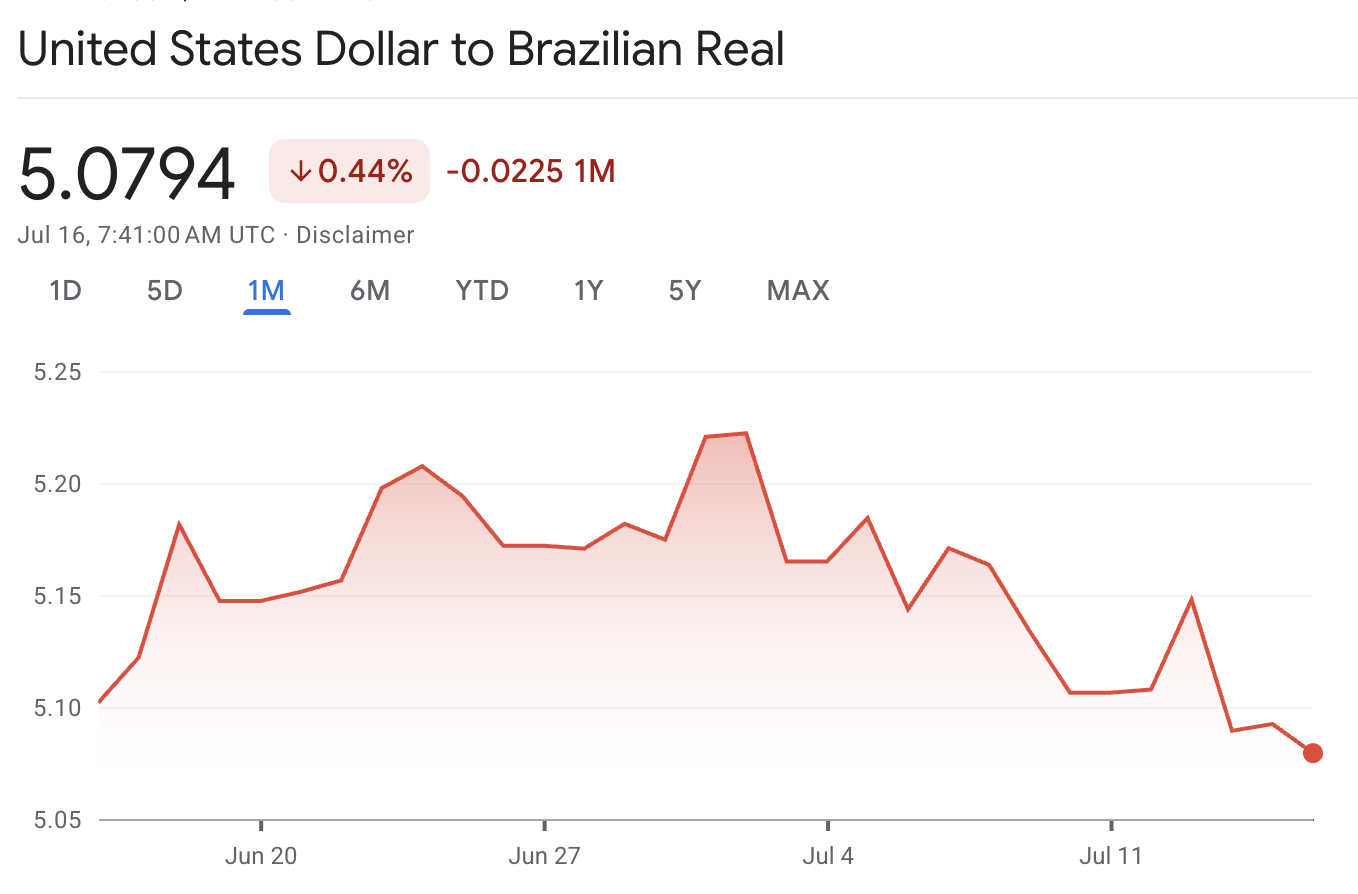
Near R$5.09, USD/BRL sits in the lower half of its recent range, which suggests the market currently trusts Brazil's rate advantage more than it fears the tariff. The ranges below are scenarios rather than fixed price targets.
| Scenario | Possible USD/BRL area | What could drive it |
|---|---|---|
| Real remains supported | R$4.90 – R$5.05 | Exemptions contain the trade hit, the dollar stays soft, and Selic holds near current levels |
| Consolidation | R$5.05 – R$5.25 | Carry support offsets tariff, fiscal and election uncertainty |
| Real weakens | Above R$5.25 – R$5.30 | Additional tariffs, retaliation, fiscal slippage, faster Selic cuts or a global risk-off move |
The R$5.00 mark is better understood as a psychological pivot than a firm floor. USD/BRL has traded below it before, and political or global shocks can carry the pair through round-number levels quickly.
Four dates stand out over the coming months: the new 25% Section 301 tariff begins on 22 July; the temporary Section 122 surcharge is scheduled to expire on 24 July; the next Copom monetary-policy meeting falls on 4-5 August; and the first round of Brazil's presidential election takes place on 4 October.
None of these will set the direction of USD/BRL on its own, but each has the potential to reshape expectations around trade, inflation, fiscal policy or interest rates, the variables far more likely to move the pair.
The new 25% US tariff does not, by itself, overturn the constructive case for the real. Exemptions blunt its direct impact, and Brazil's 14.25% Selic rate still delivers one of the widest interest-rate advantages among large, liquid emerging markets.
That support is real but conditional: the currency becomes more vulnerable if the tariffs broaden, if Brazil retaliates, if fiscal concerns intensify ahead of the election, or if Copom cuts more aggressively than expected.
For anyone watching USD/BRL, the interest-rate differential remains the first variable to track, the tariff only becomes decisive when it starts to change capital flows, inflation expectations or the expected path of Brazilian rates.