Published on: 2026-05-12
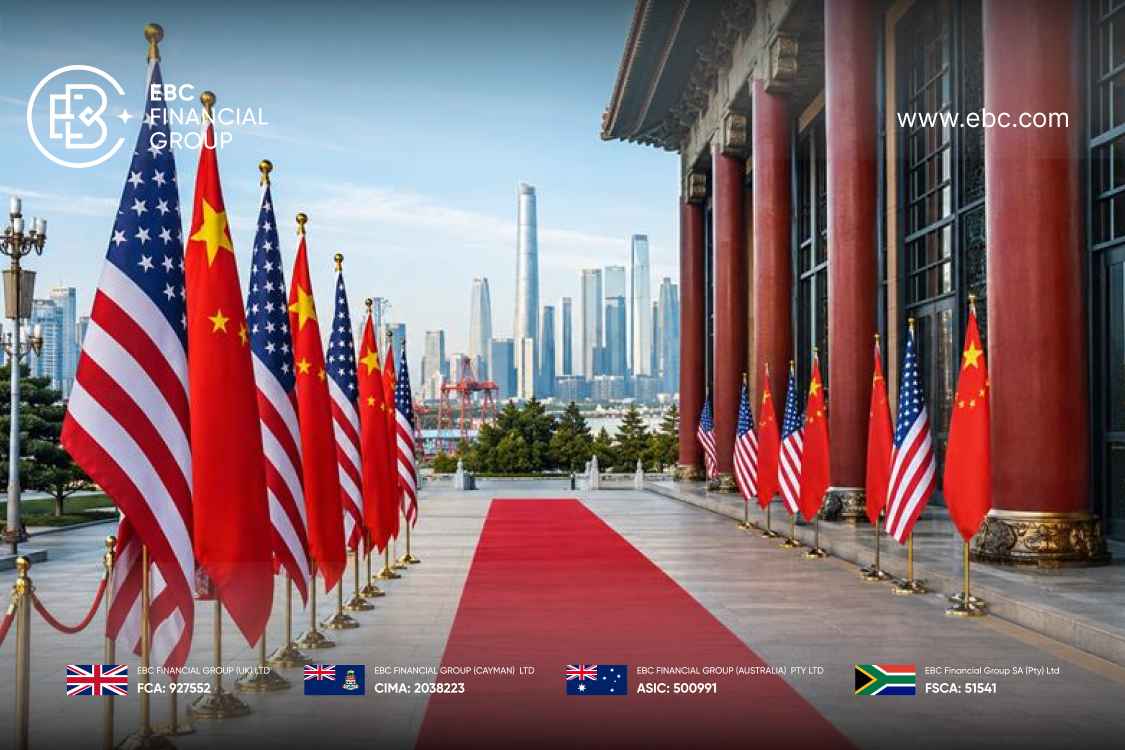
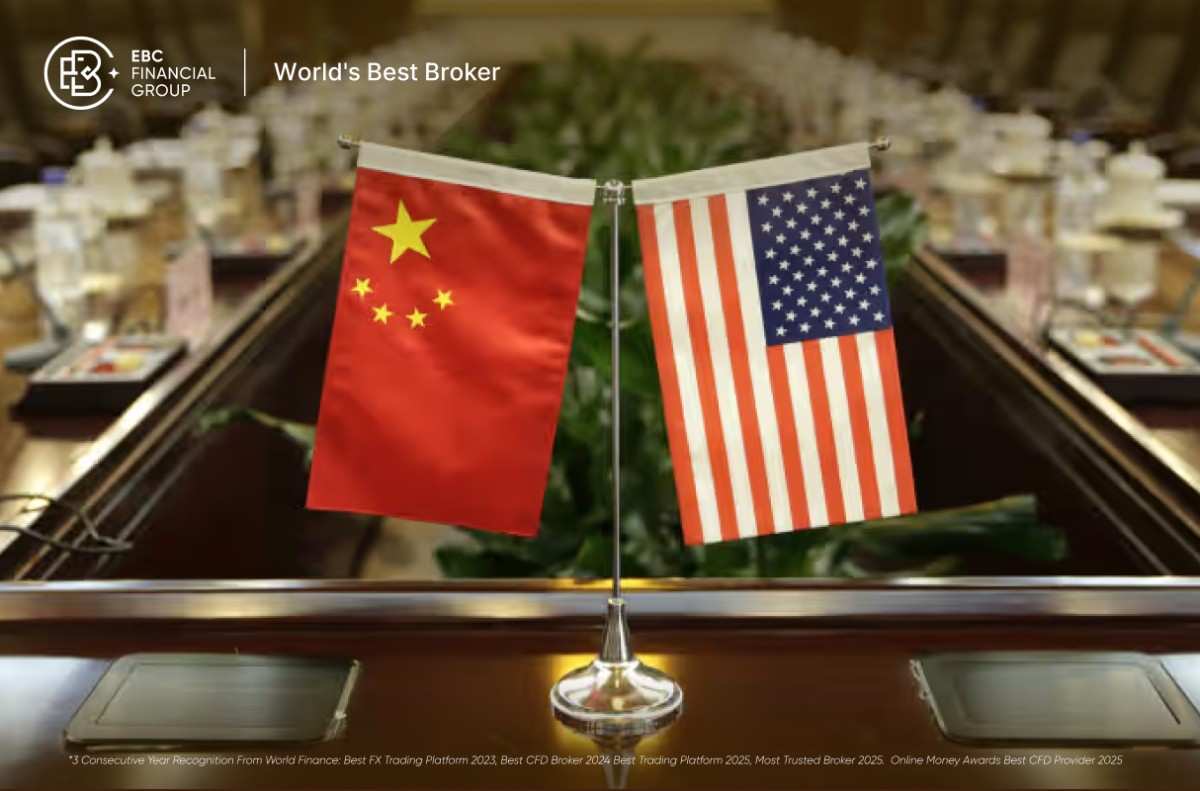
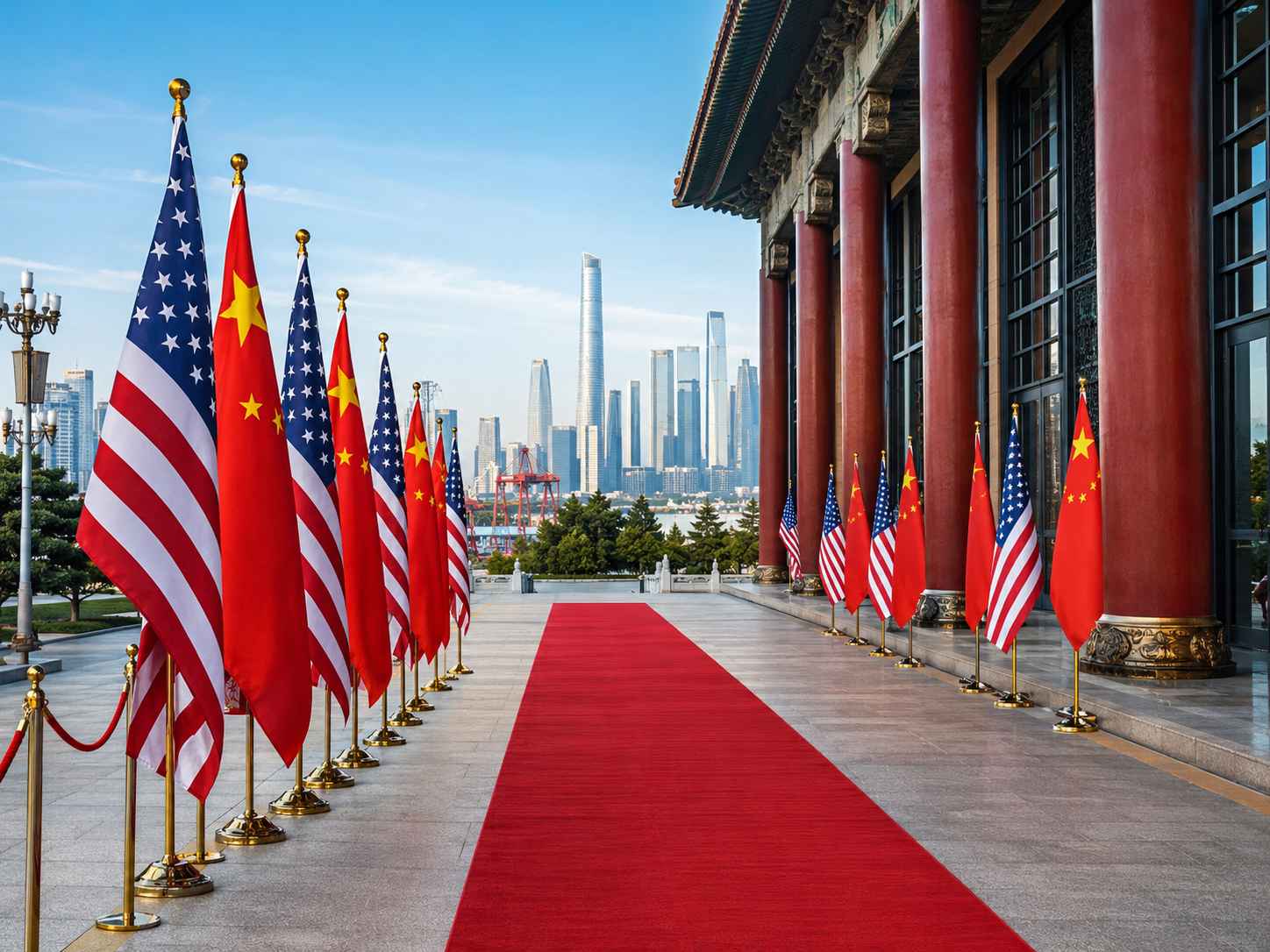
President Trump will arrive in Beijing on May 13 for a three-day state visit, the first by a U.S. president in nearly nine years. The visit was originally scheduled for late March but was postponed due to the Iran war, making the rescheduling itself a signal of how much both sides want this meeting to happen.
China enters the summit in a position of economic strength. Q1 2026 GDP grew 5.0%, hitting the top of Beijing’s target range. April exports surged 14.1% to a record $359.44 billion. The trade surplus for January-April 2026 reached $347.70 billion, with new export orders at a two-year high.
The October 2025 trade truce, which reduced tariffs, secured U.S. access to critical minerals, and committed China to purchasing 25 million metric tonnes of U.S. soybeans annually through 2028, expires on November 10, 2026. Whether it gets extended, expanded, or allowed to lapse will directly affect commodity prices, currency pairs, and equity valuations across both developed and emerging markets.
A delegation of major American CEOs, including the heads of Blackstone, Citigroup, Boeing, and Mastercard, will accompany the president. The commercial agenda alongside the diplomatic one signals both sides see this as an opportunity to deepen economic engagement, not just manage tensions.
Tomorrow, the president of the United States will land in Beijing for the first American presidential state visit to China since November 2017. The last time an American president visited China, the bilateral relationship was defined by trade friction. This time, it is defined by something far larger: a global energy crisis, a war in the Middle East that has disrupted 20% of the world’s oil and gas flows through the Strait of Hormuz, and a period of trade fragmentation that has reshaped supply chains across every continent.
The visit runs from May 13 to 15. It was originally scheduled for late March but postponed when the Iran war escalated. The rescheduling, rather than cancellation, tells the market something important: both governments concluded that the cost of not meeting exceeded the political risk of meeting.
For global markets, what comes out of Beijing this week will influence commodity prices, currency pairs (particularly USD/CNY, AUD/USD, and USD/BRL), semiconductor supply chains, and equity valuations across Asia. The signal to watch is not the headline deal. It is whether both sides indicate a willingness to move from short-term truces to a longer-term framework.
China arrives at this summit with economic data that has consistently outperformed expectations.
Q1 2026 GDP grew 5.0% year-on-year, hitting the top of Beijing’s target range and accelerating from 4.5% in Q4 2025. April exports surged 14.1% to a record $359.44 billion, recovering sharply from a 2.5% dip in March when the early effects of the Hormuz disruption slowed shipping. Imports climbed 25.3%, reflecting strong demand for commodities, industrial inputs, and AI-related components. The April trade surplus widened to $84.8 billion.
For the first four months of 2026, China’s trade surplus reached $347.70 billion. New export orders hit a two-year high in April. Exports to the United States rose 11.3% in April after a 26.5% decline in March, suggesting that the underlying bilateral trade relationship retains significant momentum even under elevated tariff conditions.
China’s trade surplus reached a record $1.2 trillion in 2025, achieved through a deliberate and effective diversification of export markets. Shipments to Europe, Southeast Asia, Latin America, and Africa have all expanded, reducing China’s dependence on any single market. The ASEAN bloc has become a larger trading partner with China than either the United States or the European Union.
This diversification, combined with China’s dominant position in critical minerals processing, rare earth refining, and advanced manufacturing, means Beijing enters the summit with the economic resilience to negotiate from a position of confidence.
The trade truce signed at the Busan Summit in October 2025 reduced tariffs, secured U.S. access to critical minerals, and committed China to purchasing 25 million metric tonnes of U.S. soybeans annually through 2028. The truce expires on November 10, 2026, less than six months from now.
Whether that agreement gets extended, expanded, or allowed to lapse is the single most consequential near-term outcome for global markets. An extension signals stability. An expansion into a longer-term framework would remove a source of structural uncertainty that has weighed on global business investment since 2018.
A lapse would immediately reprice risk across commodity markets, currency pairs, and Asian equities.
The Strait of Hormuz, through which roughly 20% of global oil and gas flows passed before the conflict, is expected to be high on the agenda.
Both governments want the strait reopened. China has provided high-level assurances that it will not supply weapons to Iran, with Defense Secretary Hegseth attributing that commitment to the “strong and direct relationship” between the two leaders.
For energy markets, any progress toward reopening Hormuz would ease the oil and fertilizer price pressures that have been driving inflation across developing economies. China’s ability to serve as a diplomatic channel between Washington and Tehran gives it a unique role in the resolution of a crisis that is affecting global energy prices, food costs, and shipping routes simultaneously.
A delegation of major American CEOs will accompany the president, including Steve Schwarzman of Blackstone, Jane Fraser of Citigroup, and the heads of Boeing and Mastercard. The commercial agenda is expected to include aircraft purchases, agricultural deals, and discussions on investment access.
The presence of this delegation alongside the diplomatic program signals that both sides view the visit as an opportunity to expand commercial ties, not just manage political tensions. For Boeing, which has been losing ground to Airbus in the Chinese market, new orders would carry immediate financial significance.
For agricultural exporters, the continuation and potential expansion of the soybean commitment would provide pricing certainty through at least 2028.
The Council on Foreign Relations described the summit as an effort to stabilize the bilateral relationship rather than resolve long-standing disputes. That framing understates what is at stake.
The world’s two largest economies meeting during a period of simultaneous energy crisis, trade fragmentation, and geopolitical instability carries a signal that goes beyond any communique: the global economy cannot stabilize without both powers at the table. No other bilateral relationship has this capacity to move commodity prices, reset supply chain expectations, and influence capital allocation decisions across both developed and emerging markets simultaneously.
The trade data underscores this. China’s exports in the first four months of 2026 totaled over $1.3 trillion. The United States remains one of China’s largest trading partners despite elevated tariffs. The bilateral trade surplus with the U.S. reached $87.7 billion in the January-April period. These are numbers that reflect deep economic interdependence, the kind that cannot be unwound by tariff schedules or political rhetoric.
The broader context makes the timing even more significant. Global trade growth has slowed to 0.5% in 2026 according to the WTO, the weakest since the pandemic. The Hormuz blockade has disrupted energy flows across Asia, the Middle East, and Europe. Food prices are rising in import-dependent economies. Twenty-two low-income countries are in or at high risk of debt distress.
In this environment, a successful summit between the world’s two largest economies provides a stabilizing signal that no other meeting, institution, or agreement can replicate.
For traders and institutional investors, the practical implications break into three categories.
Commodities: A signal of continued detente would support soybean, corn, and agricultural commodity prices by confirming the purchasing commitments through 2028. Any progress on Hormuz would ease crude oil, LNG, and fertilizer prices that have been elevated since February.
Currencies: A stable or improving U.S.-China relationship typically eases pressure on the yuan (USD/CNY), supports commodity-linked currencies like the Australian dollar (AUD/USD) and Brazilian real (USD/BRL), and provides a floor under Asian emerging market currencies that have been trading at discounts to fundamentals.
Equities: Asian equity markets have been pricing in geopolitical risk throughout 2026. A summit that signals multi-year stability rather than rolling 90-day extensions would reduce the risk premium on Asian equities, particularly in sectors tied to trade flows, technology supply chains, and energy infrastructure.
The risk scenario is equally clear. A breakdown in talks, an escalation in tensions over unresolved bilateral issues, or a failure to address the November 10 deadline would reprice risk across every asset class simultaneously.
Xi Jinping is expected to make a reciprocal state visit to Washington later this year. That expectation, signaled at the Busan Summit and reinforced in pre-summit diplomatic exchanges, is itself a market-relevant data point. It suggests both governments view this week’s meetings as the beginning of a sustained diplomatic engagement, not a one-off event.
For global markets, that continuity carries more weight than any single tariff reduction, soybean commitment, or aircraft order. The structural uncertainty that has depressed cross-border investment since 2018 was driven less by any specific trade policy and more by the perception that the bilateral relationship could deteriorate unpredictably at any moment.
A pattern of regular, high-level engagement between the two largest economies would do more to restore business confidence than any single agreement.
The first U.S. presidential visit to China in nearly nine years arrives at a moment when the global economy needs its two largest engines pulling in a compatible direction. China’s Q1 growth of 5.0%, record export performance, and effective trade diversification across Asia, Africa, and Latin America demonstrate an economy that has absorbed external shocks and maintained its forward momentum.
The October 2025 trade truce expires in less than six months, the Hormuz crisis remains unresolved, and global trade growth has slowed to its weakest pace since the pandemic.
Whether this summit produces a framework for sustained engagement or remains a symbolic visit with limited follow-through will shape commodity prices, currency markets, and capital flows across both hemispheres. The market will have its answer by Friday.