Published on: 2026-07-16
For decades, holding Johnson & Johnson stock was the ultimate defense mechanism for a choppy portfolio. It was the kind of stock you bought, tucked away, and ignored, confident that its massive consumer catalog and steady dividends would keep you afloat. But lately, J&J has been ripping up its own playbook. The company is trying to transform into a high-octane, pure-play medical innovator—and as its latest earnings report shows, that transformation is proving to be a bumpy, expensive ride.
Following its second-quarter earnings release, the JNJ share price took a sudden midday tumble, dropping more than 3% even though the company actually beat top-line revenue estimates. The drop caught a lot of retail investors off guard, but it reveals a deeper tension on Wall Street: institutional investors are realizing that J&J’s new, sleeker identity comes with a level of volatility they aren't quite used to.
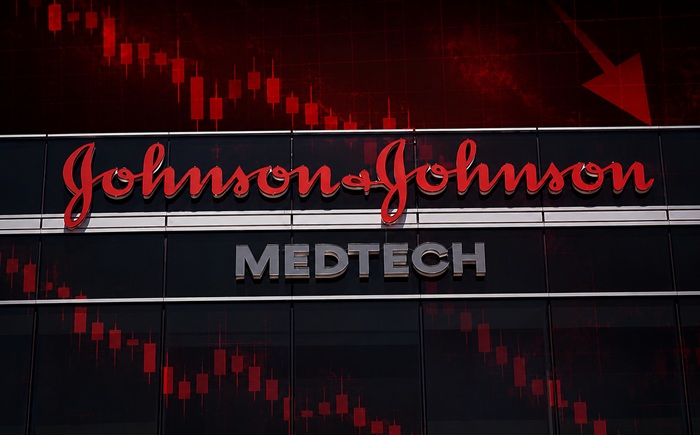
On paper, J&J’s headline revenue of $22.9 billion—a 4.2% increase year-over-year—looked like a win. But when you look closely at where that money actually went, the picture gets complicated.
By spinning off its consumer health division, Kenvue, J&J walked away from the predictable, everyday cash flow of Band-Aids and Tylenol. Now, the pharmaceutical giant is entirely reliant on high-risk, high-reward medical breakthroughs and surgical tech. This quarter, that strategy ran headfirst into some incredibly high bills.
Integrating Big Acquisitions: J&J has been on a massive spending spree to build out its medical devices segment, recently absorbing Shockwave Medical. The costs of plugging these massive businesses into J&J’s existing infrastructure were much higher than analysts estimated, dragging down operating margins.
The Stelara Anxiety: J&J’s crown jewel drug, Stelara, is rapidly losing its market monopoly. While newer oncology therapies are growing fast, they aren't quite ready to carry the financial weight that Stelara has lifted for years.
Clipped Forecasts: To top it off, management nudged their full-year adjusted profit outlook downward. They blamed a mix of stubborn supply chain inflation and unfavorable exchange rates, which was all the excuse short-term traders needed to hit the sell button.
These sharp post-earnings swings show just how much J&J’s risk profile has changed. It simply doesn't trade like a sleepy consumer staple anymore.
Traders taking a view on J&J ahead of earnings, clinical readouts, or FDA decisions can access the stock as JNJ via EBC's stock CFD platform. Pharma and biotech stocks can move 20% or more on binary events - the CFD format allows short positions for downside scenarios as well as longs, but leverage makes position sizing relative to your account critical.
The logic behind J&J's pivot makes sense in a boardroom. Advanced robotics, cardiovascular pumps, and high-tech implants offer far higher profit margins over the long run than baby shampoo. But executing this strategy in the real world is incredibly capital-intensive.
While J&J has acquired some of the most cutting-edge technology on the market, hospitals are currently operating on incredibly tight budgets. Between nursing shortages and rising administrative costs, many healthcare facilities are delaying major capital expenditures on expensive new robotic systems.
This slower-than-expected adoption curve has left some investors wondering if the company overpaid for its new toys. Until the medical devices segment starts delivering clean, organic margin expansion without the drag of heavy integration costs, the JNJ share price will likely face a bit of a valuation ceiling.
You can't have an honest conversation about Johnson & Johnson stock without talking about the legal cloud that refuses to dissipate. Even though the consumer spin-off is complete, J&J kept the liabilities linked to the legacy talcum powder lawsuits.
The company's ongoing effort to resolve tens of thousands of ovarian cancer claims through a $9 billion bankruptcy settlement has been a masterclass in legal chess, but it is far from over. Every time a claimant group objects or a court schedules a new hearing, the stock takes a psychological hit.
For conservative fund managers, this endless headline risk is a deterrent. They don't doubt J&J’s financial health—the company still boasts a rare AAA credit rating—but they hate unpredictability. Until a judge signs off on a final, unappealable settlement, this issue will continue to discount what would otherwise be a premier value stock.
So, where does this leave everyday investors?
Ultimately, the drop we saw after the Q2 earnings isn't a sign of a failing company; it’s the price of admission for a massive corporate overhaul. J&J is no longer a slow, steady defensive utility. It is now a high-stakes innovator with a legendary dividend legacy attached to it.
If you are looking at Johnson & Johnson stock today, you have to ask yourself if you believe in their long-term vision. If their new medical tech acquisitions pay off and they can finally put the talc litigation in the rearview mirror, the current pullback might look like a bargain. But if the integration of these high-priced tech firms continues to squeeze margins, it may take a while for this healthcare titan to find its footing again.