Published on: 2026-08-24
Updated on: 2026-08-24
Iran is already one of the world’s most heavily sanctioned economies, yet Scott Bessent says Washington is preparing the “single greatest financial offensive ever marshalled against an adversary.”
Monday’s “Economic D-Day” is expected to push US pressure beyond Tehran and onto the foreign banks, refiners and trade networks that keep Iranian commerce alive. Washington now has to shut down the financial and trade routes that allowed Iran to outlast earlier sanctions.
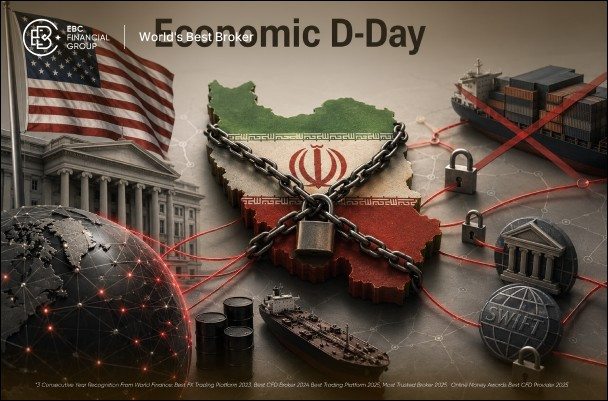
Bessent’s 2 p.m. EDT briefing will show whether “Economic D-Day” is a new sanctions strategy or a harder version of maximum pressure already in place.
China buys about 90% of Iran’s oil exports, making Chinese refiners and banks the biggest obstacle to Washington cutting Tehran’s remaining oil revenues.
Iranian crude loadings have fallen more than 80% from July levels through August 17, leaving less room for another conventional oil crackdown to do the heavy lifting.
Hormuz oil flows are roughly 77% below Q4 2025 levels, leaving Gulf supply more exposed to another Iranian retaliation.
The decisive signal will be whether Iran’s remaining payment, shipping and oil routes stop functioning, not how many entities Treasury sanctions.
“Economic D-Day” is Bessent’s label for a sanctions campaign aimed at Iran’s foreign trade partners rather than Tehran alone. Washington has confirmed the target, but not the specific penalties, entities, exemptions or enforcement dates that Bessent is expected to unveil at 2 p.m. EDT on August 24.
Iran enters that announcement with real GDP projected to shrink 5.4% in 2026 and inflation at 68.9%, leaving Tehran with far less room to absorb another hit to trade and foreign-currency earnings.
Washington is trying to turn economic isolation into political concessions. Its immediate demands include ending Iran’s nuclear programme and fully reopening the Strait of Hormuz, where months of disruption have sharply constrained Gulf energy traffic.
Military pressure has damaged Iran’s conventional capabilities without producing a political settlement. The economic campaign shifts the burden onto the revenues and external relationships that allow Tehran to keep resisting. Bessent has framed the objective more broadly, seeking economic isolation severe enough to force Iran’s leadership to capitulate.
The goal therefore reaches beyond another fall in Iranian oil exports. Washington wants to change the calculation inside Tehran and among the governments and companies that still find economic value in dealing with it.
Secondary sanctions let Washington penalise foreign companies for certain dealings with Iran even when those companies are not American. For global banks, the choice can become Iranian business or continued access to the US financial system.
Earlier enforcement has pushed traders, vessels and intermediaries out of parts of Iran’s trade network, only for new operators to take their place. A tougher campaign would need to make those replacements progressively harder and more expensive to find.
| Target | US leverage | Limitation |
|---|---|---|
| Oil buyers | Penalise refiners buying Iranian crude | Some have little US exposure |
| Banks | Threaten access to US finance | Other payment routes exist |
| Shipping | Sanction vessels and operators | Replacement ships can emerge |
| Ports and insurers | Deny services to Iranian trade | Enforcement varies by country |
Banks may carry the strongest leverage because access to US finance is far harder to replace than another tanker, broker or shell company.
The UAE already shows how quickly pressure on Iran’s trading partners can matter. Abu Dhabi halted trade, commercial exchanges and financial transactions with Iran in August. The relationship was substantial: the UAE supplied about 30% of Iran’s imports, worth roughly $21 billion in 2024, and Dubai had long served as an important re-export and financial gateway for Iranian commerce.
The UAE’s retreat removes more than just another bilateral trade channel. It shows how Iran can lose access to an established commercial gateway when the political and financial cost of maintaining that relationship rises. Replicating that outcome with China will be considerably harder.
China buys about 90% of Iran’s oil exports, concentrating Tehran’s main oil lifeline in one market. The problem for Washington is that many refiners buying those barrels have far less to lose from US sanctions than globally connected banks or major energy companies.
Much of the trade runs through independent Chinese refiners, often called “teapots,” with limited exposure to US markets. Sanctions that could force a global bank to retreat may carry far less weight for a refinery whose business is concentrated inside China.
US sanctions drove Iranian crude and condensate exports from more than 2.5 million bpd in 2017 to below 400,000 bpd on average in 2020. Iran eventually rebuilt much of that trade around Chinese demand, showing that Washington can crush export volumes without permanently removing the buyers.
Chinese arrivals of Iranian crude have fallen to roughly 534,000 bpd so far in August, from around 1.4 million bpd on average in 2025. “Economic D-Day” becomes a bigger step only if Chinese buyers begin deciding that Iranian crude is no longer worth the financial risk.
Tehran’s threat extends beyond withholding its own remaining crude to disrupting wider Gulf exports through the Strait of Hormuz. Iranian officials have warned that continued economic warfare could stop oil exports from across the Persian Gulf.
Hormuz carried 4.9 million bpd of crude and petroleum liquids in Q2 2026, down from 21.6 million bpd in Q4 2025. Gulf oil traffic is already far below pre-conflict levels, leaving the market more vulnerable if shipping conditions deteriorate again.
Another fall in Hormuz traffic would lift crude prices, tanker rates, and insurance costs. Washington can deepen Iran’s financial isolation, but Tehran can make that pressure more expensive for the rest of the Gulf and the wider energy market.
The first proof will come from behaviour, not the size of Treasury’s announcement. Chinese refinery intake should fall, foreign banks should pull back from Iran-linked payments, and replacement shipping should become harder to secure.
Iran has repeatedly found new traders, vessels and commercial routes after earlier enforcement rounds. Disruption alone therefore does not prove that Washington has broken the network supporting Iranian trade.
If Iranian oil keeps reaching buyers, payment routes remain open, and replacement ships appear quickly, Washington will have made sanctions evasion more expensive without stopping it.
“Economic D-Day” earns its name only if Iran loses those routes faster than it can rebuild them.
No. Bessent is using “Economic D-Day” to describe an economic and financial offensive, not a new military operation. The phrase refers to sanctions and pressure on Iran’s foreign trade relationships.
Not through the same IEEPA authority used earlier in 2026. The Supreme Court ruled on February 20 that IEEPA does not authorize presidential tariffs, and the White House subsequently ended the Iran-related duties imposed under that authority. Any new tariffs would require a different legal basis.
China carries the largest oil exposure, while the UAE, Iraq and Turkey maintain important trade, energy or financial links with Iran. The actual risk will depend on whether Washington targets entire sectors or specific banks, companies and transactions.
Yes. Iran also depends on Gulf trade and energy revenues, so prolonged disruption would damage its own economy. Tehran’s leverage comes from the fact that even partial disruption can impose much higher shipping and energy costs across the Gulf.
Washington does not need to make Iran stop trading. It needs to make the companies, banks and governments around Iran decide that doing business with Tehran is no longer worth the cost. If that calculation changes, “Economic D-Day” becomes strategy. If it does not, it remains branding.