An oil ETF can lag crude during one rally and outperform it during the next, even when both are tied to the same market. Most oil ETFs hold futures contracts rather than physical barrels. Because those contracts expire and must be replaced, the fund’s return also depends on the futures curve, fees and interest earned on collateral.
Most oil ETFs gain exposure through futures contracts rather than storing physical crude.
Futures contracts expire, so the fund must regularly replace one delivery month with another.
Contango can reduce returns, while backwardation can increase them.
Extreme market conditions can force a fund to change the contracts it holds.
Fees and trading costs reduce performance, while collateral income may offset part of those costs.
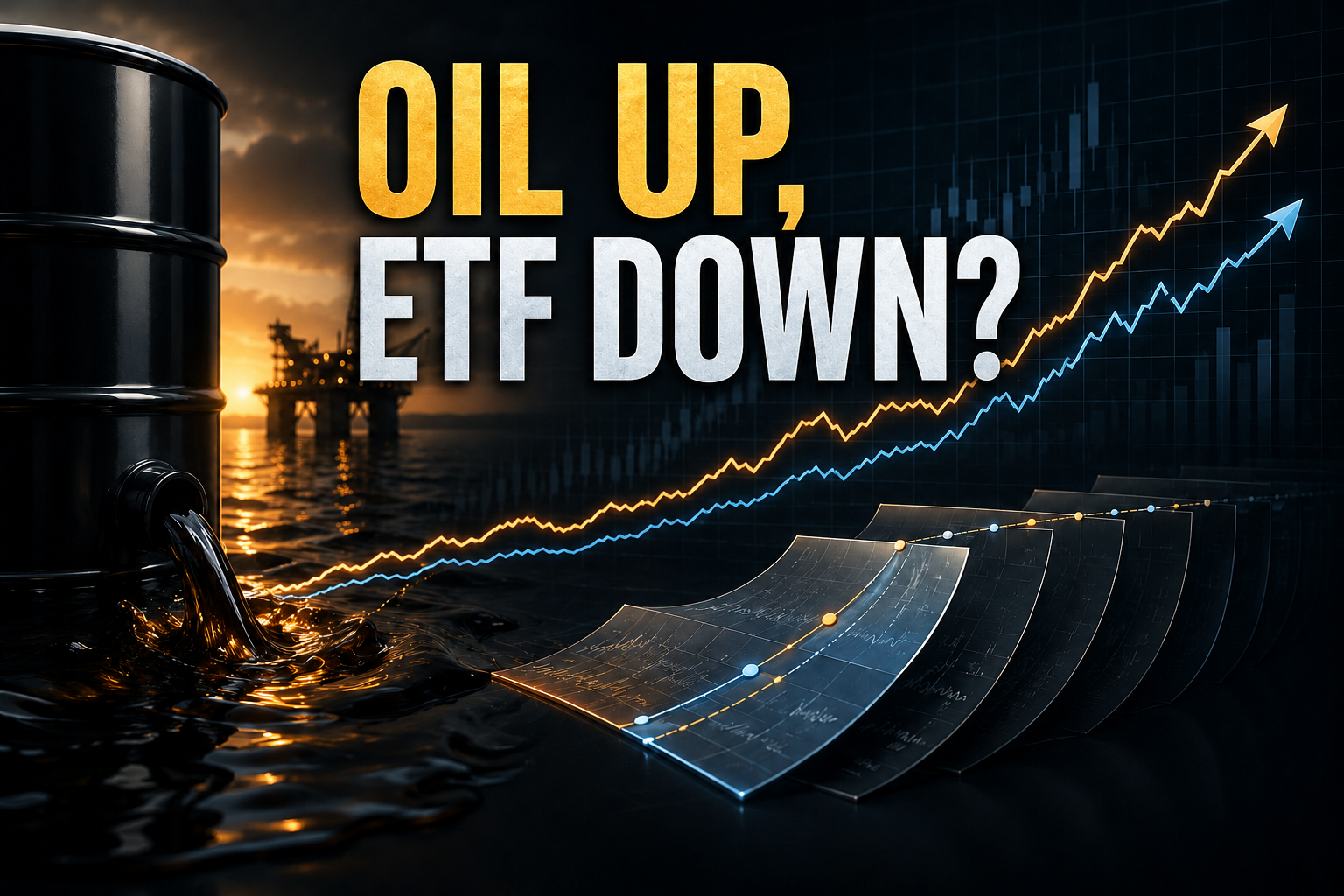
An oil ETF provides exchange-traded exposure to oil prices without requiring physical delivery or a futures account. The name can suggest that each share represents crude held in storage, though most oil funds use futures contracts instead.
Each contract is tied to a particular crude benchmark, delivery location and expiration month. The United States Oil Fund, known as USO, generally follows short-term West Texas Intermediate futures linked to oil delivered at Cushing, Oklahoma.
The oil price displayed on a financial website may show the nearest futures contract, an estimate of the physical spot price or a continuous chart created by joining several expiring contracts. Those measures can move differently.
An ETF may therefore appear to miss an oil move simply because it is being compared with another part of the crude market.
A crude-oil futures contract covers oil for delivery during a specific month. A September contract and a December contract may represent the same grade of crude, though their prices can differ because supply, demand and storage conditions vary across time.
Oil funds use these contracts to gain price exposure without arranging transportation or storage. Since the contracts expire, the fund must close its position before delivery and replace it with a later contract.
The gain or loss created by replacing one futures contract with another is called roll yield.
Contango occurs when later contracts cost more than contracts closer to expiry.
For example:
Expiring WTI contract at $75
Next-month WTI contract at $78
The fund replaces the cheaper exposure with the more expensive contract
The $3 difference is not deducted as a direct fee. The fund now holds a contract priced at $78. If that contract falls towards the spot price as expiry approaches, the fund can lose value even when crude itself changes little.
Repeated contango can gradually pull an oil ETF below the return shown by a headline crude-price chart. Oil may finish several months near where it started while the fund records a loss after rolling through a series of more expensive contracts.
Backwardation occurs when near-term contracts trade above later contracts.
For example:
Expiring WTI contract at $80
Next-month WTI contract at $76
The fund replaces the expiring position with the cheaper contract
The replacement contract may rise as it moves closer to expiry, adding to the fund’s return while backwardation remains in place.
Steep backwardation produced a clear example in 2026. CME Group estimated that front-month WTI gained about 47% from the beginning of the year through July 22. A hypothetical fully funded position that repeatedly rolled front-month futures gained approximately 84% over the same period.
The difference showed that rolling futures can push performance above the change visible in a continuous oil-price chart.
Backwardation does not guarantee gains, and contango does not guarantee losses. A sharp move in crude can overwhelm either effect. An oil ETF’s return reflects both the change in crude prices and the gain or loss created when its futures contracts are replaced.
The 2020 oil crash showed why an oil fund cannot always be treated as a direct proxy for the nearest futures contract.
Fuel demand collapsed during pandemic shutdowns while storage at Cushing, Oklahoma, became scarce.
The May 2020 WTI contract settled at negative $37.63 a barrel on April 20, while later delivery months remained above zero.
USO spread its exposure into later contracts as the front-month market became increasingly difficult to manage. By April 21, it held June, July and August futures rather than concentrating its exposure in the contract nearest expiry.
Its return could therefore diverge from the collapsing May contract and from oil charts based on a different delivery month.
The episode showed that an oil fund’s holdings can change when liquidity, position limits or extreme market conditions disrupt its usual strategy.
Roll yield can be a major reason an oil ETF separates from the crude price. Management fees, brokerage costs, bid-ask spreads and regular contract rolls create drag. Futures funds may also earn interest on cash and short-term government securities held as collateral, offsetting part of those costs.
The fund’s return reflects crude-price movements, roll yield, expenses and collateral income rather than the oil price alone.
Oil funds are not interchangeable. USO focuses on short-term WTI futures while other products spread their exposure across several delivery months or follow Brent crude instead of WTI.
An energy-sector ETF provides a different form of exposure because it owns shares in oil and gas companies. Its return also depends on production costs, earnings, debt, dividends and stock-market valuations.
Before comparing an oil fund with crude, check which benchmark it follows, which contracts it holds and how it maintains exposure. An energy-sector ETF is different again because it owns oil and gas company shares. Its return also depends on company profits, costs, debt, dividends and stock-market valuations.
No. Contango can reduce returns, while backwardation can increase them. Performance also depends on the fund’s benchmark, expenses, collateral income and the period used for comparison.
The fund may hold a different futures contract from the price displayed on the chart. Negative roll yield and expenses can also offset part of the crude-price gain.
No. USO provides exposure to a rolling WTI futures strategy. It does not store barrels for shareholders or guarantee that its return will match the physical spot price.
They may be less dependent on changes in a single near-term contract, but they still roll futures and can diverge from both short-term oil funds and spot crude.
Most oil ETFs maintain exposure through futures contracts that expire and must be replaced. The price of the new contract, the shape of the futures curve, fund costs and collateral income can all move returns away from the crude price shown in the news.
Before judging whether an oil ETF has tracked crude closely, check its benchmark, the contracts it holds and how often it rolls them. An oil ETF is a futures strategy, not a barrel of oil, and its return depends on more than the headline crude price.