Published on: 2026-04-06
Updated on: 2026-04-07
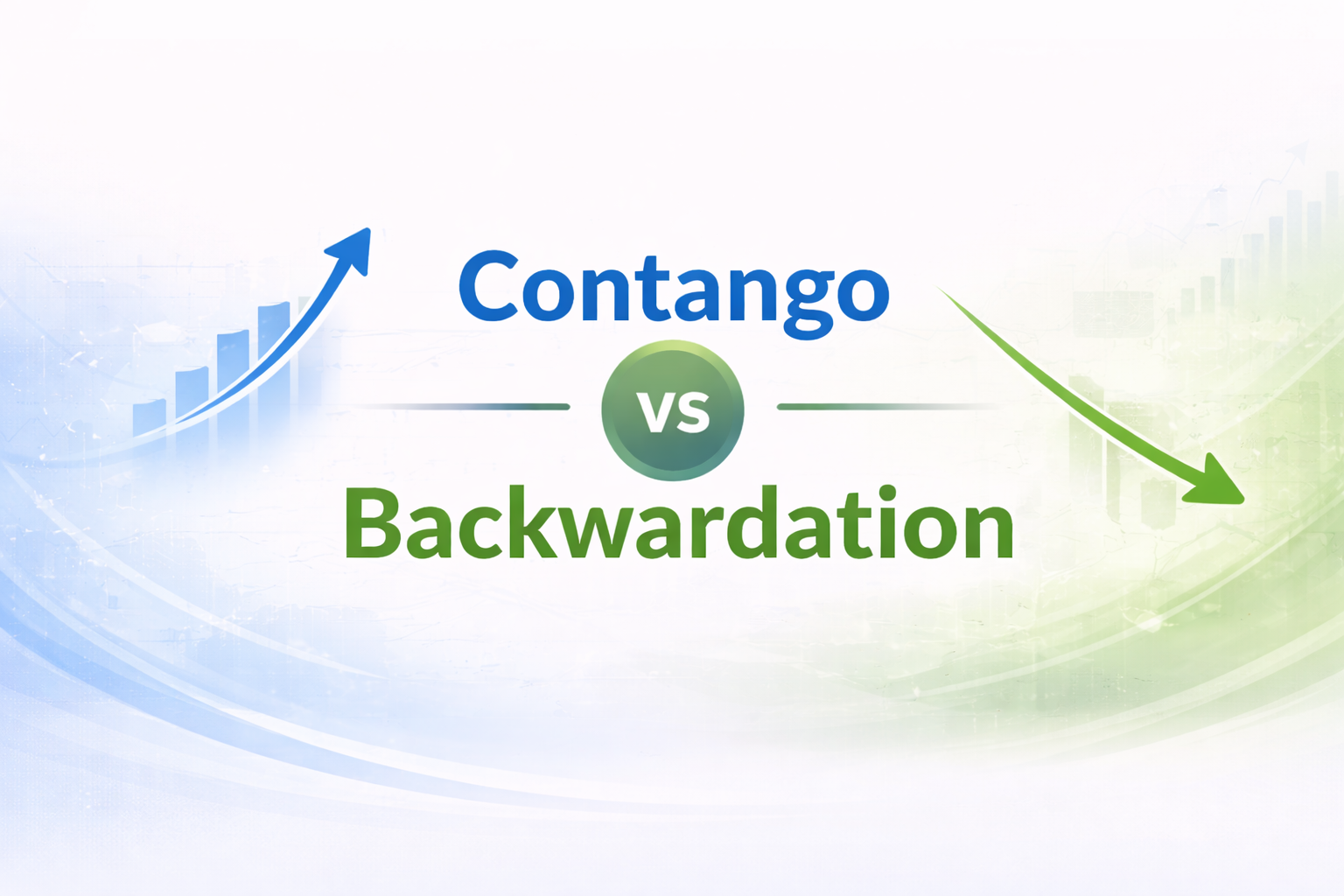
Understanding the dynamics of futures markets is essential for investors seeking exposure to commodities, indices, or other financial instruments. Two fundamental concepts that frequently appear in commodity and futures trading are Contango and Backwardation.
These terms describe the shape of the futures curve, a graphical representation of futures contract prices over different maturities, and provide critical insight into market expectations, risk management, and potential investment opportunities.
Contango occurs when futures prices exceed the current spot price, reflecting carrying costs, storage, or normal market expectations.
Backwardation occurs when futures prices are lower than the spot price, typically driven by scarcity, immediate demand, or convenience yield.
The shape of the futures curve directly affects trading strategies, including rolling futures contracts in ETFs or commodity funds.
Awareness of Contango and Backwardation can help investors anticipate potential gains or losses in futures-related positions.
Macro trends, geopolitical events, and supply-demand dynamics drive shifts between Contango and Backwardation, making ongoing analysis crucial.
A futures curve plots the prices of futures contracts for a specific asset across multiple delivery dates. This curve is a fundamental tool for investors because it reflects market expectations of future price movements.
Futures curves are particularly important in commodity markets, where physical storage costs, convenience yields, and seasonal trends can create significant differences between spot and futures prices.
Upward-sloping curve: Futures prices rise with longer maturities, typically indicating Contango.
Downward-sloping curve: Futures prices decrease over time, usually reflecting Backwardation.
The curve is influenced by interest rates, storage costs, supply-demand dynamics, investor sentiment, and macroeconomic trends. Understanding the curve enables traders and investors to make informed decisions about hedging, speculation, or ETF exposure.
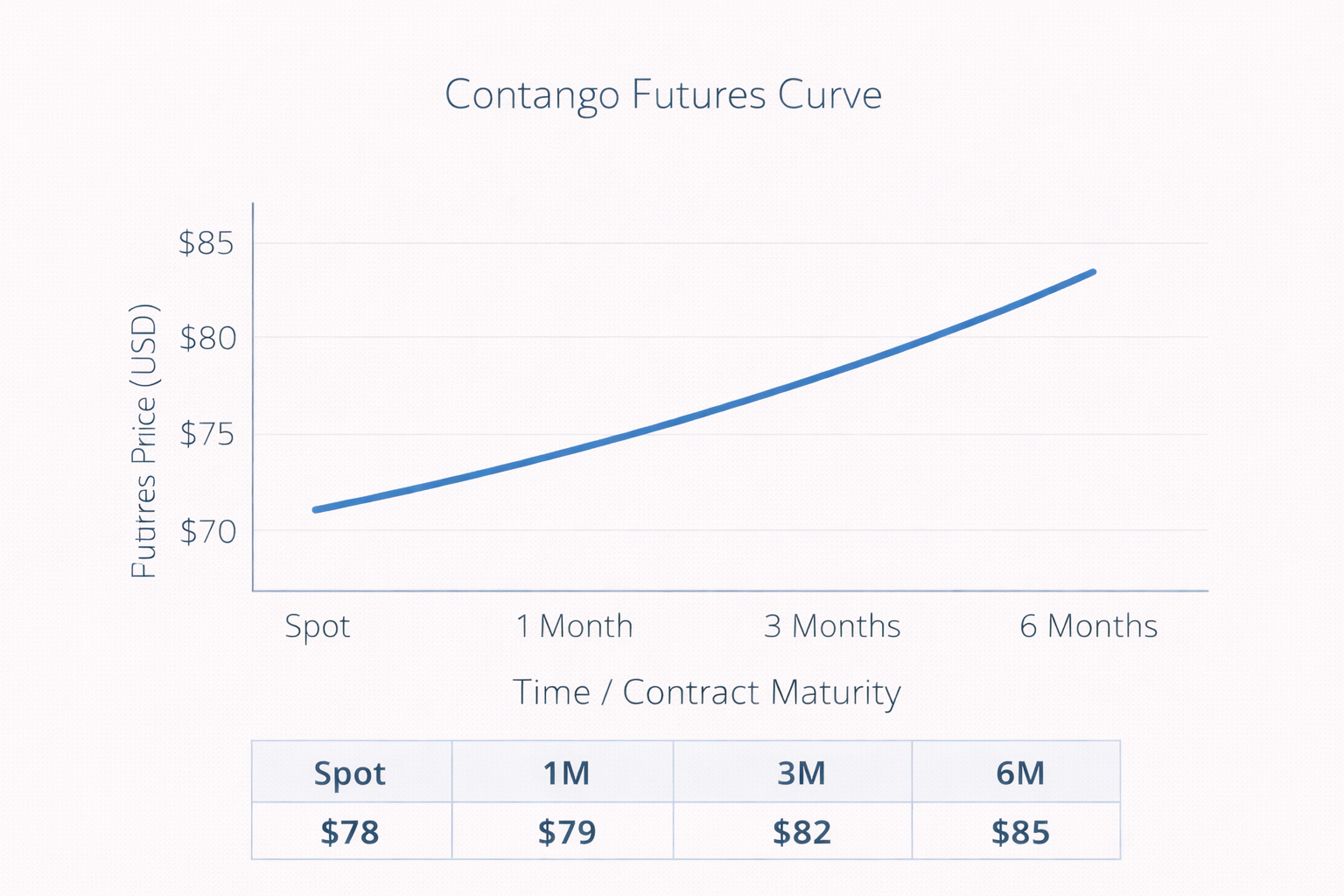
Contango is a market condition in which the price of a futures contract for a particular asset is higher than the asset’s current spot price. This situation typically arises when the costs associated with storing, financing, and insuring the physical commodity are factored into the futures price, or when investors anticipate higher prices in the future due to market expectations or inflationary pressures.
Contango is common in commodities markets such as crude oil, gold, and agricultural products, and it directly affects the returns of investors who hold futures contracts or ETFs that roll contracts forward.
Why it Happens:
Carrying Costs: Storing physical commodities such as oil, gold, or agricultural products involves storage fees, insurance, and financing costs. Futures contracts reflect these additional costs.
Normal Market Expectation: Investors may anticipate rising prices due to inflation, production limitations, or geopolitical risks.
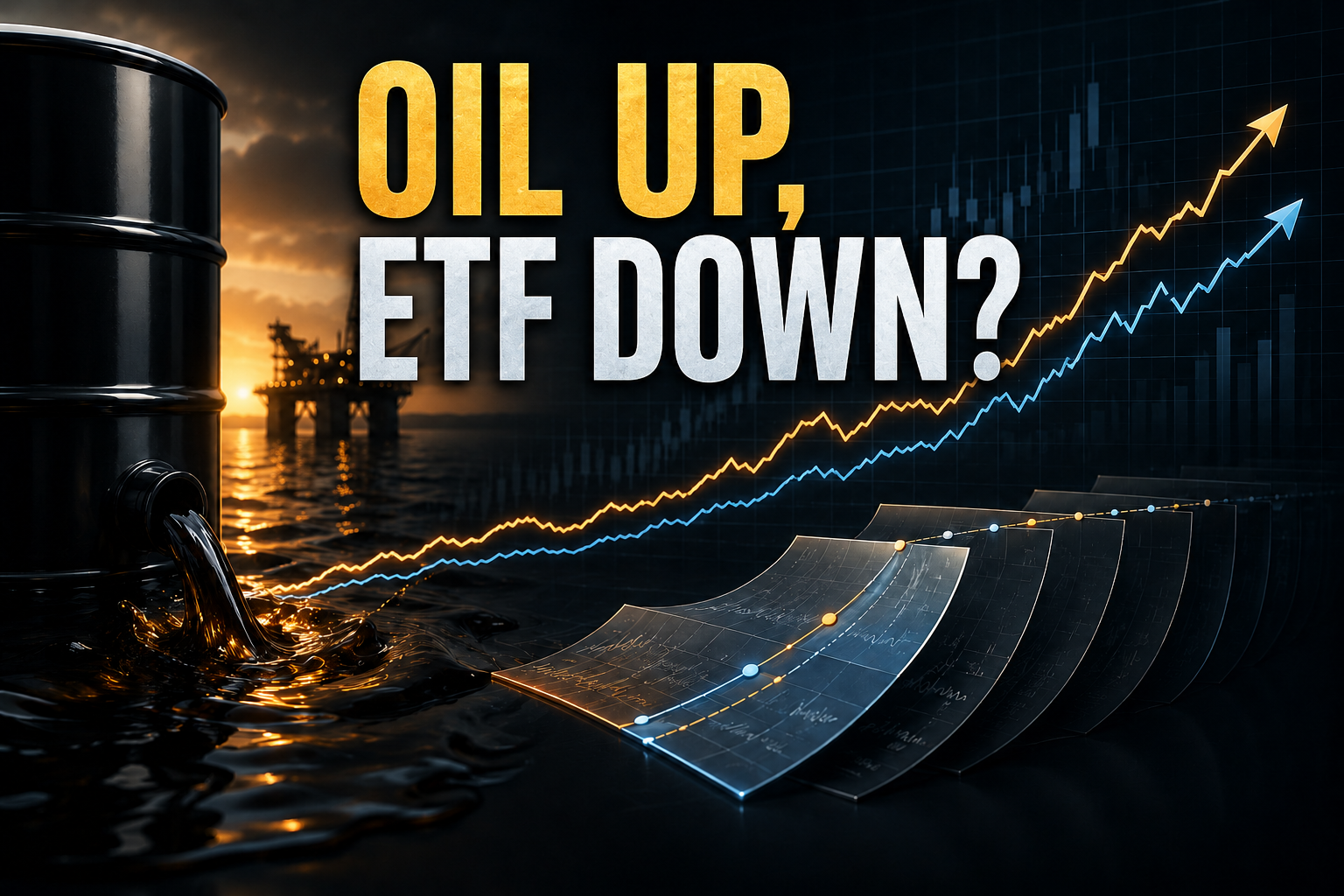
ETF and Fund Mechanics: Exchange-traded funds like USO (United States Oil Fund) that track commodity futures can experience negative roll yields in Contango markets because contracts must be rolled forward at higher prices.
Example:
Spot crude oil price in April 2026: $78 per barrel
3-month futures contract: $82 per barrel
The $4 premium reflects storage, financing, and insurance costs. Over time, rolling these futures contracts can lead to incremental losses if Contango persists.
Implications for Investors:
Long futures positions can be negatively impacted by persistent Contango, as rolling contracts requires purchasing higher-priced futures over time.
Hedgers, such as oil refiners, may benefit from predictable costs, while speculators could face reduced returns.
Monitoring the roll yield is crucial for investors in commodity ETFs exposed to Contango markets.
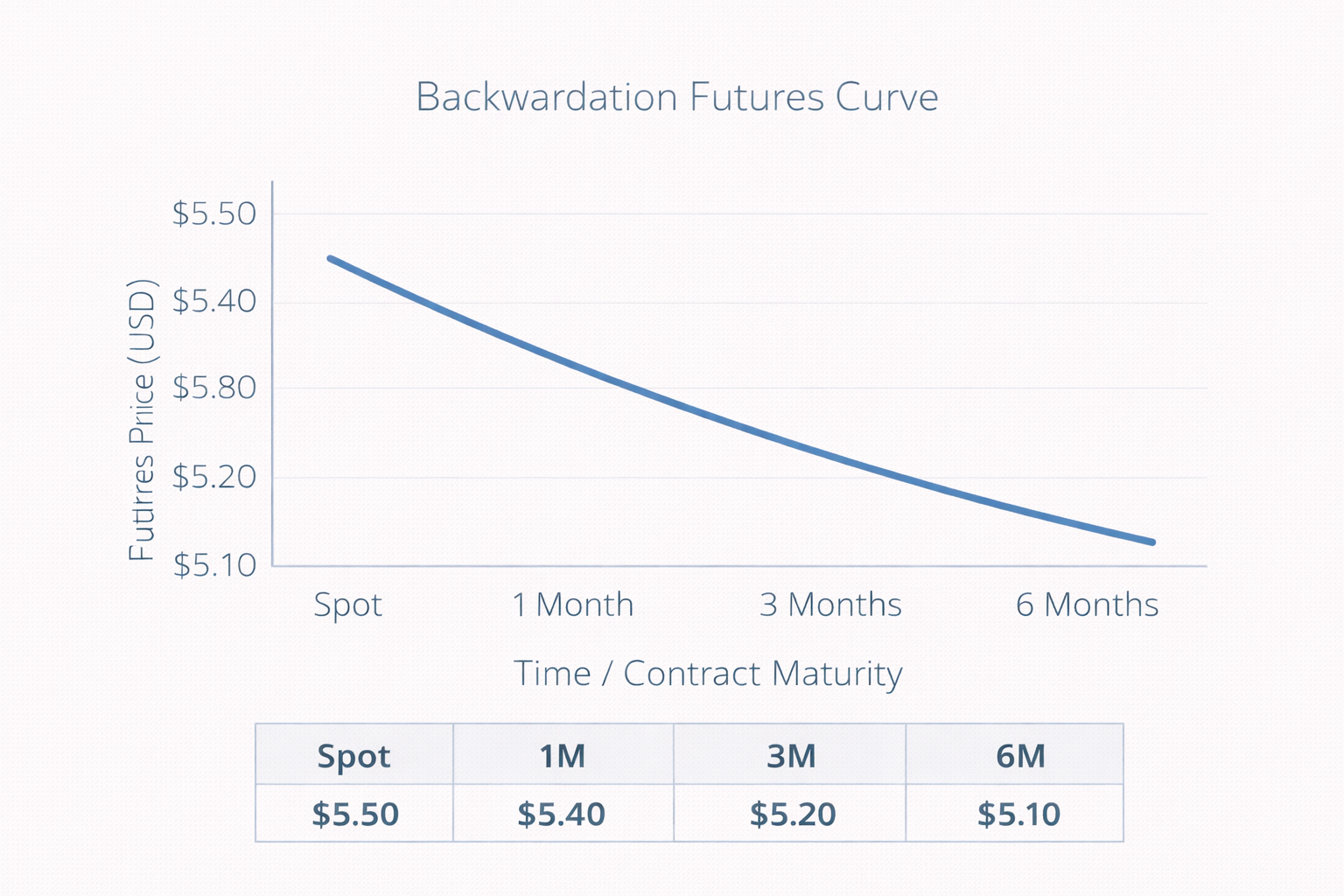
Backwardation is a market condition in which the futures price of an asset is lower than its spot price. This situation generally occurs when there is high immediate demand for the physical commodity, when supply is temporarily scarce, or when the convenience yield, defined as the benefit of holding the physical asset now rather than in the future, is significant.
Backwardation can create positive roll yields for investors, allowing them to profit when contracts are rolled forward, and it is frequently observed in energy and agricultural markets experiencing short-term supply constraints.
Why it Happens:
Immediate Demand: When supply is tight or the asset is urgently needed, traders are willing to pay more for immediate delivery, resulting in a downward-sloping curve.
Convenience Yield: Holding the physical asset now provides a benefit over holding a contract, particularly in energy and agricultural markets.
ETF and Fund Mechanics: ETFs like GLD (Gold ETF) or natural gas funds may benefit from positive roll yield during Backwardation, as contracts can be rolled forward at lower prices.
Example:
Spot natural gas price in April 2026: $5.50 per MMBtu
3-month futures contract: $5.20 per MMBtu
In this scenario, investors may gain by holding futures contracts, since rolling forward allows them to buy lower-priced contracts relative to the spot price. Backwardation often signals short-term scarcity or heightened demand.
Implications for Investors:
Backwardation creates positive roll yield, benefiting long futures positions.
Hedgers benefit when the cost of immediate supply exceeds the futures price.
Traders often monitor supply-demand forecasts, seasonal patterns, and macroeconomic trends to anticipate Backwardation.
Futures curve shapes are influenced by a variety of macroeconomic and market factors:
Supply-Demand Imbalances: Seasonal trends, geopolitical conflicts, or production outages can shift the market between Contango and Backwardation.
Interest Rates: Higher interest rates increase the cost of carrying commodities, often steepening Contango curves.
Inflation Expectations: Anticipated price increases in commodities can lead to higher futures prices relative to spot.
Geopolitical Events: Conflicts, sanctions, or trade disruptions affect supply availability and create temporary Backwardation in critical commodities like oil and wheat.
ETF and Derivative Activity: Large-scale trading and fund rollovers can amplify curve movements, particularly in highly liquid markets such as oil, gold, and natural gas.
Investors in commodity ETFs or mutual funds need to understand how the futures curve shapes affect returns:
Contango: Rolling futures contracts forward in a Contango market can lead to negative roll yield, gradually eroding returns.
Backwardation: Rolling contracts forward in Backwardation can yield positive roll, potentially enhancing returns.
Example: An investor in USO during a Contango-heavy oil market may notice persistent underperformance relative to spot oil prices. Conversely, an investor in UNG (natural gas ETF) during Backwardation can benefit from rolling contracts at lower prices.
Practical tip: Assess roll yield trends before investing in commodity ETFs, especially for long-term positions.
Monitor Futures Curves Regularly: Futures curves can shift quickly due to market shocks.
Understand Roll Yield: Calculate potential gains or losses when rolling futures contracts in ETFs.
Diversify Exposure: Avoid concentrating on a single commodity or futures contract.
Track Macro Trends: Inflation, geopolitical developments, and supply forecasts influence Contango and Backwardation.
Use ETFs Wisely: Understand whether the ETF is exposed to Contango risk or benefits from Backwardation.
Yes, all commodities with active futures markets can experience Contango or Backwardation. The exact curve shape depends on storage costs, supply-demand dynamics, and market sentiment, which differ across energy, metals, and agricultural commodities.
Contango can erode long-term returns, especially for ETFs or funds rolling futures contracts. Investors repeatedly buy higher-priced contracts over time, reducing performance relative to the underlying spot price, a factor that is critical to consider for energy- or commodity-focused funds.
Backwardation occurs when the immediate supply is scarce or the current demand is unusually high. In oil markets, geopolitical tensions, refinery outages, or seasonal demand spikes can create downward-sloping futures curves, allowing investors to profit from rolling contracts at lower future prices.
Yes, futures curves are dynamic and can shift rapidly due to geopolitical events, natural disasters, or macroeconomic changes. Traders must monitor these developments to adjust positions, hedge risk, and optimise potential gains or minimise losses in volatile markets.
Retail investors can optimise returns by selecting ETFs aligned with market conditions. For instance, investing in Backwardation markets may produce positive roll yield, while avoiding Contango-heavy periods helps prevent gradual erosion of returns when rolling contracts forward.
Contango and Backwardation are fundamental concepts in futures markets that describe the relationship between spot and futures prices. Contango reflects higher future prices due to carrying costs, storage, or market expectations, while Backwardation indicates immediate demand, scarcity, or convenience yield. Understanding these dynamics is critical for traders, ETF investors, and hedgers. Market context, macroeconomic trends, and seasonal factors drive shifts between Contango and Backwardation, affecting roll yields and investment outcomes.
Disclaimer: This material is for general information purposes only and is not intended as (and should not be considered to be) financial, investment or other advice on which reliance should be placed. No opinion given in the material constitutes a recommendation by EBC or the author that any particular investment, security, transaction or investment strategy is suitable for any specific person.