Published on: 2026-08-06
Copper settled at a record $6.703 per pound on 5 August, lifted by tariff positioning, thinning inventories, mine disruption and AI-driven infrastructure demand. US buyers have been pulling metal into domestic warehouses while Washington decides whether duties should extend into refined copper, and a parallel rally in London shows the tightness is real. The timing and size of the US move still carry a tariff premium.
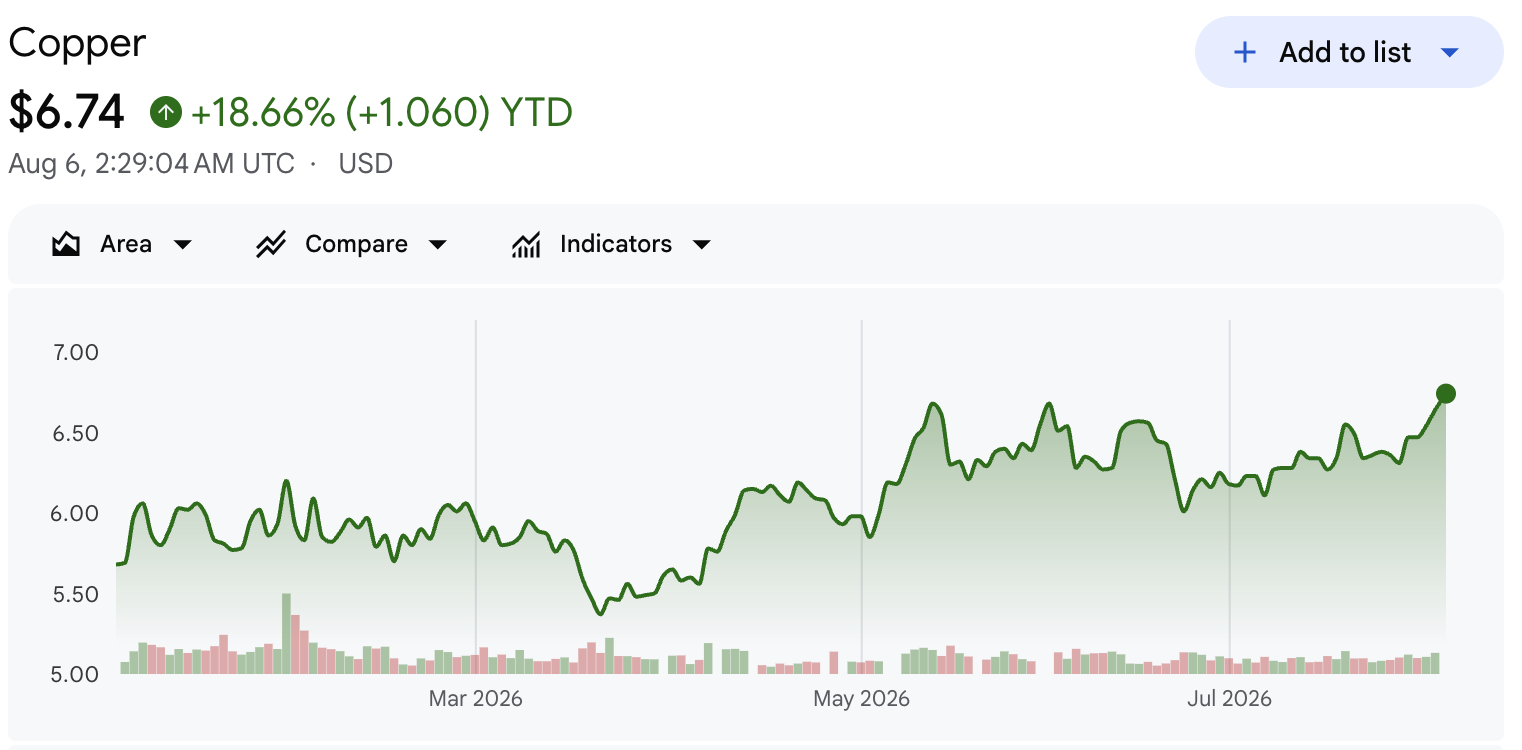
Copper settled 1.3% higher at a record $6.703 per pound on 5 August, extending its 2026 gain to 18.6%.
US copper imports reportedly reached about 200,000 tonnes in July as buyers positioned ahead of possible tariff changes.
London copper moved above $14,000 per tonne as inventories outside the United States declined and supply disruptions widened.
Freeport-McMoRan gained 3.1% to $69.39, leaving the stock about 4% below its 52-week high.
Copper rose for a third consecutive session on Wednesday, the August contract settling 1.3% higher at a record $6.703 per pound in New York, roughly seven cents above the previous settlement record. Tariff positioning supplied much of the immediate push, landing in a market already dealing with thinner inventories, major mine outages and rising power-infrastructure demand.
Copper trades in pounds in New York and tonnes in London, and $6.703 per pound converts to roughly $14,780 per tonne. When the US contract carries a premium over the London price, that gap becomes the incentive: a trader landing metal in a US warehouse before duties apply captures the difference, less freight and financing. That positioning shows up fast in copper futures.
US copper imports reached about 200,000 tonnes in July, according to shipping data cited by Investor’s Business Daily. The record volume followed months of aggressive buying as importers tried to secure material before further tariff changes raised costs.
Washington already applies tariffs across copper and copper-intensive products, with changes in April 2026 setting separate 50%, 25% and temporary 15% categories depending on the item.
Refined copper is the open question. The 2025 proclamation directed a Commerce review of the refined market; the phased duties floated for it, 15% in 2027 and 30% in 2028, remain recommendations rather than enacted rates. An update was due by 30 June 2026 and no final decision has been published. An unresolved decision is itself an incentive: every month the rules stay open is a month in which importing early costs less than importing late.
The rush changed where copper sits, not how much exists. Metal that would otherwise have stayed in Europe or Asia moved into the US, where domestic prices paid better. Buying ahead of a deadline also pulls consumption forward instead of creating it, so some of July’s volume likely covered requirements that would have appeared later anyway. That raises the possibility of a softer import period once stockpiling slows.
London copper climbed above $14,000 per tonne in the same stretch, which separates this record from a purely American story: inventories outside the United States declined and near-term supply became more expensive.
Buyers paid up for immediate metal. A premium for prompt copper over copper delivered later usually signals physical tightness: someone needs the metal itself, not exposure to its price.
Supply disruptions have left less room to absorb unexpected demand. Freeport-McMoRan’s Grasberg operation in Indonesia, one of the world’s largest copper mines, is still running below normal capacity after the mud-rush incident of September 2025, a disruption expected to remove hundreds of thousands of tonnes from projected 2026 production. Freeport said on 23 July that Production Blocks 2 and 3 had restarted, that the ramp-up was on schedule, and that output should reach about 65% of normal capacity in the second half of 2026, with full capacity by the end of 2027.
Severe storms in Chile added a second shock during July, interrupting Caserones and Los Pelambres and leaving Caserones facing a two-to-three-week recovery after damage to two transmission towers. Los Pelambres resumed operations on 23 July and kept its full-year guidance. Chile is the world’s largest copper producer.
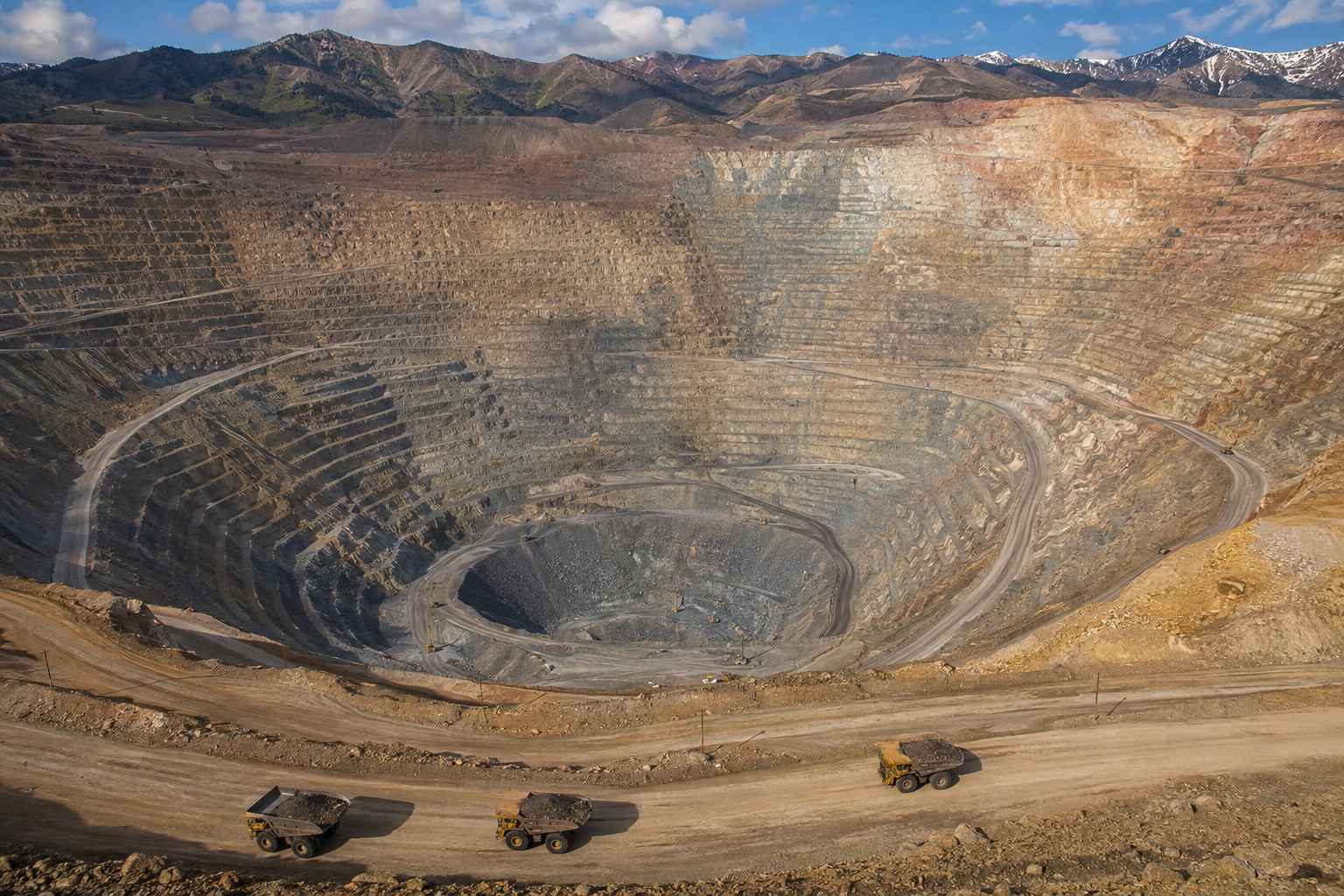
Producing mines have limited room to lift output quickly, while new projects take years to build, making disrupted production difficult to recover in the following quarter. US buying magnified those outages by pulling metal from other regions.
The US price therefore carries a regional premium that London’s does not, though London above $14,000 shows the scarcity is not an American invention.
AI is a genuine source of copper demand, but it sits in the electricity infrastructure around data centres rather than in the chips. New computing campuses need grid connections, transformers, substations, switchgear, cooling and backup power before a single server runs. That is copper by the tonne, and the data centre buildout orders it well ahead of the compute it supports.
The 18.6% gain this year owes something to that. It does not explain the 1.3% settlement record on 5 August. AI investment is the slow variable; tariff positioning, falling inventories and mine outages are the fast ones, and the fast ones moved the price this week.
Freeport-McMoRan rose 3.1% to $69.39 on Wednesday, closing about 4% below its 52-week high of $72.28, while Southern Copper gained approximately 1.6%. Freeport had already gained 5.8% on Tuesday as copper approached its previous record, leaving a two-day advance of roughly 9%.
Miners move more than the metal because much of a mine’s cost base is fixed within the year, so a change in the copper price passes into margin and cash flow rather than being absorbed by it. That leverage works both ways, which is why mining shares can fall further than the metal when it turns.
A sustained price above $6.70 would support stronger revenue and cash flow expectations for producers, but proximity to a yearly high raises the bar: the shares need evidence that record copper can survive beyond the tariff rush.
Whether copper holds above $6.70 depends on what happens after US import front-loading fades. If it stays above that level while London inventories keep declining and immediate-delivery premiums stay elevated, the breakout would look less dependent on tariff timing.
The main warning would be rising inventories once tariff policy becomes clearer. Importers that bought extra copper in July may need less later in the year, creating a demand gap even if underlying consumption stays healthy. A fall below $6.70 alongside weaker London prices and rebuilding stocks would challenge the claim that physical demand is absorbing supply.
Traders following the metal through commodity CFDs rather than mining equities avoid company-specific and operating-leverage risk, but take on spreads, financing charges and counterparty exposure instead. Leverage magnifies losses as readily as gains.
Copper’s longer-term support remains visible in grid expansion, data-centre construction and constrained mine supply. The record settlement also contains a premium created by copper tariff uncertainty and the rush to move metal into the US before the rules change again.
The rally rests on more than speculation, though $6.70 should not be read as a clean measure of global economic strength. Copper earns its reputation as a growth gauge when consumption sets its price; a benchmark carrying a regional policy premium is measuring something narrower. Rebuilding stockpiles and a price retreat after tariff clarity would reveal that part of the record was a timing trade rather than a permanent increase in consumption.