Published on: 2026-04-03
Tesla delivered 358,023 vehicles in Q1 2026, missing StreetAccount’s estimate of 370,000 and Tesla’s own compiled consensus of 365,645.
The company produced 50,363 more vehicles than it delivered, the largest single-quarter inventory surplus in recent memory.
Energy storage deployments fell 38% from the prior quarter, removing the one business segment that had been consistently growing.
TSLA closed down 5.43% on April 2, its worst single-session drop of 2026, while the S&P 500 finished the same day up 0.09%.
Tesla has reported two consecutive years of declining annual deliveries, dropping from a peak of 1.81 million in 2023 to 1.64 million in 2025.
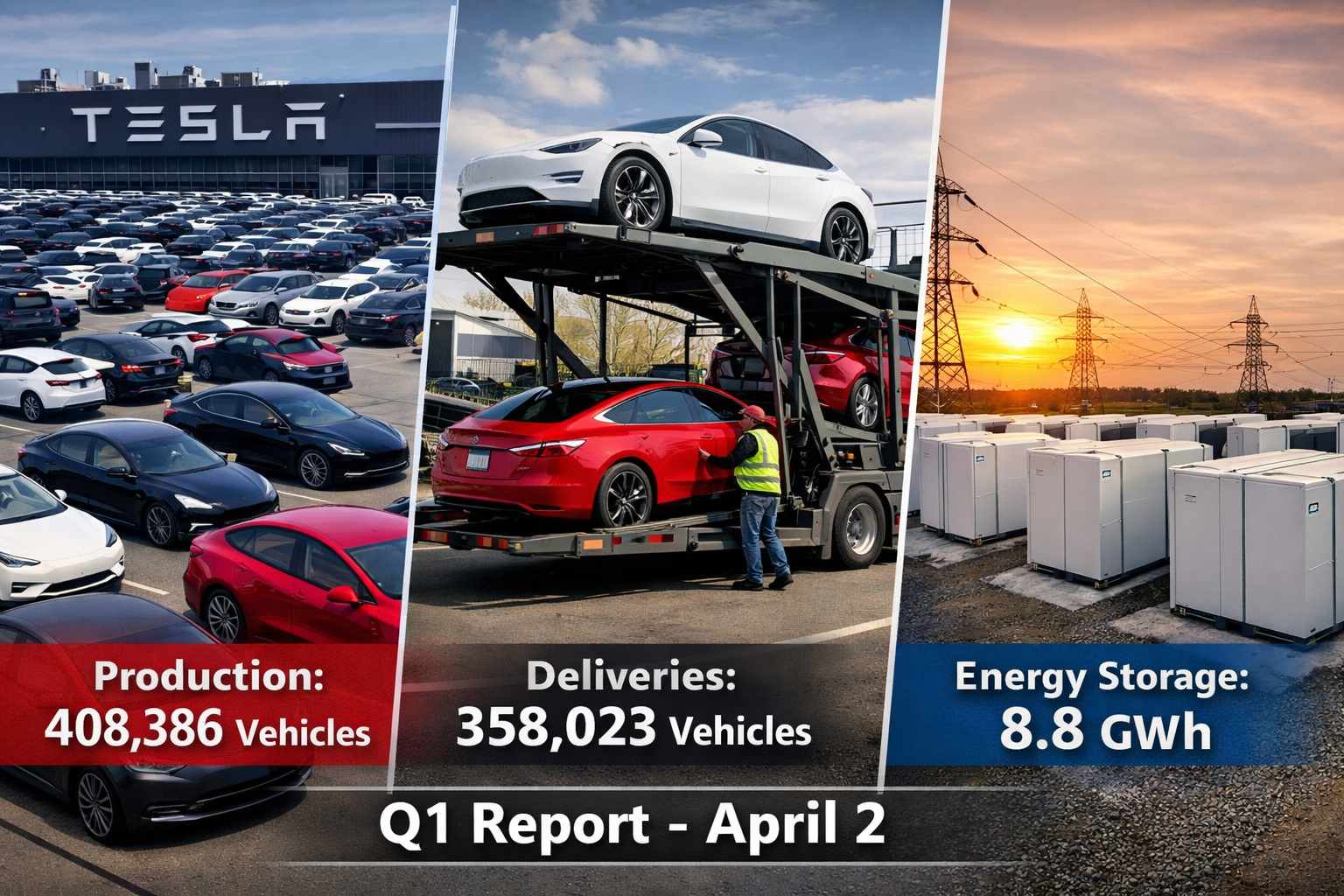
On April 2, Tesla reported it had produced 408,386 vehicles, delivered 358,023 vehicles, and deployed 8.8 GWh of energy storage products in the first quarter of 2026.
Tesla’s own company-compiled sell-side consensus, published on March 26, had pointed to 365,645 deliveries and approximately 14.4 GWh of energy storage deployments.
Tesla missed both. StreetAccount’s independent estimate had been set at 370,000 deliveries. TSLA shares fell 5.43% to close at $360.56 following the report.
Tesla reported total deliveries of 358,023 vehicles for the first quarter of 2026. This figure fell short of the 365,645 units projected by the company’s internal analyst consensus published on March 26.
The 6.3% year-over-year increase compared to Q1 2025 appears positive at first glance. However, institutional analysts note that last year’s first quarter was artificially low due to the "Juniper" Model Y refresh transition.
| Metric | Q1 2026 | Estimate | Prior Quarter |
|---|---|---|---|
| Total Deliveries | 358,023 | 365,645–370,000 | 418,227 (Q4 2025) |
| Total Production | 408,386 | N/A | N/A |
| Production-Delivery Gap | 50,363 units | N/A | N/A |
| Model 3/Y Deliveries | 341,893 | N/A | N/A |
| Model 3/Y Production | 394,611 | N/A | N/A |
| Other Models Deliveries | 16,130 | N/A | N/A |
| Energy Storage Deployed | 8.8 GWh | ~14.4 GWh | 14.2 GWh (Q4 2025) |
| Year-Over-Year Change | +6.3% | N/A | vs. 336,681 in Q1 2025 |
| Sequential Change | -14.4% | N/A | vs. Q4 2025 |
| TSLA Closing Price | $360.56 | N/A | Down 5.43% on April 2 |
Tesla produced 408,386 vehicles and delivered 358,023, leaving a difference of 50,363 units. Within Model 3 and Model Y, production was 394,611 while deliveries were 341,893, a gap of 52,718 units.
When measured against the 418,227 units delivered in Q4 2025, deliveries actually fell by 14.4% on a sequential basis.
This is the largest single-quarter inventory buildup in the company's history and suggests a shift from a build-to-order model to a more traditional inventory-heavy approach.
U.S. sales were particularly soft at 119,900 vehicles, down 12.5% sequentially. March U.S. sales of 41,300 units marked the sixth consecutive month of year-over-year decline in the domestic market.
There are two options to address the surplus. Maintaining current prices risks carrying unsold inventory into Q2 and worsening the issue.
Cutting prices or extending financing incentives moves units but compresses the automotive gross margins investors will scrutinise line by line at the April 22 earnings call. Neither path is clean heading into what is already a critical quarter.
Tesla’s energy business had become the cleaner part of the growth narrative throughout 2025. That is precisely why the 8.8 GWh deployment figure hit the stock so hard.
Tesla’s internal consensus projected approximately 14.4 GWh for the quarter. The actual result was significantly lower, representing a substantial decline by any standard.
Energy storage deployments declined 38% from the record 14.2 GWh in Q4 2025 and 15.4% from the 10.4 GWh in Q1 2025. The year-over-year and sequential declines suggest the drop is neither seasonal nor a one-time event.
The quarter did not just miss on vehicles. It also removed the argument that Tesla Energy could offset persistent softness in the automotive segment.
William Blair analysts flagged the energy miss as more concerning than the vehicle shortfall, noting in a published note that they could not fully explain the drop-off from supply data alone.
TSLA is down 20% year to date in 2026, with Thursday’s session adding to the decline.
Tesla shares posted their worst single-day drop of 2026 on April 2, closing at $360.56, down 5.43%. The S&P 500 finished the same session up 0.09%, and the Nasdaq gained 0.18%, confirming this was a stock-specific reaction rather than a market-wide move.
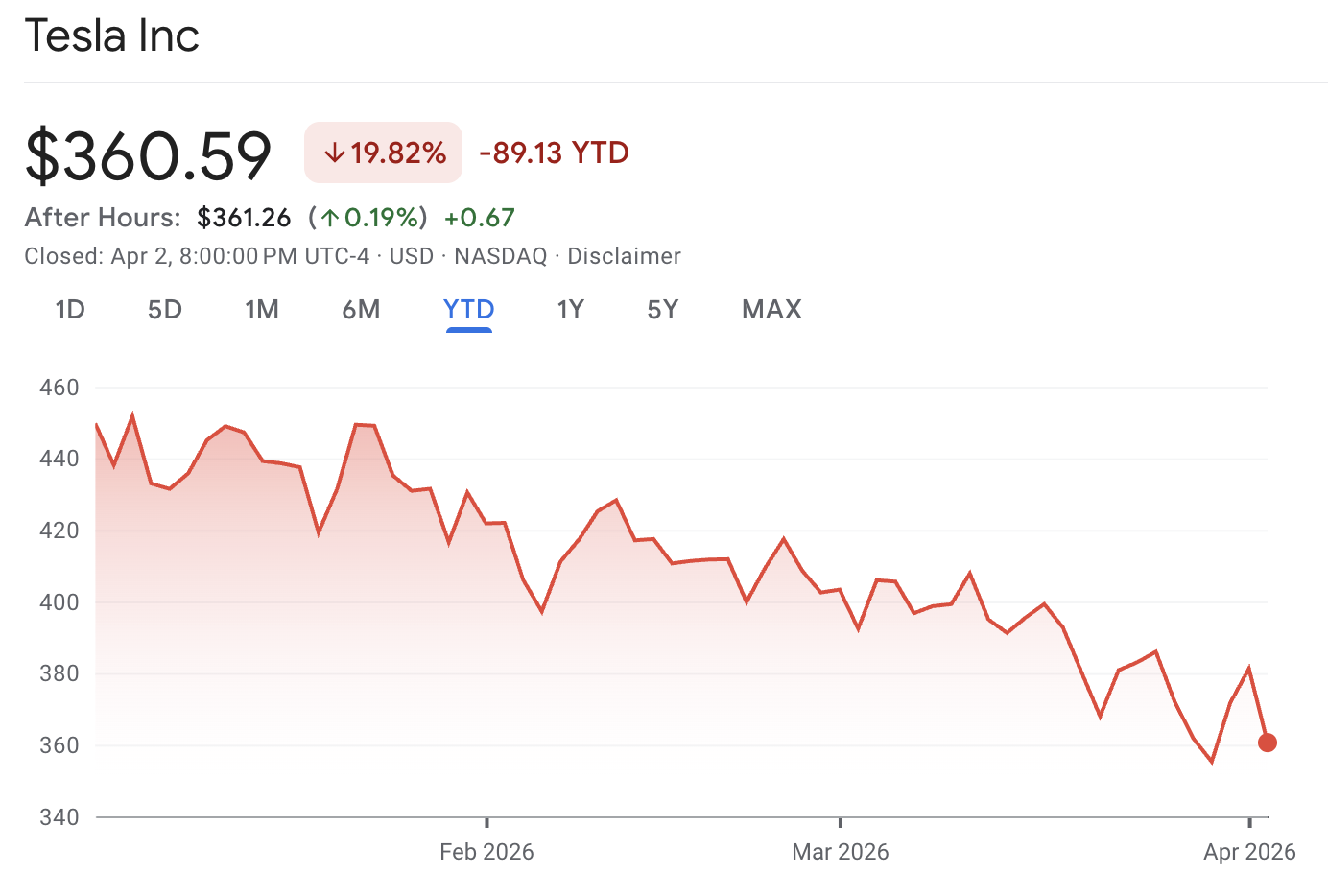
Trading volume hit 76.2 million shares, nearly 24% above the three-month average, underlining the conviction behind the selling.
The annual delivery trend remains concerning. Tesla peaked at 1.81 million deliveries in 2023, declined to 1.79 million in 2024, and dropped further to 1.64 million in 2025. The full-year 2026 consensus projects 1,689,691 vehicles, a 3.3% increase from 2025.
With only 358,023 vehicles delivered in Q1, Tesla must average over 444,000 deliveries per quarter for the rest of the year to meet this target, a pace not consistently achieved since 2023.
Three structural factors are limiting the recovery investors expect from Tesla.
End of the federal EV incentive. The $7,500 U.S. federal plug-in vehicle tax credit expired in September 2025, removing a meaningful purchase subsidy for mainstream buyers at a point when Tesla was already navigating softening demand in its largest market.
The Musk brand effect. Analysts have identified ongoing brand-perception challenges in key Western markets, where CEO Elon Musk’s political involvement has created a polarizing image that, according to sales data, is affecting purchasing decisions among traditionally pro-EV consumers.
Global EV competition. Tesla’s 2025 delivery decline was partly due to increased competition worldwide, especially from Chinese manufacturers offering similar products at lower prices.
Not all markets are declining. Tesla’s European registration data showed significant growth in Q1 2026: France up 203%, Spain up 42.9%, and Denmark up 144%, driven by refreshed Model Y and Model 3 variants. The brand remains resilient in some regions, which is a key positive ahead of April 22.
Tesla stock fell because Q1 2026 deliveries of 358,023 vehicles missed both Tesla’s own compiled consensus of 365,645 and StreetAccount’s estimate of 370,000. A production-delivery gap of over 50,000 units and an energy storage miss of 38% compounded the selloff.
Yes. Tesla delivered 358,023 vehicles in Q1 2026, below both Tesla’s own company-compiled consensus of 365,645 and StreetAccount’s independent estimate of 370,000. This was the second consecutive quarter of missing delivery projections.
Tesla will release Q1 2026 financial results after market close on Wednesday, April 22, 2026, followed by a live question-and-answer webcast with management.
The Q1 2026 report signals a challenging transition for Tesla. After two years of declining annual deliveries, the company is no longer viewed as a hyper-growth story. The combination of a large inventory surplus and a sharp slowdown in the energy segment has prompted a reassessment of the stock's premium.
Tesla remains a leading player in the global EV market, particularly in Europe. However, structural challenges in the U.S. and increasing global competition are testing the limits of its current product lineup. The upcoming April 22 earnings call will be a pivotal moment for the stock in 2026.
Disclaimer: This material is for general information purposes only and is not intended as financial, investment, or other advice on which reliance should be placed. No opinion given in the material constitutes a recommendation by EBC or the author that any particular investment, security, transaction, or investment strategy is suitable for any specific person.
Tesla, Inc. First Quarter 2026 Production, Deliveries and Deployments, published April 2, 2026.
Tesla, Inc. Q1 2026 Delivery Consensus, company-compiled analyst estimates published March 26, 2026.