Published on: 2026-04-06
Sharp fluctuations in the stock market often follow major corporate earnings reports, underscoring the significant influence of earnings season. Understanding the underlying mechanisms is essential to explain why these events consistently impact markets each quarter.
This issue is particularly relevant for Q1 2026. Analysts anticipate robust year-over-year growth for the S&P 500 within a complex macroeconomic environment characterized by tariff tensions, persistent inflation, and uncertain interest rates.

These factors indicate that the upcoming earnings season may significantly influence overall market dynamics.
The upcoming earnings season is approaching a pivotal phase, as major financial institutions are scheduled to report initial results.
The S&P 500 is expected to post double-digit earnings growth for a sixth straight quarter.
Earnings guidance from corporations is expected to be as influential as reported results.
Risks such as tariffs, interest rate uncertainty, and market concentration continue to pose significant threats to investor sentiment.
The Q1 2026 earnings reporting season is imminent, with several indicators pointing toward underlying strength. Key drivers include anticipated earnings growth, expectations for sequential acceleration, and consistently rising forecasts.
Analysts forecast that S&P 500 earnings grew by approximately 12.5% in Q1 2026, which would mark the sixth consecutive quarter of double-digit earnings growth for the index.
Such consistency is significant. Six consecutive quarters of double-digit growth indicate genuine corporate resilience, even amid a challenging macroeconomic environment.
As of now, the estimated year-over-year earnings growth rate for Q1 2026 sits at 13.2%, up from the 12.8% estimated at the start of the quarter. Nine of eleven S&P 500 sectors are projected to report year-over-year growth, led by Information Technology, Materials, and Financials.
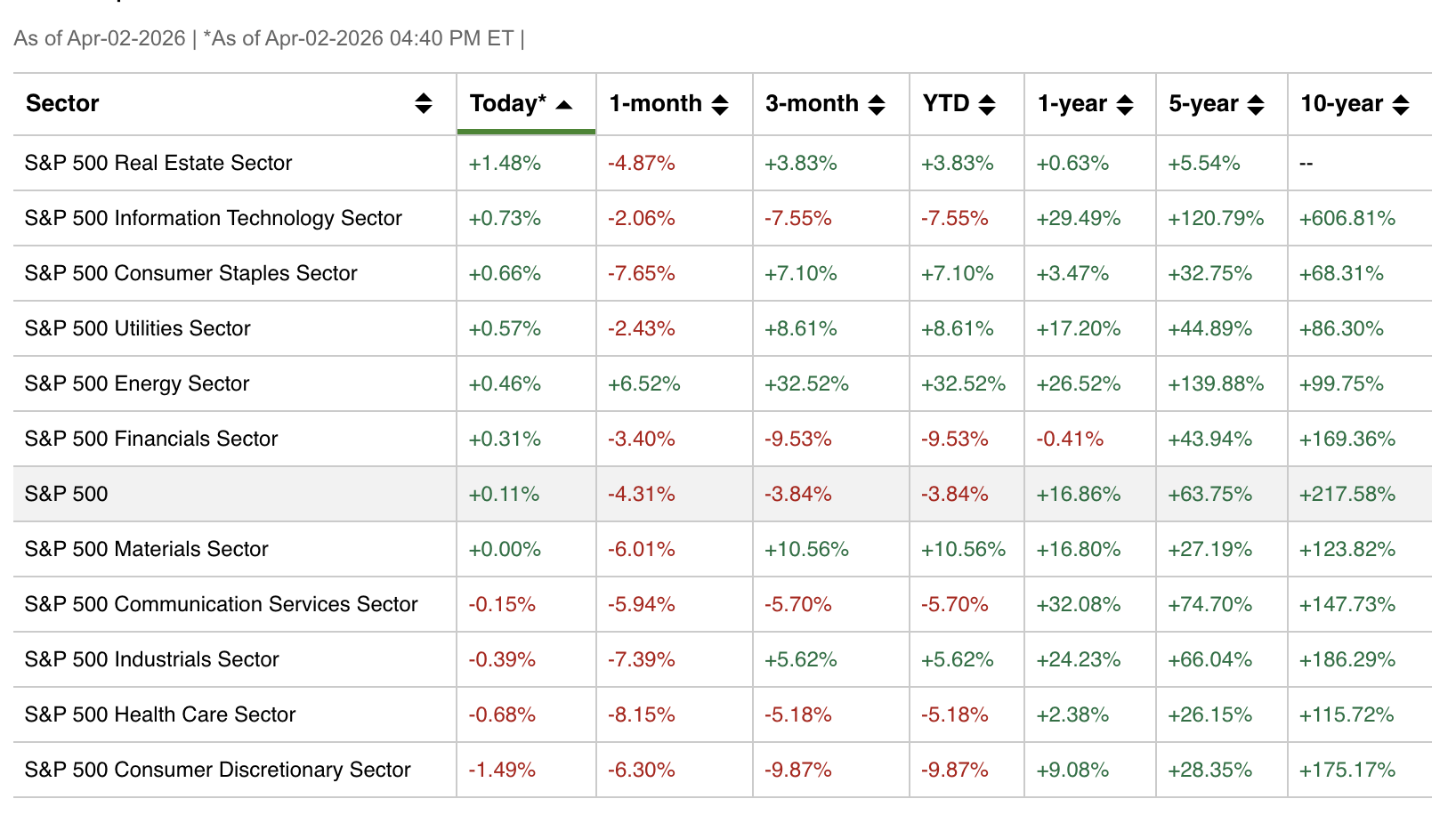
The following provides an overview of key sector trends to monitor:
| Sector | Expected Q1 2026 Earnings Growth | Outlook |
|---|---|---|
| Information Technology | ~45% | Leading growth, supported by AI-related spending |
| Materials | ~24% | Expected to outperform on stronger earnings momentum |
| Financials | ~19% | Benefiting from an investment banking rebound |
| Communication Services | ~12.7% | Posting solid growth on resilient platform earnings |
| Health Care | Decline expected | Facing a projected year-over-year earnings decline |
| Energy | Mixed | Outlook remains sensitive to oil price movements |
Barclays has raised its 2026 S&P 500 earnings per share (EPS) estimate to $321, projecting year-over-year growth of approximately 15% to 16%. The firm asserts that the current bull market is primarily driven by genuine profitability expansion rather than valuation increases alone.
Earnings season does not move the market only because companies report profits. It moves the market because those reports change expectations for the broader index.
When large-cap companies beat forecasts and raise guidance, investors often lift earnings expectations for entire sectors. That can push index valuations higher and strengthen market sentiment.
Conversely, if major companies underperform or express caution regarding demand, margins, or capital expenditures, investors may reduce forecasts across the market.
This effect is strongest when leadership is narrow, and a small group of large companies accounts for a large share of index gains. In that environment, earnings season can shift not only stock prices but the entire market narrative.
Forward guidance is often underestimated by investors. Corporate projections for upcoming quarters frequently exert a greater influence on market movements than reported results.
Companies may exceed earnings estimates but still experience share price declines if their guidance is disappointing. Conversely, positive guidance can offset weaker reported results.
More S&P 500 companies are currently issuing positive EPS guidance for Q1 2026 than negative, with 59 companies issuing positive guidance against 51 issuing negative guidance. The number issuing positive guidance is above both the five-year and ten-year averages.
This positive skew provides a supportive foundation for the market, but it also raises expectations. Companies must meet or surpass these expectations to sustain positive investor sentiment.
Although optimism is warranted, it should be balanced with awareness of several factors that could disrupt the earnings rally.
Charles Schwab expects companies to remain in a high-tariff environment in 2026, with the average effective tariff rate on U.S. imports still in double digits. While companies may continue cost mitigation efforts, thinner profit margins remain a real concern as inventories are worked down.
NVIDIA comprises over 7.1% of the S&P 500, and the top seven companies collectively represent approximately 33% of the index. This concentration is likely to amplify volatility during both market advances and declines, positioning NVIDIA as a central driver of significant market movements.
Oil price risks persist, as elevated prices may reduce earnings potential across multiple sectors. Of greater concern is the impact of oil prices on inflation and the diminishing prospects for interest rate reductions. Current market expectations indicate only a minimal likelihood of rate cuts within the year.
J.P. Morgan observes that elevated valuations and heightened market enthusiasm may prompt investors to question the sustainability of the AI sector’s growth, despite robust fundamentals in capital expenditures, sales growth, and earnings.
The Q1 2026 earnings season begins in mid-April, with JPMorgan Chase, the largest bank outside China, kicking off the busiest stretch of the reporting season. In the following weeks, major banks, technology firms, and consumer companies will release their reports.
Both reported results and accompanying guidance are expected to influence market direction throughout the summer.
Employing a structured analytical approach, rather than reacting to each individual earnings release, enables clearer interpretation of market signals.
Focus on these signals:
Beat rate and magnitude: Is the proportion of companies exceeding estimates tracking above or below the historical average?
Guidance tone: Are more companies raising full-year outlooks than cutting them?
Margin trends: The estimated net profit margin for the S&P 500 in Q1 2026 is 13.2%, exceeding the five-year average of 12.2%. Any unexpected margin compression could negatively affect the broader index.
Sector rotation signals: Strong results from financials and industrials would signal broadening growth. Weakness outside of tech would reinforce concentration risk.
Management commentary on tariffs: Companies that present detailed mitigation strategies are likely to outperform those that provide only vague or uncertain statements.
The Q1 2026 earnings season begins in mid-April, with major banks reporting first. Peak reporting activity runs through late April and into May, led by JPMorgan Chase.
Analysts forecast year-over-year earnings growth of approximately 12.5% to 13.2% for Q1 2026, which would extend the index’s streak of double-digit quarterly growth to six consecutive quarters.
Information Technology, Financials, and Materials are projected to lead. Health Care is the notable laggard, expected to report a year-over-year decline in earnings.
Strong earnings can push stock prices higher, but forward guidance carries equal or greater weight. A disappointing outlook from management can trigger a selloff even when the headline earnings number beats expectations.
Yes. Tariffs can compress profit margins, particularly for companies with global supply chains or heavy import exposure. Investors should watch how management teams discuss input costs and pricing power during earnings calls.
The potential for earnings season to influence market movements arises from the fundamental role of earnings as the primary driver of long-term market returns. In the current quarter, the stakes are particularly elevated.
The S&P 500 enters the Q1 2026 earnings season with strong momentum, recent analyst upgrades, and the prospect of a sixth consecutive quarter of double-digit growth. However, elevated valuations, ongoing tariff uncertainty, and significant reliance on a few large-cap companies leave limited tolerance for disappointing results.
Earnings guidance should be monitored as closely as reported figures. In a market that already reflects optimistic expectations, corporate outlooks for future performance will be a key determinant of current price movements.
Disclaimer: This material is for general information purposes only and is not intended as (and should not be considered to be) financial, investment or other advice on which reliance should be placed. No opinion given in the material constitutes a recommendation by EBC Financial Group or the author that any particular investment, security, transaction or investment strategy is suitable for any specific person.