Published on: 2026-02-25
Updated on: 2026-02-25
Quarterly earnings reveal how companies are actually performing, not what investors hope or assume. During earnings season, expectations collide with reality, and that collision often drives some of the biggest stock price movements of the year.
Every few months, stock markets suddenly become louder, faster, and more unpredictable. Prices gap overnight, volatility spikes, and stocks move sharply even when the broader market stays calm. Understanding quarterly earnings helps explain why these markets move and not just how they move.
Quarterly earnings refer to the financial results that publicly listed companies release every three months, summarising their business performance over the previous quarter.
These updates are published in a quarterly earnings report, also called a stock earnings report or earnings announcement, and include detailed financial results, such as revenue, profits, expenses, and the future outlook.
In simple terms:
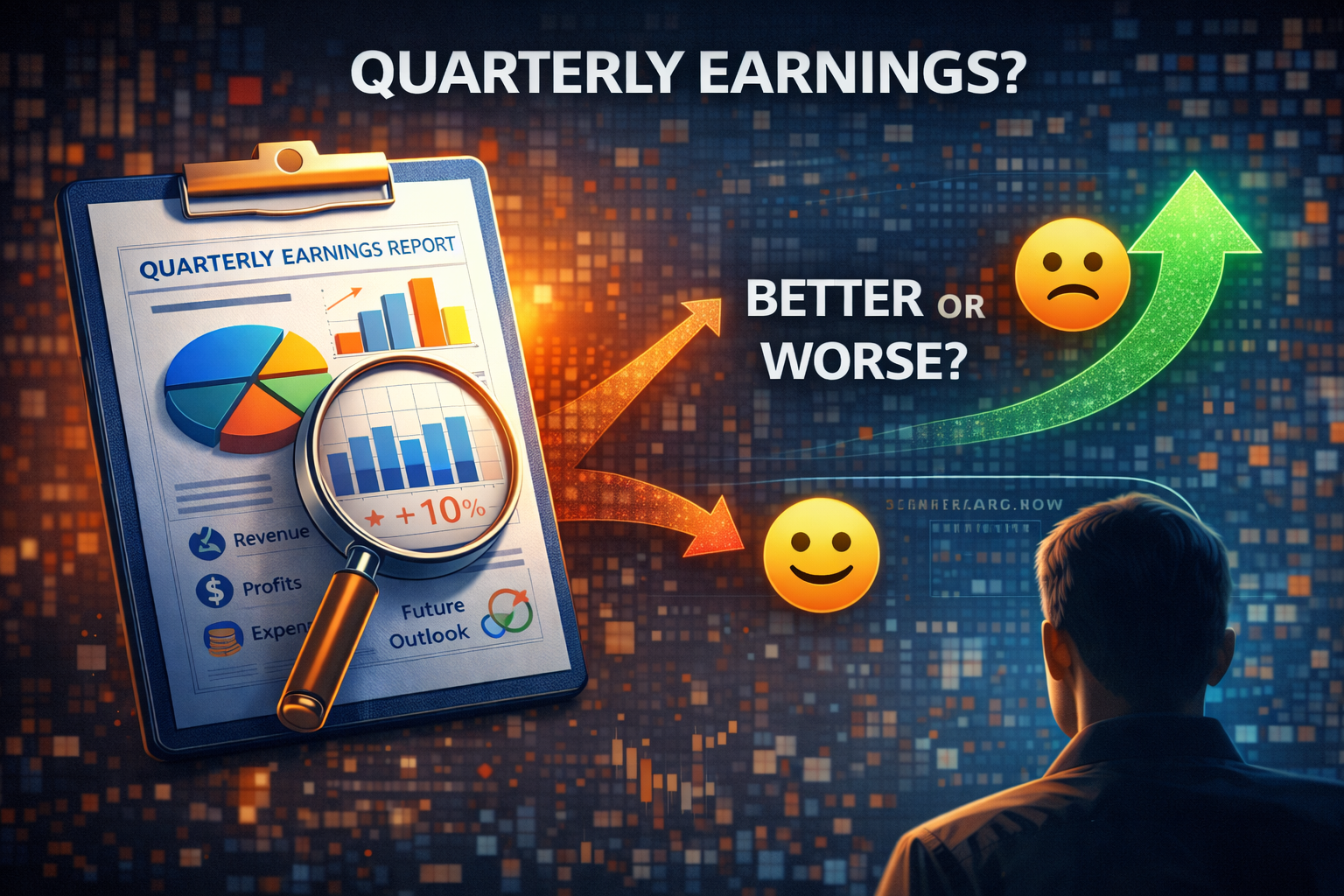
Quarterly earnings answer one core question:
“Did the company perform better or worse than expected?”
Public companies are required to disclose these results regularly so investors can evaluate business performance transparently. Key metrics usually come from the company’s income statement and form the backbone of fundamental analysis.
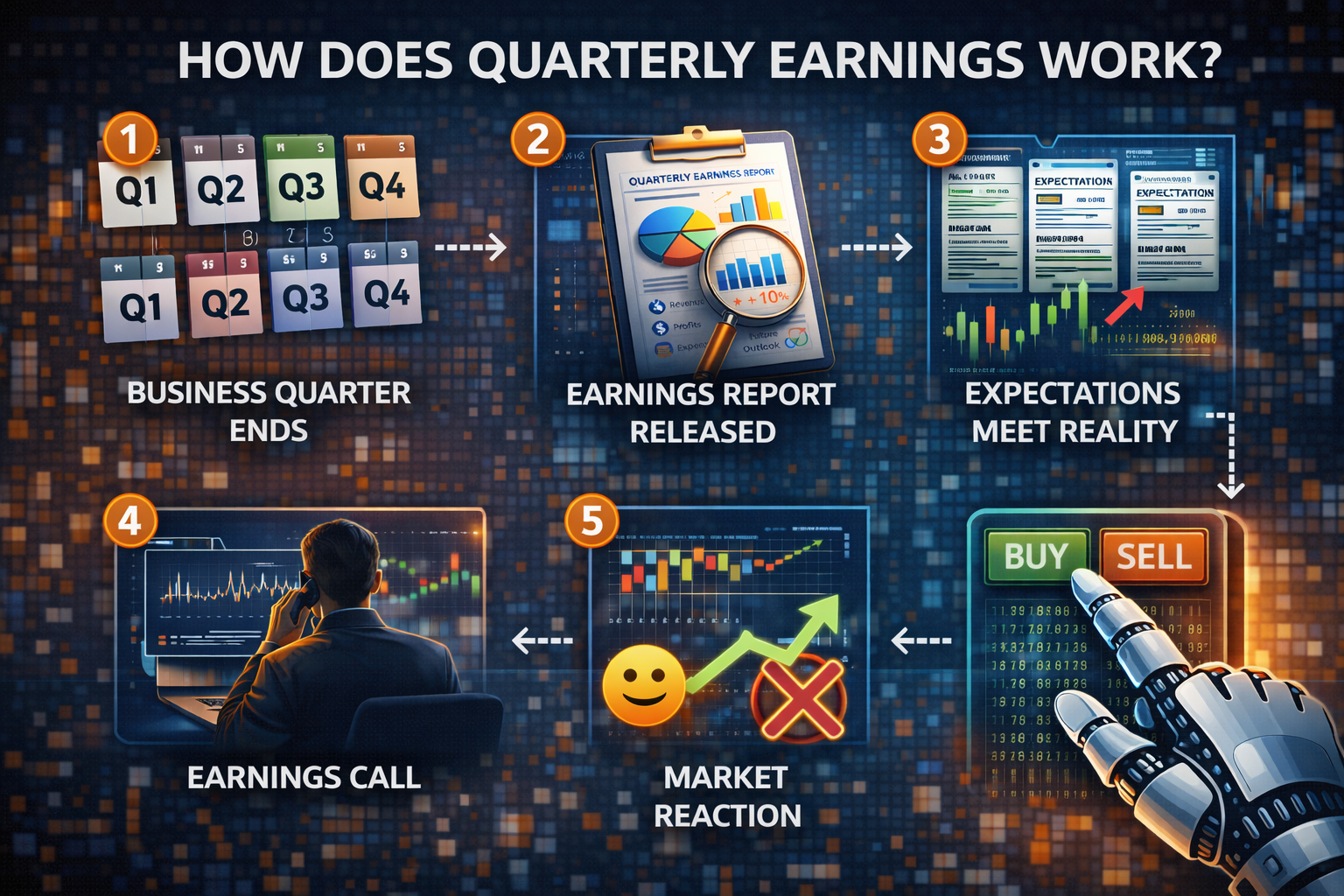
Quarterly earnings follow a structured process that repeats throughout the year.
Companies divide their financial year into four reporting periods. At the end of each quarter, accounting teams finalise financial data, including sales, costs, and profits.
The company publishes a quarterly earnings report, which typically includes:
Revenue (total sales)
Net income (profit)
Earnings per share (EPS)
Profit margins
Year-over-year growth comparisons
Management commentary
These numbers form the official corporate earnings results.
Before the release, analysts estimate expected performance based on research and forecasts.
Markets then compare:
Actual results
Market expectations
This comparison creates an earnings beat or miss.
Beat → Results exceed expectations
Miss → Results fall short.
Interestingly, expectations often matter more than the raw numbers themselves.
Shortly after the announcement, executives host an earnings call, where management explains results and answers analyst questions.
This discussion often introduces forward guidance, meaning projections about future performance. Traders listen carefully because future outlook frequently moves prices more than past results.
Once information becomes public, markets rapidly adjust valuations. This leads to the familiar stock price reactionseen during earnings season, sharp moves up or down, sometimes within seconds.
Quarterly earnings are central to equity markets because they apply to every publicly listed company.
Participants who closely monitor public company earnings include:
Institutional investors
Hedge funds
Equity analysts
Portfolio managers
Retail traders
Long-term investors
Earnings reports influence:
Individual stocks
Stock indices
Sector ETFs
Options markets
Even broader market sentiment can shift when large companies release results, especially major index components.
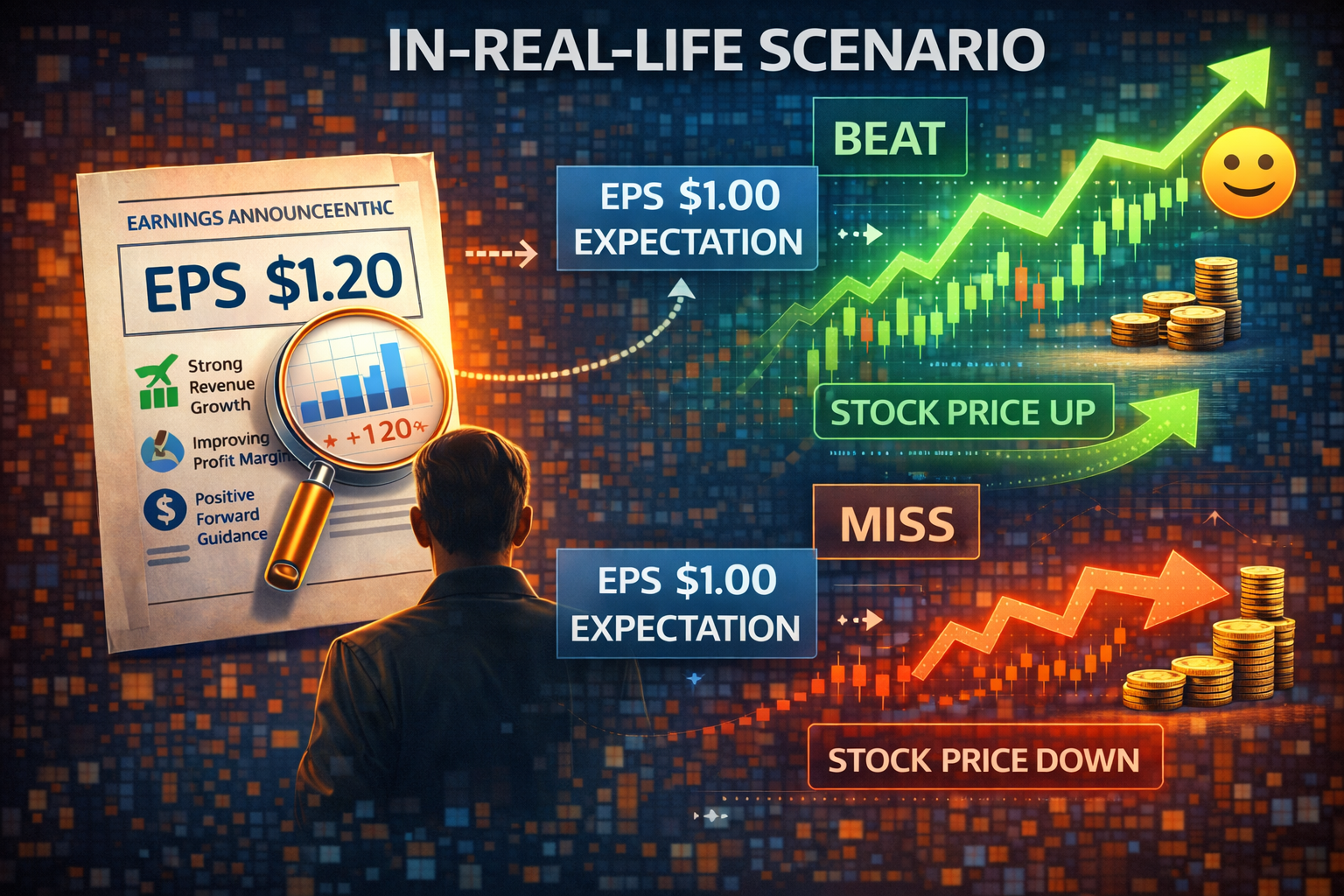
Imagine a technology company expected to earn $1.00 per share based on analyst expectations.
The company releases its earnings announcement showing:
Earnings per share (EPS): $1.20
Strong revenue growth
Improving profit margins
Positive forward guidance
Even though the company was already profitable, the key event is the earnings beat, performance exceeded market expectations.
Traders immediately reprice the stock higher because investors now believe future earnings potential is stronger than previously assumed.
Now reverse the situation:
If EPS comes in at $0.85 instead, the stock may drop sharply even if it still makes money. The disappointment relative to expectations drives the move.
Quarterly earnings act as reality checks for valuations.
Earnings reports provide new information that forces markets to reassess a company's value. Prices adjust quickly to reflect updated assumptions.
Stocks often experience large movements during earnings announcements. This phenomenon, known as earnings volatility, attracts both short-term traders and options participants.
Strong company financial results can improve investor sentiment, while weak reports can trigger risk-off behaviour across entire sectors.
Metrics such as EPS directly affect valuation ratios, such as price-to-earnings (P/E). When earnings change, perceived value changes too.
During earnings season, clusters of reports can influence overall market direction, especially when large corporations report simultaneously.
Understanding quarterly earnings doesn’t require deep accounting knowledge, but it does require context.
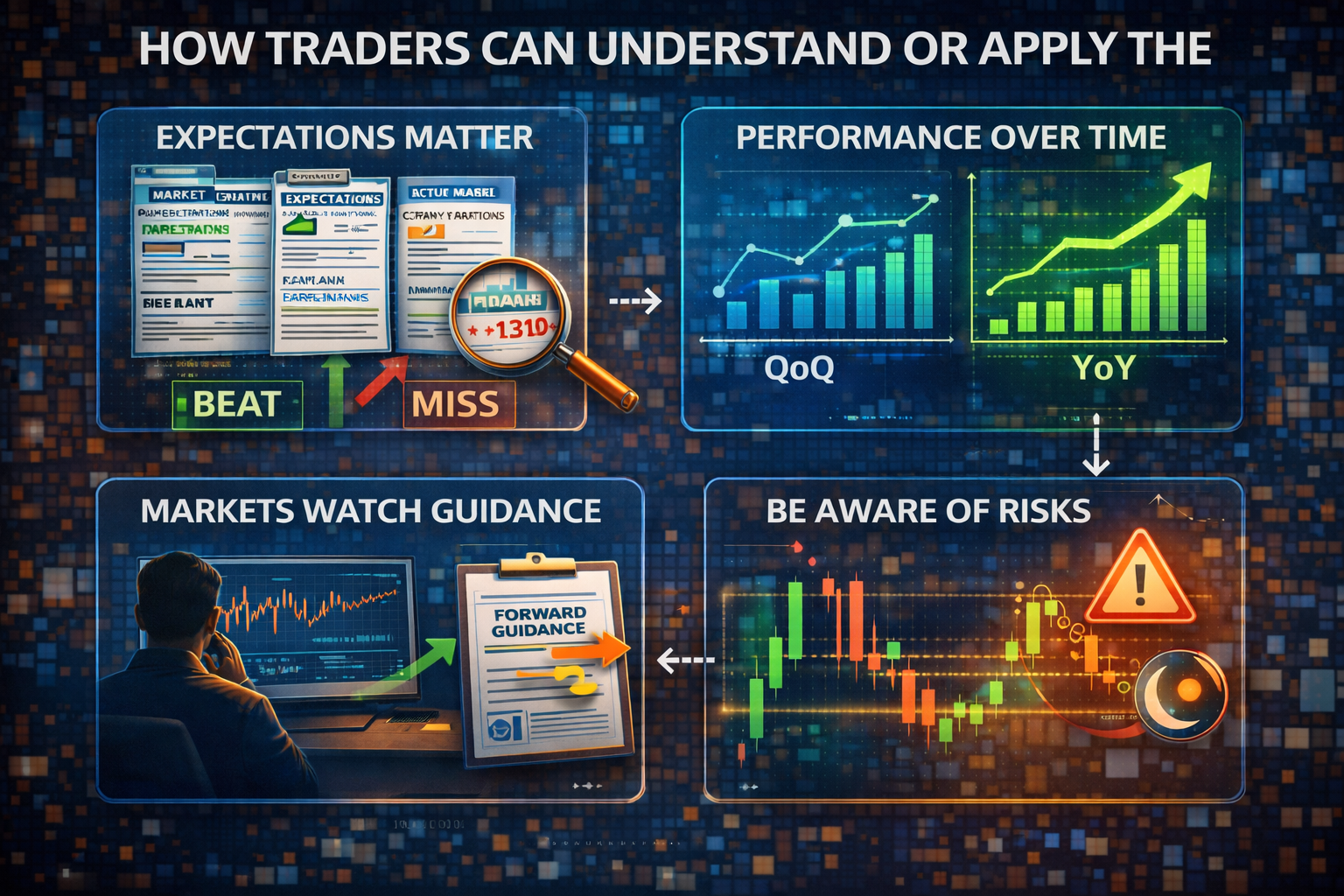
First, traders learn to compare results against market expectations, not just whether profits increased. A company showing strong year-over-year growth can still fall if expectations were even higher.
Second, observing quarter-over-quarter performance helps reveal short-term business momentum, while year-over-year growth removes seasonal distortions.
Third, traders often focus on forward guidance because markets price future earnings more heavily than past performance.
Finally, earnings events highlight the importance of risk awareness. Price gaps can occur outside trading hours, adding uncertainty around announcements.
This is one of the most common beginner mistakes. A company can report record profits and still see its stock fall if investors expect even better results. Markets react to expectations, not absolute performance.
EPS gets headlines, but experienced traders analyse revenue growth, margins, and guidance together. Strong profits driven by cost-cutting rather than business expansion may signal weaker long-term health.
Short-term traders often pay even closer attention because earnings announcements create volatility, liquidity changes, and trading opportunities, though also increased risk.
Initial reactions during earnings announcements can be emotional or liquidity-driven. Stocks sometimes reverse direction after investors digest details from the earnings call.
Quarterly earnings describe past performance. Markets move based on what those results imply about the future, which is why forward guidance often matters more than historical numbers.
Quarterly earnings are financial updates released every three months showing how a public company performed, including revenue, profits, and future outlook. Investors use them to evaluate business health and valuation.
Stocks move because markets compare actual results with analyst expectations. Surprises, positive or negative, cause rapid repricing as investors adjust future growth assumptions.
EPS measures how much profit a company generates for each outstanding share. It helps investors compare profitability across companies and evaluate valuation metrics.
Both matter. Revenue shows growth potential, while profit shows efficiency. Traders often evaluate them together, along with guidance, to understand overall business quality.
Earnings announcements introduce higher uncertainty due to potential price gaps. Traders typically assess risk tolerance carefully because volatility can increase significantly around release times.
Quarterly earnings are recurring financial updates that reveal how publicly traded companies are actually performing. Through quarterly earnings reports, earnings announcements, and earnings calls, markets receive new information that reshapes expectations, valuation, and investor sentiment.
For traders, quarterly earnings explain many of the market’s largest and fastest price movements. Understanding analyst expectations, earnings beats or misses, and forward guidance helps turn seemingly chaotic volatility into understandable market behaviour.
When prices move sharply during earnings season, it isn’t randomness; it’s the market recalculating reality.