Published on: 2026-03-19
The Mar-a-Lago Accord has attracted significant attention in global macroeconomics because it suggests a rare outcome for Washington: a weaker US dollar without losing its dominance.
This possibility draws market attention, as any major dollar-reset strategy would affect trade, inflation, bond yields, commodities, and risk appetite.
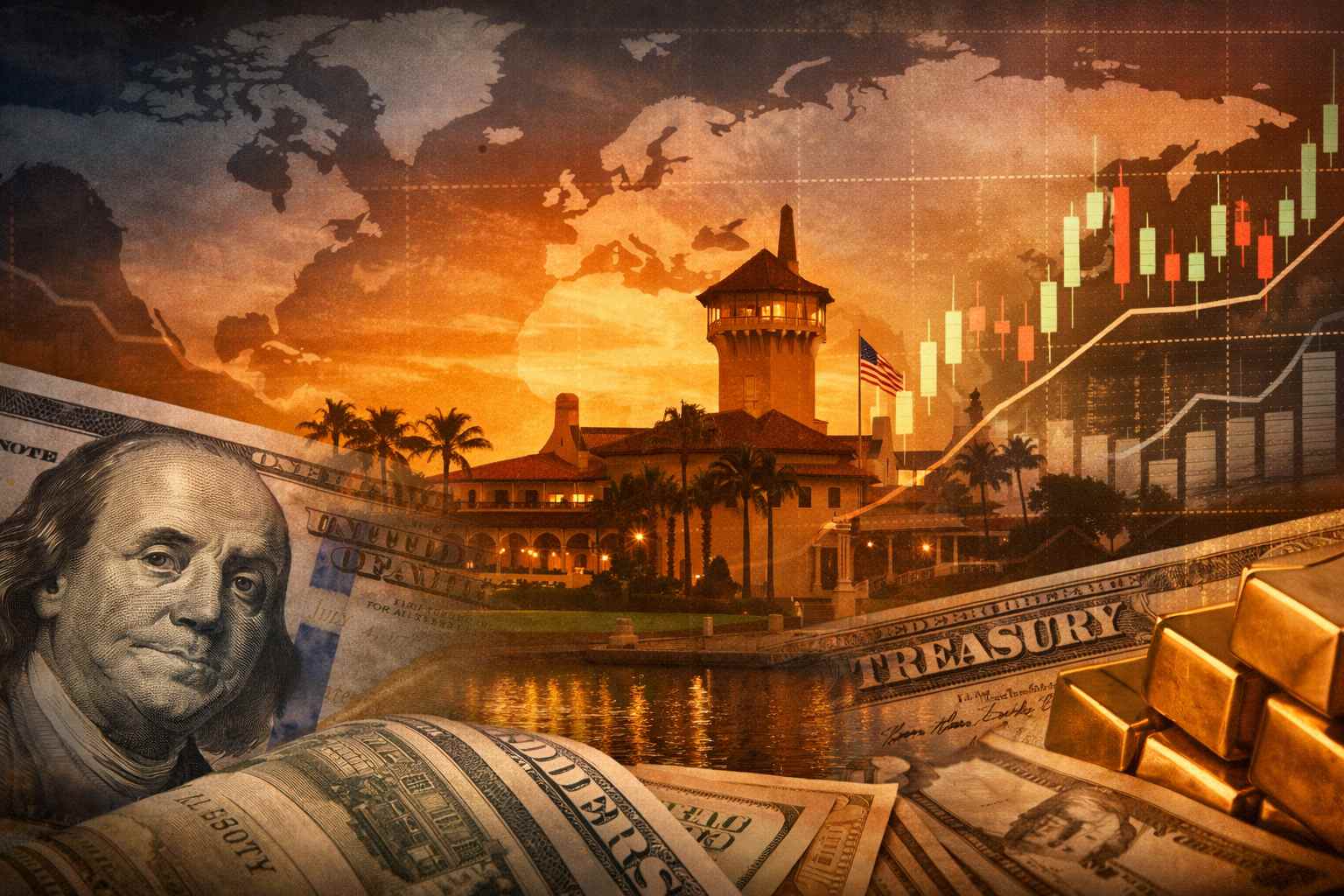
Analysts use the term to describe a potential effort to rebalance global currency markets, drawing on the logic of the 1985 Plaza Accord.
The Mar-a-Lago Accord is a proposed, not yet formalized, strategy associated with the Trump administration’s trade and currency agenda.
Its main objective is to deliberately weaken the US dollar to reduce the trade deficit and support American manufacturing.
The concept is inspired by the 1985 Plaza Accord, though today’s global context makes replication much more complex.
A coordinated multilateral agreement faces significant resistance, especially from China, while unilateral approaches involve substantial risks.
Even partial implementation of the plan could cause significant volatility in currency and US Treasury markets.
The concept originates from an influential essay published in November 2024 by Stephen Miran, Trump’s newly appointed Chairman of the Council of Economic Advisers.
The paper lays out a structural argument that the US dollar has been persistently overvalued, and that this overvaluation, not domestic fiscal policy, is the root cause of America’s chronic trade deficits.
According to Trump, an artificially strong dollar is the primary reason for the decline of the American Dream, leading to the loss of US manufacturing and well-paying blue-collar jobs.
The dollar’s strength stems from its reserve currency status, which increases investment in the US. The accord is named after Trump’s Mar-a-Lago Club in Palm Beach, Florida, replacing the Plaza Hotel of New York as the symbolic venue for a new global monetary negotiation.
The concept suggests a deliberate US strategy to weaken the dollar to boost exports and address trade imbalances, though no official policy has been announced.
Miran outlines two key paths to achieve this:
Multilateral route: A multi-currency accord where the leverage applied would come through tariffs and the threat of withdrawal of US security guarantees. On the tariff side, the blueprint points to a sequencing of tariffs first, then the incentive of lower tariffs should trading partners join the accord.
Unilateral route: If allies do not cooperate, the US would seek to depreciate the dollar through domestic fiscal measures, industrial policy, and direct foreign-exchange interventions.
Given the nature of global trade, FX flows, and FX reserve stockpiles, the eurozone, China, and Japan are identified as the key nations that would need to sign up to the accord.
Understanding the ambition requires considering the historical parallel.
The Plaza Accord of 1985 was signed at the Plaza Hotel in New York by the G5 nations: the US, Japan, West Germany, France, and the UK.
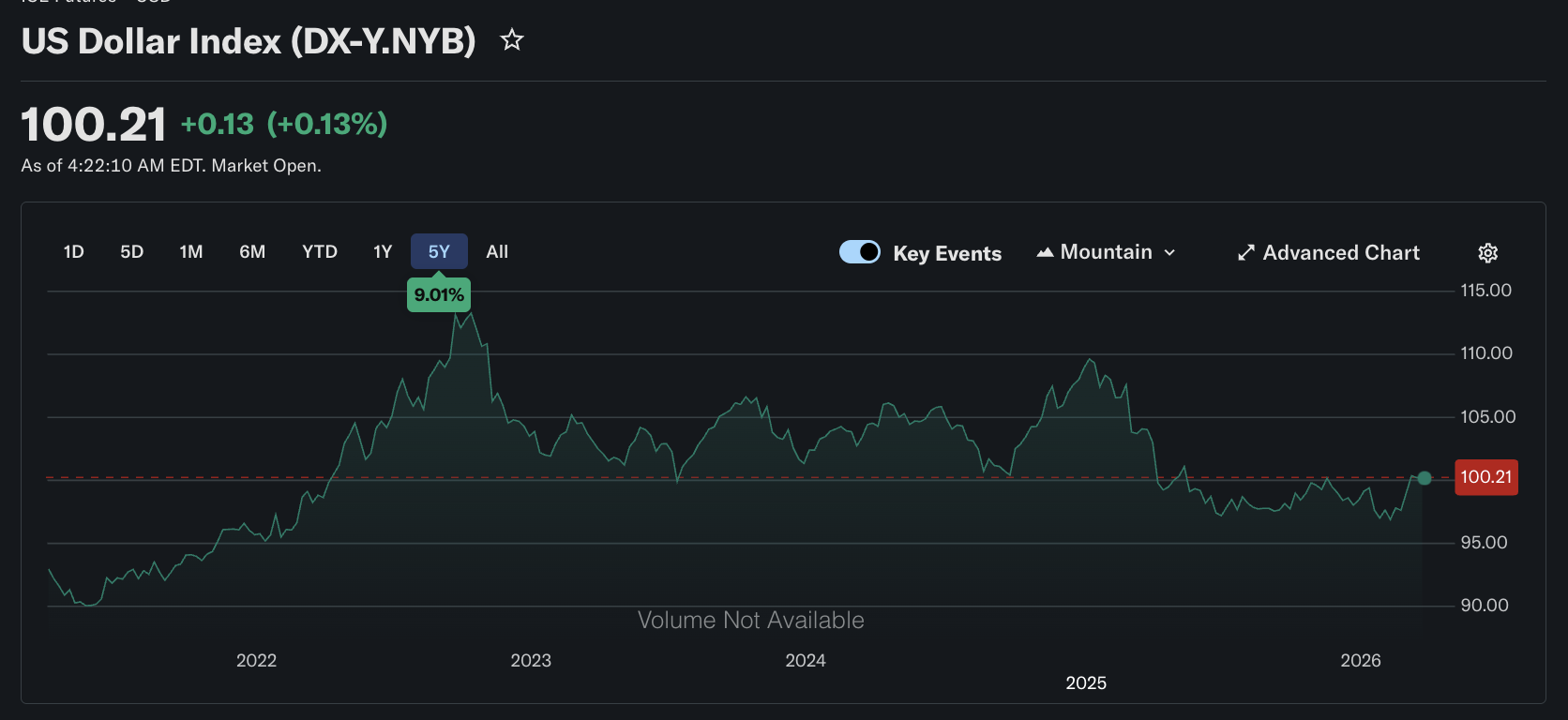
The agreement addressed the soaring USD, which had risen by nearly 80% against major currencies since 1980.
Under the accord, the G5 agreed to intervene in currency markets and adjust economic policies to depreciate the dollar. The result was dramatic: within two years, the USD fell by roughly 40%.
| Feature | Plaza Accord (1985) | Mar-a-Lago Accord (Proposed) |
|---|---|---|
| Status | Formally signed | Theoretical / speculative |
| Participants | G5 (US, UK, Germany, France, Japan) | Unclear; China inclusion uncertain |
| Mechanism | Coordinated central bank intervention | Tariffs, security leverage, fiscal tools |
| Dollar outcome | Fell roughly 40% in two years | Unknown; forecasts vary widely |
| Global context | Cold War alliances, managed FX regimes | Fractured geopolitics, floating FX markets |
Several conditions that enabled the Plaza Accord in 1985 no longer exist. Most developed country central banks no longer intervene in currency markets.
China is now a dominant global trade power and America’s main trade rival. It is unlikely to allow the yuan to appreciate to meet US policy objectives.
One of the more controversial proposals within the Mar-a-Lago framework extends beyond currency markets.
One of the more extreme proposals is that the US would require foreign governments that hold Treasuries to exchange those holdings for 100-year, non-tradable, zero-coupon bonds, with the exchange tied to security commitments and using military presence as leverage.
Treasuries are priced based on the assumption of full and unconditional payment, and tampering with that assumption would immediately reprice US sovereign risk. The ripple effects through global bond markets would be severe and fast.
This is the question every investor and trader wants answered honestly.

If markets sense any movement towards the Mar-a-Lago Accord, there could be a profound reshaping of currency and US Treasury markets.
A deliberate US dollar devaluation would increase volatility as traders adjust to a new foreign exchange environment.
A weaker dollar could boost US exports by making them more affordable internationally, narrowing the trade deficit. However, higher import costs could increase inflation and reduce American purchasing power.
There are also broader macro risks to consider:
Coordinated intervention: Central banks could sell dollars and buy their own currencies, echoing the Plaza model. That is the cleanest route, but it depends on a rare political alignment.
Tariff leverage: Washington could use tariffs, or offer tariff relief, to encourage trade partners to make currency concessions.
Reserve and Treasury engineering: Market analysis proposals include encouraging foreign holders to sell dollars, converting short-term Treasuries into long-term bonds, or imposing fees to make reserve holdings less attractive.
Even without a coordinated accord, a more isolationist US is likely to attract less foreign investment and experience lower growth rates over time. Analysts generally expect continued downward pressure on the dollar.
A key reason for resistance is that Beijing views Japan’s experience after the Plaza Accord as a warning. The yen's appreciation contributed to Tokyo’s asset bubble collapse and decades of economic stagnation.
Beijing is unlikely to risk changes to the renminbi that could reduce export competitiveness during a trade war.
Adrian Day, president of Adrian Day Asset Management, described the Mar-a-Lago Accord as a “loose collection of disparate policies” rather than a cohesive plan.
He cautioned against dismissing them, noting that Trump often begins negotiations with extreme positions before adopting more moderate policies.
It is a proposed but unconfirmed strategy linked to the Trump administration, aimed at deliberately weakening the US dollar to reduce trade deficits and revive American manufacturing. The name comes from Trump’s Mar-a-Lago estate in Florida.
No. Policymakers have not officially endorsed this as a strategic goal, and as of early 2025, it remains a speculative concept rather than an official policy.
The Plaza Accord was a 1985 agreement between the US, UK, Japan, Germany, and France to deliberately weaken the dollar. The Mar-a-Lago Accord is often described as a modern version of that deal, with updated mechanisms and a broader scope.
Potentially, yes. If implemented, most analysts expect the dollar to face downward pressure. The extent and speed would depend on the cooperation of the trading partner and the specific tools used.
A weaker dollar usually increases the cost of imports, which can drive inflation higher. It may also reduce the value of US-denominated assets for foreign investors, potentially shifting capital flows away from US markets.
The Mar-a-Lago Accord is not a treaty but a proposed strategy to weaken the dollar while maintaining the United States’ central role in the global financial system.
It could affect the dollar if it leads to coordinated intervention or credible reserve-policy action. However, these tools also risk higher yields, increased inflation, and reduced confidence in the system that underpins the dollar’s strength.
Disclaimer: This material is for general information purposes only and is not intended as (and should not be considered to be) financial, investment, or other advice on which reliance should be placed. No opinion given in the material constitutes a recommendation by EBC or the author that any particular investment, security, transaction, or investment strategy is suitable for any specific person.