Published on: 2026-03-27
Updated on: 2026-03-30
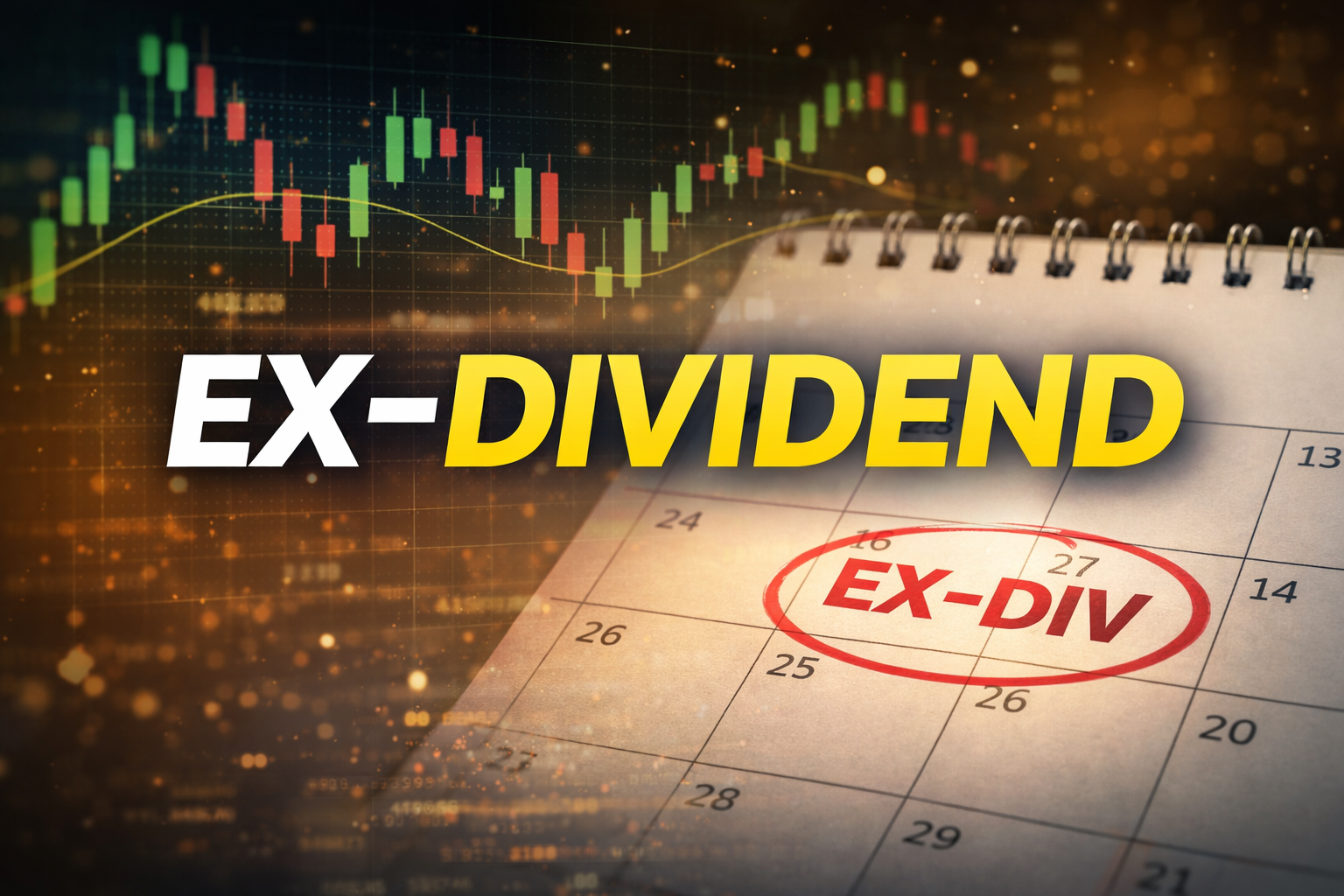
The ex-dividend date determines which shareholders are entitled to receive a declared dividend. Many investors make buy-or-sell decisions around this date to optimise their returns.
While dividends provide a steady income stream, timing is important. Purchasing a stock on or after its ex-dividend date means you will not receive the upcoming payment. This article explains the ex-dividend concept in detail, explores its effects on stock prices and investment strategies, and provides real-life examples of well-known dividend-paying companies.
Ex-dividend is the first day a stock trades without the value of its declared dividend.
Investors must own the stock before the ex-dividend date to receive the dividend.
Stock prices often adjust downward on the ex-dividend date by roughly the dividend amount.
Dividend capture strategies rely heavily on understanding ex-dividend timing.
Holding periods and taxes can affect the total benefit from dividend payments.
The term ex dividend refers to a stock trading without the upcoming dividend included in its price. On the ex-dividend date, the buyer of the stock is not entitled to the dividend. Only shareholders recorded on the company’s books before this date are eligible for payment.
This date is critical because it ensures fair distribution of dividends. Without it, new shareholders could claim dividends they did not help earn. The ex-dividend date is set by the company in accordance with the stock exchange rules.
Dividend-paying companies follow a standard schedule:
Declaration Date: The board announces the dividend amount, record date, and payment date.
Ex-Dividend Date: The stock begins trading without the dividend. Investors buying on or after this date are not eligible.
Record Date: The company identifies shareholders eligible to receive the dividend.
Payment Date: The dividend is distributed to shareholders on record.
To be eligible, investors must purchase shares at least one business day before the ex-dividend date due to the standard T+2 settlement period.
Suppose Apple Inc. declares a quarterly dividend on March 1, with an ex-dividend date of March 15 and a payment date of March 30.
If an investor buys Apple shares on March 14, they will receive the dividend.
If they buy on or after March 15, they will not receive it.
On March 15, the stock begins trading ex-dividend, meaning the market price may drop to reflect the dividend payout.
This adjustment is common and reflects the fact that new buyers will not receive the upcoming payment.
On the ex-dividend date, a stock’s price often decreases by approximately the dividend amount. This adjustment accounts for the cash leaving the company to pay dividends.
For example, if Coca-Cola shares trade at $60 and the dividend is $1 per share, the stock may open near $59 on the ex-dividend date. Market dynamics can influence the exact price change, but they provide investors with a general expectation.
Some investors use a dividend capture strategy, buying a stock just before the ex-dividend date and selling shortly afterwards to collect the dividend. While appealing in theory, it is not risk-free:
Stock prices may fall more than the dividend amount.
Transaction fees can erode profit.
Taxes can reduce net gains.
This strategy works best for experienced traders who understand market volatility and taxation.
Long-term investors may care less about ex-dividend timing, as they focus on overall return, both dividends and price appreciation. Short-term traders, however, may closely track ex-dividend dates to capture dividends or anticipate price adjustments.
Below are examples of widely held, dividend-paying companies whose ex-dividend dates are important for income investors.
Note: Dividend yields and ex-dividend dates are illustrative examples.
Investors should monitor these dates to ensure dividend eligibility and understand how upcoming dividends can affect stock pricing and portfolio income.
Taxes can significantly affect the net benefit of dividend payments. Rules vary by country, but generally:
Qualified dividends receive favourable tax rates.
Non-qualified dividends may be taxed as ordinary income.
Holding periods around the ex dividend date determine whether a dividend is qualified.
For example, in the United States, investors usually need to hold a stock for at least 61 days around the ex-dividend date to receive qualified dividend tax treatment. Consult a tax professional for guidance in your jurisdiction.
This is false. Investors must own the shares before the ex dividend date to qualify.
While prices often adjust, market forces can cause variations. The price change may be smaller or larger than the dividend.
Dividends do not guarantee profit. Taxes, transaction fees, and market fluctuations can reduce or eliminate gains.
Ex-dividend is the day a stock trades without its upcoming dividend. Investors buying on or after this date are not entitled to receive the declared dividend.
Stock prices often drop roughly by the dividend amount on the ex dividend date. Market conditions can influence the adjustment, so the price change is not always exact.
No. To receive the dividend, you must purchase the stock before the ex dividend date. Buying on or after means the dividend will go to the previous shareholder.
It determines dividend eligibility. Investors track it to plan purchases or sales and to maximise income from dividend-paying stocks.
Yes. Any company paying a dividend sets an ex dividend date as part of its dividend schedule to identify eligible shareholders.
The ex dividend date is a key concept for anyone investing in dividend-paying stocks. It determines which shareholders are entitled to receive a dividend.
Investors must purchase shares before this date to qualify for the dividend, and stock prices often adjust to reflect the upcoming payout. Understanding ex dividend timing is essential for dividend capture strategies, tax planning, and overall investment decision-making.
Disclaimer: This material is for general information purposes only and is not intended as (and should not be considered to be) financial, investment or other advice on which reliance should be placed. No opinion given in the material constitutes a recommendation by EBC or the author that any particular investment, security, transaction or investment strategy is suitable for any specific person.