Published on: 2026-04-30
Updated on: 2026-04-30
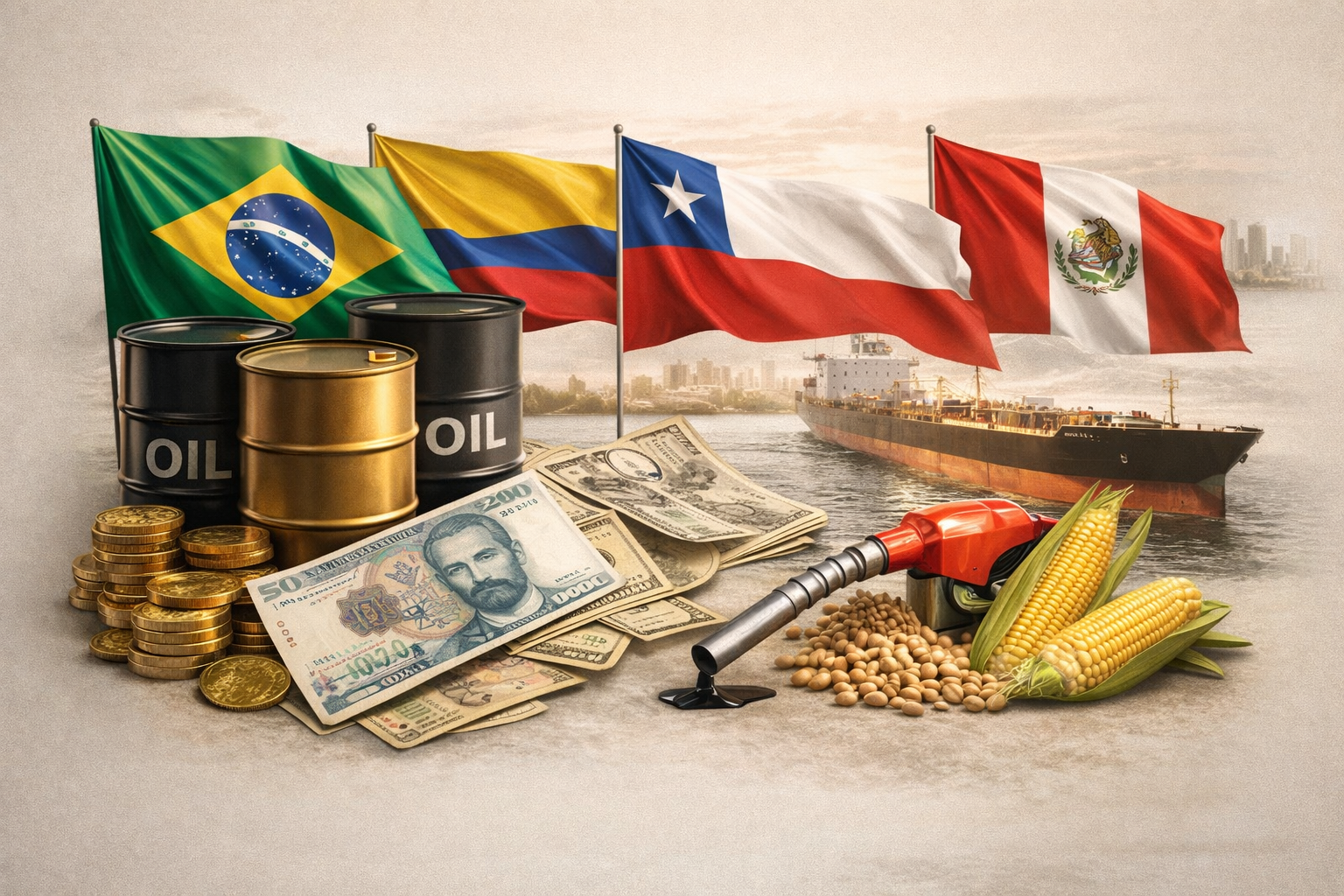
After the war escalated on 28 February, the Brazilian Real became one of the most closely watched currencies in Latin America. It was not the main winner every day since Colombia, Peru, and Mexico all had strong runs of their own. But Brazil kept coming back into focus because it sat at the intersection of higher oil prices, trade disruption, and still-high interest rates.
The obvious explanation was that Brazil is a major crude exporter, so higher oil prices should help its external position and support the currency. That was true, but only part of the picture. The more interesting shift was that the war changed who could supply the market, not just the price of what was traded.
Brazil was not only benefiting from higher crude prices. It was also becoming a replacement supplier. In March, China lifted purchases of Brazilian crude to a record 1.6 million barrels a day. That pushed Brazil’s total crude exports to 2.5 million barrels a day, the second-highest monthly figure on record. India also became Brazil’s second-largest oil buyer. That gave the Real a stronger story than the usual idea that commodity exporters simply rise when oil does.
Brazil also still had yield on its side. On 18 March, the central bank began easing cautiously, cutting its benchmark rate by 25 basic points to 14.75% after holding it at 15% for five meetings. Reuters reported that inflation forecasts for 2026 were revised higher after the oil shock, making the path for further cuts less certain. So the Real was supported by stronger export demand, a clear oil link, and one of the region's highest policy rates.
That mix helps explain why Brazil remained relevant even when it was not leading every session. On 6 April, Reuters reported that Mexico’s Peso led the regional bounce, Peru’s Solrose 0.9%, and Brazil’s Real gained just 0.2% as markets weighed the risk of escalation and hopes for a ceasefire. Brazil was not dominating the scoreboard. It simply kept fitting the shock's structure.
The most revealing part of the Brazil story was the tension at home. A firmer currency can make a country appear strong from abroad, even as households and businesses face uncertainty. In March, conditions in Brazil scrapped federal diesel taxes, imposed a 12% tax on crude exports, and added a 50% levy on diesel exports to soften the blow from rising fuel costs. President Lula said oil prices were “getting out of control”, while Reuters noted the farm sector was under pressure because diesel is central to soybean harvesting and corn planting.
That tension became clearer in refined fuels. Reuters reported on 8 April that Brazil’s diesel imports fell 25% in March to 1.05 billion litres, even though the country still relies on imports for about a quarter of its diesel needs. The share of US diesel in those imports dropped sharply, likely because cargoes were redirected to higher-paying markets such as Asia. So Brazil was benefiting from stronger crude exports while facing stress in securing enough fuel at home.
The domestic response also became harder to manage. On 9 April, Reuters reported that Brazil planned to appeal a court ruling that suspended the 12% crude export tax for some international firms. Petrobras was not covered by that exemption. This showed the government was trying to use the oil windfall to protect consumers, but even that response was becoming more contested.
Colombia is the best comparison because it prevents the article from focusing too much on Brazil. Colombia also had the oil link, and at times it looked stronger. But its policy response was sharper and noisier. On 31 March, the central bank raised rates by 100 basis points to 11.25%, and the government then withdrew from the central bank board in protest. Reuters reported that analysts saw the clash as a potential blow to credibility.
That is where Brazil began to look steadier, even if not always stronger. Brazil was dealing with inflationary pressures and fuel stress, but Colombia’s currency story featured a more visible fight between the government and the central bank. This makes the comparison useful because it shifts the discussion from raw performance to how that performance was sustained.
Chile shows the other side of the regional split. It is a commodity-heavy economy, too, but that did not offer the same protection in this shock. On 24 March, Chile is one of Latin America’s largest oil importers because it lacks meaningful domestic production. This left it more exposed when Brent surged from roughly $70 before the conflict to about $101 later in March.
By 7 April, Chile’s Peso was leading losses in the region as markets braced for a US ultimatum to Iran and oil spiked above $150 a barrel. ING made a similar point in March, arguing that Brazil had stronger rebound potential if the crisis eased, while Chile looked more vulnerable, especially if copper weakened too. This is a cleaner distinction. “Commodity currency” is too broad to explain what happened. What mattered was exposure to the right commodity during this specific shock.
Peru and Mexico matter because they stop the regional story from becoming too neat. Peru’s Sol reminds us that resilience in foreign exchange does not have to come from oil. Sol was one of Latin America’s most stable currencies because Peru accumulated a large stock of Dollars through trade surpluses and foreign-exchange reserves, about $83 billion, or roughly 30% of GDP. This gave Peru a different kind of support, less tied to wartime commodity demand and more to external buffers.
Mexico’s role is different. It shows how quickly leadership could shift day to day. Reuters reported on 6 April that the Peso led the regional move higher as the Dollar softened and markets balanced escalation against possible ceasefire chances. The same report had Peru’s Sol rising more than Brazil’s Real that day. So the region never moved in a clean ranking from strongest to weakest. It was a moving set of reactions shaped by different local strengths.
Brazil also looks more interesting when compared with Asia than with its Latin American peers. Asia, which imports about 60% of its crude from the Middle East, was the region most exposed to the energy shock. Countries, including India and the Philippines, had already intervened in currency markets to support their exchange rates. Brent had risen 55% since the conflict broke out on 28 February.
That wider contrast helps explain why Brazil drew so much attention. It did not need to be the strongest currency in Latin America to look well placed in a world where large net importers were under far heavier strain. The comparison makes the Brazil story easier to read.
The ending also has to reflect where the market is now. The brief ceasefire-relief story is no longer enough. It was reported on 14 April that the International Energy Agency now sees the war as the largest oil supply disruption in history, with 1.5 million barrels a day of supply lost this year. The agency also flipped its 2026 demand view from expected growth to a small decline.
At the same time, the market is no longer trading this as a straight-line panic. The Dollar jumped on 12 April after US-Iran talks failed, as investors rushed back into safe havens. By 15 April, the Dollar had given up almost all those gains as hopes for fresh talks returned. Brent fell back to around $94.50 a barrel, and risk appetite improved across markets.
The lesson was never simply “oil up, Brazil up”. It was the war shocks that rewarded countries that could sell what the world suddenly lacked, while exposing what those same countries still needed to buy. From here, the things worth watching are whether oil stays below the panic highs, whether Brazil’s export boost holds if diplomacy improves, and whether fuel strain at home starts to matter more than the windfall from selling crude abroad.