Published on: 2026-04-16
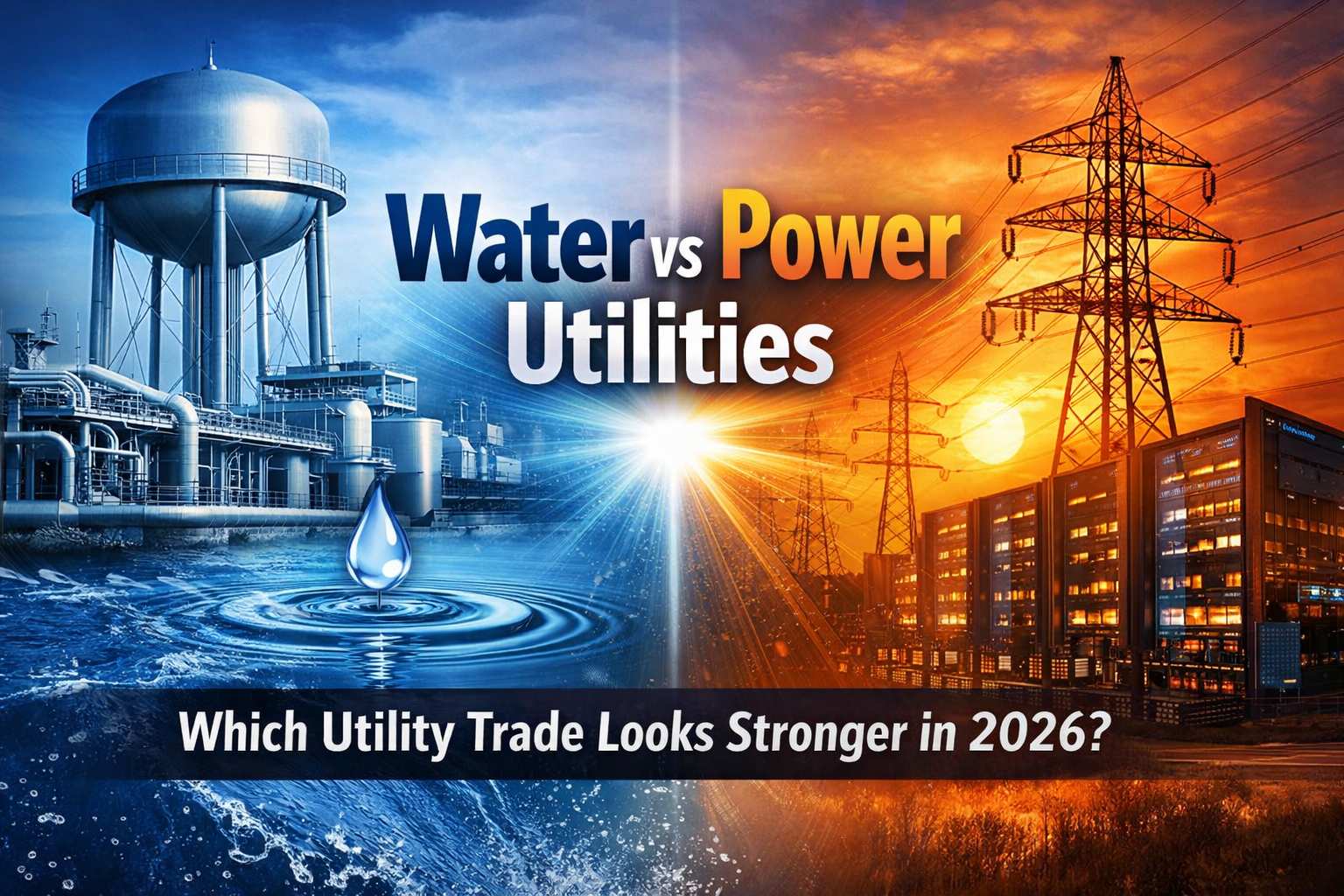
Water vs power utilities is becoming a more important market debate in 2026 as higher interest rates, rising infrastructure capex, and stronger electricity demand reshape the utility sector. What once looked like a simple defensive allocation is now a more complex capital-allocation decision across regulated utilities.

Power utilities are gaining momentum as electricity demand rises, driven by data-centre growth, grid expansion, and electrification. Water utilities, by contrast, continue to offer a more stable and predictable earnings profile, anchored in essential infrastructure and regulated returns. The key question for investors is no longer which sector is safer, but which utility model can convert capital expenditure into durable earnings more efficiently in a high-rate environment.
Water utilities provide essential services with stable demand and predictable earnings, while power utilities are increasingly driven by electricity demand growth, grid investment, and data-centre expansion. In 2026, the key difference is that power utilities offer more growth potential, while water utilities provide more defensive stability. This shift is changing how investors approach the utility sector in 2026.
For much of the past decade, utilities were treated as classic defensive sectors. They offered steady dividends, predictable utility earnings, and relative insulation from economic cycles. When growth stocks sold off, utility stocks often outperformed. That was the utility trade.
That framework still holds, but it is no longer sufficient.
Three structural shifts are reshaping how markets evaluate regulated utilities:
Higher interest rates are raising the cost of capital. Utilities rely heavily on debt financing, and rising yields directly affect both valuation and long-term earnings.
Changing demand dynamics are introducing growth into parts of the sector. Power utilities now sit at the centre of electrification, grid investment, and AI-driven electricity demand.
Rising infrastructure capex is increasing the importance of regulatory execution and capital recovery. Investors are focusing more closely on how efficiently utilities convert investment into earnings.
The result is a more selective environment. The utility sector is no longer just about yield. It is about capex efficiency, rate-base growth, and earnings durability.
Power utilities are benefiting from a structural shift in electricity demand. Data centres, digital infrastructure, and electrification are driving load growth in key regions such as ERCOT and PJM.
For regulated power utilities, this creates a rare combination: growth within a regulated framework.
Electricity demand in the US is expected to reach around 4,108 BkWh in 2026, reinforcing the need for grid upgrades, generation capacity, and energy storage. At the same time, utilities are expanding transmission networks and investing in grid reliability to support higher and more volatile loads.
This translates into a stronger investment case:
Rate-base expansion driven by transmission and distribution upgrades
Grid modernisation linked to reliability and resilience
Exposure to data-centre power demand, especially in high-growth regions
Policy and regulatory support for infrastructure investment
Unlike the traditional utility model, power utilities now offer growth with regulation, not just income stability.
However, the risks are not uniform. Utilities exposed to slower-growth regions or less supportive regulators may struggle to capture the same upside. Transition risks tied to legacy generation assets also remain a key factor.
Water utilities operate under a different economic model. Demand for water is generally more stable and less sensitive to economic cycles than electricity demand. This creates a more predictable earnings base.
The investment case for water utilities is built on necessity rather than growth acceleration.
Key drivers include:
Ageing infrastructure replacement, including pipelines and treatment systems
Regulated rate-base growth, determined by state-level decisions
Public funding support for water system upgrades and resilience
EPA estimates show the US will need $625 billion in drinking water infrastructure investment over the next 20 years, highlighting the scale and persistence of the investment cycle.
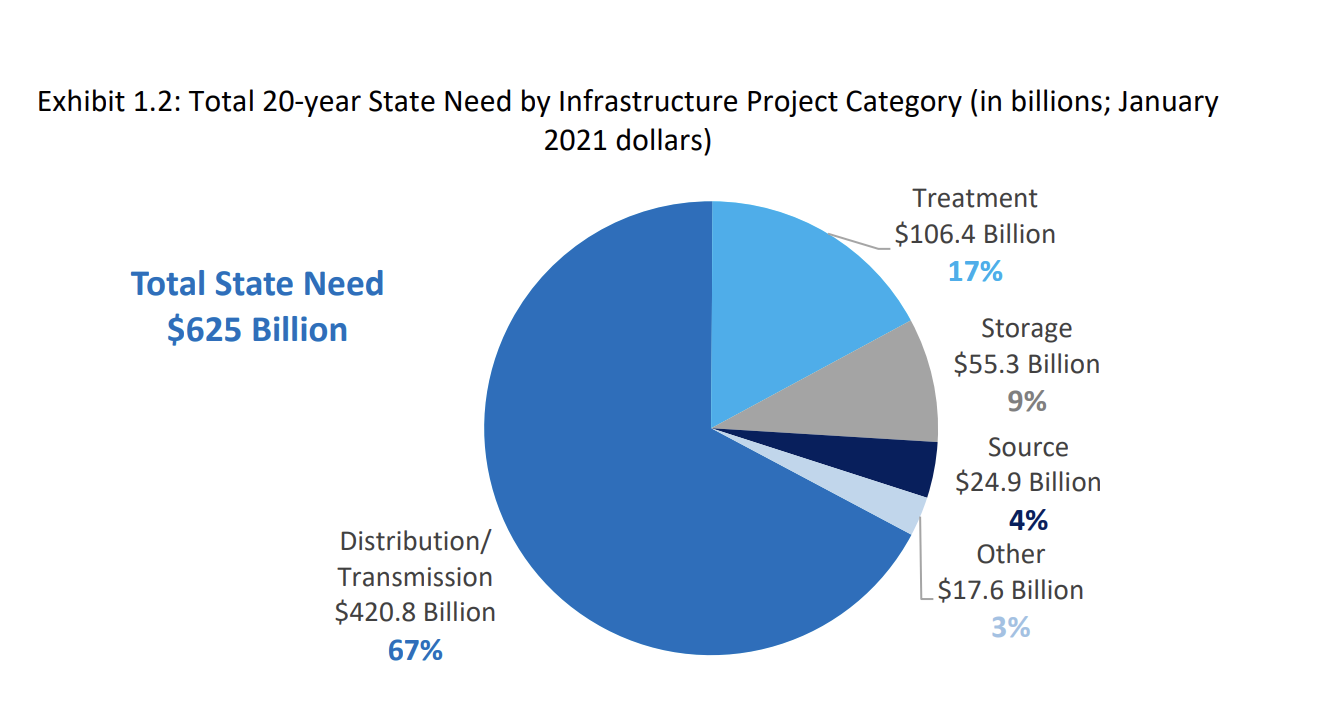 Water utilities therefore offer:
more predictable utility earnings
lower exposure to demand volatility
a clearer defensive utility profile
What they generally lack is strong demand-side growth. There is no direct equivalent to AI-driven electricity demand or data-centre expansion. As a result, water utilities tend to trade as stability-focused infrastructure assets, rather than growth-driven ones.
Interest rates remain a central factor for both sectors.
When bond yields rise, utility valuations often decline because future cash flows are discounted at higher rates. Utilities also face direct pressure through higher borrowing costs, which can reduce the spread between allowed returns and actual financing costs.
This affects both water and power utilities, but not equally.
Power utilities often manage:
larger capital programmes
longer construction timelines
higher exposure to construction-period financing
Water utilities are also capital-intensive, but their projects are typically more modular and shorter in duration. This can allow faster conversion of capex into earnings.
As a result, water utilities may offer a slightly more resilient financing profile, while power utilities carry more exposure to long-duration capital cycles.
The key distinction between water utilities and power utilities lies in how efficiently each converts capital investment into earnings. The structural differences between water utilities and power utilities become clearer when comparing their capital models.
| Dimension | Power Utilities | Water Utilities |
|---|---|---|
| Capex driver | Load growth, grid upgrades, generation transition | Infrastructure replacement, compliance |
| Earnings upside | Higher if demand growth remains strong | More moderate and regulated |
| Earnings predictability | Lower | Higher |
| Regulatory complexity | Higher | Lower to moderate |
| Capex-to-earnings timeline | Longer | Often shorter |
| Key risk | Demand shortfall, transition costs | Rate-case outcomes, return pressure |
Power utilities offer greater upside when demand growth is strong and regulatory support is clear. Water utilities offer more stable and predictable earnings, with fewer moving parts.
In a high-rate environment, markets increasingly reward efficient capital allocation and reliable earnings conversion, not just sector classification.
Water infrastructure is not a direct trading asset, but it is an important macro and equity theme. It influences utilities, infrastructure investment, and rate-sensitive sectors.
Power utilities are benefiting from rising electricity demand, especially from data centres, grid expansion, and electrification trends. This creates a stronger growth narrative than in previous cycles.
Water utilities provide essential services with stable demand and long-term infrastructure needs. Their earnings profile is more predictable, making them attractive in uncertain market conditions.
The main shared risk is financing cost. Both sectors depend on debt, regulatory approval, and long-term capital investment.
The water vs power utilities debate in 2026 reflects a deeper shift in how markets evaluate infrastructure assets. The sector is no longer defined purely by defensiveness. It is defined by capital intensity, rate sensitivity, and earnings conversion.
Power utilities are increasingly positioned as growth-oriented regulated assets, supported by rising electricity demand and grid investment. Water utilities remain defensive infrastructure assets, offering stability and predictability.
In a high-rate environment, that distinction matters more than ever. The better trade is not simply the safer one. It is the utility model that can turn capital into earnings with greater efficiency and consistency.
Disclaimer: This material is for general information purposes only and is not intended as (and should not be considered to be) financial, investment or other advice on which reliance should be placed. No opinion given in the material constitutes a recommendation by EBC or the author that any particular investment, security, transaction or investment strategy is suitable for any specific person.