Published on: 2026-06-02
Updated on: 2026-06-02
The Australian dollar gained on Tuesday against the kiwi after Iran fired two ballistic missiles overnight targeting American forces stationed in Kuwait. A peace deal seems increasingly unlikely, according to EBC Financial Group.
The pair may weaken further as traders unwind bearish positions in New Zealand's currency following a hawkish shift from the RBNZ last week, analysts said.
Interest-rate differentials between the two economies may have peaked, while any de-escalation in the Middle East tensions would be a boon to the kiwi, according to Goldman Sachs.
Australia's current account deficit widened to A$27.1 billion. The RBA has raised interest rates three times this year. There are signs the tight financial conditions are working to cool demand.
While traders have pared bearish bets on the kiwi since a six-year peak last month, short positions are yet to unwind to levels seen before the Iran war, according to CFTC data.
Meanwhile, bullish wagers on the Aussie are hovering near the highest since February, leaving scope for a sharp reversal if sentiment turns sour.
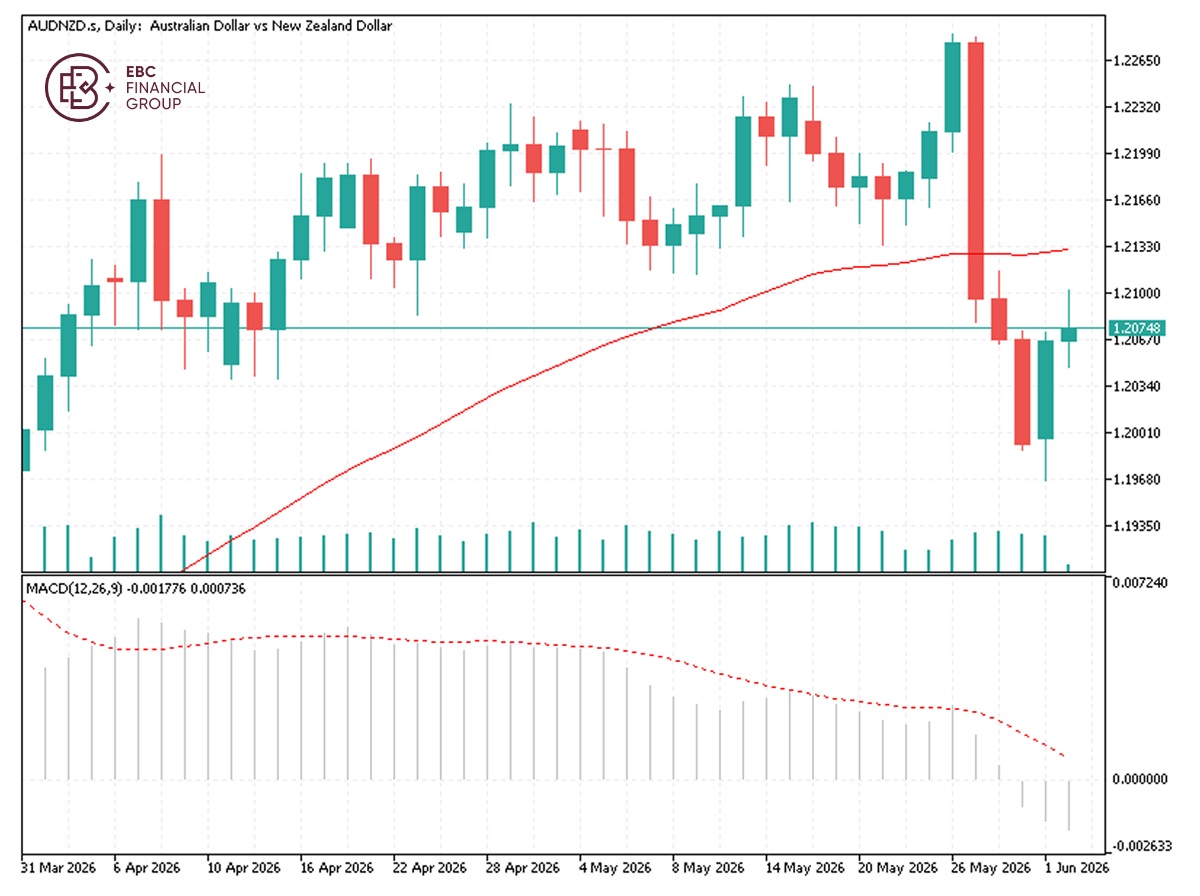
A bearish MACD divergence occurred, after the AUD/NZD rally stalled. That suggested the underlying upward buying momentum was fading, so a drop below 1.2000 may be in the wind.
As of market close on 1 June, among EBC major products, Oracle shares led gains as investors rewarded the company for accelerating AI cloud infrastructure expansion.
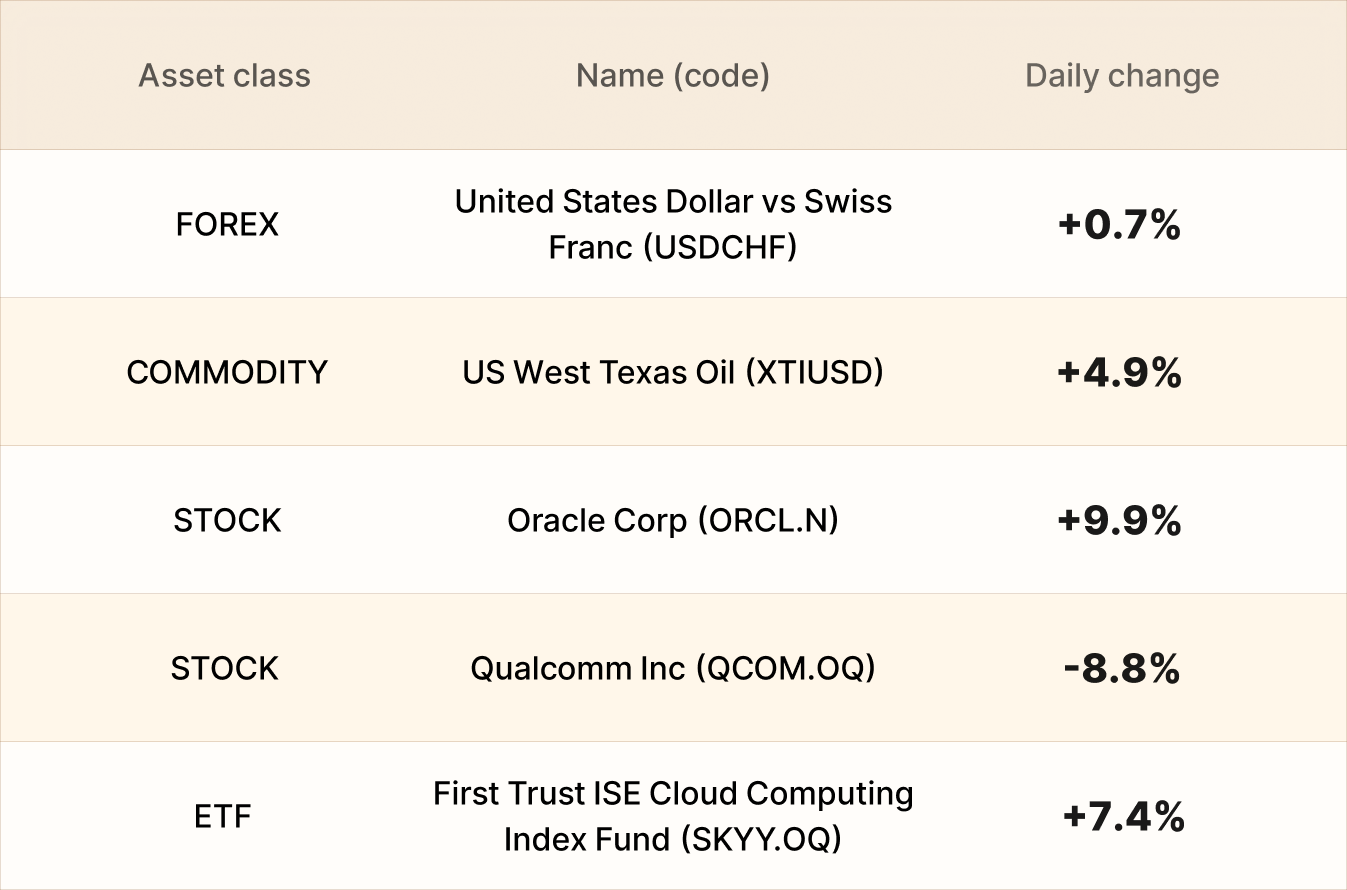
Qualcomm was facing selloff after competitor Nvidia unveiled its new RTX Spark superchip, a powerful processor for Windows PCs that directly challenges Qualcomm's Snapdragon series.
Swiss economy grows less than initially estimated in Q1. Tasnim News Agency reported that Tehran has suspended message exchanges with Washington over Israel's military operations in Lebanon.