Published on: 2026-04-23
AI’s power hunger is repricing the solar power market because the sector is no longer judged only by falling module costs and rising installation volumes. It is increasingly judged by whether it can help serve fast-growing electricity demand from AI data centers through a mix of generation, storage, contracts, and grid access.
Global electricity demand is expected to grow at an average annual rate of 3.6% from 2026 to 2030, while developers in the United States plan to add a record 86 GW of utility-scale capacity in 2026, led by 43.4 GW of solar and 23.7 GW of battery storage.
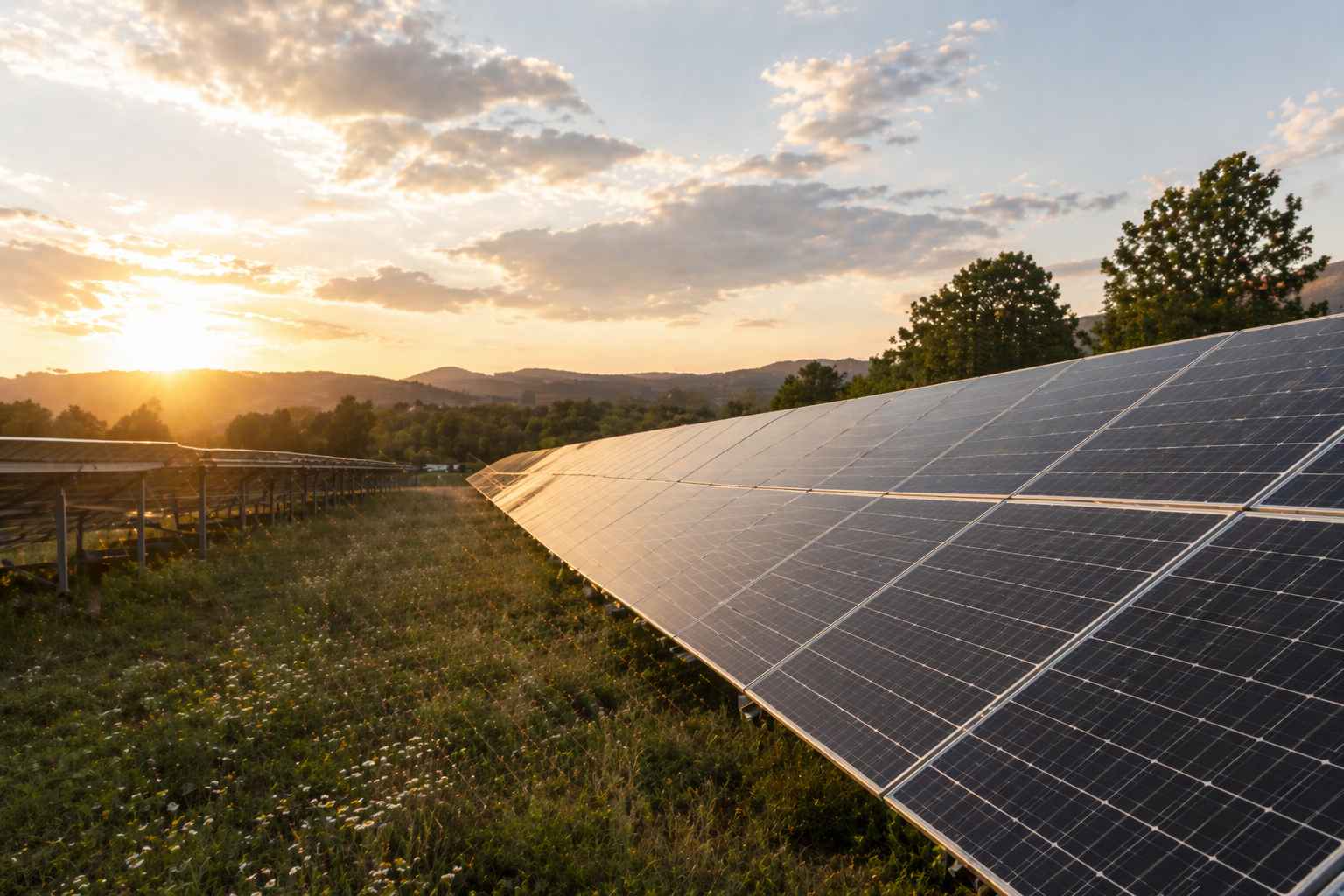
Solar remains one of the fastest and most cost-competitive ways to add new generation, but AI infrastructure needs electricity with high reliability, predictable delivery, and clearer long-term supply arrangements. That is why battery energy storage systems, or BESS, are moving closer to the center of the story.
AI is pushing data centers into a different league of electricity consumption. Data centers used about 1.5% of global electricity in 2024, and in the base case that share rises to just under 3% by 2030. In absolute terms, global data-center electricity demand is projected to more than double to around 945 TWh by the end of the decade. In the United States, the expansion is even more visible, with data centers expected to account for almost half of electricity-demand growth through 2030.
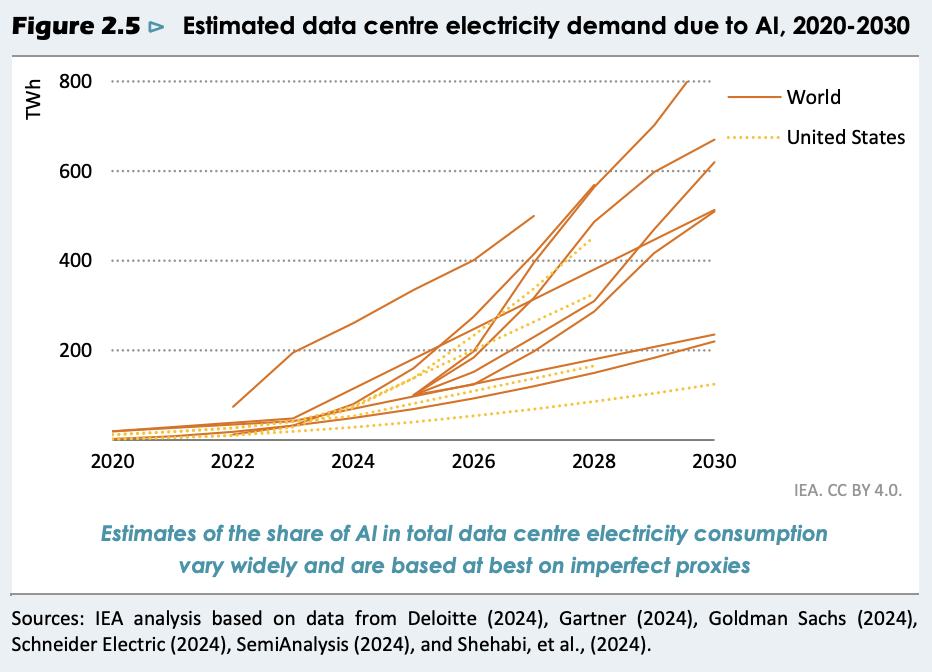
This is not simply a story about higher electricity use. Data centers require extremely high reliability, are often built in clusters, and can place heavy pressure on local grids even when national supply looks adequate. Their demand is also location-sensitive, since land, fiber access, tax policy, and transmission availability tend to determine where large facilities can be built.
For investors, this changes the way power markets should be read. Electricity availability and deliverability are becoming more important strategic variables in digital infrastructure.
The old framework favored cheap generation. The new one places greater value on dependable, contracted, and locationally useful electricity. AI data centers do not only need more megawatt-hours. They need power that fits continuous operations, long planning cycles, and tighter reliability requirements.
That distinction matters for financial analysis. A project that produces low-cost power is not automatically the most valuable project if the electricity arrives at the wrong time, in the wrong place, or without a structure that supports long-term demand.
As AI-related electricity consumption rises, utilities, developers, and large corporate buyers are putting greater emphasis on storage, transmission, efficiency, and flexible demand alongside generation itself.
Solar sits at the front of this response because it remains fast to deploy and cost-competitive at utility scale. In the United States, it is the largest source of planned new utility-scale capacity for 2026, well ahead of other generation types. That makes it one of the few technologies able to respond quickly to rising demand from data centers and broader electrification trends.
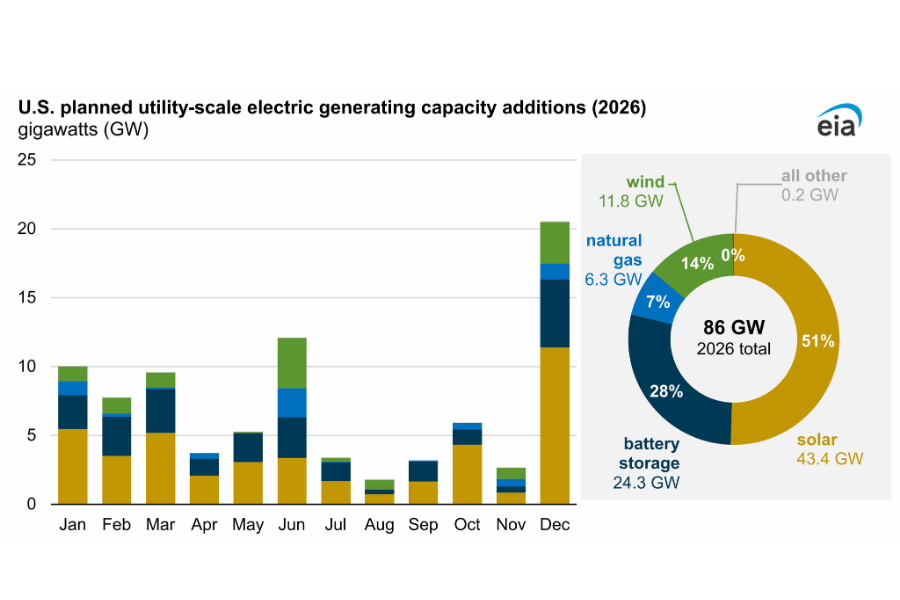
AI-driven load growth therefore strengthens the solar thesis, but only up to a point. Solar can add capacity faster than many alternatives, especially in markets where land, permitting, and transmission are available.
Yet speed of deployment no longer defines value on its own. In the next phase of the market, usefulness matters as much as scale.
| Metric | Latest signal |
|---|---|
| Planned U.S. utility-scale capacity additions in 2026 | 86 GW |
| Planned solar additions in 2026 | 43.4 GW |
| Solar share of planned additions | 51% |
| Planned battery storage additions in 2026 | 23.7 GW |
| Battery storage share of planned additions | 28% |
| Global data-center electricity use in 2024 | 415 TWh |
| Global data-center electricity use by 2030 | ~945 TWh |
| Global grid queue backlog | 2,500+ GW |
Solar’s limitation is timing. Generation is concentrated in daylight hours, while AI data centers need electricity throughout the day and night. In congested grids, that mismatch becomes more expensive because midday supply can face curtailment or weaker pricing if it cannot be absorbed efficiently.
This is where the solar story shifts from volume to usefulness. The relevant question is no longer only how much electricity a project can produce. It is whether that project can deliver power when it is needed, under terms that make it commercially attractive for large buyers.
That shift is becoming more important as grid connection queues deepen and congestion-related curtailment becomes more common.
Battery energy storage systems improve the economics of solar by changing the quality of what solar projects sell. Stand-alone solar sells electricity when the sun is shining. Solar paired with BESS can store excess output, discharge it later, and narrow the gap between when power is generated and when customers need it.
That makes solar more relevant to AI infrastructure, where reliability and timing matter as much as price. This is why battery storage is no longer a side note in the energy transition story. It is becoming a core part of how renewable generation is valued in power markets shaped by always-on digital demand.
The market is already moving in that direction. Developers plan to add 23.7 GW of utility-scale battery storage in the United States in 2026, second only to solar. Batteries are no longer treated as a niche supplement. They are becoming a standard feature of the new power stack.
BESS does more than smooth output. It helps shift electricity into higher-value hours, reduce curtailment, support grid stability, and improve the usefulness of long-term contracts for large buyers. In financial terms, it can turn a solar project from a low-cost energy asset into a more flexible infrastructure asset with stronger commercial value.
Repricing means not every solar megawatt deserves the same valuation. Projects paired with BESS may command better economics than stand-alone solar. Projects near major data-center load growth or strong transmission corridors may attract more capital than assets in congested or poorly connected markets.
Long-term power purchase agreements also become more valuable when large customers want visibility over supply and pricing.
This is why AI changes the solar market rather than simply boosting it. The likely winners are less defined by the cheapest panels or the largest pipeline alone and more by projects that combine generation, storage, interconnection, and credible offtake. The market is moving from valuing solar as cheap generation to valuing it as deliverable power.
AI increases electricity demand through data centers, and solar is one of the fastest scalable sources of new generation. That makes solar a natural first response to rising load growth, especially in markets with strong development pipelines.
BESS stores excess solar generation and shifts it into higher-value hours. That improves reliability, reduces curtailment risk, and makes solar more useful for customers such as data centers that need steady power.
Solar can meet part of the demand, but data centers need dependable electricity across the full day. In practice, storage, grid access, and long-term contracts are increasingly needed to make solar fit those requirements.
AI is increasing electricity demand, but the bigger financial shift is not toward any solar megawatt. It is toward solar power that can be stored, delivered, and contracted to serve always-on digital infrastructure. That is why AI’s power hunger is repricing the solar power market.
Solar remains one of the fastest-scaling sources of new supply in many regions, yet BESS is what turns intermittent generation into power that data centres and power markets can actually use. The strongest opportunities in the next phase of the market are likely to sit where solar, storage, grid access, and long-term demand converge.