Published on: 2026-04-20
Updated on: 2026-04-20
TSMC Q2 guidance did not signal a break in AI demand. With first-quarter revenue at US$35.9 billion and second-quarter guidance of US$39.0 billion to US$40.2 billion, the more important message is that demand for leading-edge compute remains intact while the next constraint is shifting into HBM and advanced packaging, where SK hynix now becomes the critical cross-check.
TSMC's Q1 2026 revenue reached US$35.9 billion, ahead of its prior range, and HPC rose 20 percent quarter-on-quarter to 61 percent of revenue, indicating that AI compute demand remains the dominant growth engine.
The Q2 midpoint of US$39.6 billion and above-30-percent full-year growth guidance argue against a near-term demand air pocket in the Asia AI chain.
The constraint is moving from pure wafer availability toward the HBM complex, where memory stacks, advanced packaging, and integration timing increasingly determine shipment readiness.
SK hynix is the next decisive checkpoint because its April 23 earnings call will show whether HBM3E and HBM4 supply, pricing, and packaging ramps are keeping pace with foundry-led AI demand.
TSMC's numbers read as a supply-and-execution story, not a demand rollover. Revenue, margins, mix, and the full-year outlook all pointed to persistent AI strength, especially in leading-edge and HPC-linked demand.
TSMC reported Q1 revenue of US$35.9 billion, gross margin of 66.2 percent, and operating margin of 58.1 percent. It then guided Q2 revenue to US$39.0 billion to US$40.2 billion, with gross margin of 65.5 percent to 67.5 percent and operating margin of 56.5 percent to 58.5 percent. At the midpoint, that is US$39.6 billion of revenue, a 10.3 percent sequential increase.
The mix matters as much as the headline. HPC represented 61 percent of first-quarter revenue, while 7-nanometer-and-below technologies accounted for 74 percent of wafer revenue. TSMC also said AI-related demand remains extremely robust and raised full-year 2026 revenue growth to above 30 percent in US dollar terms. Those are not the signals of a foundry seeing weakening AI appetite.
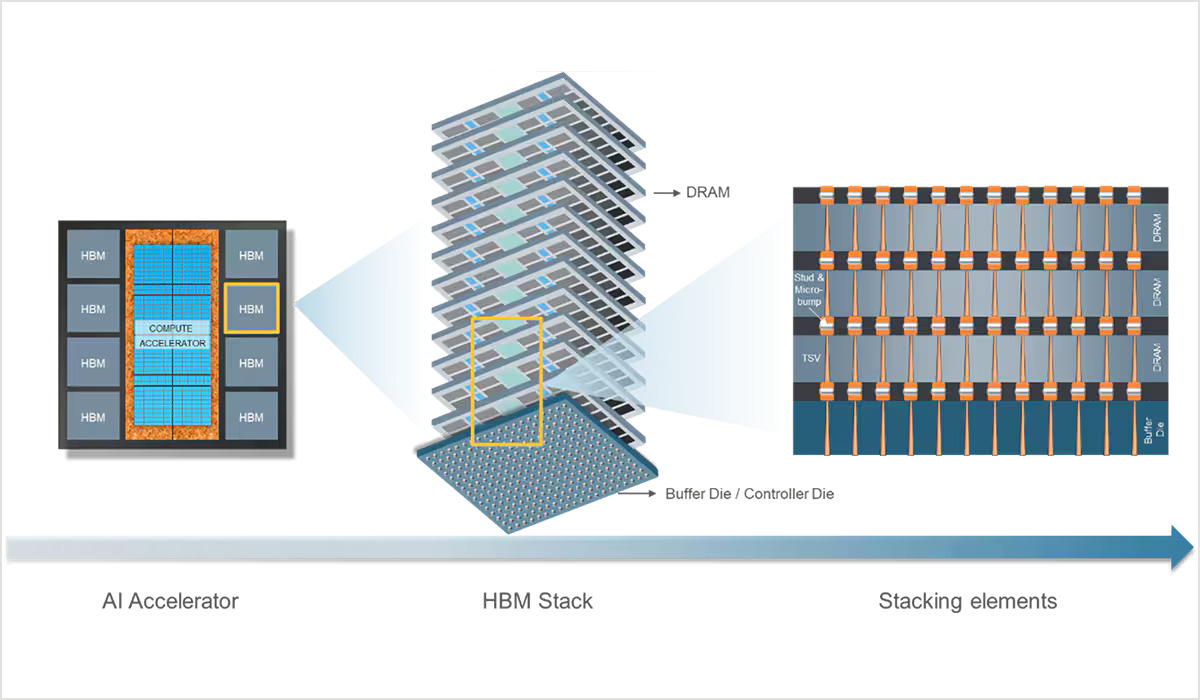
The answer is that TSMC kept validating front-end demand, but also made clear that advanced packaging remains tight. Once wafer demand is intact and packaging is constrained, the next gating item becomes the HBM stack and integration chain rather than end-market demand itself.
TSMC's call was explicit on two points.
First, the company is receiving strong signals from customers and cloud providers about AI demand, supported by an increase in token intensity as workloads shift further into agentic AI.
Second, advanced packaging capacity remains very constrained, necessitating closer collaboration with OSAT partners. That combination shifts the market's attention from "Is AI demand holding up?" to "Can the ecosystem assemble enough high-bandwidth systems on time?"
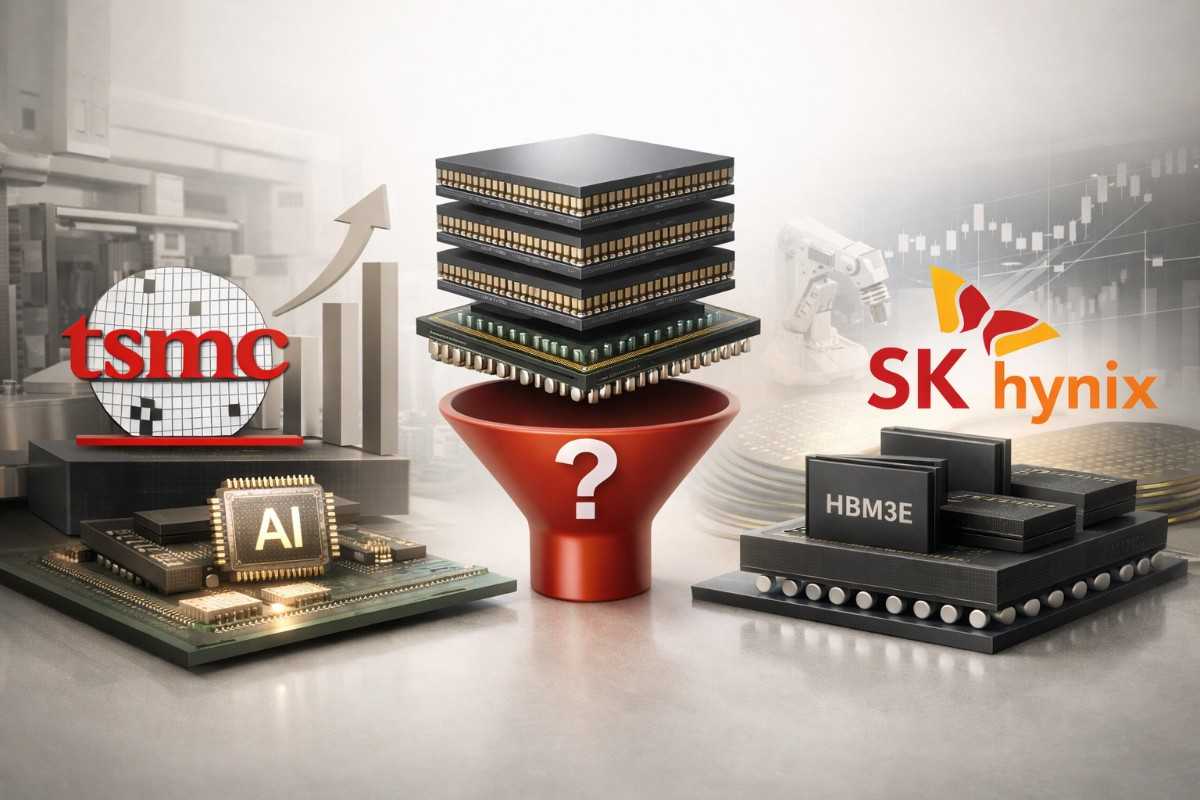
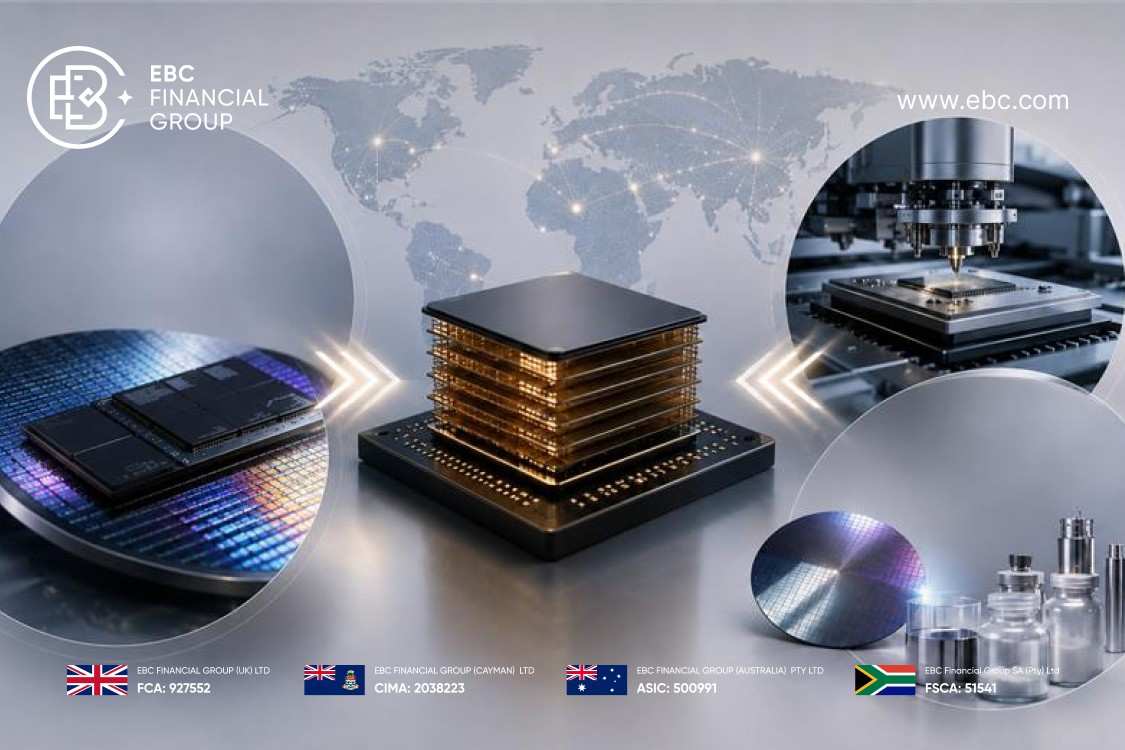
That is where the HBM bottleneck thesis becomes more persuasive. HBM is not just a memory line item. It is located at the intersection of DRAM process technology, stacking, thermal management, package design, and advanced packaging from the foundry side. If that lane remains constrained, AI accelerator shipments can stay supply-limited even while wafer starts and end demand remain healthy.
SK Hynix's own disclosures strengthen that read. In October 2025, the company said it had completed next-year HBM supply discussions and secured full customer demand for all DRAM and NAND production for the following year.
In January 2026, it said HBM revenue had more than doubled year on year, large-scale HBM4 production was underway, and advanced packaging facilities in Cheongju and Indiana were progressing. That does not describe a company hunting for demand. It describes a company trying to keep up.
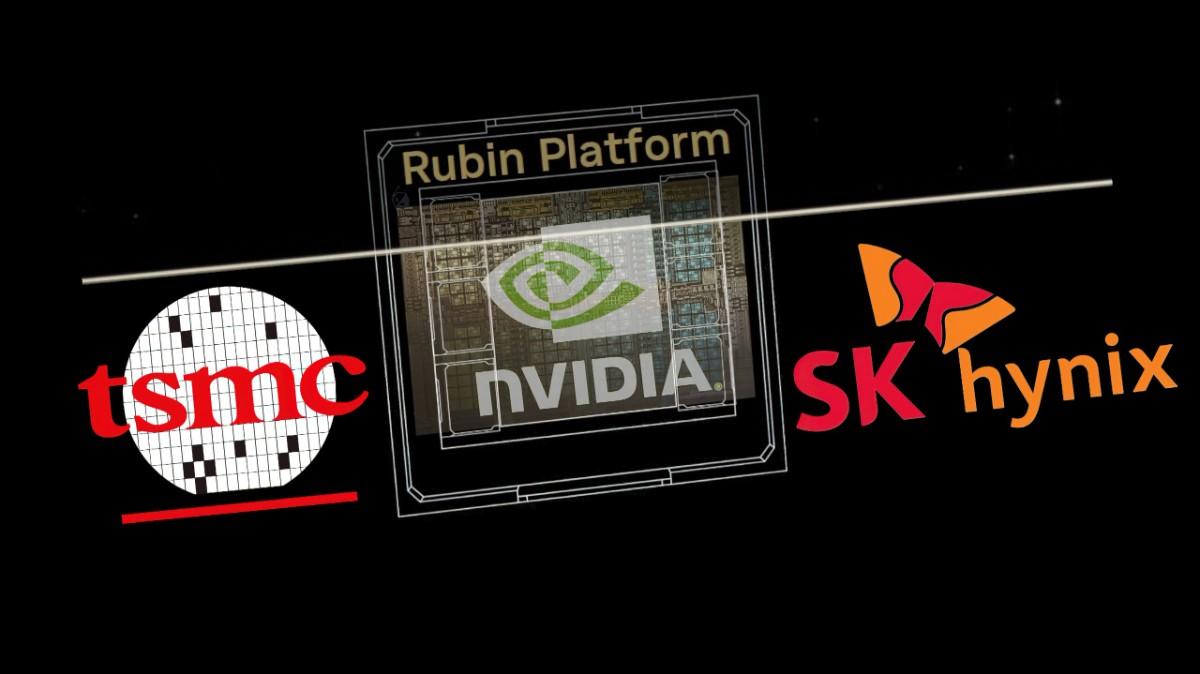
SK Hynix's April 23 earnings can validate whether the AI supply constraint is now centered on HBM availability, HBM mix, and packaging readiness. The key issue is not whether AI demand exists, but whether the memory side can convert it into shippable volume fast enough.
Three disclosures will matter most.
First, investors will want confirmation that HBM3E shipments remain tight and that HBM4 qualification and volume ramps are on schedule.
Second, any update on M15X output, advanced packaging expansion, and customer allocation will show whether supply is catching up.
Third, commentary on DDR5 and enterprise SSD demand will indicate whether AI capex is broadening into the rest of the memory stack.
A clear report would strengthen the TSMC message that Asia's AI supply chain still has visible demand, but the main constraint is shifting deeper into memory and packaging.
A messy print, by contrast, would not necessarily invalidate AI demand. It would more likely suggest that yields, qualification, or packaging integration are delaying monetization across the supply chain. That is the real significance of April 23.
Yes. The midpoint for Q2 is US$39.6 billion, indicating gross margins of approximately 66.5 percent. TSMC's projected year-over-year growth of over 30% reflects ongoing strength in demand for AI-driven semiconductors.
Because wafer demand appears intact. The more binding issue is whether the ecosystem can supply enough HBM and advanced packaging to complete AI systems. Without that, strong foundry output does not fully translate into end shipments.
SK Hynix is central because it has disclosed strong HBM demand, HBM4 ramp activity, and capacity expansion in both memory production and advanced packaging. That makes its earnings a direct read-through for AI memory supply conditions.
TSMC's latest quarter kept the core AI narrative intact. Revenue guidance, margin structure, and management commentary all argue that the industry is not facing a demand problem at the foundry level.
However, the constraint is migrating into the HBM and advanced-packaging lane, where memory supply, package complexity, and execution discipline now matter more than headline wafer appetite.
SK Hynix's April 23 earnings should determine whether that bottleneck thesis is confirmed, delayed, or merely pushed one step further upstream into equipment and packaging capacity.