Published on: 2026-05-08
Many investors still think of Sony as a TV and PlayStation company. Sony stock earnings now point to a very different business mix.
On May 8, 2026, Sony reported operating profit of ¥1.45 trillion for the fiscal year ended March 2026, up 13% year over year. It guided ¥1.6 trillion in operating profit for the year ahead, approved a ¥500 billion share buyback, announced a planned dividend of ¥35 per share for FY2026, and signed a new MOU with TSMC for next-generation image sensor development, all in one announcement.
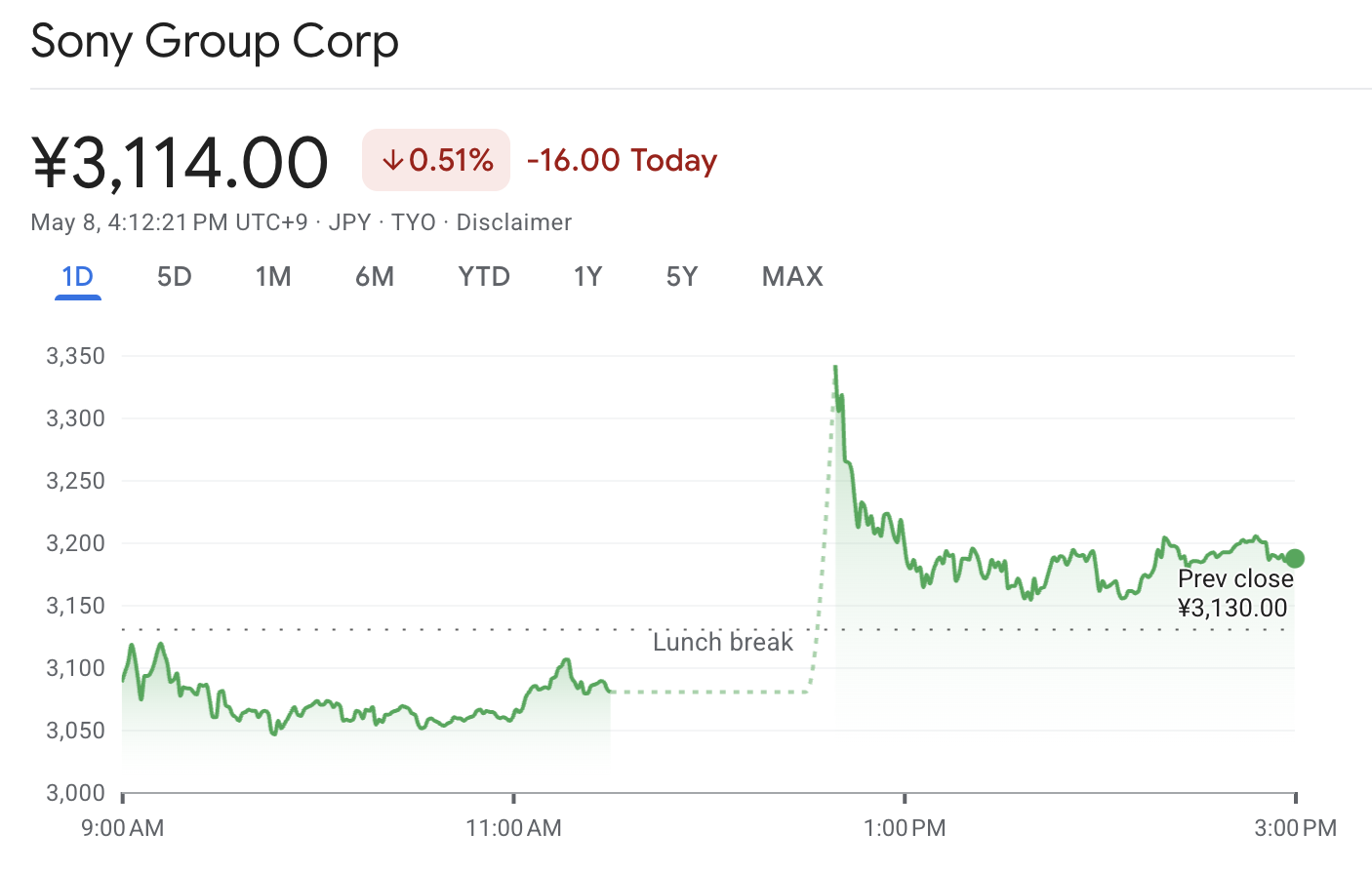
Sony stock does not trade like an AI infrastructure play or a content-led earnings story. After this earnings report, the question worth asking is whether it should.
Sony reported its full-year financials on May 8, 2026. Here is how the completed year compares to the year ahead:
| Metric | FY2024 | FY2025 Actual | FY2026 Guidance / Action |
|---|---|---|---|
| Net Sales | ¥12.03T | ¥12.48T (+4%) | ¥12.30T (-1%) |
| Operating Profit | ¥1.28T | ¥1.45T (+13%) | ¥1.60T (+11%) |
| Annual Dividend | ¥20/share | ¥25/share | ¥35/share (planned) |
| Share Buyback | Prior facility | N/A | ¥500B approved, running May 2026 to May 2027 |
Sony is guiding for lower sales but higher profit, which makes margin expansion the central post-earnings story. The headline profit of ¥1.45 trillion beat the prior year comfortably, and the composition of that growth is what deserves attention.
Imaging and Sensing Solutions led the way, with operating profit up 37%, driven by stronger mobile image sensor demand and an improved product mix. Music followed with record full-year earnings, powered by streaming growth across recorded music and publishing.
Games and Network Services held up despite lower PlayStation 5 hardware sales. Operating income still rose, carried by software, network services, and monthly active users that peaked at 132 million in December before ending March at 125 million, still a Q4 record.
The ¥1.6 trillion guidance came in roughly in line with analyst consensus, though some forecasts had penciled in a higher figure. That slight miss is why the stock reaction was measured rather than sharp. The business is performing. The question is whether management is guiding conservatively or whether headwinds are real.
Sony estimated a ¥50 billion negative impact from US tariff changes. Memory pricing is also a live variable. Both are manageable relative to the profit base, but neither is zero.
A buyback of this size, running through May 2027 and covering up to 230 million shares, is a significant capital allocation statement.
At current exchange rates, ¥500 billion is approximately $3.2 billion. Combined with the planned FY2026 dividend of ¥35 per share, up from ¥25 in FY2025, the message is that free cash flow is strong enough to return capital at scale without cutting investment.
PlayStation 5 hardware sales fell during the most recent fiscal year, which is expected at this stage of a console lifecycle. What is less obvious is that the business underneath the hardware decline is actually improving.
Monthly active users peaked at 132 million in December and ended March at 125 million, a Q4 record
Cumulative PS5 sell-in topped 92 million units
Software and network services revenue hit record highs
Operating income rose despite lower hardware revenue
This transition matters for how the PlayStation segment gets valued. Console hardware is a low-margin, cyclical business. Network services, digital game sales, and subscription revenues are higher-margin and more predictable. Sony is migrating PlayStation from a hardware company to a services platform, and the user base numbers suggest the migration is working.
Sony Semiconductor Solutions holds a 6% equity stake in JASM, Japan Advanced Semiconductor Manufacturing, a TSMC-led joint venture in Kumamoto, Japan. A second JASM fab is under construction with total investment across both facilities exceeding $20 billion, scheduled for production by end of 2027.
Separately, Sony Semiconductor Solutions signed a new non-binding MOU with TSMC on May 8 for a strategic partnership to develop and manufacture next-generation image sensors. The proposed joint venture would be majority controlled by Sony, located at its new fab in Koshi City, Kumamoto.
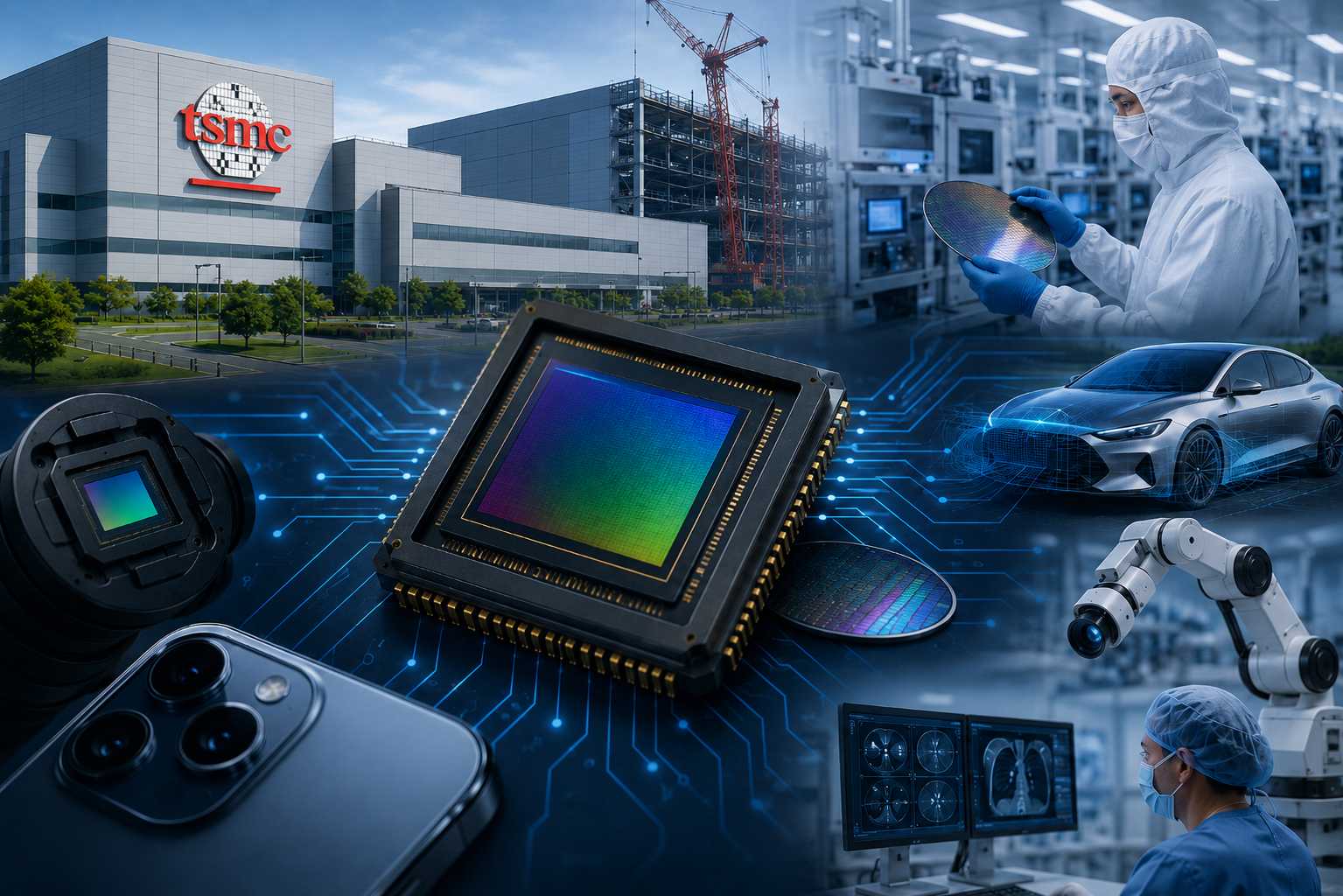
This is a more direct image sensor partnership than the existing JASM arrangement and signals Sony’s intent to deepen, not just maintain, its TSMC relationship.
Sony holds the global number one position in image sensors. Those sensors are no longer just camera parts. They sit inside AI systems across smartphones, autonomous vehicles, robotics, and medical imaging. As AI deployment scales, image sensor demand scales with it.
Sony AI’s Ace project, published in Nature in April 2026, used Sony Semiconductor Solutions sensors for high-speed perception in real-time sports tracking. It is a narrow example, but it shows Sony’s sensor technology being validated at the frontier of applied AI research.
No earnings report is without its complications. Three factors deserve attention before drawing firm conclusions on Sony stock.
Memory prices: Component cost pressure can compress margins in Sony’s device-dependent segments if consumer electronics demand softens.
Tariff exposure: Sony estimated ¥50 billion in headwinds from US tariff changes. That figure moves with policy, not fundamentals.
Guidance conservatism: The ¥1.6 trillion operating profit forecast for FY2026 came in below some analyst expectations. Sony has a history of guiding cautiously and revising upward, but the gap is worth watching.
Sony stock earnings delivered what the underlying business has been building toward: a record operating profit base, growing from structurally improving divisions, funded well enough to return ¥500 billion to shareholders while investing in the semiconductor infrastructure that powers the next decade of AI devices.
The PlayStation hardware decline is not a threat. It is a transition. The image sensor business is not a cyclical component play. It is becoming a foundational AI input, with a stronger supply chain anchor through TSMC.
The market prices Sony as a consumer electronics company. The earnings data says something different.