Published on: 2026-05-06
Updated on: 2026-05-06
The KOSPI’s break above 7,000 is more than a record-high headline. It shows global investors repricing South Korea as an AI supply-chain market, but it also exposes a rally increasingly dependent on Samsung Electronics and SK Hynix.
For investors, the question is not whether AI chip demand is real. The question is whether earnings, market breadth, and foreign inflows can justify a move that has pushed South Korea past the UK in listed stock-market value.
KOSPI breaking 7,000 is an AI supply-chain story, not a broad victory lap for every Korean stock.
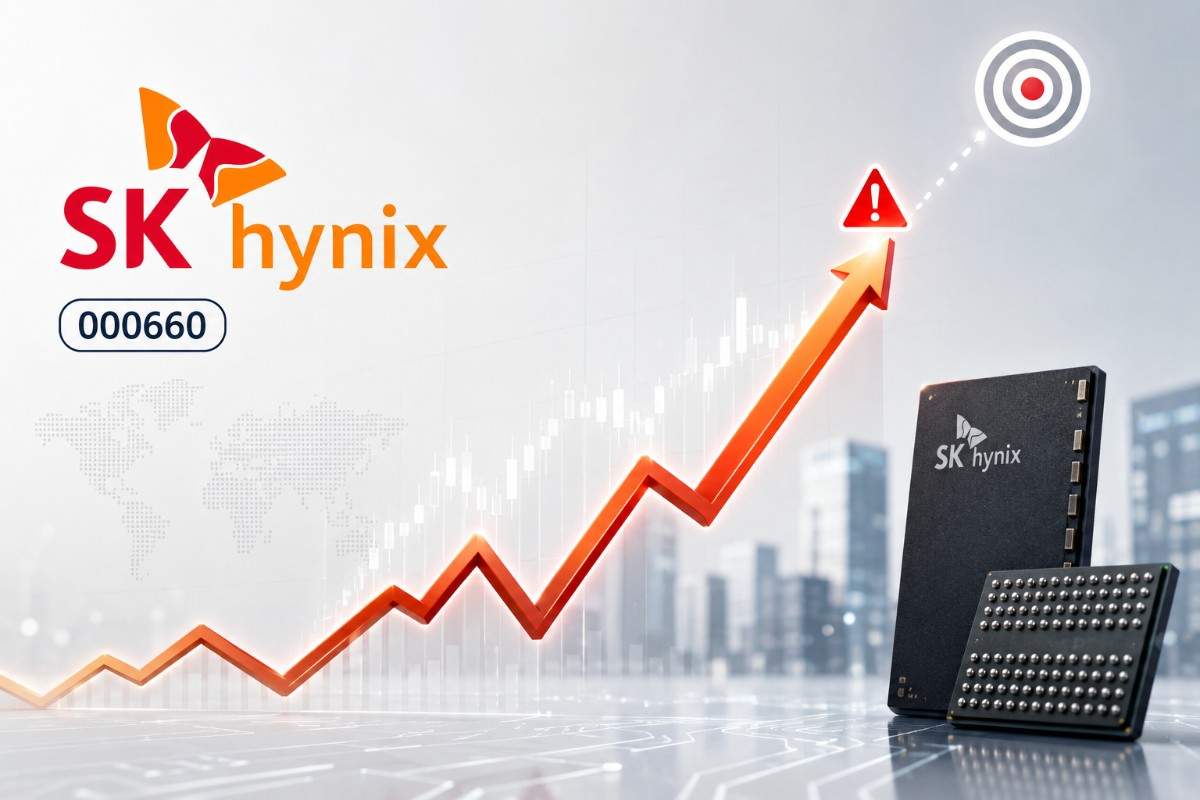
Samsung Electronics and SK Hynix are leading the rally, making semiconductor concentration the central risk.
The bull case depends on earnings upgrades, strong HBM demand, foreign inflows and better market breadth.
The bear case is that chip expectations may already be priced too aggressively.
Korea ETF investors may be taking more semiconductor-cycle risk than they realize.
The KOSPI surged nearly 7% to a record high of 7,398.34 in Wednesday trading, led by a sharp rally in AI-linked technology shares. Samsung Electronics rose nearly 13%, while SK Hynix gained 10%, as investors chased exposure to companies tied to memory chips and artificial intelligence infrastructure. (1)
| Driver | Why it matters for investors |
|---|---|
| AI chip demand | Supports earnings expectations for Samsung, SK Hynix and Korean semiconductor suppliers |
| Foreign inflows | Shows global capital is treating Korea as a direct AI hardware trade |
| Governance reform | Strengthens the case for a lower “Korea discount” |
| Global risk appetite | Helps explain why investors are willing to chase high-growth equity exposure |
| Won stability | Affects foreign-investor returns and capital flows |
The most important driver is AI infrastructure spending. Data centers require memory chips, high-bandwidth memory, servers, advanced packaging, power equipment and related industrial capacity. Samsung and SK Hynix sit close to the center of that supply chain.
That is why investors are no longer treating Korea only as a cyclical exporter trading at a valuation discount. They are increasingly treating it as one of the cleaner ways to buy into the AI hardware cycle in the public market.
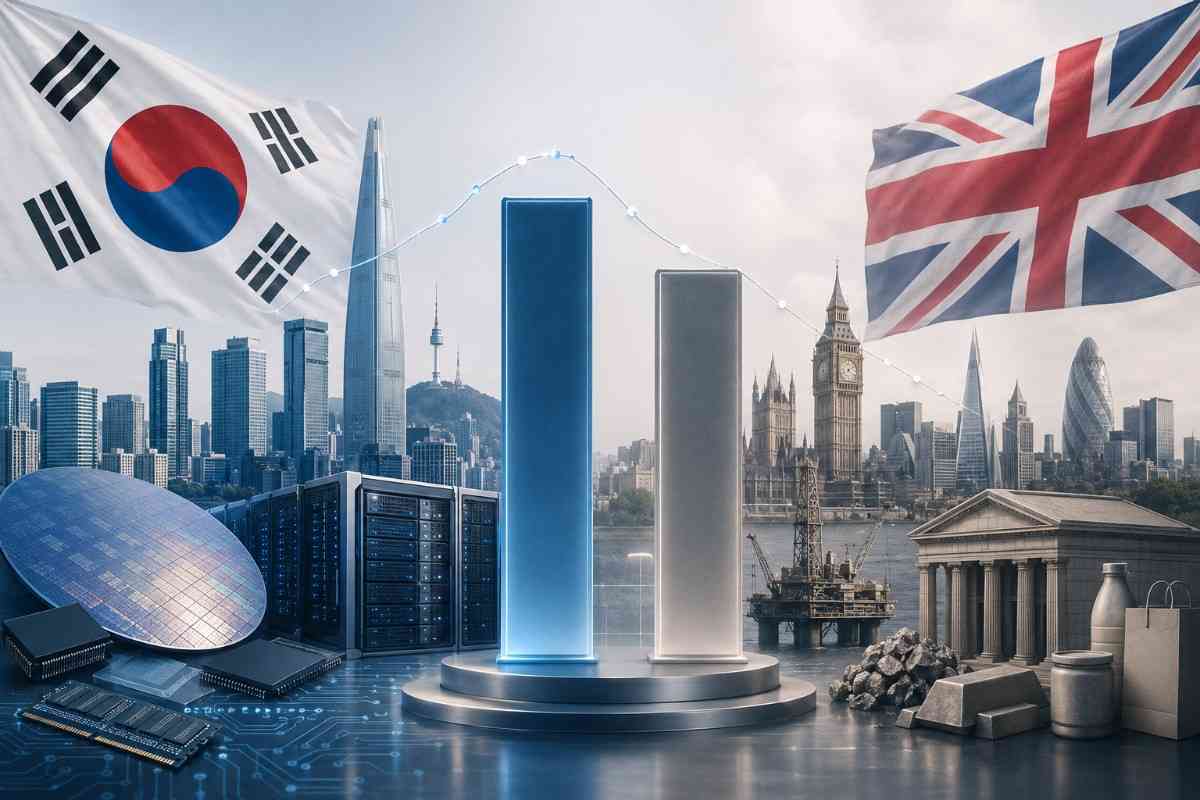
South Korea has overtaken the UK to become the world’s eighth-largest stock market by listed market capitalization. Bloomberg reported that Korean-listed companies had a market value of about $4.04 trillion, compared with about $3.99 trillion for UK-listed companies. (2)
That comparison needs context. Market capitalization is not GDP. It is not currency power. It also does not mean Seoul has replaced London as a global financial center.
It mainly shows that investors are paying more for Korea’s listed companies because they have greater direct exposure to AI hardware momentum. The UK market is more heavily weighted toward banks, energy companies, miners, consumer staples, and dividend-paying global defensives. Those sectors can be attractive, but they do not offer the same direct link to AI chip demand.
So the milestone matters, but not because one economy has “beaten” another. It matters because global investors have changed what they are willing to pay for Korea’s earnings exposure.
The strongest bullish argument is not simply that AI is popular. It is that AI demand may be driving a real earnings upcycle for Korean semiconductor companies.
Goldman Sachs Research raised its year-end 2026 KOSPI target to 7,000 from 6,400 and lifted its 2026 Korea earnings-growth forecast to 130% from 120%, citing stronger semiconductor conditions and improved profit expectations. (3)
That matters because memory-chip cycles can create large profit swings. When pricing improves and demand is strong, chipmakers can see operating profits rise much faster than revenue. If Samsung and SK Hynix continue to receive earnings upgrades, the rally can become more than a momentum trade.
This is the best version of the bull case: share prices are rising because future profits are rising too.
The biggest risk is also the reason the rally has been so powerful.
Samsung Electronics and SK Hynix dominate the market narrative. If sourced, add this sentence here: Together, they account for more than 40% of the KOSPI market capitalization. That means a rising KOSPI does not automatically prove that the whole Korean market is healthy. It may simply mean investors are aggressively repricing two dominant semiconductor companies.
That concentration can work on the way up. It can also hurt on the way down. If Samsung or SK Hynix disappoints on earnings, margins, HBM supply, or memory pricing, the impact on the wider index could be larger than a normal single-stock setback.
For retail investors using Korea ETFs or broad Korean equity funds, the key point is simple: you may be exposed to more semiconductor-cycle risk than you think.
The rally is sustainable only if earnings catch up with prices.
The issue is not whether AI demand exists. The issue is how much future AI demand is already priced into Korean equities after such a fast move.
A healthier rally needs three confirmations.
First, earnings upgrades must continue. If Samsung and SK Hynix's profit expectations keep rising after the share-price surge, the rally will have a stronger foundation. If prices rise while earnings estimates stall, the market becomes more dependent on valuation expansion.
Second, market breadth needs to improve. A durable Korean bull market should not rely only on memory chips. Autos, defense, shipbuilding, industrial automation, power equipment and financials need to participate. Broader leadership would show that the rally is spreading beyond the AI chip trade.
Third, foreign inflows need to be stable. Long-term foreign and institutional buying would support the market. Short-term momentum flows, retail leverage and crowded positioning would make the rally more fragile.
This is the practical test for investors. The KOSPI does not need more excitement now. It needs confirmation.
| Signal to watch | Bullish reading | Bearish reading |
|---|---|---|
| Samsung and SK Hynix earnings | Profit upgrades keep rising | Estimates stall after the price surge |
| HBM and DRAM pricing | Pricing remains firm | Memory pricing weakens |
| Foreign flows | Foreign investors keep buying | Foreign investors turn net sellers |
| Market breadth | Autos, defense, shipbuilding and financials join the rally | Chips carry the index alone |
| Won-dollar rate | Won stabilizes | Won weakness pressures foreign returns |
| Governance reform | Buybacks, dividends and shareholder returns improve | Reform headlines fail to change investor behavior |
| US AI capex guidance | Cloud and AI infrastructure spending remains strong | Hyperscalers slow or delay spending plans |
If the bullish signals appear together, KOSPI 7,000 would look less like a speculative spike and more like a rerating of Korea’s earnings power.
If the bearish signals appear together, the market could correct even if the long-term AI theme remains intact. A valid long-term story does not protect investors from short-term overpricing.
A move toward 8,000 is possible under the bullish scenario, but it would require confirmation rather than just enthusiasm.
Some analysts have become more bullish as semiconductor earnings expectations improve. Local financial reporting said Goldman Sachs raised its 12-month KOSPI target from 7,000 to 8,000, citing stronger fundamentals across semiconductors and industrials. (4)
Investors should treat that as a scenario, not a guarantee. For the KOSPI to move sustainably toward 8,000, three things likely need to happen at the same time: chip earnings upgrades must continue, valuations must remain reasonable, and non-chip sectors must join the rally.
Without those confirmations, the index could still move higher, but it would also become more exposed to disappointment.
The next stage of the rally is about confirmation, not celebration. Investors should watch:
Samsung and SK Hynix earnings revisions: The clearest test of whether profits are catching up with prices.
HBM and DRAM pricing: The key signal for whether the memory-cycle bull case remains intact.
US AI capital-expenditure guidance: Strong hyperscaler spending would support Korean chip demand.
Foreign net buying: Sustained inflows would strengthen the rally; reversals would weaken it.
Won-dollar stability: Currency weakness can hurt returns for foreign investors.
Non-chip sector participation: Broader leadership would make the rally healthier.
Governance reform delivery: Investors need actual buybacks, dividends, and shareholder returns improvements, not just policy language.
For Korea ETF investors, the market-cap milestone should not be the only reason to buy. South Korea has become a more important global equity market, but broad exposure still carries concentrated semiconductor risk.
South Korea’s move above the UK in stock-market value is a genuine milestone. But the ranking table is not the real story.
The real story is whether Korea can turn an AI chip rally into a broader, earnings-backed market rerating. If earnings upgrades continue and leadership widens, KOSPI 7,000 may prove justified. If the rally remains concentrated in Samsung and SK Hynix, the index could become fragile even if the long-term AI theme remains intact.
For investors, the answer is not simply to buy or avoid Korea. The better question is whether earnings, breadth and foreign inflows are strong enough to support the rally after the headline excitement fades.
(1) https://apnews.com/article/stocks-markets-rates-iran-kospi-0da189a3d33b041087b7df6096e5c8ad