Published on: 2026-05-14
Updated on: 2026-05-14
Global investors are back to Asia to ride the wave of AI hardware. South Korea remained a major beneficiary, overtaking Canada's as the world's seventh largest stock market in May.
JPMorgan strategists are increasingly recommending bets on more gains of it, just as traders chasing the rally push up the cost of options. Implied volatility for the KOSPI is hovering around peak levels.
South Korea was once hit hard by closure of the Strait of Hormuz, with its export-centred economy highly exposed to the external shock, particularly amid persistent weakness in the currency.
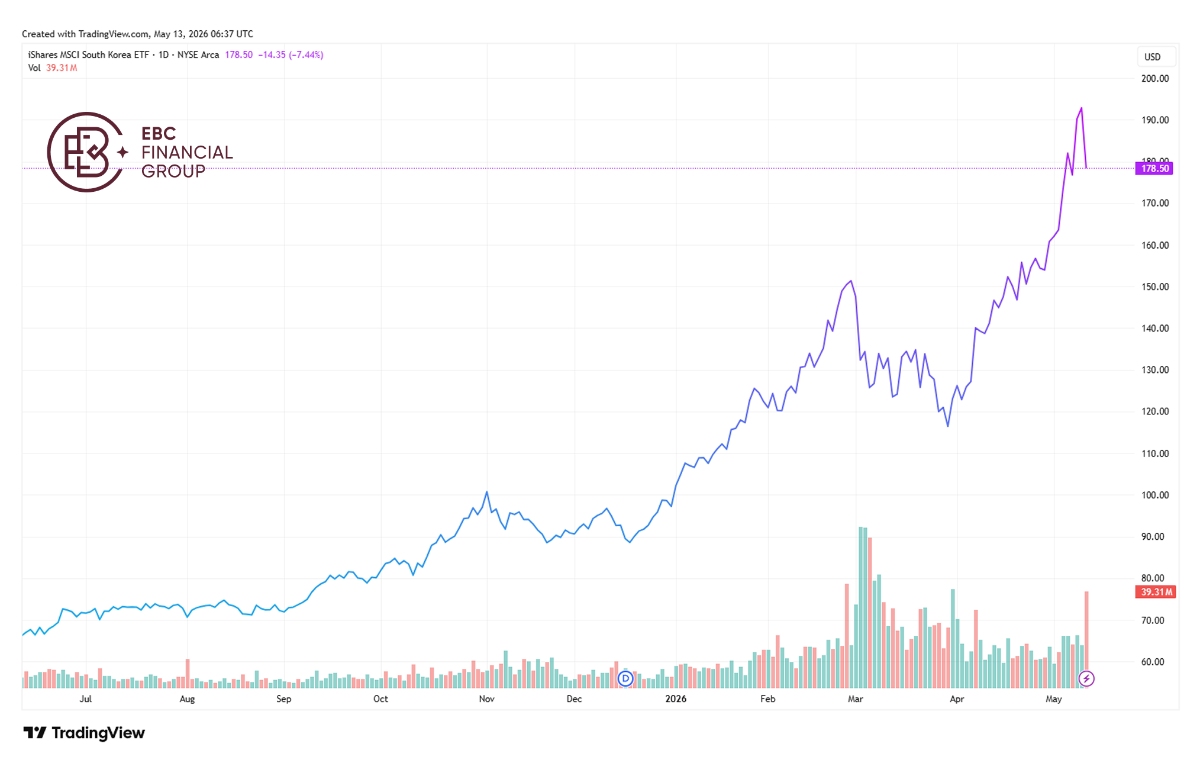
Still iShares MSCI South Korea ETF has registered a yearly gain of over 83.6%, following a torrid rally of 91% in 2025. The latest results of Samsung Electronics and SK Hynix provided a fresh boost.
Samsung Electronics market cap past the $1 trillion mark as its operating profit surged more than eightfold to 57.2 trillion won in Q1. The company was the first to begin mass production of HBM4 chips.
Government has been striving against the so-called "Korea Discount". iShares MSCI South Korea ETF is trading at a multiple of 25.1, compared to 21.4 for iShares MSCI All Country Asia ex Japan ETF.
The equity market has overtaken Canada's as the world's 7th largest. The exports rose 48% from a year earlier in April, with semiconductor shipment up 173%, laying the groundwork for a protracted bullish run.
Triple challenge
A top South Korean policymaker said the nation should pay citizens a "dividend" using taxes on AI profits. The proposal spooked investors, with the benchmark index tumbling 2.3% on Tuesday.
Foreign investors withdrew 5.6 trillion won worth of KOSPI shares on Tuesday, bringing their selling for the month to 8.8 trillion won. It is the latest push for a more even recovery.
Retail investors in the country are not fully convinced of capital gains from home. In 2025, South Korea was the third largest buyer of US stocks, largely due to massive purchase owned to "Seohak ants".
Seoul has implemented measures to try and stem outflows, announcing tax breaks for individual investors who sell their foreign holdings. However, analysts doubt if the move will pan out.
North Korea also drew attention. Kim last week revised its constitution to abandon the aim of reunification with Seoul, redefining itself for the first time in more than 70 years as a separate country.
Furthermore, the revision lowers the threshold of nuclear use by reclassifying South Korea as a foreign enemy. Previously, deploying nuclear weapons against ethnic brethren carried massive moral baggage.
Potential tech pullback, coupled with "city dividend", could prompt individuals to allocate more funds to Wall Street in the short term, while nuclear tensions in the peninsula is a far-reaching concern.
The underdog
Indian market is left behind which has low exposure to AI and a currency near a record low. iShares India 50 ETF has declined roughly 15% in 2026, languishing around its lowest level in more than 2 years.
Foreign investors have dumped the shares during the Iran war at the fastest pace on record. India is the world's third-biggest energy importer and relies heavily on oil and gas from the Middle East.
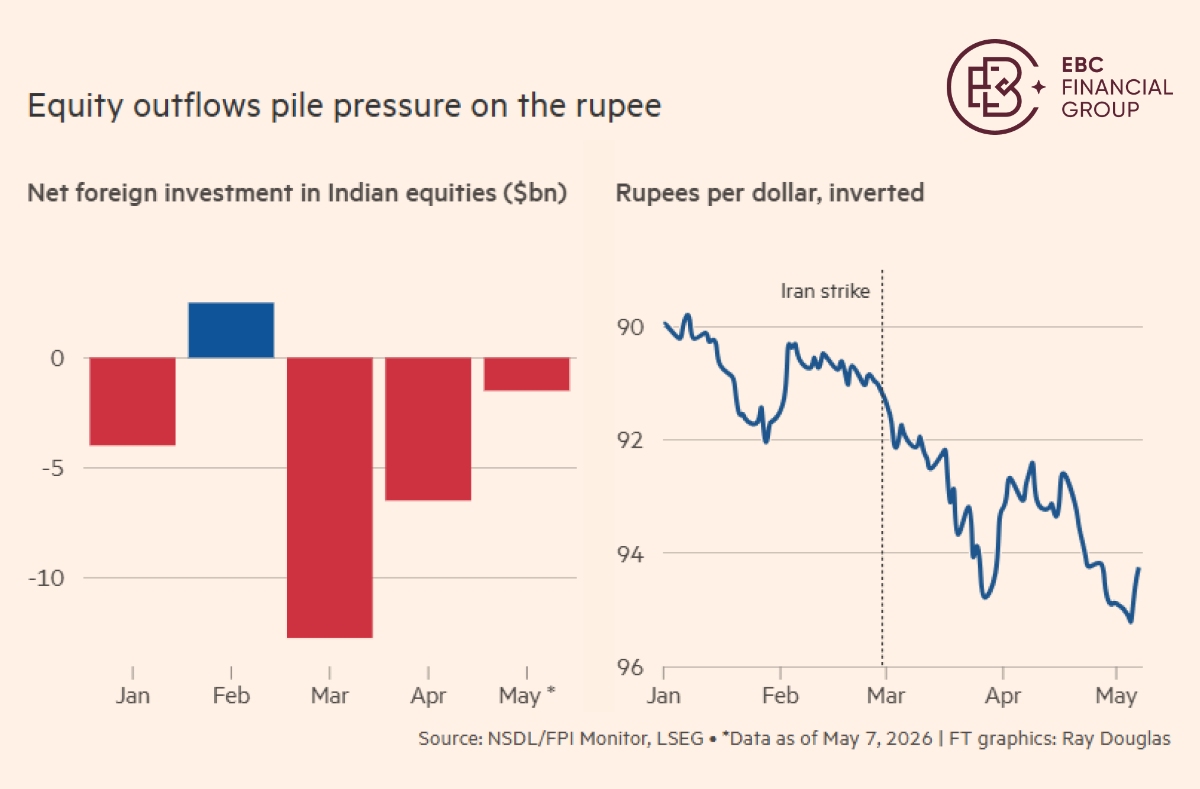
The rupee was already Asia's worst-performing currency this year before the war began, thanks to growing trade deficit and a slump in FDI. A trade deal with the US remains unsigned after months of negotiations.
Nomura warned that the current account deficit in the financial year from April could rise to 2% of GDP, a double of the level for the year earlier. The BOI recently said new FTAs may help easing the pressures though.
Economists expect the GDP to grow below the central bank's forecast of 6.9%, the lowest in 4 years. India's energy demand is increasing rapidly, intensifying the urgency of building a more resilient system.
HSBC downgraded Indian equities to "underweight" from "neutral" in late April - its second cut in less than a month, citing that the valuations may appear expensive again as earnings downgrades filter through.
Local IT shares fell to a 3-year low on disappointing earnings. They are unlikely to attract positive investor interest unless global AI activity, cloud capex growth and cloud revenue momentum slow, HSBC said.