Published on: 2026-05-13
Updated on: 2026-05-13
The GMR Solutions IPO was marked down because investors questioned how much equity value remains after debt service, payor friction and KKR control take their share.
GMR priced 31.9 million shares at $15, about 36% below the original midpoint of its $22 to $25 range. (Global Medical Response)
National scale helped the IPO clear, but not at the original price. GMR reaches more than 60% of the U.S. population.
The proceeds signal recapitalisation, not expansion, with funds tied to preferred-share redemption and partial term-loan repayment.
GMR generated $1.19 billion of 2025 adjusted EBITDA, but long-term debt still made the equity claim harder to value. (Capedge)
Payor mix is the cash-flow test: 59% commercial revenue supports economics, while 32% government exposure limits pricing flexibility. (GMR Solutions S-1/A, SEC, May 2026)
GMR Solutions priced at $15, raising $478.7 million against an original $22 to $25 range. Retail investors are misreading the signal if they treat the lower price as a simple bargain. The market did not reject GMR's mission. It marked down the residual value.
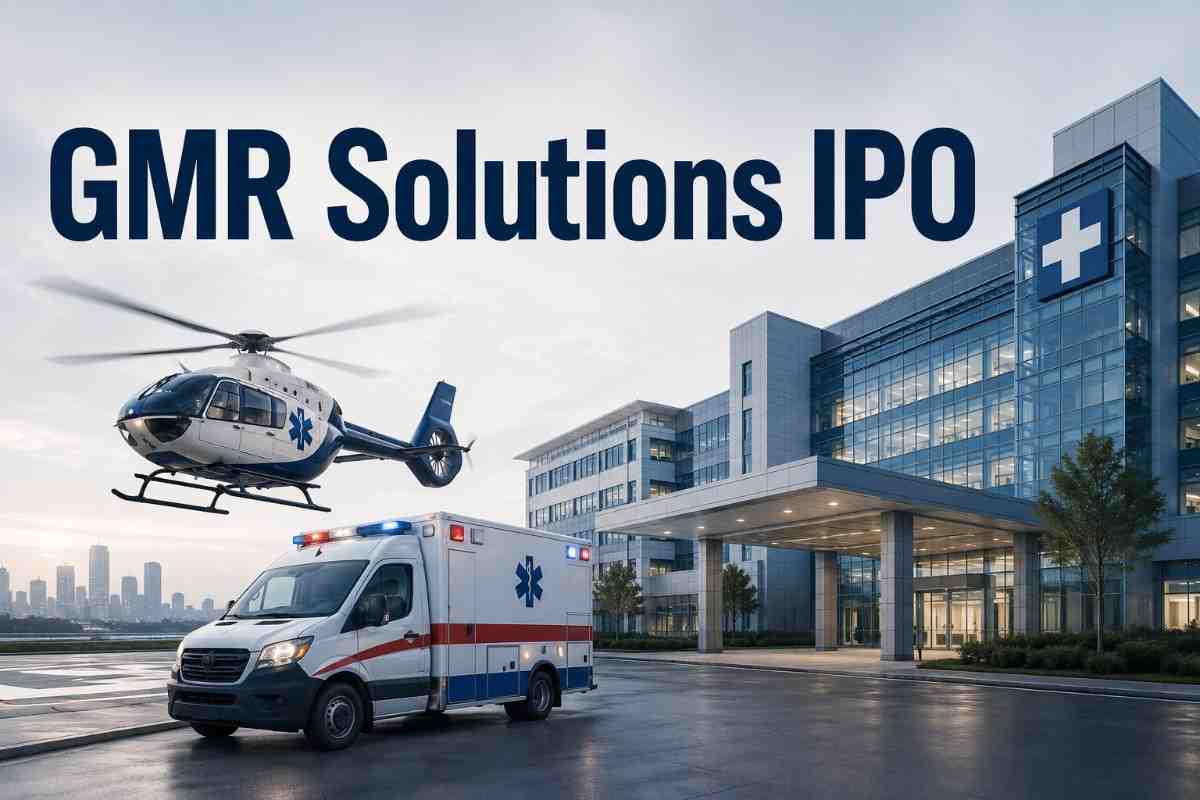
The surface case looks defensive. GMR is the largest U.S. emergency medical services provider and the only national, fully integrated air and ground EMS operator, with a network spanning rural and urban communities.
That footprint creates an easy shortcut. Ambulances are essential, emergency care is non-discretionary and aging demographics support long-term medical transport demand. But defensive demand is not the same as defensive equity.
Service volume must become recognised revenue. Revenue must become collectible cash. Cash must cover operating costs, aircraft obligations, interest expense, and preferred-stock cleanup before minority shareholders capture the upside.
That is why the 36% discount carries more information than the IPO itself. At the original midpoint of $23.50, the same share count implied a raise of about $750 million. At $15, the raise landed near $479 million. The gap marks the distance between medical necessity and common shareholder value.
The most revealing line in the IPO terms is not about patient volume. It is the use of proceeds.
GMR plans to redeem certain Series B preferred shares and use remaining IPO proceeds, the $500 million concurrent private placement and cash on hand to repay part of Global Medical Response’s first-lien term loan due 2032.
That placed the IPO in a tougher valuation bucket. Public markets are willing to pay more for growth capital than for equity raised to repair sponsor-era balance sheets. GMR arrived with a defensive service profile, but the proceeds forced investors to underwrite a recapitalisation.
The operating platform still has weight. In 2025, GMR generated $5.74 billion in revenue, $206.2 million in net income, and $1.19 billion in adjusted EBITDA. Adjusted EBITDA rose 8.5% from 2024, while revenue fell 4.0% after divestitures of non-core assets.
| Metric | Latest Reported Figure | Market Read |
|---|---|---|
| 2025 revenue | $5.74 billion | Large operating base |
| 2025 net income | $206.2 million | Profit recovery, but modest against revenue |
| 2025 adjusted EBITDA | $1.19 billion | Strong operating earnings proxy |
| 2025 operating cash flow | $641.1 million | Better cash generation than 2024 |
| Long-term indebtedness excluding finance leases | $4.90 billion | Main valuation filter |
The $15 IPO price implies a different valuation conversation than the original range.
Reuters reported that GMR cut its IPO valuation target to about $3.3 billion, down from about $5 billion. Using year-end 2025 debt of about $5.05 billion, cash of $609 million, and adjusted EBITDA of $1.19 billion, the rough enterprise-value lens points to the mid-6x adjusted EBITDA range before detailed pro forma adjustments.
That is not distressed pricing for a scaled healthcare infrastructure asset, but it is a clear discount for a company whose public equity story still depends on deleveraging.
The market is not pricing ambulance volume alone. It is pricing reimbursement translation.
GMR’s payor mix gives it access to commercial reimbursement, but the headline mix cuts both ways. Commercial payors represented 59% of 2025 net transport revenue, while Medicare and Medicaid still accounted for 32%. Those government fee schedules are non-negotiable and may sit below the cost of medical transportation.
A business can treat the patient, record the service and still wait for the final cash yield. GMR’s filing says revenue estimates depend on payor mix, contractual arrangements, reimbursement schedules, cash collections and payment behavior. That makes collections a valuation input, not an accounting footnote.
The No Surprises Act adds another channel for air ambulance pricing. Its independent dispute-resolution process shifts some out-of-network payment disputes away from patients and into provider-insurer arbitration.
For GMR, the payor system is the bridge between essential service and investable cash flow. Retail investors may see 5.5 million patient encounters and assume that revenue will be durable. Institutions ask how much of that activity becomes timely cash after negotiation, arbitration, write-offs and collection delays.
That question deserved a lower IPO price.
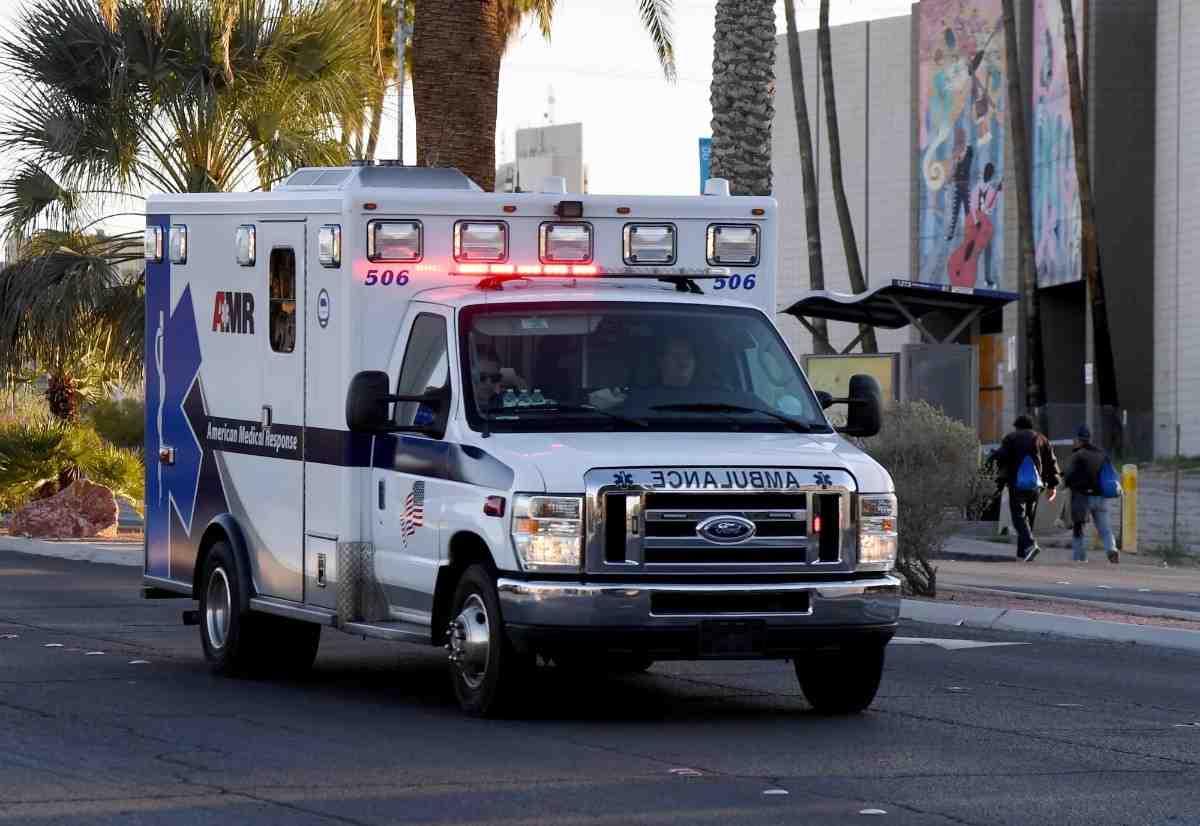
KKR helped assemble GMR into a national platform. Public shareholders are buying into that platform after the sponsor has already shaped the capital structure.
KKR formed GMR in 2018 by combining American Medical Response with Air Medical Group Holdings, which it had acquired earlier. The firm owned about 89% of GMR before the IPO and was expected to retain at least 77% of voting power after the offering.
That creates a controlled-company discount. Minority shareholders receive economic exposure to the EMS platform, but limited governance influence. If the stock performs, KKR retains flexibility. If the stock struggles, outside shareholders have little power to force faster deleveraging, alter capital allocation or push governance reform.
The result is a narrower shareholder bargain: exposure to a difficult-to-replicate healthcare infrastructure asset, with minority rights sitting beneath sponsor control.
| Scenario | Market Signal |
|---|---|
| GMRS trades firmly above $15 | Investors are rewarding the reset valuation. The revised entry point may be low enough to compensate for financial complexity. |
| GMRS stalls near the offer price | Public markets may be refusing to assign defensive healthcare multiples until leverage falls and reimbursement visibility improves. |
| Adjusted EBITDA holds near $1.1 billion to $1.2 billion | The deleveraging case strengthens because more operating value can pass through to common shareholders. |
| Commercial payor trends weaken or dispute costs rise | The $15 price may look less like a bargain and more like the first public mark on collection risk. |
| KKR remains dominant while public float expands slowly | GMRS may trade at a minority-shareholder discount rather than like a clean healthcare compounder. |
The GMR Solutions IPO is not mainly about whether the first trade clears $15. It is a test of how much public investors will pay for non-discretionary healthcare volume when senior claims still command the first call on value.
GMR’s network would be difficult to replicate. Ambulance and air-medical operations require local contracts, clinical labor, dispatch infrastructure, aircraft utilisation, fleet maintenance, hospital relationships and municipality access. A new entrant cannot assemble that system quickly.
That operating base likely helped the IPO clear the range after it was cut. Scale gave investors a reason to stay involved. It did not give them a reason to accept the original valuation.
The market separated the two questions. A lower price can improve entry math. It can also reveal what institutions refused to underwrite at the original range.
The unresolved question is whether the $15 IPO price finally compensates public investors for the claims sitting above GMRS common equity, or whether it is only the first visible discount on a healthcare platform still being valued through its balance sheet.