Published on: 2026-05-14
Dogs of the Dow 2026 is back in focus because the US equity rally has become increasingly uneven. AI-linked growth is still setting the pace, but concentrated leadership is making dividend income, valuation discipline and defensive cash flow more relevant for portfolios seeking balance rather than pure momentum.
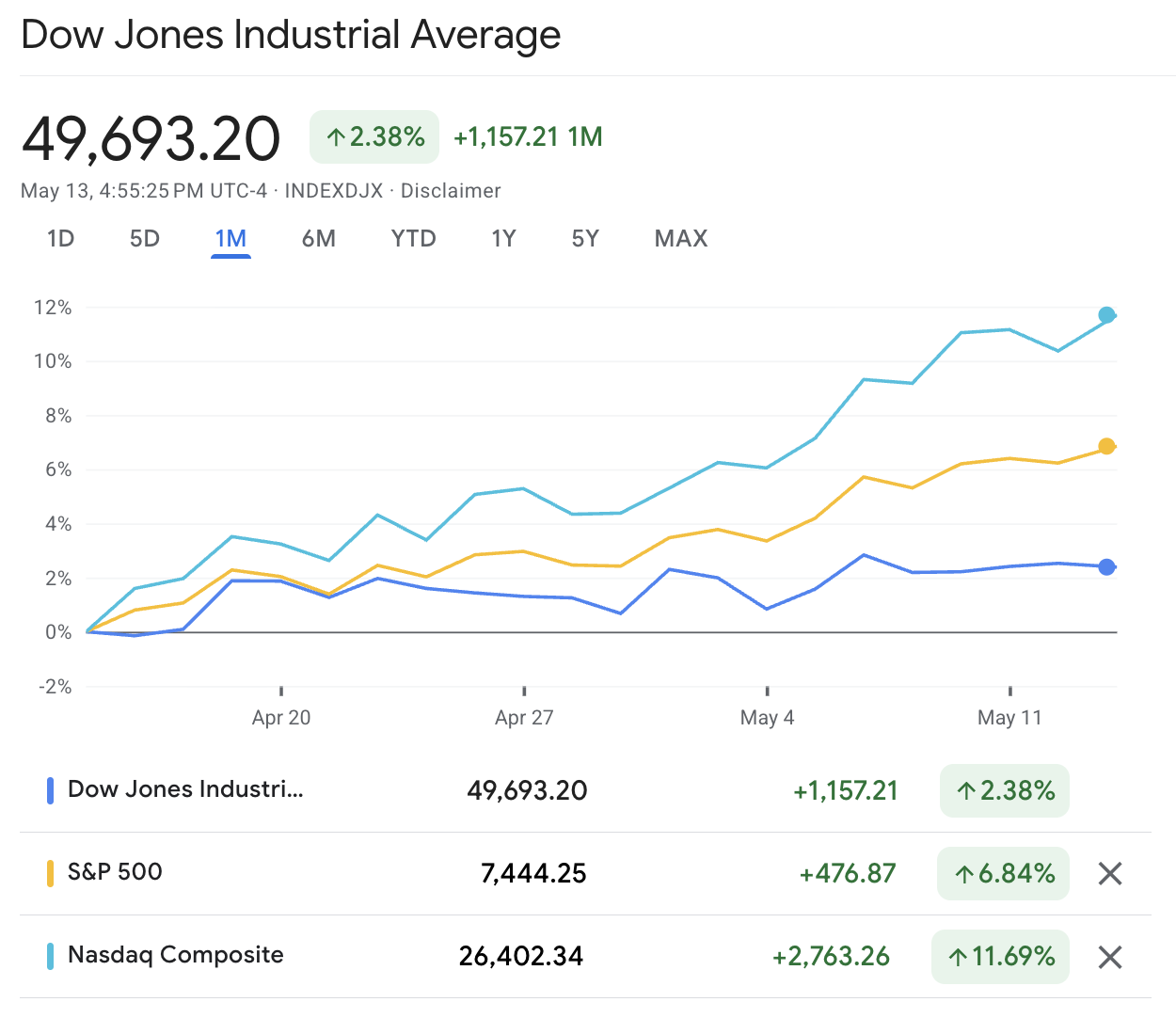
The divergence is visible in the major indices. The Dow Jones Industrial Average slipped to 49,693.20, while the S&P 500 reached 7,444.25 and the Nasdaq Composite climbed to 26,402.34. Year-to-date, the Dow is up 3.4%, compared with 8.7% for the S&P 500 and 13.6% for the Nasdaq. That spread shows how much capital is still favouring technology, semiconductors and AI infrastructure over traditional blue-chip income.

Dogs of the Dow 2026 started with an average dividend yield of 3.39%, above the Dow 30 average of 1.93%.
Verizon led the screen with a 6.78% starting yield, followed by Chevron at 4.49%.
The basket is positive on average, but returns are highly dispersed across telecom, energy, healthcare, consumer staples and discretionary names.
A 10-year Treasury yield near 4.46% raises the hurdle for dividend shares, making payout durability more important than headline yield.
Nike and Home Depot show why a high yield can signal stress as well as value.
The Dogs of the Dow strategy selects the 10 highest-yielding shares in the Dow Jones Industrial Average at the start of the year. The portfolio is usually held in equal weights and refreshed annually.
The official 2026 list includes Verizon, Chevron, Merck, Amgen, Procter & Gamble, Coca-Cola, UnitedHealth, Home Depot, Nike and Johnson & Johnson. The logic is simple. A high dividend yield may indicate that a blue-chip stock has become temporarily cheap after share-price weakness. If earnings stabilise, investors may receive both dividend income and valuation recovery.
The limitation is just as clear. Yield rises when price falls. A high yield can reflect undervaluation, but it can also signal weak growth, margin pressure, rising leverage or concern over the dividend itself. The Dogs screen identifies where to look. It does not prove what to buy.
The case for Dogs of the Dow 2026 has less to do with nostalgia and more to do with market concentration. Growth investors are still paying for AI exposure, cloud demand, chip capacity and data-centre buildout. That has lifted the S&P 500 and Nasdaq faster than the Dow, but it has also increased opportunity cost for investors sitting outside the technology trade.
Dividend shares offer a different return profile. They provide exposure to telecom, energy, healthcare and consumer defensives, sectors that can perform without relying on the AI capital expenditure cycle. That matters when index returns are being driven by a smaller group of large growth stocks.
Rates remain the main constraint. With the 10-year Treasury yield near 4.46%, dividend shares must offer more than income. Investors need evidence of free cash flow, manageable debt, stable earnings and a dividend policy that can survive a slower revenue cycle.
| Company | Ticker | Sector | Starting Yield | Approx. Price Return YTD | Main Signal |
|---|---|---|---|---|---|
| Verizon | VZ | Telecom | 6.78% | +15.9% | High income with improving cash-flow confidence |
| Chevron | CVX | Energy | 4.49% | +22.0% | Dividend yield plus energy-price leverage |
| Merck | MRK | Healthcare | 3.23% | +7.8% | Defensive pharma exposure with pipeline risk |
| Amgen | AMGN | Healthcare | 3.08% | +2.8% | Biotech income with earnings sensitivity |
| Procter & Gamble | PG | Consumer Staples | 2.95% | -0.7% | Defensive quality, modest growth upside |
| Coca-Cola | KO | Consumer Staples | 2.92% | +14.8% | Pricing power and brand resilience |
| UnitedHealth | UNH | Healthcare | 2.68% | +21.5% | Recovery potential with policy risk |
| Home Depot | HD | Consumer Discretionary | 2.67% | -12.1% | Housing and renovation-cycle pressure |
| Nike | NKE | Consumer Discretionary | 2.57% | -33.5% | Turnaround risk and execution pressure |
| Johnson & Johnson | JNJ | Healthcare | 2.51% | +11.3% | Defensive balance-sheet quality |
Starting yields use the official year-start Dogs screen. Price returns are calculated from the official starting prices against latest available market prices.
The basket shows why this strategy needs interpretation rather than mechanical buying. Verizon and Chevron have delivered strong gains from different sources: telecom cash-flow stability and energy-linked income. Coca-Cola and Johnson & Johnson show that defensive balance sheets can still attract capital when investors question growth valuations.
The weaker names matter more. Nike’s decline shows how quickly high yield can become a value-trap signal when revenue momentum and brand execution weaken. Home Depot reflects a different pressure point: housing affordability, mortgage rates and renovation demand. Both stocks lift the basket’s yield, but for reasons that require caution.
The best Dogs of the Dow setups usually share three traits: cash-flow visibility, dividend coverage and a credible path to earnings stabilisation. Verizon fits the income case when debt reduction and subscriber discipline support free cash flow. Chevron fits when commodity prices and capital discipline protect shareholder returns. Coca-Cola and Johnson & Johnson fit when pricing power and balance-sheet strength outweigh slower growth.
The more difficult cases sit where the yield is rising because the business is being repriced. Nike is the clearest example. A lower share price has lifted its yield, but the market is still testing whether management can restore growth, margin consistency and product momentum. Home Depot’s issue is not brand quality. It is the macro cycle. A sustained recovery depends on housing turnover, mortgage affordability and repair-and-remodel demand.
UnitedHealth sits between those groups. Its recovery potential is meaningful, but managed-care margins, reimbursement policy and Medicare Advantage pricing remain central risks. Merck and Amgen carry healthcare defensiveness, yet both need pipeline progress and disciplined capital allocation to sustain investor confidence.
Dividend sustainability is the first test. A high payout supported by shrinking cash flow is not defensive. Payout ratios, free cash flow conversion, debt maturities and buyback discipline matter more than yield alone.
Treasury competition is the second test. When risk-free income remains high, equity dividends need either growth or capital appreciation to justify volatility. A 3% to 4% yield is not enough if earnings visibility is deteriorating.
AI opportunity cost is the third test. Dogs of the Dow 2026 can reduce concentration risk, but the basket may lag if AI earnings continue to accelerate and investors keep paying premium multiples for growth. The strategy works best as a diversification tool, not as a replacement for broad equity exposure.
Dogs of the Dow 2026 has regained relevance because the market is rewarding two opposing forces at once. AI-linked growth still dominates index leadership, while dividend shares are attracting investors who want income, valuation discipline and lower dependence on crowded technology momentum.
The strategy’s appeal lies in its structure. It forces attention toward large-cap companies that the market has discounted. Yet the screen is only a starting point. Verizon and Chevron show how income can pair with price recovery. Nike and Home Depot show how yield can also flag deeper business or cyclical stress.
The dividend trade is returning because concentrated growth leadership has made portfolios more fragile. High yield alone is not enough. The strongest opportunities will come from companies where dividend income is backed by free cash flow, durable earnings and a credible recovery path.