Published on: 2026-06-10
Updated on: 2026-06-10
Shigeru Fujimoto became famous for doing what most market playbooks warn against: buying after prices fall and waiting through the damage.
His reported near-¥2B fortune came from decades of selecting Japanese stocks after weakness, using RSI to time and company fundamentals to decide whether the drop warranted capital.
However, Fujimoto’s method leaves one with an uncomfortable question: was the falling stock cheap, or was the buyer simply early and wrong?

Fujimoto’s reported wealth moved from about ¥1.8B in 2023 to nearly ¥2.4B in 2025, after almost seven decades in Japanese stocks.
His day reportedly starts around 2 a.m., before Tokyo opens and after Wall Street has already priced global risk.
He watches RSI below 30 for oversold pressure, while sales, profits, and dividends decide whether the entry deserves capital.
His 1:2:6 buying rule turns conviction into staged exposure rather than one full-size emotional purchase.
The central risk is psychological: a falling stock can reward patience or expose denial.
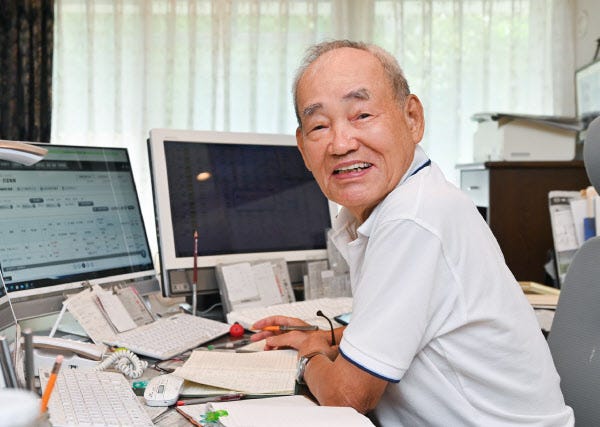
Shigeru Fujimoto is a Kobe-based Japanese stock trader who reportedly built a fortune of about ¥2B, or roughly $14M, through decades of trading local equities. He is often called “Japan’s Warren Buffett,” although the nickname mostly signals fame. Buffett compounds through ownership; Fujimoto built his reputation through repetition, timing, and endurance in Japanese stocks.
Fujimoto worked in a pet shop, later ran mahjong parlors, began investing as a teenager, became a full-time market participant in 1986, and moved more actively into day trading in 2015. By his late eighties, the biography had become less interesting than the routine: waking before Tokyo opens, scanning markets, tracking companies, and placing orders after nearly seven decades of repetition.
His appeal comes from the contradiction. Fujimoto is not known for one spectacular trade. He is known for staying in the market long enough to turn ordinary Japanese stock trading into an extraordinary public record.
Fujimoto does not begin with the stock price. He begins with the conditions around it: overseas markets, company news, sector pressure, and whether the sell-off has damaged the business case or only the share price.
| Step | Fujimoto’s Process |
|---|---|
| 1. Preparation | Starts around 2 a.m., checking US markets, financial news, and trade records before Tokyo liquidity appears. |
| 2. Stock selection | Looks for Japanese companies where sales, profits, and dividends still support the case after weakness. |
| 3. RSI timing | Uses RSI below 30 to judge oversold pressure and RSI above 70 to spot overheating. |
| 4. Staged buying | Builds exposure through the 1:2:6 rule, adding only when the idea still deserves more capital. |
Position size is where Fujimoto’s method becomes serious. The first buy tests the idea; each additional layer raises the cost of being wrong.
Fujimoto’s trading day starts around 2 a.m. He checks US markets, watches Nikkei on CNBC, reads the Nikkei newspaper around 4 a.m., marks stocks to buy or sell, and then follows charts throughout the Tokyo session. Recording trade details by hand remains part of the routine.
Tokyo does not open on a blank slate. Wall Street has already priced global risk, US rate expectations, currency moves, and semiconductor sentiment before Japanese liquidity appears.
Weak US tech trading can pull Japanese shares lower before domestic liquidity reacts. Broken company guidance sends a different message. Fujimoto’s first job is to separate market pressure from damage to the company.
Risk: Mistaking broad market pressure for company damage before the real Tokyo session has even begun.
Fujimoto does not buy weakness blindly. He looks for companies where sales, profits, and dividends still point in the right direction.
That filter decides whether a lower price deserves attention. A strong company falling with the market can become a candidate. A weak company whose earnings story has cracked does not become attractive just because RSI looks low.
Cheap prices attract attention. Weak businesses destroy capital.
Risk: Buying a weak business at a lower price and calling it discipline.
Fujimoto uses RSI to judge pressure. Below 30 signals oversold conditions. Above 70 signals overheating.
The signal helps him avoid buying only because a stock looks cheaper than yesterday. RSI tells him whether selling has become crowded, not whether the company deserves capital.
RSI can show exhaustion. Fundamentals decide whether exhaustion is useful.
Risk: Treating RSI as permission to buy when it only shows that selling has become crowded.
Fujimoto’s 1:2:6 rule starts with 1,000 shares, then adds 2,000 and 6,000 only after confidence improves.
The first purchase gives him exposure without forcing full commitment. The later additions demand more evidence from price action, the company case, and his own conviction.
Risks: Begins when the added size protects pride rather than strengthens a valid thesis.
Fujimoto’s most uncomfortable idea starts where most trading rules end: the loss. Fixed stops, fast exits, and strict invalidation levels protect capital when price moves against the position. Fujimoto gives a stock more room when the company case still holds.
That patience has a brutal history behind it. During the 1987 Black Monday crash, his assets reportedly fell from ¥1B to ¥200M. Many people leave the market after that kind of damage. Fujimoto stayed.
A stop-loss is more than a chart level. It asks whether new facts have broken the trade. Fujimoto’s method can absorb volatility only when the original case survives the fall.
Conviction built before the trade can be discipline. Conviction invented after the loss usually becomes denial.
Fujimoto’s visible move is to buy after weakness. The real work happens before and after that order: preparation before Tokyo opens, stock selection before the first entry, and enough capital to avoid panic when the position moves against him.
RSI gives timing. The 1:2:6 rule controls exposure. Sales, profits, and dividends decide whether the lower price deserves attention. None of those pieces works alone.
Ignoring losses is not the lesson. The point is to know what would make the original idea wrong before the price starts testing it. Once the thesis breaks, patience stops being discipline.
Where Takashi Kotegawa’s strategy centred on speed, Fujimoto’s centres on endurance: buying weakness only when the company case still deserves capital.
The Shigeru Fujimoto Strategy is a Japanese stock approach built around buying selected companies after weakness. RSI helps with timing; the 1:2:6 rule controls entry size; and fundamentals decide whether the lower price warrants more capital.
Fujimoto made his money over decades of Japanese stock trading, not from a single famous trade. He began investing as a teenager, became a full-time market participant in 1986, and kept trading through major crashes, recoveries, and market cycles.
Fujimoto is known for giving positions more room than standard stop-loss rules allow. His view only works when the company case remains intact. Once the reason for buying breaks, holding the stock stops being patience and becomes refusal to accept the loss.
Fujimoto’s 1:2:6 rule starts with a small position, then adds more only after confidence improves. A typical example is buying 1,000 shares first, then adding 2,000 and 6,000 later. The rule keeps the first entry from becoming a full emotional commitment.
The structure can be studied, but copying the tolerance for losses is dangerous. Fujimoto has capital, experience, routine, and market memory built over decades. The visible part is buying weakness. The harder part is knowing when weakness has turned into permanent damage.
Fujimoto did not build his reputation on a perfect indicator. RSI helps with timing, staged buying controls exposure, and early preparation gives him a cleaner read before Tokyo opens. None of those tools matters if the stock no longer deserves the next yen.
Again and again, his career comes back to one decision: add, hold, or admit the idea has broken. Buying weakness takes nerve. Knowing when weakness has become damage takes judgment.