Published on: 2026-06-11
Inflation weakens money before interest rates respond. Central banks raise policy rates to cool demand, bond markets demand higher yields to protect real returns, and lenders pass the pressure into mortgages, credit cards and business loans.
But inflation does not always produce higher rates; the source, persistence, and spread of price pressures determine how far rates move.
Inflation above the 2% target pressures central banks because persistent price growth weakens purchasing power and policy credibility.
The federal funds rate moves short-term borrowing first, which is why floating-rate loans, prime rates and some savings yields react quickly.
The 2-year Treasury yield often moves before the Fed, making it one of the clearest signals of future rate expectations.
The 10-year Treasury yield shapes mortgage rates and long-term loans, so borrowing costs can rise even when the Fed has not announced a new rate hike.
Real interest rates reveal the true pressure point: a 5% rate is restrictive when inflation is 2%, but far less restrictive when inflation is 6%.
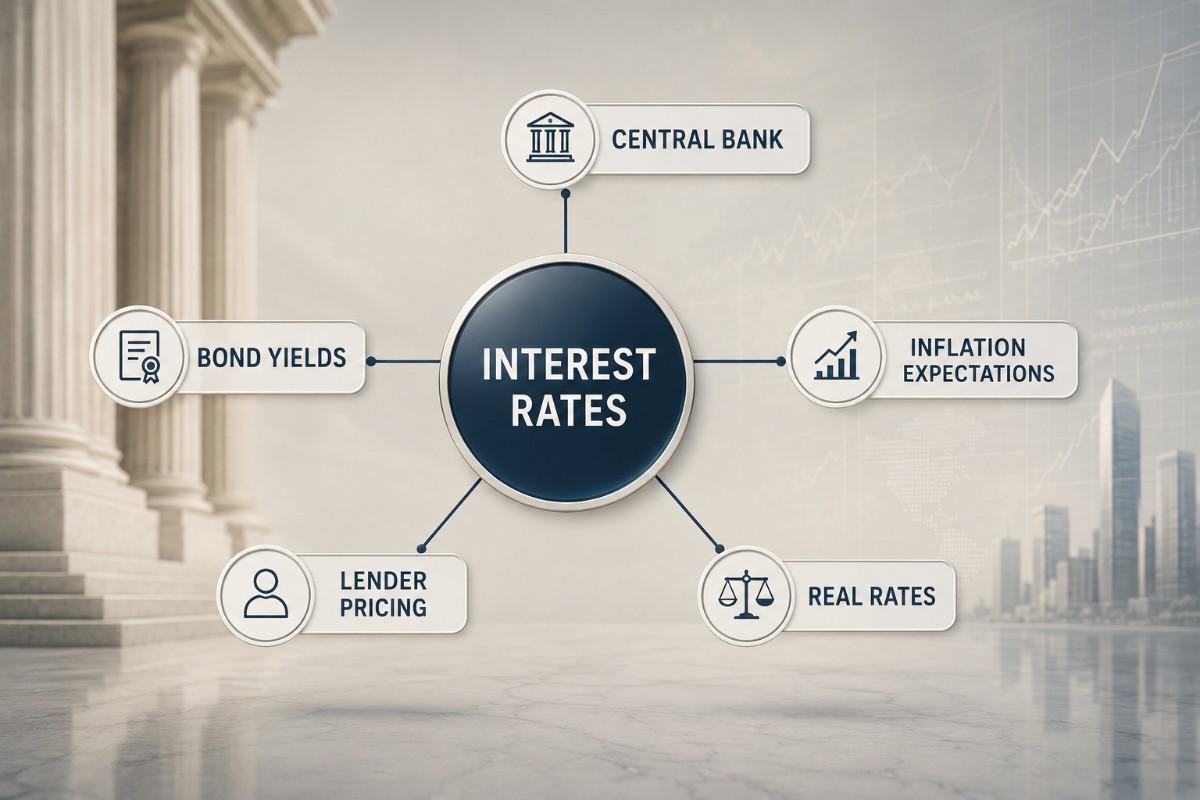
Before inflation changes every loan or savings rate, it usually passes through five channels.
| Force | What It Moves | Why It Matters |
|---|---|---|
| Central bank policy | Short-term rates | Sets the cost of overnight money |
| Bond yields | Market rates | Prices future inflation before policy changes |
| Inflation expectations | Future rates | Turns one price shock into lasting pressure |
| Lender pricing | Loans and credit | Passes higher funding costs to borrowers |
| Real rates | True policy pressure | Shows whether money is actually tight |
Inflation expectations are the danger line. Once future price increases are built into wages, contracts, and lending rates, borrowing costs can rise before central banks move and remain elevated after headline inflation fades.
Central banks raise interest rates when inflation becomes persistent enough to threaten purchasing power, wages and expectations. Higher rates slow demand by making credit harder to justify, forcing price increases to lose momentum.
The Federal Reserve’s long-run inflation goal is 2%, measured by the annual change in the personal consumption expenditures price index. Inflation above that level for too long creates a hard choice: hold rates high and pressure demand, or risk letting inflation become normal.
Higher policy rates work through everyday decisions. Mortgages become harder to afford, car loans carry larger payments, business expansion needs stronger returns, and cash becomes more attractive than immediate spending.
Central banks cannot create cheaper fuel, food or rent with a rate hike. They can reduce the economy’s ability to keep accepting higher prices.
Bond markets often move before central banks because yields price the future. When inflation appears persistent, buyers demand higher returns for lending money over time.
A bond pays fixed cash flows. Higher inflation makes those future payments less valuable. Prices fall, yields rise, and market interest rates adjust before any official policy decision.
The 2-year Treasury yield is the cleaner signal for expected policy. It rises when markets expect central banks to keep rates higher or delay cuts.
The 10-year Treasury yield carries the broader inflation verdict. It reflects long-term inflation expectations, real growth, fiscal risk and term premium. That makes it central to mortgages, corporate debt and long-term financing.
Borrowing costs can rise during a central bank pause because bond markets do not wait for permission.
Inflation expectations change the behaviour that keeps inflation alive. Workers ask for higher wages before prices rise again, landlords reset rents earlier, firms protect margins faster, and lenders demand stronger returns before committing money for years.
A single jump in gasoline or food prices can fade. Repeated increases change contracts, pay negotiations and loan pricing. Once that happens, inflation no longer sits only in the data; it starts shaping decisions.
Central banks watch expectations because delays become expensive once inflation feels normal. Restoring credibility then requires higher real rates and a longer period of tight money.
A gasoline spike can fade. Inflation becomes a rate problem when wages, rents, services and long-term expectations start moving with it.
Inflation reaches daily life through lender pricing. Banks and finance companies raise loan rates when funding costs climb, bond yields rise or credit risk increases.
Variable-rate debt feels the pressure first. Credit cards, floating-rate business loans and adjustable-rate mortgages can reprice quickly because they are tied to short-term benchmarks or bank formulas.
Fixed-rate debt creates a split. Existing borrowers keep old rates, while new borrowers face the current cost of money. Inflation rewards locked-in borrowers and punishes new borrowing.
Savings rates can rise, but not evenly. Banks lift deposit yields most aggressively when they need cash or face stronger competition for deposits.
Borrowing costs often rise faster than savings yields because lenders reprice funding risk, credit risk and margins at once.
Nominal rates are the numbers on loans, bonds or savings accounts. Real rates show the pressure after inflation.
The simple formula is real interest rate = nominal interest rate minus inflation. A 5% rate is restrictive when inflation is 2%. The same 5% rate loses force when inflation is 6%.
Real rates help explain why central banks may keep policy tight even after inflation starts to cool. If nominal rates stay high while inflation falls, real rates rise without another hike.
Inflation control depends on pressure, not appearances. Money only becomes truly tight when borrowing costs rise faster than the inflation they are meant to defeat.
Mortgage rates do not need a fresh Fed hike to move higher. They respond more closely to long-term Treasury yields, mortgage-backed securities and lender risk premiums than to the overnight policy rate.
A pause only means the central bank has stopped moving for now. If inflation lifts long-term yields, mortgage lenders still reprice loans to protect returns.
That pressure hits housing immediately. A higher mortgage rate reduces purchasing power across the entire loan balance, often faster than a small drop in home prices can restore affordability.
Inflation squeezes housing from both sides. Construction, insurance and maintenance costs rise, while higher mortgage rates reduce the amount buyers can finance.
Not every inflation spike deserves a rate hike. Central banks respond most aggressively when price pressure is persistent, broad-based and capable of changing expectations.
A temporary supply shock can lift headline inflation without proving that demand is too strong. Oil spikes, crop disruptions and shipping bottlenecks raise prices, but higher interest rates cannot directly increase supply.
The policy reaction changes when inflation spreads into services, wages, rents and expectations. Those categories move slowly and can keep inflation alive after the original shock fades.
A weak economy complicates the decision. Raising rates can control inflation but deepen a slowdown. Holding rates steady can protect growth, but risk weaker credibility.
Temporary inflation creates noise. Persistent inflation changes the cost of money.
History’s lesson is persistence, not panic. The 1970s and early 1980s forced aggressive tightening because inflation had spread into wages, contracts and expectations. By late 1980 and early 1981, the federal funds rate approached 20%, showing how expensive credibility becomes once inflation gets embedded.
The post-2008 period showed the other side of the cycle. Inflation stayed subdued, demand remained fragile, and central banks kept rates near zero for years. Low inflation gave policy room to support growth rather than suppress demand.
The 2021 to 2023 cycle proved the same point in modern form. Energy and goods shocks started the pressure, but wages, rents and sticky services turned inflation into a broader rate problem. Central banks stopped treating inflation as a temporary pressure once it threatened credibility.
Persistent inflation does not just lift rates. It changes the regime in which rates are set.
An inflation report moves rates when it suggests price pressure will last.
Start with the split between headline and core inflation. Headline inflation shows the immediate cost-of-living shock. Core inflation gives a cleaner view of underlying pressure because it removes food and energy.
Then look at services, shelter and wages. These categories move slowly, which makes them harder to reverse once they accelerate.
Next, watch bond yields. A rise in the 2-year yield points to tighter policy expectations. A rise in the 10-year yield signals broader pressure from inflation expectations, real yields or term premium.
Finally, compare nominal rates with inflation. Falling inflation with steady nominal rates tightens real policy. Rising inflation with steady nominal rates weakens it.
Rates move most when inflation stops looking temporary and starts looking difficult to break.
No. Interest rates rise most when inflation becomes persistent, broad-based or embedded in expectations. A temporary spike in gasoline or food prices can fade. Inflation tied to wages, rents and services is harder to remove.
The Fed raises rates to slow demand. Higher borrowing costs make mortgages, loans and business expansion harder to justify, while higher savings yields can delay spending. The aim is to make repeated price increases harder to pass on.
Higher rates reduce credit growth and weaken demand. Fewer buyers can absorb higher prices, so businesses lose room to keep raising them. The effect usually arrives with a lag because wages, leases and loan contracts reset slowly.
Mortgage rates rise because long-term lenders demand protection against inflation risk. They follow Treasury yields and mortgage-bond spreads more closely than the Fed’s overnight rate, so home-loan costs can rise even during a policy pause.
Bond markets may tighten conditions anyway. If inflation looks persistent, long-term lenders demand higher yields to protect real returns. A central bank can pause policy, but it cannot force markets to ignore inflation risk.
Inflation affects interest rates by changing the value of future money. Central banks respond through policy rates, bond markets reprice future inflation, lenders pass pressure into credit, and real rates show whether money is truly tight.
Persistence is the dividing line. Headline inflation shows the pain, core inflation shows the trend, expectations show credibility, and bond yields show how quickly the cost of money is being repriced.