Published on: 2026-03-04
Updated on: 2026-03-04
South Korean stocks have suffered a sudden, violent reversal after being one of the world's strongest markets in 2026.
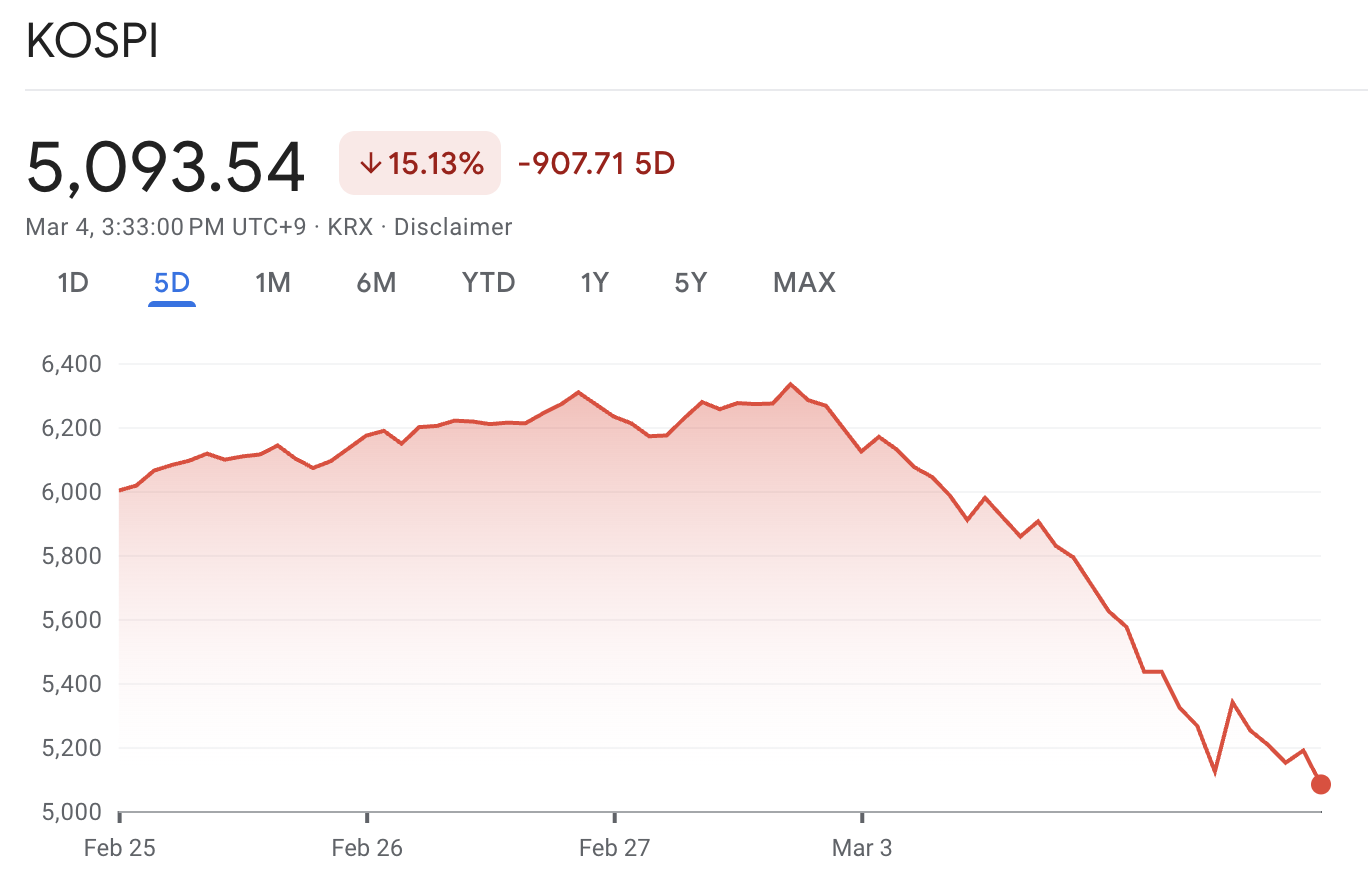
On Tuesday, 3 March 2026, the Kospi fell about 7.2%, its steepest one-day drop since August 2024.
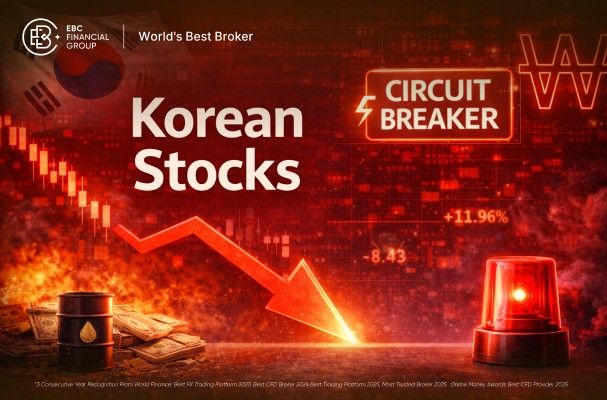
On Wednesday, 4 March 2026, selling intensified, and the Kospi fell as much as 11% intraday, triggering market-wide trading halts and sending the tech-heavy Kosdaq into its own circuit breaker.
The immediate trigger has been a sharp rise in geopolitical risk tied to the widening war involving Iran, which has pushed oil higher and raised fears of an energy shock.
South Korea is particularly vulnerable due to its status as a major importer of oil and gas. Consequently, rising energy prices have a swift impact on both inflation expectations and corporate profit margins.
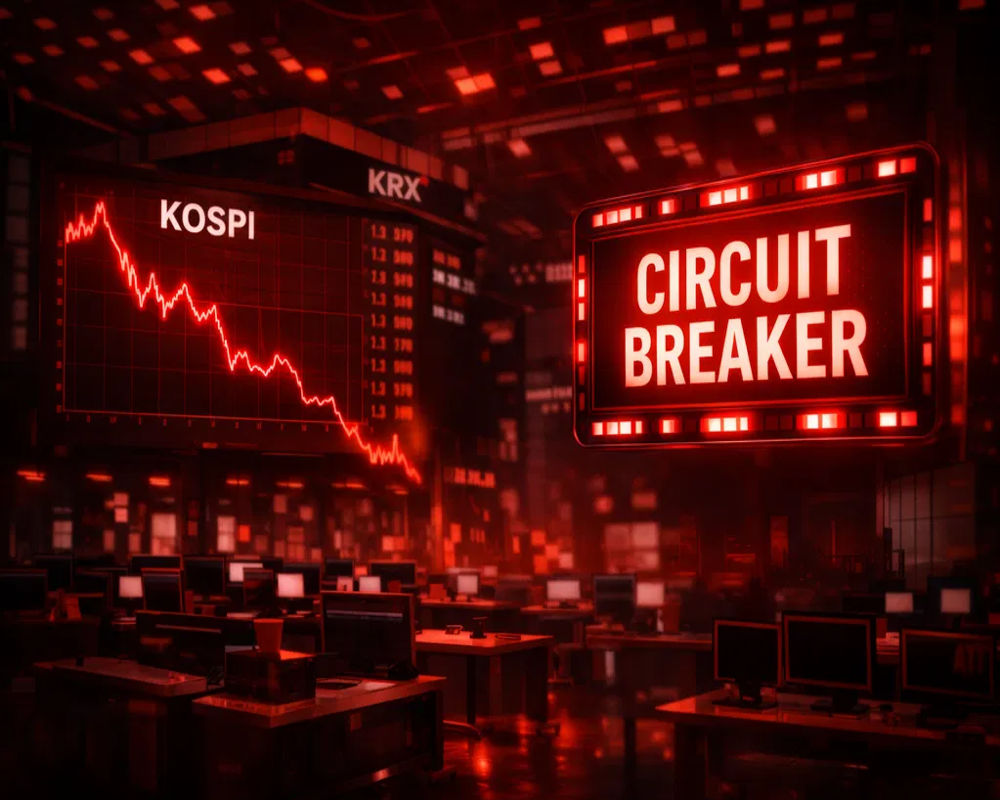
South Korea has two related market-stabilisation tools that are often confused in headlines.
These can halt trading across the market when the index tumbles hard.
According to the Korea Exchange (KRX), Phase 1 is triggered when the KOSPI index drops by more than 8% from its previous close, and this condition remains in effect for 1 minute.
During this halt, trading and order entry for related products are suspended for 20 minutes, and only order cancellations are permitted.
KRX also sets phase 2 (15% + an additional 1%) and phase 3 (20% + an additional 1%), with phase 3 closing the market for the day.
This is different from the market-wide circuit breaker.
KRX describes the sidecar as a mechanism that can suspend programme trading quotes for five minutes when KOSPI200 futures move sharply, with a typical trigger of a 5% move lasting one minute.
This matters because day one of the rout featured programme-trading suspensions, while day two featured broader circuit-breaker conditions as the index fell through the 8% threshold.
| Date (2026) | What happened | Why it mattered |
|---|---|---|
| Tue, 3 Mar | Kospi fell about 7.2% after a public holiday on Monday, and trading halts were triggered to manage volatility. | The market was crowded after a huge year-to-date rally, so profit-taking accelerated quickly. |
| Wed, 4 Mar | Kospi fell as much as 11% intraday and was still down about 9.6% midday, while the Kosdaq also hit a circuit breaker after falling more than 8%. | The second wave suggested forced selling and a deeper "risk-off" shift, not just one-day profit-taking. |
The sell-off hit the market's biggest and most crowded trades.
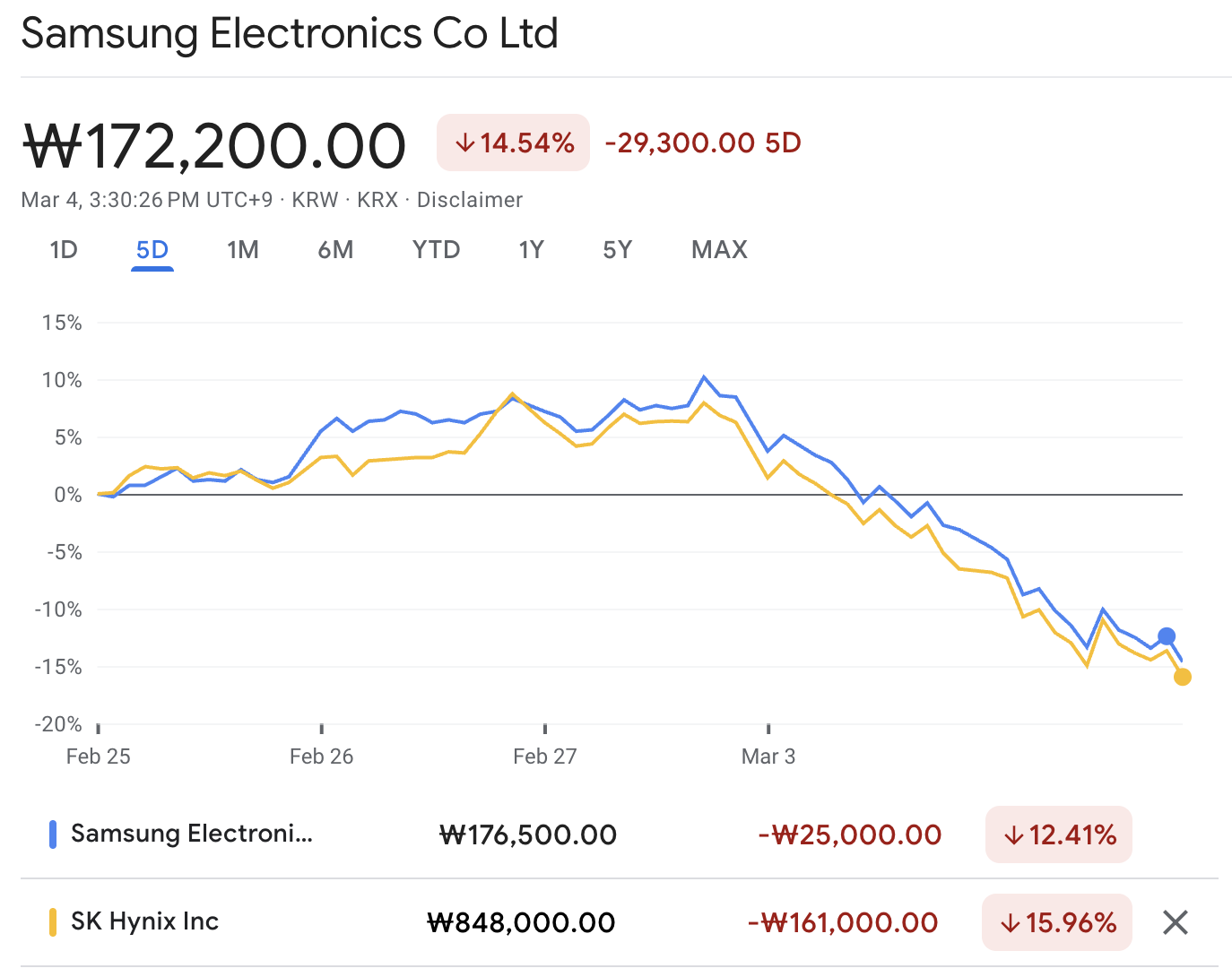
For example, Samsung Electronics and SK Hynix fell roughly 9.9% and 12% on Tuesday.
On Wednesday, Samsung fell more than 10%, and SK Hynix fell about 8% as panic selling spread.
South Korea imports most of its energy, which means higher oil prices can act like an external tax on the whole economy.
The sell-off is driven by the risk of an energy shock, with Brent crude oil prices increasing sharply and European gas prices surging in a short period.
South Korea imports approximately 2.7 million barrels of oil daily, primarily from the Middle East. This dependence makes Hormuz-related risks more impactful in Seoul compared to many other markets.
The KOSPI entered the week as a standout global performer.
For context, the index was up about 48% YTD before Tuesday's sell-off.
The Kospi was still up about 37% in 2026, even after Tuesday's fall, which shows how much optimism had been priced in.
When a market is that extended, a macro shock does not just lower prices; it can force rapid changes in risk limits, leverage, and hedges.
Once the won starts weakening, foreign investors often become more sensitive to losses because their equity returns shrink in dollar terms.
For instance, the Korean won weakened by about 1.34% against the US dollar during the sell-off, and foreign investors were heavy net sellers, including 7 trillion won on the last trading day of February and another 5.4 trillion won on Tuesday.
That is a classic feedback loop in emerging Asia: weaker currency, heavier outflows, more volatility.
South Korea's industrial production data has been disappointing, showing a decline in overall output and a significant drop in semiconductor production. This is particularly concerning because chips are crucial for driving earnings growth.
When macroeconomic data declines with a global shock, investors tend to lose confidence rapidly.
A falling currency can tighten financial conditions without any central bank action, because import prices rise and offshore funding becomes less comfortable.
For example, there was a sharp daily weakening in the won during the rout.
US bond yields have increased, raising concerns among investors that rising oil prices may lead to persistently high inflation. This could delay interest rate cuts and negatively impact global growth assets.
This situation is significant for Korea because a global sentiment of "higher for longer" often drives foreign capital away from riskier markets.
Even in a broad sell-off, some sectors can attract relative support.
Shipping, defence, and energy shares saw gains during the turmoil, which fits the usual playbook for geopolitical stress.
You will receive the most accurate information from three sources.
First, keep an eye on oil prices and shipping news, as Korea's vulnerability is closely linked to energy costs and delivery risks.
Second, monitor the USD/KRW exchange rate. Prolonged currency weakness can maintain foreign selling pressure.
Lastly, you should watch KOSPI200 futures and programme flow, as the sidecar rules can quickly alter market microstructure when futures move by 5% in a minute.
KRX market-wide circuit breakers triggered when the Kospi falls more than 8% from the prior close, and the condition lasts one minute, which leads to a 20-minute halt.
The sell-off was driven by global risk aversion linked to the Iran war and rising oil prices, and Korea is highly exposed because it imports large volumes of energy and its market is concentrated in cyclical tech names.
A circuit breaker can halt broad market trading after large index declines, while the sidecar suspends programme-trading quotes for five minutes when KOSPI200 futures move sharply.
In conclusion, Korean stocks have been hit by a two-day rout because a global geopolitical shock has collided with a crowded rally that had priced in strong AI-led earnings and calm energy conditions.
The circuit breaker is significant because it indicates that stress has shifted from "normal selling" to "market structure control." It suggests that upcoming sessions remain volatile, even if prices rebound.
For a sustainable recovery, two conditions must be met simultaneously: first, both oil and shipping risks need to decrease, and second, the won must stabilize sufficiently to reduce foreign outflows.
Disclaimer: This material is for general information purposes only and is not intended as (and should not be considered to be) financial, investment or other advice on which reliance should be placed. No opinion given in the material constitutes a recommendation by EBC or the author that any particular investment, security, transaction or investment strategy is suitable for any specific person.